
A pristine 1969 muscle car loses its allure the moment you’re hit with the stagnant scent of 50-year-old foam and the radiating heat of an uninsulated floorboard. You shouldn’t have to choose between iconic style and basic physical comfort. Most enthusiasts believe that a punishing ride is simply the price of admission for owning a legend. We disagree. The right custom classic car interior solves these pains, turning a relic into a refined driving environment that rivals any modern luxury machine.
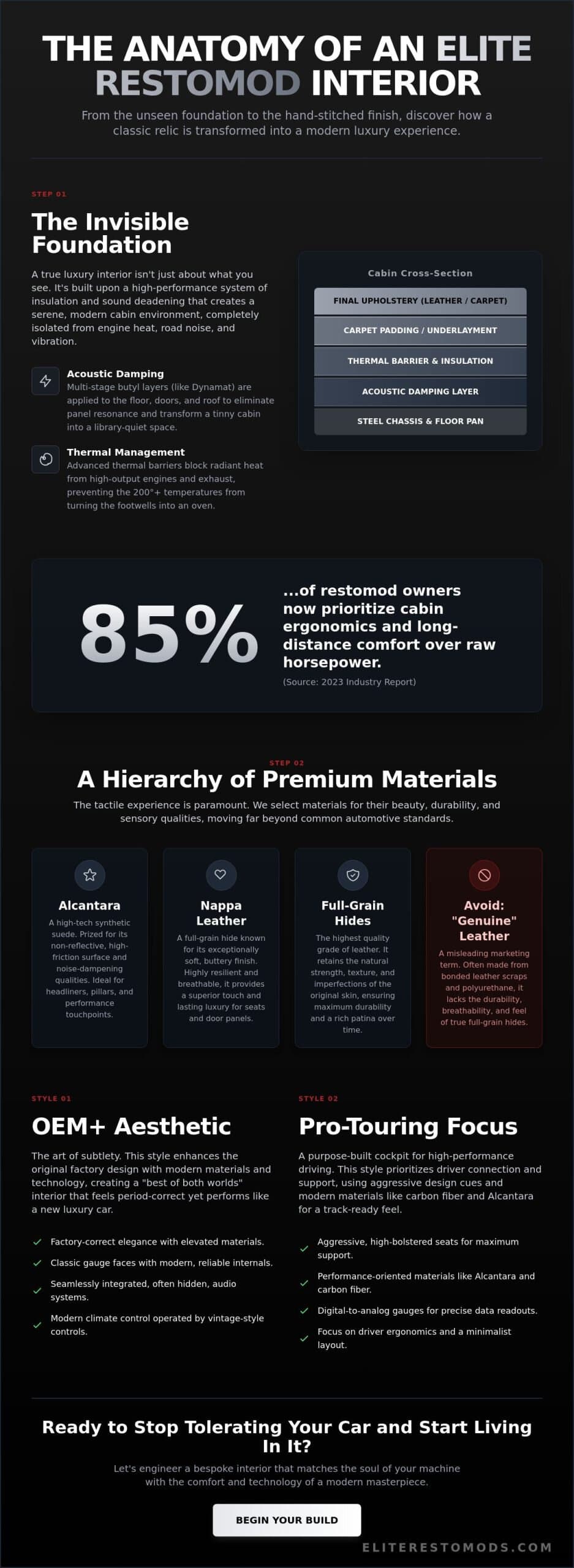
You already know that the soul of a car is its engine, but the heart of the experience is where you sit. You’ll discover how to integrate modern climate control and high-fidelity audio while maintaining the car’s vintage soul. According to a 2023 industry report, 85% of restomod owners now prioritize cabin ergonomics over raw horsepower for long-distance drivability. We’ll show you the meticulous process of using material science and ergonomic design to create a cabin that’s ready for a 500-mile journey. It’s time to stop tolerating your car and start living in it.
Key Takeaways
- Learn why the “invisible” foundation of heat and sound insulation is the most critical first step in achieving a modern, serene cabin environment.
- Navigate the hierarchy of bespoke materials, from Nappa leather to Alcantara, to elevate your custom classic car interior into a piece of functional art.
- Identify your signature aesthetic by contrasting the subtle, factory-correct elegance of an OEM+ look with the aggressive, high-bolstered focus of a Pro-Touring build.
- Discover how to seamlessly integrate 21st-century technology and digital-to-analog gauges without compromising the iconic, uncluttered soul of your vintage dashboard.
- Understand how to re-engineer original seat architecture with modern lumbar support and climate control for a luxury grand-touring experience.
The Foundation of a Bespoke Custom Classic Car Interior
A true custom classic car interior isn’t just a simple upholstery refresh. It’s a comprehensive reimagining of the cabin space. Many enthusiasts view the history of custom cars as a journey of exterior aesthetics, yet the most elite builds prioritize the driver’s sensory environment. We treat the interior as a high-performance system. This starts with the “invisible” build, the layers of engineering hidden beneath the hand-stitched leather and bespoke trim. This phase determines if a car feels like a relic or a modern masterpiece.
Before the first hide is cut, we address the structural soul of the vehicle. A 1967 Mustang or 1969 Camaro often arrives with decades of hidden fatigue. We inspect every inch of the 18-gauge steel floor pans and seat mounts for stress fractures or corrosion. A rigid foundation is non-negotiable. Without it, even the most expensive interior will eventually squeak, rattle, or fail. We ensure the shell is ready to support the modern luxury we’re about to install. You can see how this structural integrity plays into our overall process for every build.
To better understand this concept, watch this helpful video:
Modern performance creates modern challenges. High-output LS3 crates or Coyote engines generate immense heat that radiates through the firewall. We eliminate the “old car smell” by installing advanced moisture barriers and synthetic insulators that block dampness and mildew. It’s about creating a dry, climate-controlled sanctuary that smells like premium hides, not 50-year-old gasoline. Every “fully sorted” interior we produce starts with this commitment to a dry, vibration-free environment.
Thermal and Acoustic Management
We utilize multi-stage damping materials like Dynamat Xtreme to transform a tinny cabin into a library-quiet environment. We apply these 0.067-inch thick butyl layers to the doors, roof, and floor to kill resonance. Acoustic decoupling in a 1960s muscle car involves creating a physical break between the vibrating steel chassis and the interior cabin panels to interrupt the transmission of low-frequency road noise. Thermal barriers are equally vital; they keep the 200-degree roar of an LS3 engine from turning the footwells into an oven.
Sealing the Vintage Shell
A custom classic car interior must be airtight to truly feel premium. We replace original, cracked weatherstripping with modern EPDM synthetic rubbers that provide a vault-like seal against wind noise and rain. Firewall insulators and precision-cut gaskets modernize the driving experience by isolating the cabin from mechanical vibration. Every gap is closed. The result is a vintage icon that feels as tight and composed as a modern luxury sedan, ensuring the vehicle is meant to be driven, not just displayed.
Premium Materials: From Hand-Stitched Leather to Alcantara
The cockpit of a high-performance restomod isn’t just a place to sit. It’s a sensory experience that bridges the gap between 1960s soul and 21st-century luxury. We start with the foundation of every custom classic car interior: the leather. The hierarchy is strict. We don’t use “genuine” leather, which is often a marketing term for bonded scraps. Instead, we utilize full-grain hides that retain the natural strength and texture of the skin. For those seeking a buttery, soft-touch finish, Nappa leather provides a resilient surface that handles the heat of a summer cruise without cracking. The pinnacle remains bespoke Italian hides, sourced from tanneries that have spent centuries perfecting the art of the soak and dye.
Modern builds frequently incorporate Alcantara or Ultrasuede on headliners and A-pillars. These materials aren’t just for show. They provide a non-reflective, high-friction surface that adds a layer of contemporary sophistication while dampening cabin noise. To tie the design together, we utilize contrast stitching as a precision tool. It defines the architecture of the cockpit, drawing the eye along the iconic curves of a vintage dash. This level of detail mirrors the craftsmanship celebrated by industry-recognized interior design awards, where the difference between a good build and a world-class masterpiece lies in the consistency of the thread tension.
The final element of the material strategy is the scent. We avoid the sharp, chemical odor associated with cheap foams and industrial glues. By using high-end, low-VOC adhesives and natural jute padding, we curate a “new car smell” that feels organic and expensive. It’s a subtle psychological cue that tells you this isn’t just a restored car. It’s a new machine.
The Art of Bespoke Upholstery
Design choices define the vehicle’s personality. Diamond quilting brings a modern, European supercar aesthetic to a custom classic car interior, offering a bold visual texture. In contrast, traditional tuck-and-roll patterns preserve the 1960s muscle car DNA. Master builders prove their skill through French seams, where the raw edges are folded in and stitched down for a clean, reinforced finish. When selecting a palette, we look for colors that provide depth. A deep cognac leather can ground a metallic midnight blue exterior, creating a sophisticated visual balance that looks timeless rather than trendy.
Beyond Fabric: Wood, Carbon Fiber, and Metal
Tactile feedback is essential for a premium driving experience. For a “Gentleman’s Racer” aesthetic, we integrate real wood veneers like walnut or dark ash, often finished in a modern matte clear coat. If the project is a Pro-Touring beast, carbon fiber accents provide a lightweight, high-tech edge that signals pure performance. We often replace flimsy factory plastic knobs with machined aluminum trim. These components offer a cold, heavy, and precise feel that plastic can’t replicate. It’s about turning every interaction with the car into a moment of tactile luxury. You can see these materials in action across our current restomod inventory.
Defining Your Aesthetic: Three Examples of Custom Interior Styles
A custom classic car interior isn’t just about choosing a color. It’s about synchronizing the cabin with the mechanical heart of the machine. If the engine bay houses a roaring LS3, the seats shouldn’t feel like a soft sofa from 1965. Every stitch should reflect the car’s intended purpose. We see this as a hierarchy of design where the aesthetic must match the performance capabilities. A mismatch here breaks the spell of the drive. Whether you want a time capsule or a futuristic cockpit, the design path defines the soul of the final build.
The OEM+ Masterpiece
This approach caters to the purist who demands perfection without losing the factory identity. We use original 1960s or 70s patterns but swap the thin, dated vinyl for premium hides or Alcantara. It’s about invisible technology. You’ll find modern A/C systems controlled by the original chrome sliders and high-fidelity Bluetooth audio hidden behind a stock-looking radio face. For investment-grade vehicles, this preservation of “soul” is paramount. It ensures the car looks exactly as it did on the showroom floor in 1969, yet feels like a modern luxury sedan the moment you close the door.
The High-Performance Pro-Touring Cabin
When a car is built to corner at 1.0g of lateral force, the interior has to keep the driver planted. This aesthetic focuses on high-bolster seat architecture and race-ready materials. These cabins often mirror the aggressive energy of iconic classic car engine swaps that provide the raw power under the hood, and they demand the same surgical chassis precision delivered by pro touring suspension upgrades that allow vintage muscle to out-corner modern sports cars. It’s a cockpit designed for action, utilizing carbon fiber accents and digital gauges to track vital engine data in real-time. Key features include:
- Five-point harnesses integrated into reinforced seat frames for track safety.
- Suede-wrapped steering wheels to provide maximum grip during spirited canyon runs.
- Low-pile lightweight carpeting to reduce weight while maintaining a finished look.
Modern Luxury Fusion
This is a complete reimagining of the vintage space. We integrate 2026-level technology, including custom-molded center consoles, wireless charging pads, and heated or ventilated seats. The goal is to eliminate the ergonomic flaws of the past. By using bespoke 3D-printed components, we can fit modern touchscreens and ambient LED lighting that feels factory-integrated rather than tacked on. It’s the ultimate custom classic car interior for the driver who refuses to compromise, where the silhouette of American muscle meets the comfort of a private jet.
Seamless Technology Integration for the Modern Driver
Integrating 21st-century technology into a 1960s cockpit is a delicate operation. You want the precision of a modern supercar without sacrificing the aesthetic of a period-correct muscle car. It’s about invisibility. A custom classic car interior should feel like a time capsule until you turn the key. The challenge lies in hiding the complexity of modern wiring and modules behind the minimalist steel and chrome of yesteryear. We believe that convenience shouldn’t come at the cost of character.
Dakota Digital has mastered this balance of then and now. Their HDX gauge series provides the accuracy of a 2024 microprocessor while retaining the font, needles, and layout of a 1969 Camaro or Mustang. You get 100% digital reliability with a purely analog soul. Climate control follows the same logic. We utilize Vintage Air Gen 5 systems. These units replace bulky, vacuum-operated heaters with electronically controlled, high-capacity cooling. They fit behind the dash with zero modifications to the firewall; this ensures you stay cool during a 95-degree July cruise without an eyesore under the hood.
High-fidelity sound shouldn’t require cutting up original door panels. We hide premium speakers behind factory-style grilles to maintain a stock appearance. The music is crisp; the look is untouched. This meticulous approach defines a high-end custom classic car interior, where the technology serves the driver without distracting from the vintage vibe.
Modern Infotainment in a Classic Frame
Retrosound head units are the gold standard for audio integration. They feature the iconic twin-knob design but pack Bluetooth and Apple CarPlay connectivity. We tuck USB-C charging ports inside the center console or glove box, keeping cords out of sight. For the soundstage, custom-molded kick panels house mid-range drivers. This directs sound toward the cabin without compromising the door structure or original upholstery lines.
Enhanced Visibility and Safety
Safety shouldn’t be loud. We integrate backup cameras into the rearview mirror; the screen stays completely dark until you shift into reverse. Lighting is another critical upgrade. We swap dim incandescent bulbs for LED interior kits. We use 3000K warm-white tones to mimic the original factory glow while providing 300% more illumination for the cabin. For the ultimate convenience, electronic parking brakes and push-button starts bring an Elite convenience factor to the driving experience, replacing clunky mechanical levers with sleek, tactile controls.
Discover how we blend vintage soul with modern performance by exploring our bespoke restoration services.
Designing for the Drive: Ergonomics and Long-Distance Comfort
A vintage cabin shouldn’t feel like a chore. Most 1960s muscle cars shipped with flat bench seats or primitive buckets. These are the weakest links in any performance build. They lack lumbar support. They offer zero lateral grip. You slide across the vinyl during every hard corner. At Elite Restomods, we design every custom classic car interior for the long haul. We prioritize turn-key reliability. This ensures your car is ready for a 500-mile road trip, not just a short cruise to a local show.
We focus heavily on the seat architecture. We integrate modern heating and cooling elements directly into the frames. We add multi-way power adjustments for a tailored fit. Central to our design is the Golden Triangle. This is the precise geometric relationship between the driver seat, the steering wheel, and the pedals. If this alignment is off by even 15 millimeters, the driver feels disconnected from the machine. We calibrate this space to ensure total control over the massive horsepower under the hood. It’s about creating a cockpit that responds to your body, not one you have to fight against.
Modern Seat Conversions
We often start with frames from modern luxury icons like the Porsche 911 or BMW M-series. These provide a lightweight, crash-tested foundation with advanced mechanics. Our craftsmen strip these seats to the bone. We then apply high-density custom foam. This allows us to create aggressive bolsters for high-G cornering while maintaining a period-correct aesthetic. The result is a seat that looks like 1969 but supports like 2026. For more on how we integrate these features, you can browse our latest build guides and restoration insights.
Driver-Centric Controls
Accessibility is a requirement for a modern daily driver. We install tilting steering columns to accommodate different heights and driving styles. We don’t just swap parts; we tune the feedback of every interaction. Pedal spacing is meticulously adjusted for precise footwork. The tactile resistance of the pedals is calibrated to match the stopping power of a six-piston Wilwood brake system. Every touchpoint feels intentional and solid. It’s the difference between a project car and a professional, world-class machine. Vintage soul. Contemporary comfort. Unrivaled performance.
Ready to feel the difference of a professionally engineered cockpit? Explore our Elite Certified Restomods to see these bespoke interiors in action.
Drive Your Legacy in Unrivaled Comfort
Your vehicle is a statement of history, but its cabin should reflect the pinnacle of modern luxury. A truly bespoke custom classic car interior balances the raw nostalgia of the 1960s with the ergonomic precision required for modern long-distance touring. By combining hand-stitched premium leathers with hidden technological upgrades, you create a space that feels both timeless and technologically advanced. Every component in an Elite build undergoes our rigorous Elite Certified quality assurance process to ensure your vehicle arrives in fully sorted condition. This meticulous attention to detail transforms a vintage machine into an investment-grade piece of functional art. Don’t settle for a static display piece when you can experience the roar of the engine from a cockpit designed specifically for your comfort and style. The road is calling, and it’s time your interior matched the power under the hood.
Commission Your Bespoke Masterpiece with Elite Restomods
The journey to your perfect drive starts with a single stitch; let’s build something iconic together.
Frequently Asked Questions
Will a custom interior hurt the resale value of my classic car?
A high-quality custom classic car interior typically increases resale value by 15% to 20% for restomod builds. While NCRS purists prefer factory-original parts, the broader collector market pays a premium for bespoke luxury. It’s about the caliber of the execution. Meticulous hand-stitched leather and modern soundproofing transform a vintage cabin into a high-performance environment that buyers find irresistible.
How much does a full custom classic car interior typically cost?
A full custom interior typically ranges from $10,000 to $30,000 based on industry reports from SEMA and specialized upholstery journals. This investment covers premium hides, custom foam sculpting, and new wiring harnesses. It’s a reflection of your car’s soul. High-end materials and expert labor ensure your vehicle stands out as a piece of functional art rather than a standard restoration.
Can I add modern air conditioning to my original classic car dashboard?
You can integrate modern air conditioning into an original dashboard using model-specific kits from manufacturers like Vintage Air. These systems utilize the factory controls or discreetly hidden panels to maintain the vintage aesthetic. It’s the perfect marriage of 1960s style and 21st-century comfort. You get ice-cold performance without cutting into your precious original steel.
What is the best material for a classic car interior that will be driven often?
Automotive-grade leather or technical fabrics like Alcantara are the premier choices for a custom classic car interior designed for the open road. These materials boast a 50,000-plus double-rub durability rating. They handle the friction of daily entry and exit without cracking or thinning. You get the visceral feel of a luxury cockpit with the ruggedness required for cross-country tours.
How do I get rid of the “old car smell” in my vintage vehicle?
Eliminating the “old car smell” requires replacing the 50-year-old organic padding and jute insulation under the carpet. These materials trap moisture and decay over decades. By installing modern closed-cell foam and sound deadening from brands like Dynamat, you remove the source of the odor. Your cabin will smell like fresh leather and success instead of a damp basement.
Can modern seats be installed in a classic car without permanent modifications?
Modern seats can be installed using bolt-in adapter brackets that utilize the factory mounting holes. This method ensures 100% reversibility for future collectors. You gain the lateral support of a performance seat while keeping your floor pans intact. It’s a smart way to upgrade ergonomics without sacrificing the vehicle’s structural integrity or historical value.
How long does a complete custom interior restoration take?
A complete custom interior restoration usually requires 8 to 12 weeks of dedicated shop time. This period allows for the meticulous fabrication of custom door panels, center consoles, and headliners. We don’t rush the process. Every stitch must be perfect to meet our standards of unrivaled excellence. It’s a transformative journey that turns an aging cockpit into a modern masterpiece.
What is the difference between a reproduction interior kit and a bespoke build?
A reproduction kit is a mass-produced set designed to mimic the factory original, while a bespoke build is a one-of-one creation tailored to your specific anatomy and style. Kits often use lower-grade vinyl and standard patterns. Bespoke interiors offer unrivaled personalization. You choose the exact grain of the leather and the contrast of the stitching for a truly iconic result.