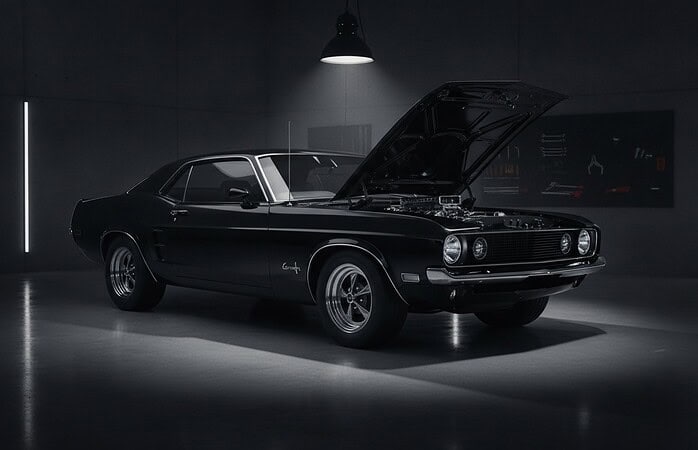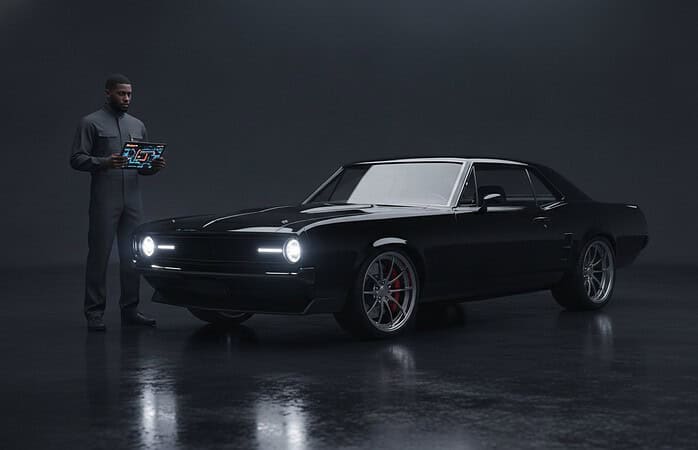

A flawless coat of hand-rubbed paint and a fresh leather interior don’t make a masterpiece; they often mask a mechanical nightmare. You’ve likely felt that familiar tightening in your chest when browsing high-end listings, wondering if the soul of the vehicle matches its pristine aesthetic. It’s a justified anxiety. Most collectors eventually find themselves asking: what is a fully sorted classic car? The answer isn’t found in a trophy cabinet. It’s found in the deliberate synergy between heritage design and modern engineering reliability.
We recognize the fear of discovering terminal structural rust beneath a six-figure finish or facing the frustration of mechanical gremlins on a spirited drive. This guide reveals the rigorous technical standards that distinguish a simple restoration from a truly sorted, investment-grade vehicle. You’ll gain a professional framework for evaluating mechanical readiness and the confidence to distinguish a static show car from a high-performance driver. We’re moving beyond the visual impact to explore the meticulous quality assurance that ensures your vintage asset performs with the visceral power and refined comfort of a modern machine.
Key Takeaways
- Learn to look beyond the aesthetic finish to understand what is a fully sorted classic car through real-world stress testing and system synchronization.
- Identify the critical difference between superficial patina and terminal structural rot to ensure your investment stands on a rust-free foundation.
- Discover why integrating modern electrical harnesses and high-capacity cooling systems is essential for reliable performance in today’s driving conditions.
- Master a professional auditing process using natural light and targeted inspections to uncover hidden mechanical gremlins or panel irregularities.
- Understand how a professional structural audit provides the ultimate peace of mind for collectors seeking road-ready reliability.
Defining the Fully Sorted Classic: Beyond the Restoration
A restoration project often reaches its visual peak long before it reaches mechanical maturity. For the discerning collector, the question of what is a fully sorted classic car is answered not by the depth of the clear coat, but by the relentless testing of every moving component under real-world stress. While organizations like the Classic Car Club of America (CCCA) provide historical frameworks for classification, the modern definition of sorted requires a level of engineering that transcends traditional preservation.
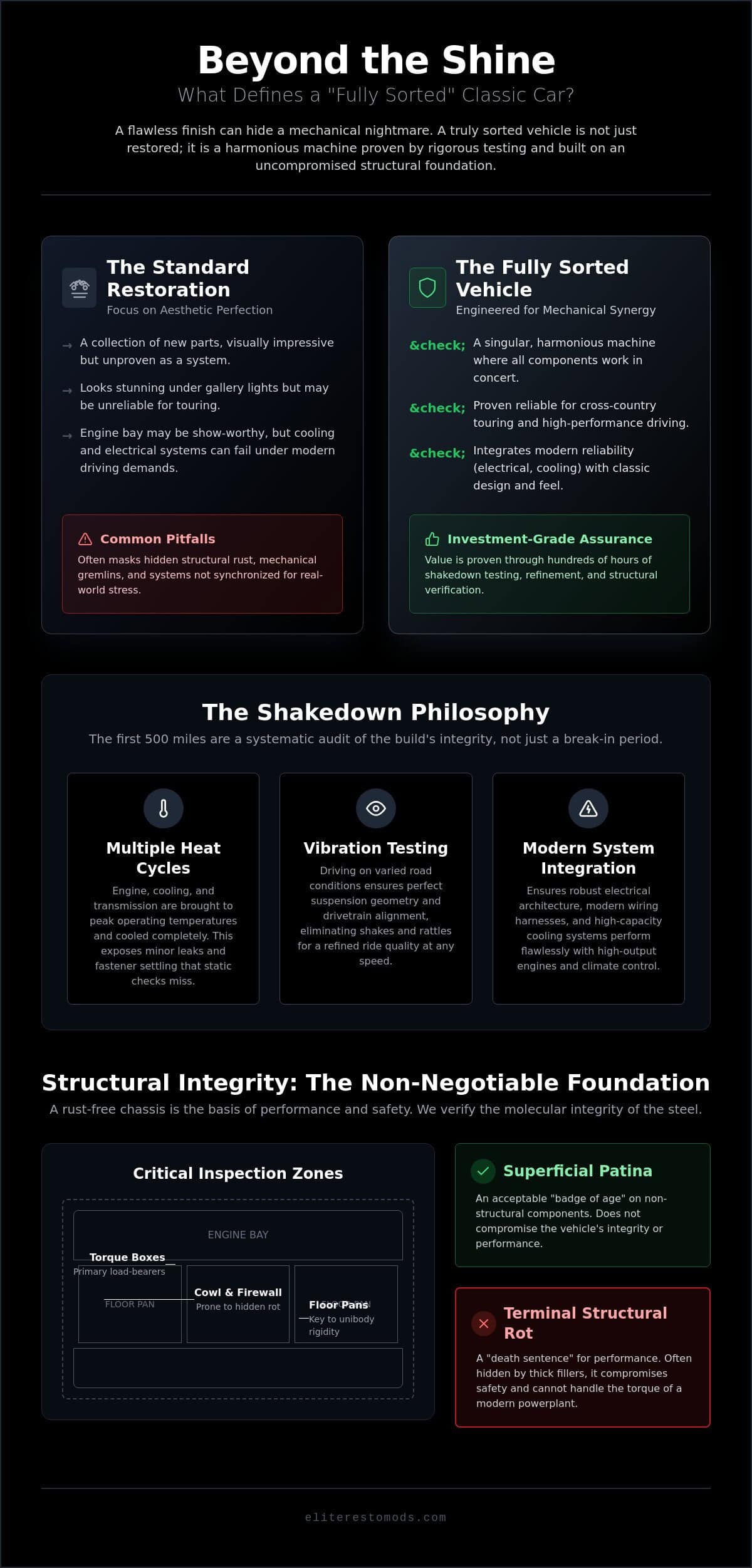
A finished restoration is a collection of new parts; a sorted car is a singular, harmonious machine. This distinction creates a significant divide in the investment-grade market. High-end buyers aren’t just looking for a trailer queen that looks stunning under gallery lights. They seek vehicles capable of reliable, cross-country touring. When browsing Elite Certified Restomods, the value is found in the hundreds of hours spent refining the interaction between old-school soul and modern performance.
To better understand this concept, watch this helpful video:
The Shakedown Philosophy
The first 500 miles of a vehicle’s life after restoration are its most revealing. This period isn’t just about break-in; it’s a systematic audit of the build’s integrity. Professional sorting involves multiple heat cycles where the engine, cooling system, and transmission reach peak operating temperatures and then cool completely. This process exposes minor leaks or fastener settling that static inspections miss. Vibration testing during varied road conditions ensures that the suspension geometry and drivetrain alignment are perfect. It’s the difference between a car that starts and a car that survives a mountain pass.
Aesthetic Perfection vs. Mechanical Synergy
Visual excellence can be deceptive. A show-winning engine bay might hide a cooling system that fails in modern stop-and-go traffic. A truly sorted vehicle prioritizes mechanical synergy over mere cosmetics. This requires a robust electrical architecture, often utilizing a completely modern wiring harness to support high-performance fuel injection and climate control systems. It’s about finding the balance. You want the visceral roar of a high-displacement V8, but you also need the refined comfort of an interior that stays quiet and cool. When you understand what is a fully sorted classic car, you realize that the most beautiful part of the machine is the way it feels at 80 miles per hour on an open highway.
Structural Integrity: The Foundation of a Sorted Machine
Beneath the hand-stitched leather and mirror-finish chrome lies the true character of the build. A rust-free chassis isn’t just a preference; it’s the non-negotiable foundation of every Elite Certified vehicle. When asking what is a fully sorted classic car, you must look where the sun doesn’t shine. Steel doesn’t lie. It either holds the load or it yields. Superficial patina is a badge of age, but terminal structural rot is a death sentence for performance. Many inferior restorations rely on high-build primers and thick polyester fillers to hide the sins of past repairs, masking compromised metal that can no longer handle the torque of a modern powerplant. True sortedness requires verifying the molecular integrity of the steel in every critical load-bearing zone.
Every Elite Certified build begins with a total stripping of the chassis to expose these hidden vulnerabilities before any mechanical work commences. This ensures the visceral excitement of the drive is never undermined by structural failure.
Critical Inspection Zones for Structural Decay
The structural hierarchy varies significantly between architectures. In unibody designs, the torque boxes and floor pans are the primary load-bearers. If these are soft, the car’s geometry shifts under cornering. The cowl vent remains a silent killer of vintage interiors; water traps here, rotting the firewall from the inside out and inviting moisture into the cabin. Body-on-frame vehicles often exhibit a bottom-up rot pattern. Moisture sits inside the boxed sections of the frame, eating the metal from within while the exterior appears pristine. Identifying these patterns is essential to determining if a vehicle is truly road-ready or merely a cosmetic facade.
Anatomy of the Chassis and Substructure
Professional sorting demands a deep dive into the frame horns and crossmembers to check for thinning or stress cracks. These areas endure decades of road fatigue and engine vibration. Suspension mounting points and spring buckets are high-stress zones where the metal must be perfect to support modern, high-performance handling components. To truly know what is a fully sorted classic car, we utilize borescopes to inspect the internal cavities of boxed frame sections for hidden oxidation. This level of scrutiny aligns with the comprehensive safety check standards proposed by global historic vehicle federations, ensuring the machine remains safe and predictable at triple-digit speeds. A stiff, healthy chassis is the only way to achieve the refined comfort and brute force that define our builds.
The Mechanical Shakedown: Achieving Modern Performance
The mechanical soul of a vintage machine is often its most temperamental attribute. A car that idles comfortably in a driveway is not necessarily road-ready. When we define what is a fully sorted classic car, we are describing a vehicle that has transitioned from a collection of parts into a synchronized system of modern performance. This transformation requires engineering a cooling system capable of managing high-ambient temperatures and modern stop-and-go traffic. We utilize high-efficiency, multi-core aluminum radiators paired with high-CFM electric fans to ensure the needle never moves; even in the height of summer, the engine remains within its optimal thermal window. This level of reliability is non-negotiable for an investment-grade asset.
Stopping power must match the brute force of the engine. A sorted machine utilizes modern braking systems with proportional valving and high-performance calipers to provide consistent, fade-free deceleration. Similarly, suspension geometry is fine-tuned for pro-touring performance. This involves balancing spring rates and damper valving to achieve a planted, aggressive feel without sacrificing the refined ride quality expected of a luxury build. Our Custom Build Services focus on this delicate equilibrium, ensuring the vehicle handles with modern precision while retaining its classic spirit.
Drivetrain and Electrical Synergy
Integrating a modern engine swap requires more than just physical fitment. It demands total electrical synergy. We replace brittle, decades-old wiring with modern, high-performance harnesses and weather-sealed connectors to support advanced fuel injection and engine management systems. This ensures the vehicle starts with a single turn of the key every time. Transmission calibration is equally critical. We optimize shift points and final drive ratios to ensure the engine remains in its power band during spirited driving while offering relaxed, low-RPM cruising on the highway. This harmony between the drivetrain and the electrical architecture is what separates a project car from a professional build.
The Elimination of NVH (Noise, Vibration, Harshness)
True luxury is found in the silence of the cabin. We utilize advanced sound deadening materials and thermal barriers to isolate the driver from road noise and engine heat. Identifying and neutralizing harmonic vibrations is a hallmark of the sorting process, especially in high-horsepower builds where drivetrain imbalance can ruin the experience. Every piece of weatherstripping and every window seal is meticulously fitted to provide an airtight environment. This attention to detail transforms a raw machine into a piece of functional art that is as comfortable as it is powerful. By neutralizing these distractions, we allow the driver to focus on the visceral excitement of the road.
The Auditor’s Checklist: Evaluating a Vehicle’s Sorted Status
Natural sunlight is an auditor’s most unforgiving ally. It exposes the slightest undulations in a panel that professional studio lighting might soften or hide. To understand what is a fully sorted classic car, you must perform a 360-degree walk-around, scrutinizing the sharpness of every body line. Soft edges or rounded corners where there should be crisp, factory creases are immediate indicators of excessive plastic fillers. We look for the reflection’s continuity across panels; if the light breaks or distorts, the metal beneath has been compromised. This visual audit is the first step in separating a genuine investment from a cosmetic facade.
The examination continues inside the cabin where we pull back carpets and trunk mats to inspect the virgin metal of the floor pans. Any sign of non-factory welding or fiberglass patches indicates a structural shortcut. We also examine the glass channels and window trim for rust bloom or bubbling. These are often the primary locations where poor storage reveals itself. In the engine bay, we scrutinize the seams and the firewall for evidence of historic battery acid corrosion. If not properly neutralized and repaired, these acidic remnants eat through metal and compromise the structural integrity of the front clip.
Advanced Diagnostic Equipment for Professional Audits
Modern technology has replaced the simple magnet in our diagnostic arsenal. We use high-resolution bore scopes to peer into rocker panels and frame rails without the need for invasive disassembly. This reveals the internal health of the metal that traditional inspections miss. Ultrasonic thickness gauges allow us to measure the remaining life of the chassis steel, ensuring it hasn’t thinned to a dangerous level. We also utilize infrared cameras to detect thermal variations across the bodywork. These temperature differences often reveal hidden repairs or disparate materials beneath the paint that the naked eye cannot detect.
The Tactile and Auditory Examination
A master builder listens to the car. Sound and touch provide the final confirmation when asking what is a fully sorted classic car. A light hammer tap across the lower panels should produce a sharp, metallic ring. A dull thud suggests a heavy layer of filler masking a structural problem. We perform a pick test on floors and trunk pans to identify soft spots where the metal has lost its strength. Feeling for the crunch inside boxed sections and structural pillars is equally vital. If you hear the sound of dry leaves when pressing on a pillar, you’re hearing the internal disintegration of the steel. This sensory audit ensures the vehicle’s soul is as healthy as its skin.
Before you commit to your next acquisition, explore our rigorous inspection process to see how we verify every vehicle’s pedigree.
The Elite Certified Standard: Ensuring a Seamless Experience
While many enthusiasts view final adjustments as a hobbyist’s weekend task, we treat the process as a professional engineering certification. Understanding what is a fully sorted classic car requires moving beyond the ‘good enough’ mindset of a standard restoration. Our Elite Certified Standard is the culmination of hundreds of hours of stress testing and systematic validation. Every vehicle undergoes a professional structural audit before it ever reaches our showroom floor. This ensures the foundation of your investment is as reliable as the modern performance upgrades we install. It’s the difference between owning a project and possessing a masterpiece.
Financial wisdom in the collector market starts with the chassis. Choosing a vehicle that began as a dry, rust-free icon is the smartest move a collector can make. We protect that integrity by integrating modern rust-prevention coatings, including high-solids epoxy primers and advanced ceramic finishes that shield the metal from the elements. These materials provide a barrier that original factory coatings simply cannot match. This proactive approach preserves the molecular health of the steel, ensuring your asset remains investment-grade for decades. It’s about marrying the soul of the past with the protection of the future.
The Elite Restomods Quality Assurance Process
Our quality assurance process is a systematic review of every mechanical and aesthetic component. We don’t just check for functionality; we verify synergy. You can explore the specific stages of our rigorous build process to see how we transform vintage steel into high-performance art. For those ready to experience the pinnacle of automotive craftsmanship, we invite you to view our current inventory of investment-grade restomods. Each car in our collection has been vetted against our highest standards of reliability and performance, ensuring they are road-ready from the moment of delivery.
Sourcing and Consignment for the Discerning Collector
Finding the right candidate for a build is a specialized skill. By leveraging our professional sourcing services, you gain access to a network of rust-free icons that meet our strict structural criteria. Similarly, our consignment program ensures that only truly sorted vehicles enter our ecosystem, protecting both buyer and seller from hidden mechanical gremlins. Once a vehicle is certified, we provide national enclosed vehicle transport solutions to protect your sorted investment. We handle the logistical complexities so you can focus on the visceral excitement of the drive. Every detail is managed with the perfectionism your collection deserves.
Securing Your Automotive Legacy
The transition from a completed restoration to a road-ready masterpiece is defined by the meticulous details uncovered during a professional shakedown. True value lies in the synergy between a rust-free foundation and a drivetrain engineered for the modern era. By understanding what is a fully sorted classic car, you move beyond the anxiety of hidden mechanical gremlins and into the realm of pure, visceral performance. Every vehicle in our collection undergoes a rigorous quality assurance process to ensure it meets our Elite Certified standard. We specialize in investment-grade, fully sorted restomods that are built to be utilized and enjoyed; they are bespoke pieces of functional art designed for the open road.
Whether you’re reliving a classic era of design or curating a world-class collection, the foundation must be perfection. Reliability is the ultimate luxury. We offer national enclosed transport for all purchases to ensure your asset arrives in pristine condition. It’s time to experience the marriage of brute force and refined comfort with the total confidence that only professional craftsmanship provides. Your high-performance reality is waiting.
Explore our Elite Certified inventory to find a meticulously inspected, fully sorted classic today.
Frequently Asked Questions
What is the difference between a restored car and a sorted car?
A restored vehicle is an assembly of fresh components; a sorted vehicle is a validated machine. While a restoration focuses on the visual and mechanical renewal of parts, the sorting process ensures those parts function in harmony under real-world stress. You’ll often find that what is a fully sorted classic car has undergone extensive road testing to eliminate the minor leaks and vibrations that appear only after the initial build is complete.
Is surface rust on a classic car frame a deal-breaker?
Superficial oxidation is generally not a deal-breaker if the metal’s thickness remains within factory specifications. It’s a common characteristic of vintage steel that hasn’t been modernly coated. However, you must verify the integrity of the chassis with a professional audit to ensure the rust hasn’t transitioned into structural decay. Once cleared, surface rust can be neutralized and sealed with high-performance epoxy primers to prevent further degradation.
How can I tell if a classic car has been repaired with Bondo?
You can identify excessive plastic filler by looking for soft body lines and checking panels with a professional paint depth gauge. In natural sunlight, heavy filler often creates slight undulations in the reflection that aren’t present in straight metal. Master builders also use the tap test where a sharp metallic ring indicates healthy steel and a dull thud suggests a thick layer of filler masking a structural problem beneath the paint.
What is the most expensive area of a classic car to repair for rust?
The cowl and firewall assembly is often the most costly area to remediate due to its complex, multi-layered construction. Repairing this zone requires surgical precision and extensive labor to maintain the vehicle’s structural alignment and dashboard fitment. Roof skins are similarly expensive because they require a high level of artisanal skill to install without warping the large, flat surface of the metal during the welding process.
Does a rust-free classic car actually exist?
Authentic rust-free examples are rare but they do exist, particularly as survivor vehicles from arid climates like the high desert. In the modern market, what is a fully sorted classic car often begins as one of these dry specimens before undergoing a total restoration with modern rust-prevention coatings. These foundations are the gold standard for collectors because they ensure the molecular integrity of the steel is preserved from the very beginning of the build.
Why is a cowl vent leak so dangerous for classic car interiors?
Cowl leaks are hazardous because they are often invisible until the damage is terminal. Water traps in the internal plenum, rotting the firewall and leaking into the cabin where it destroys the floor pans and electrical harnesses from the inside out. This moisture creates a breeding ground for mold and persistent electrical gremlins that can be nearly impossible to resolve without a total teardown of the dashboard and the entire interior.
How many miles should a classic car be driven to be considered sorted?
A professional shakedown typically requires approximately 500 miles of varied driving conditions. This distance allows for enough heat cycles to expose fastener settlement, cooling system vulnerabilities, and suspension alignment shifts. It’s during these initial miles that the most critical mechanical adjustments are made, ensuring the vehicle transitions from a static project into a reliable, high-performance driver capable of long-distance touring without hesitation.
Is it safe to drive a classic car with a rusted frame?
Driving a vehicle with a compromised frame is fundamentally unsafe. A rusted chassis lacks the torsional rigidity required to manage suspension geometry and braking forces properly, which leads to unpredictable handling at high speeds. In the event of a collision, a structurally weakened frame cannot provide the necessary protection for the occupants, making it a significant safety liability rather than a functional piece of art.