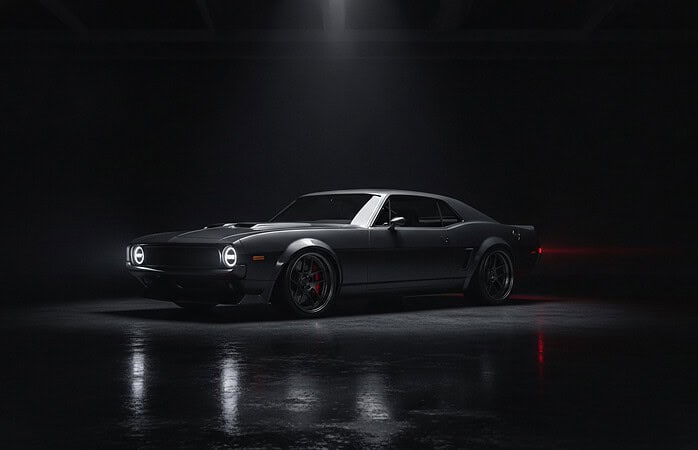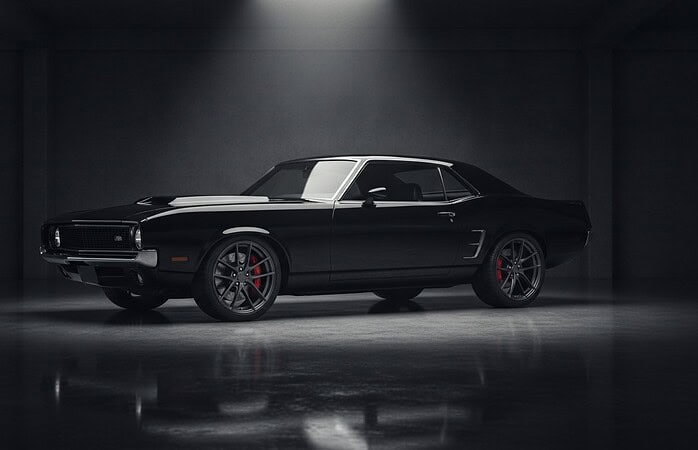

The five hundred dollar junkyard engine swap is a ghost story told around shop heaters, not a reality for the discerning collector in 2026. You adore the timeless silhouette of your vintage icon, yet the temperamental soul of an aging engine often keeps it confined to the garage. It is a frustrating irony. You crave the visceral thrill of the open road, but you require the unwavering reliability of modern fuel-injected engineering. Understanding the true cost of LS swap in classic car projects is the vital first step toward transforming your vehicle into a bespoke piece of functional art.
We promise to demystify the financial landscape of 2026, providing a transparent breakdown that accounts for everything from high-performance crate engines to the intricate wiring of standalone ECUs. You will discover the distinct price tiers separating a budget-conscious DIY build from an elite, professional-grade installation. We provide a comprehensive checklist of components, including cooling systems and transmission adapters, to ensure your investment delivers the refined power and increased market value your classic deserves. This is where your journey from nostalgic preservation to modern performance begins.
Key Takeaways
- Explore how a modern LS conversion transcends a simple engine change to become a complete mechanical evolution of your vintage chassis.
- Analyze the current 2026 market pricing for essential hardware, contrasting the economy of salvage yard donor engines with the prestige of high-performance crate options.
- Understand why professional engineering and bespoke fabrication are the primary drivers of a project’s quality and its final operational reliability.
- Calculate the comprehensive cost of LS swap in classic car builds by weighing the hidden risks of DIY assembly against the precision of an elite professional workshop.
- Assess the long-term return on investment, focusing on how modernized performance and daily-driver dependability significantly enhance a classic car’s market value.
Defining the LS Swap: More Than Just an Engine Change
A vintage machine is a vessel for memories, a masterpiece of chrome and steel that defines an era. Yet, the mechanical soul beneath the hood often fails to meet the demands of the modern road. This is where the concept of What is an LS Swap? enters the conversation. It is not merely a mechanical substitution. It is a transformative surgery that marries the timeless elegance of the 1960s with the relentless precision of 21st-century engineering. This process represents the ultimate evolution of the restomod, treating the car as a bespoke piece of functional art rather than a static museum piece.
When considering the cost of LS swap in classic car projects, many enthusiasts underestimate the depth of the integration. A professional build is far more than a simple engine replacement; it is a holistic synchronization of the drivetrain, fuel system, and electrical architecture. To truly understand the scope of this modernization, one must look beyond the block and into the intricate web of components that make a high-performance vehicle possible in 2026.
To better understand this concept, watch this helpful video:
Why the LS Architecture Dominates the Restomod Scene
The GM LS platform has earned its status as the gold standard for vintage chassis modernization. Its compact, all-aluminum design offers an unmatched power-to-weight ratio, allowing builders to extract immense performance without upsetting the delicate balance of a classic vehicle. Modern fuel injection eliminates the temperamental nature of carburetors, providing turn-key reliability and consistent power delivery in any climate. The aftermarket support for this platform is unparalleled, offering everything from bespoke accessory drives to specialized oil pans designed to clear vintage crossmembers. This ecosystem simplifies the meticulous restoration process, ensuring that modern capability does not come at the expense of heritage aesthetics.
The Spectrum of Swap Complexity
Total investment is dictated by three primary factors: the choice of powerplant, the complexity of the fabrication, and the level of professional integration. A direct-fit application in a popular chassis like a C10 or a Chevelle involves predictable labor hours. Conversely, a unique European or obscure domestic icon may require extensive custom-engineered engine bay modifications. The role of the transmission is equally critical, as modern overdrives often require floor pan alterations to accommodate their larger casings. These mechanical intricacies are what ultimately define the final cost of LS swap in classic car builds, turning a simple engine change into a complete vehicle metamorphosis. Every detail, from the cooling system capacity to the standalone ECU tuning, contributes to the final price and the ultimate driving experience.
The Component Breakdown: Hard Part Costs and Sourcing Options
The engine is the heart of the machine. It is the source of both power and personality. Selecting the right powerplant is the most significant decision in your build. While salvage yard pulls offer an entry point for budget-conscious projects, elite builds often require the uncompromising standards of a factory-new crate engine. Calculating the total cost of LS swap in classic car builds requires a granular look at the hardware, starting with the block itself. Every component must be curated to ensure the final product is a cohesive masterpiece of engineering.
Sourcing the Engine: New vs. Used Financials
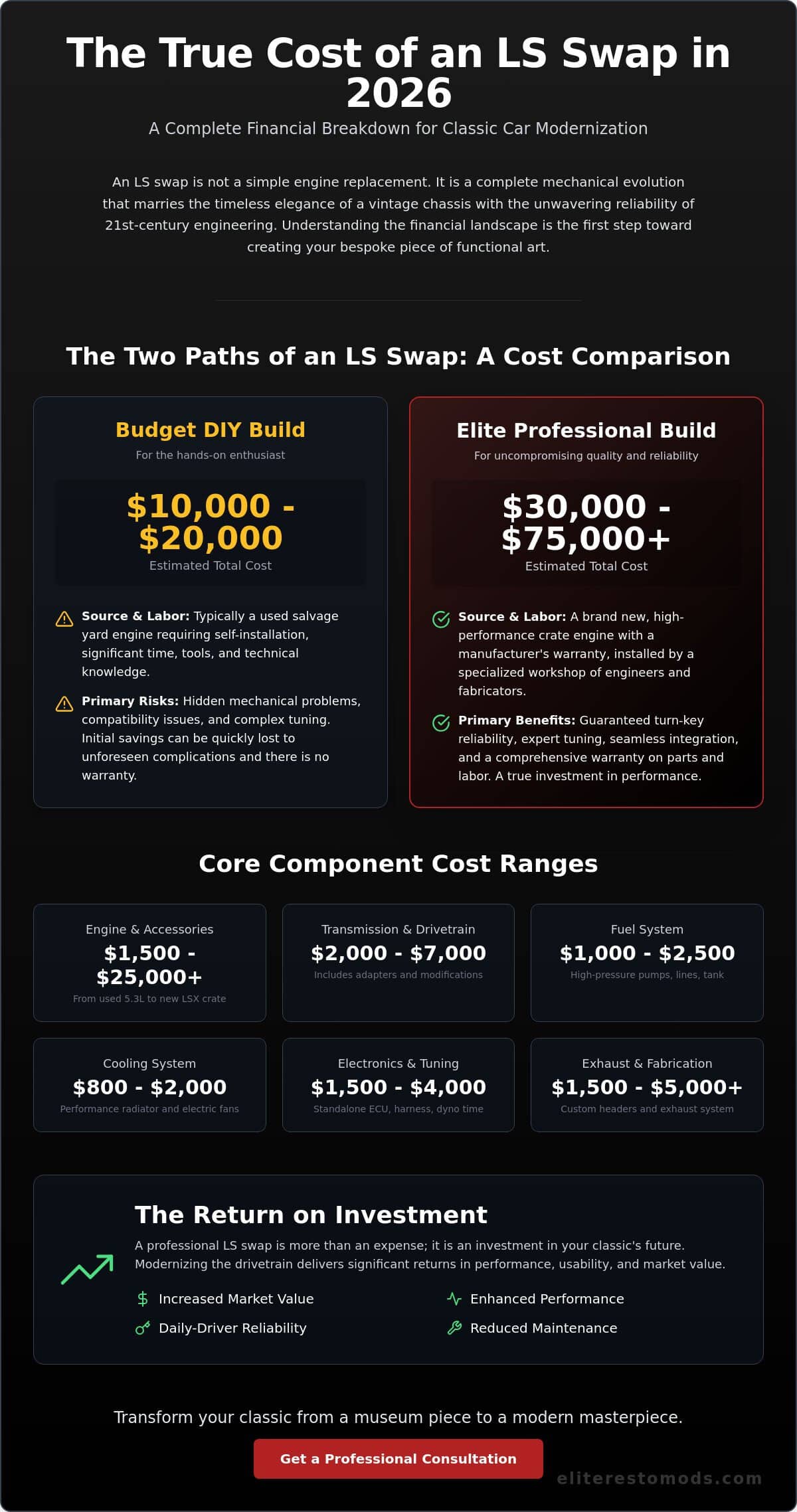
The allure of a used 5.3L engine, often found between $500 and $1,500, is undeniable for many enthusiasts. However, the true price of a salvage unit often balloons after accounting for cleaning, new seals, and rigorous compression testing. Industry experts often cite professional LS swap costs as a reflection of the meticulous testing required for high-mileage units. For those seeking the pinnacle of reliability, a brand new LS3 430HP complete crate engine carries a market price of approximately $10,620. Stepping up to the visceral LS376/525 6.2L variant requires an investment of roughly $12,197. This premium provides a factory warranty and the confidence that every internal component is pristine. For those seeking a turn-key solution that bypasses the logistical hurdles of parts sourcing, exploring custom build services ensures every component is curated for peak performance.
Essential Support Systems and Installation Kits
Modern power requires a sophisticated support network. A high-quality standalone wiring harness typically costs between $400 and $800, providing the necessary bridge between vintage gauges and modern sensors. Fuel systems are another critical variable. High-pressure EFI lines, modern pumps, and baffled fuel tanks are essential for consistent performance. This infrastructure is often paired with specialized components like the Holley 302-2 oil pan, priced near $460, which is necessary to clear the crossmembers of many vintage chassis. The transmission selection further dictates the budget. While a used 4L60E automatic might range from $500 to $1,500, a high-performance T56 manual transmission can cost between $2,500 and $5,000. In 2026, many builders are also turning to the ZF 8HP 8-speed automatic for its rapid shifting and efficiency, with used units costing between $400 and $800 before required adapter kits. Every choice impacts the final harmony of the build.
Professional Labor and the Cost of Mechanical Excellence
While hardware components have relatively fixed market values, the professional labor involved is the most significant variable in any restomod budget. It is the invisible force that transforms a collection of parts into a cohesive driving machine. This phase represents the transition from a simple engine change to an elite automotive evolution. When calculating the total cost of LS swap in classic car builds, one must account for the specialized skill set required to bridge the gap between two eras of technology. Achieving a factory-plus finish requires hundreds of hours of meticulous assembly, ensuring every bolt is torqued to spec and every fluid line is routed with aesthetic intent.
The cost of LS swap in classic car projects often scales with the level of integration required. Beyond the physical mounting of the block, professional shops focus on the hidden details that define a world-class build. When analyzing the component costs for an LS swap, it becomes clear that hardware is only half the equation. This includes the art of the wire tuck, where a modern standalone harness is delicately integrated into the vintage chassis to maintain a clean, uncluttered engine bay. Final calibration on a chassis dyno is the closing act, where air-fuel ratios and timing maps are optimized for smooth, turn-key driveability in any environment.
The Fabrication and Engineering Phase
Engineering a modern powertrain into a vintage space is rarely a bolt-in affair. Master builders must often address firewall clearances and steering column interference, requiring surgical precision with a TIG welder. High-torque LS engines also demand custom driveshaft measurements and balancing to prevent driveline vibration. Crucially, this increase in velocity necessitates a parallel upgrade in stopping power, as vintage drum brakes are fundamentally incapable of managing modern horsepower levels safely.
The Importance of a Fully Sorted Build
There is a vast chasm between a vehicle that merely runs and one that is truly reliable. At Elite Restomods, the meticulous QA process ensures that every custom build undergoes rigorous testing to eliminate the issues often found in lesser shops. This dedication to excellence guarantees that your vintage icon is ready for a cross-country tour the moment it leaves the trailer. A fully sorted build represents the definitive standard where mechanical perfection meets aesthetic grace, ensuring the vehicle performs as an investment-grade asset rather than a project in progress.
Budget DIY vs. Elite Professional Builds: A Cost Comparison
The journey from a garage project to a world-class masterpiece is paved with financial decisions that dictate more than just the bottom line. While many enthusiasts are lured by the prospect of a five thousand dollar DIY build, the actual cost of LS swap in classic car projects often reveals a different story when the final bolt is turned. There is a fundamental distinction between a car that simply moves under its own power and one that has been fully sorted to an investment-grade standard. Choosing the right path requires a cold, hard look at the disparity between hobbyist effort and professional mechanical excellence.
The DIY Reality Check
The DIY path is often a trial by fire. Beyond the engine and transmission, a first-time builder must invest in specialized diagnostic equipment and high-end fabrication tools to ensure a safe installation. It’s common for experienced hobbyists to spend over 150 hours on a swap. Without a proven template, mistakes are inevitable. Research suggests that builders should budget an additional 20 to 30 percent for unforeseen expenses like incorrect fittings, fluid leaks, and wiring rework. These hidden costs often turn a budget project into a multi-year ordeal that risks total abandonment before the first test drive.
The Professional Advantage
Professional builds offer a level of precision that a home garage simply cannot replicate. An Elite Certified Restomod is not just a collection of parts; it is a documented mechanical journey. This documentation is vital. It transforms the vehicle from a hobbyist’s experiment into a tangible, liquid asset. Appraisal experts and insurance providers prioritize professional documentation over home-built projects, which directly translates to higher valuation and better coverage. Access to proprietary installation templates and high-performance components ensures that the build is finished correctly the first time, backed by a comprehensive warranty on both parts and labor.
Mid-tier shop builds provide a middle ground, typically falling between seven thousand and twelve thousand dollars for the mechanical assembly. However, these builds often stop at basic functionality. They frequently lack the artisanal finishes and comprehensive engineering of a top-tier build. The Elite Certified standard goes further, treating the engine bay as a gallery space where every line is symmetrical and every finish is durable. This level of perfectionism ensures that the vehicle is not only a joy to drive but a pride to display at the highest levels of automotive competition. Discover the difference that professional curation makes by viewing our current inventory of Elite Certified Restomods.
Evaluating the Return on Investment for Your Classic Car
The true measure of an automotive investment is found in the intersection of market value and personal utility. An engine swap is not merely an expense. It is a strategic enhancement that preserves the soul of a vintage icon while providing the mechanical fortitude of a modern supercar. When calculating the total cost of LS swap in classic car projects, one must look beyond the initial invoice to the long term appreciation of the vehicle. A car that remains trapped in the garage due to an unreliable powertrain is a liability; a car that performs with turn-key precision is a liquid asset.
In the current market, the demand for high-performance, reliable vintage vehicles has reached an all-time high. Collectors are no longer satisfied with static displays. They seek the visceral thrill of the drive without the anxiety of mechanical failure. This shift in buyer behavior has made the LS platform the preferred choice for those looking to maximize their return. Professional consignment program services frequently prioritize these modernized builds because they represent a lower risk and a higher desirability for the modern enthusiast.
Resale Value and Market Trends in 2026
The collector car landscape in 2026 has witnessed a definitive move toward the “driver’s classic.” While numbers-matching purism still exists, the premium paid for a fully sorted, professional restomod often exceeds the cost of the modifications themselves. Buyers are increasingly willing to pay for the peace of mind that comes with modern fuel injection, improved cooling, and contemporary electronics. The Elite Restomods inventory serves as a benchmark for this trend, showcasing how meticulous engineering and bespoke finishes command top-tier market prices. A documented, high-quality build ensures that the cost of LS swap in classic car applications is recouped through significantly higher appraisal values during resale.
The Final Verdict: Is it Worth the Expense?
Deciding to modernize your vintage asset is a choice between preservation and participation. The emotional value of a vehicle that starts every time you turn the key is difficult to quantify, yet it remains the most compelling reason for the swap. You’re not just buying an engine; you’re buying the freedom to enjoy your car on your own terms. Whether it’s a cross-country tour or a spirited weekend drive, the reliability of the LS platform ensures that your investment provides a consistent return in the form of pure driving pleasure. To understand how we achieve this level of mechanical perfection, you can learn more about our meticulous approach to the custom build process. Ultimately, the fusion of historical design and modern capability creates a timeless machine that is as rewarding to own as it is to drive.
Elevating Your Classic Icon for the Modern Era
Modernizing a vintage masterpiece is a transformative journey that extends far beyond the engine bay. You’ve discovered that the cost of LS swap in classic car projects represents a calculated investment in both visceral performance and long term marketability. By choosing professional engineering over budget compromises, you ensure that your vehicle remains a reliable participant in the modern world rather than a static relic of the past. Every detail matters. From the precision of the electrical integration to the final dyno calibration, the goal is a seamless marriage of heritage and power.
We are here to bridge the gap between your dream and a high performance reality. Every Elite Certified vehicle in our collection undergoes a rigorous 100-point inspection to guarantee mechanical perfection. To make your acquisition seamless, we offer specialized classic car financing for high value builds and provide nationwide enclosed transport for all custom commissions. Your journey toward a fully sorted, investment grade icon is ready to begin.
View our current inventory of Elite Certified LS-swapped restomods and experience the pinnacle of modern restomod craftsmanship today. Your vision of a reliable, high performance classic is within reach.
Frequently Asked Questions
How much does a basic LS swap cost for a Chevy C10 or Camaro?
A mid-range installation for a popular chassis like a Chevy C10 or Camaro typically ranges from $7,000 to $12,000 for a functional build. However, an elite, professional-grade project often exceeds $30,000 once you factor in high-performance crate engines and bespoke fabrication. The total cost of LS swap in classic car applications depends heavily on the level of finish and the choice between used components or brand-new hardware.
Can I use my original transmission with an LS engine swap?
You can utilize an original transmission with an adapter kit, though this is rarely the optimal choice for a high-performance build. Modern LS engines produce torque levels that often overwhelm vintage gearboxes. Upgrading to a contemporary 4L60E automatic or a T56 manual ensures your drivetrain can handle the increased power while providing the benefit of an overdrive gear for comfortable highway cruising and improved fuel efficiency.
Will an LS swap decrease the value of my numbers-matching classic car?
Replacing the original drivetrain in a rare, numbers-matching survivor may decrease its value among a small group of purist collectors. Conversely, the broader modern market often pays a significant premium for the reliability and performance of a professional restomod. Many owners find that the increased utilization and driving enjoyment far outweigh any potential loss in historical purity, transforming a static asset into a bespoke piece of functional art.
How long does a professional shop take to complete an LS swap?
A comprehensive, professional-grade installation typically requires between 100 and 150 labor hours to reach a fully sorted standard. While a basic mechanical swap might be completed in a few weeks, a show-quality integration involving custom wiring and fabrication often spans two to four months. This timeline ensures that every system, from the high-pressure fuel lines to the standalone ECU calibration, is meticulously tested for long-term reliability.
What is the most reliable LS engine for a daily driver restomod?
The LS3 6.2L crate engine is widely considered the most reliable and versatile choice for a daily driver restomod in 2026. It offers a perfect balance of 430 horsepower and factory-engineered longevity, making it an ideal candidate for long-distance touring. For those prioritizing efficiency, a refurbished 5.3L truck engine provides a cost-effective alternative that still delivers the turn-key reliability and modern performance expected from the LS platform.
Do I need to upgrade my brakes and suspension when doing an LS swap?
Upgrading your brakes and suspension is essential when introducing the significant horsepower gains of a modern LS powerplant. Vintage drum brakes and soft factory springs weren’t engineered to manage 400 or more horsepower safely. Integrating a modern disc brake conversion and performance-tuned suspension components ensures that your vehicle remains composed under pressure, providing a driving experience that is as safe as it is exhilarating.
Is a crate engine better than a refurbished junkyard engine for my budget?
A brand-new crate engine is generally the superior choice for builders who prioritize a factory warranty and immediate peace of mind. While a used $1,500 salvage yard engine seems attractive, the hidden costs of cleaning, testing, and replacing aged seals often close the price gap quickly. Investing in a new LS3 long block ensures that every internal component is pristine, eliminating the mechanical risks associated with high-mileage donor units.
How does an LS swap affect my classic car insurance and financing options?
Professional installations significantly improve your ability to secure high-value classic car financing and agreed-value insurance coverage. Specialized providers favor documented builds that utilize industry-standard components and professional labor. An Elite Certified build provides the mechanical transparency that underwriters require, often resulting in higher appraised values and more comprehensive protection for your automotive investment compared to a hobbyist-level project.