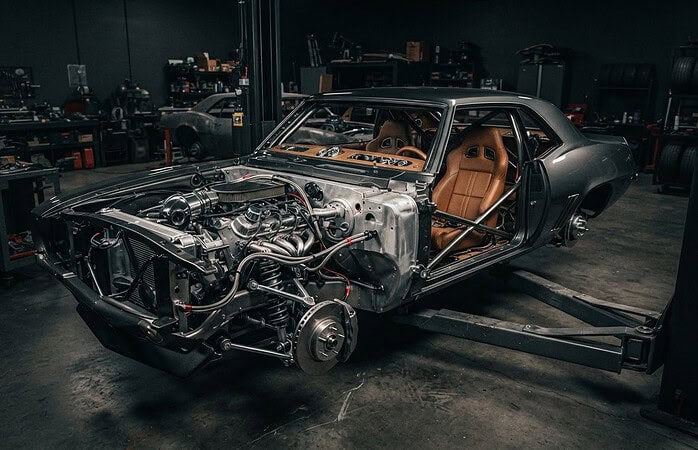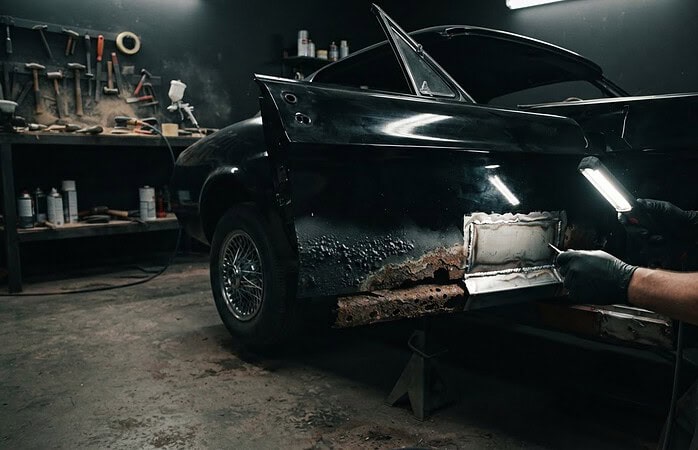

Restomod unreliability is never a flaw of the modern engine itself; it’s a failure of the bridge between vintage iron and digital precision. You’ve invested in the visceral power of a Gen 4 Coyote or an LS376, yet the soul of the machine feels fractured by intermittent electrical ghosts or fuel delivery inconsistencies. It’s a common frustration for those chasing perfection. Troubleshooting modern engine in classic car builds requires moving beyond the wrench and into the realm of the systems architect.
We understand the desire to transform a vintage asset into a bespoke piece of functional art that starts every time you turn the key. This guide provides a systematic diagnostic framework designed to eliminate the project car stigma for good. You’ll learn how to master ECU communication errors, resolve overheating in cramped engine bays, and utilize the latest software like Holley EFI V6 or Haltech NSP to ensure your restomod is truly daily-driver ready. We’ll bridge the gap between heritage design and modern operational reliability, moving your build from the shop floor to the open road with absolute confidence.
Key Takeaways
- Understand why traditional mechanical logic fails when integrating digital precision into vintage iron, requiring a shift in diagnostic philosophy.
- Master the use of modern diagnostic tools and software to communicate directly with the electronic control unit for real-time performance data.
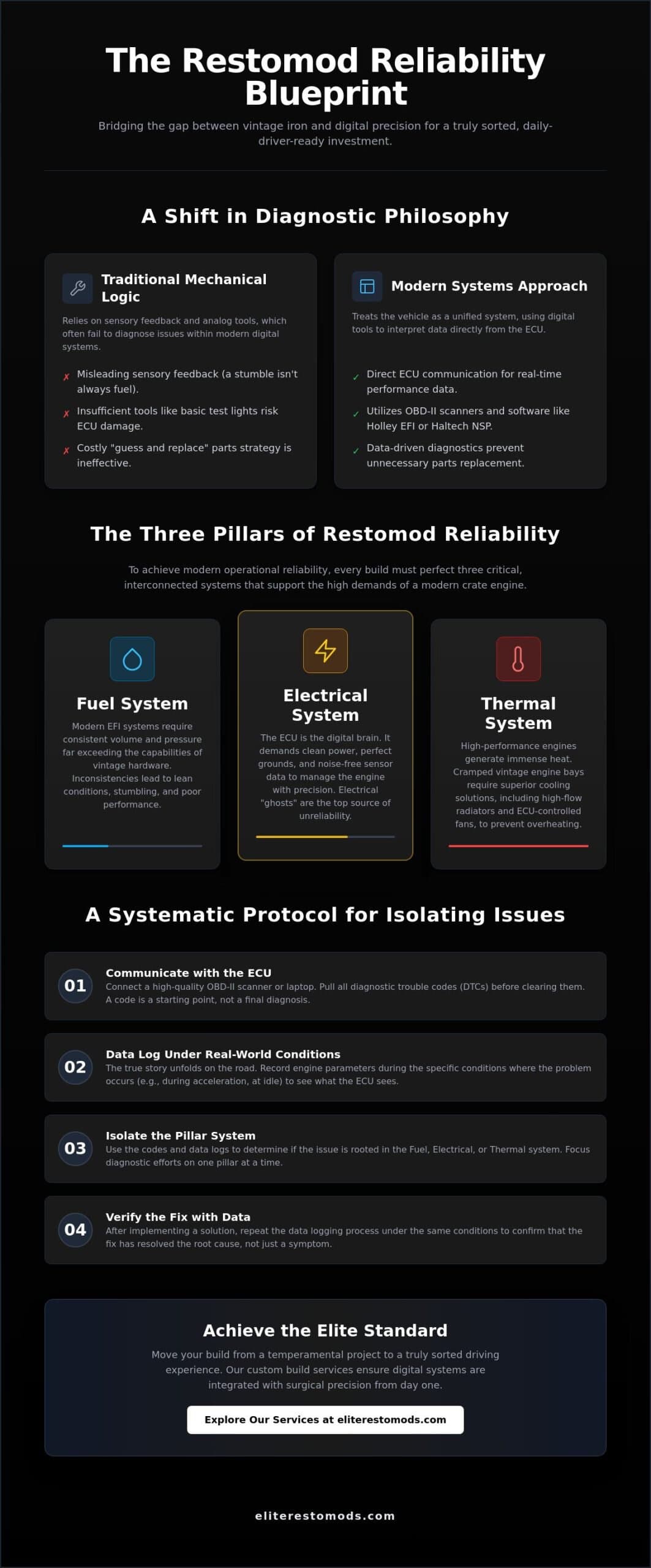
- Focus on the three pillars of restomod reliability to ensure your fuel, electrical, and thermal systems meet the demands of high-performance crate engines.
- Utilize a systematic protocol for troubleshooting modern engine in classic car builds to isolate persistent performance issues with surgical accuracy.
- Learn the elite standards required to transition a temperamental project into a truly sorted, daily-driver-ready investment.
Understanding the Marriage of Heritage and Modern Performance
The allure of a classic silhouette paired with the relentless torque of a contemporary powerplant represents the pinnacle of automotive desire. It’s a transformative journey. This process turns a vintage relic into a bespoke piece of functional art. However, this marriage of heritage and high-performance engineering is far from a simple bolt-on affair. It’s a complex integration of disparate eras. The raw, visceral spirit of the past must coexist with the clinical precision of the 21st century.
Successfully executing modern engine swaps requires more than just mechanical aptitude; it demands the vision of a master builder. The ultimate goal is a fully sorted vehicle. This is a machine that delivers modern operational reliability without sacrificing its soul. Achieving this level of perfection means moving beyond the “project car” mentality and embracing a systematic approach to system harmony.
To better understand the motivation and technical landscape of these complex builds, watch this helpful video:
The Analog vs Digital Divide
In a traditional build, the driver relies on sensory feedback. You feel the throttle cable stretch; you hear the carburetor secondaries open. Modern engines operate on a different plane. Mechanical components now interact with electronic control units that process thousands of data points per second. This digital layer can make sensory feedback misleading. A stumble that feels like a fuel issue might actually be a sensor-induced timing pull. You must treat the car as a complete, unified system where every wire and vacuum line serves the digital brain. Only then can you achieve the visceral thrill of 500 horsepower delivered with the refinement of a modern luxury grand tourer.
Why Traditional Methods Fall Short
Old school mechanical logic often fails when applied to modern EFI systems. A simple test light is no longer a sufficient diagnostic tool for a digital environment. In fact, using one on sensitive ECU circuits can lead to expensive hardware damage. The era of “guessing and replacing” parts is over; it’s a costly path to diagnostic failure. When you’re troubleshooting modern engine in classic car applications, the focus shifts to real-time engine health data. Modern sensors provide a transparent window into combustion. They allow you to see exactly what the ECU sees before you ever turn a wrench. This transition from intuition to information is what defines a truly sorted vehicle. It’s the difference between a car that merely runs and one that provides a reliable investment through our custom build services.
Digital Diagnostics: Decoding the Language of Modern Control Modules
The electronic control unit acts as the silent conductor of your restomod symphony. It manages every spark and pulse of fuel with a speed that makes traditional classic car maintenance look like ancient history. In these high-end builds, the ECU isn’t just a component; it’s the bridge between vintage steel and modern performance. Mastering the language of this control module is essential for anyone serious about troubleshooting modern engine in classic car applications. Data is the new oil. Precision is paramount.
Essential tools for the modern restomod owner extend far beyond the socket set. You need a high-quality OBD-II scanner and a dedicated laptop running the latest software, such as Holley EFI V6 or Haltech NSP. These tools allow you to peer into the mind of the machine. Interpreting fault codes requires a disciplined mind to avoid the parts cannon trap. A code for a lean condition doesn’t always mean a failing sensor; it could be an air leak or a fuel pump struggling to keep pace. For those who demand perfection, our custom build services ensure these digital systems are integrated with surgical precision from day one.
Data logging during real-world driving is where the true story unfolds. An engine might idle perfectly in the garage but stumble under the heat and vibration of a mountain pass. By recording logs during these specific events, you can pinpoint the exact millisecond a sensor drops out or timing is pulled. This is the difference between guessing and knowing.
Harnessing the Power of OBD-II
Integrating a diagnostic port into a vintage dashboard requires a balance of aesthetics and accessibility. Once installed, it provides access to critical metrics like Short Term and Long Term Fuel Trims. These percentages tell you exactly how much the ECU is compensating for real-world conditions. If your Long Term Fuel Trims are consistently high, your system is fighting an underlying mechanical issue that no amount of tuning can fix. Live data allows you to spot intermittent sensor dropouts that never stay long enough to trigger a permanent fault code.
CAN Bus Communication and Wiring Integrity
Modern automotive communication networks, or CAN Bus systems, are incredibly sensitive to environment. High-quality wiring harnesses are non-negotiable for long-term reliability. We often see builds plagued by “ghosts” that are simply electrical interference from high-voltage ignition components or poorly grounded circuits. A twisted pair of wires isn’t just a design choice; it’s a shield against digital noise. Protecting the integrity of these signals ensures that the communication between your engine, transmission, and dashboard remains flawless, preserving the bespoke experience of a truly elite machine.
The Three Pillars of Restomod Reliability: Fuel, Electrical, and Thermal
The transition from a carbureted relic to a high-output crate engine is a leap across decades of technology. While the electronic control unit handles the complex calculations, it remains entirely dependent on the physical environment you provide. Reliability is not a luxury; it’s an engineering requirement. Most failures encountered when troubleshooting modern engine in classic car builds stem from a fundamental mismatch between 50-year-old chassis design and the demands of 2026-spec performance hardware. To achieve a truly sorted result, you must perfect the foundations: fuel, electrical, and thermal systems.
A modern engine swap is only as good as the infrastructure supporting it. Professional automotive service technicians often find that intermittent tuning issues are actually physical system failures in disguise. By establishing a baseline of perfection in these three areas, you eliminate the variables that lead to roadside frustration. This is the hallmark of our meticulous build process. Each system must be treated as a bespoke installation, not a generic retrofit.
Precision Fuel Delivery
Traditional vintage tanks were never designed for the 58 PSI or higher required by modern electronic fuel injection. High-pressure EFI demands a constant, aerated-free supply of fuel. Without baffled tanks, aggressive cornering or acceleration can cause fuel starvation, leading to instant lean conditions and potential engine damage. Troubleshooting vapor lock often reveals inadequate fuel pump voltage or poor line routing near heat sources. You must ensure your high-pressure pump receives a consistent 13.5 to 14 volts to maintain the flow rates necessary for peak performance. Anything less is a compromise that risks the soul of the build.
The Science of Grounding
Electrical grounding is the silent killer of modern engine performance. While a vintage starter motor might tolerate a loose chassis ground, a modern ECU is hyper-sensitive to electrical noise. Digital signals travel in millivolts; a single ohm of resistance can corrupt critical data from oxygen sensors or crank position sensors. You must create a common ground plane. This means heavy-gauge, dedicated cables connecting the engine block directly to the frame and the body. Identifying dirty power sources, such as unshielded alternator wires or poorly suppressed ignition coils, is vital to preventing the digital interference that disrupts sensor signals and causes phantom misfires.
Managing the Heat
High-horsepower engines generate immense thermal energy. In the restricted engine bays of classic muscle cars or vintage trucks, this heat has nowhere to go. Upgrading to high-efficiency aluminum radiators paired with high-CFM electric fans is non-negotiable. Effective thermal management also requires a strategic look at engine bay packaging. You must ensure adequate airflow both into and out of the bay. Protecting sensitive electronics and wiring harnesses from manifold and exhaust heat with aerospace-grade shielding is the final step in ensuring your high-performance investment doesn’t succumb to heat soak during a spirited summer drive.
A Systematic Protocol for Isolating Persistent Performance Issues
Mastering the intersection of vintage steel and digital performance requires more than just mechanical intuition. It demands a disciplined diagnostic framework. When troubleshooting modern engine in classic car builds, the goal is to move from broad observation to surgical isolation. A master builder doesn’t just fix a symptom; they identify the root cause to ensure the integrity of the entire machine. This methodical rigor is what separates a temperamental project from a bespoke masterpiece. If you’re ready to move beyond the frustration of endless troubleshooting, explore our custom build services to see how we engineer reliability from the first bolt.
The protocol for excellence follows five definitive steps:
- Step 1: Reproduce the symptom. You must create controlled conditions where the failure occurs consistently.
- Step 2: Isolate the subsystem. Determine if the fault lies within Air, Fuel, Spark, or Control modules.
- Step 3: Perform a physical inspection. Check every connection and ground for mechanical integrity.
- Step 4: Validate with data. Use your digital tools to confirm that sensor readings match your mechanical suspicions.
- Step 5: Verify the fix. A comprehensive test drive under varying loads is the only true confirmation of success.
The Art of Symptom Reproduction
Creating a test environment that mimics the failure state is critical. Many restomods suffer from heat-soak issues that only appear after thirty minutes of spirited driving. You must replicate these thermal conditions in the shop to see how the ECU reacts when engine bay temperatures climb. For high-load troubleshooting, a chassis dyno provides a safe, controlled way to monitor sensor data at wide-open throttle. This approach eliminates the variables of the open road, allowing you to focus entirely on the machine’s heartbeat.
Isolating Digital vs Mechanical Failures
Determining whether a misfire is a physical spark plug failure or a software map issue is a common hurdle. You must test mechanical fuel pressure against the ECU’s internal sensor readings to ensure they align. A vacuum leak is a physical flaw, yet it can confuse modern oxygen sensors into adding excessive fuel, creating a digital rich condition. By applying the “half-splitting” method to automotive subsystems, you can quickly determine if the problem is a hardware defect or a digital communication error, preserving the refined driving experience you’ve worked so hard to create.
The Elite Standard: Achieving a Truly Sorted Driving Experience
A fully sorted restomod is the ultimate realization of automotive excellence. It’s a vehicle where the dialogue between vintage aesthetics and modern performance is seamless. For many enthusiasts, the journey of troubleshooting modern engine in classic car projects feels like an endless loop of minor adjustments and mechanical compromises. However, the elite standard demands more. A car isn’t truly sorted until every system operates in perfect harmony, providing a driving experience that’s as predictable as it is exhilarating. This is the distinction between a project that’s merely finished and a curated asset that represents a reliable investment. It’s the difference between a machine you hope will start and one you know will perform.
Achieving this level of perfection requires a transition from builder to curator. It involves a relentless pursuit of system harmony where the raw, visceral power of a modern crate engine is tempered by the refined comfort of a bespoke interior. We don’t just build cars; we create functional art designed to be utilized and enjoyed on the open road. By the time a vehicle earns its place in our collection, the frustrations of troubleshooting modern engine in classic car integration have been engineered out of the equation. The result is a machine that honors its heritage while embracing the absolute confidence of 21st-century engineering.
The Importance of Professional Calibration
Professional calibration serves as the final, critical bridge in this transformative process. Most builders stop at a base map. They leave the engine’s potential locked behind generic software settings that don’t account for the unique variables of a custom chassis. A master-built powertrain requires custom tuning that respects specific altitudes, local fuel quality, and your individual driving style. This level of meticulous detail ensures longevity and driveability. It provides the peace of mind that comes from knowing your ECU is perfectly synced with the mechanical heart of your machine. It’s the final polish on a high-performance masterpiece.
Investing in Reliability
Choosing an Elite Certified Restomod means bypassing the traditional pitfalls of the secondary market and the unreliability of “project cars.” We treat every build as a transformative journey. You’re invited to explore our curated inventory of fully sorted vehicles to find a machine that’s truly ready for the open road. Our commitment to excellence is reflected in our meticulous build process, where no detail is too small to be overlooked. We stand as the bridge between your long-held dream and a tangible, high-performance reality, ensuring your investment is as reliable as it is breathtaking.
Master the Open Road
The journey from a temperamental project car to a truly sorted masterpiece is defined by the transition from mechanical guesswork to systematic precision. By mastering the intersection of high-pressure fuel delivery, digital signal integrity, and thermal management, you move beyond the frustration often found when troubleshooting modern engine in classic car builds. You’ve learned that a reliable restomod isn’t just a collection of parts; it’s a unified system where every digital pulse and mechanical rotation works in absolute harmony.
Elite Certified Restomods represent the pinnacle of this perfectionist philosophy. Our specialized master builders leverage decades of integration experience to ensure every vehicle survives a rigorous quality assurance process. These are investment-grade assets designed for the visceral thrill of daily driving, offering a seamless bridge between heritage and modern capability. It’s time to stop wrenching and start driving.
Discover our inventory of fully sorted, investment-grade restomods to find a machine that finally matches your vision. Your dream of a high-performance reality is closer than you think.
Frequently Asked Questions
Why does my restomod run great when cold but stumble when hot?
Stumbling when hot often indicates heat soak affecting sensitive electronic components or the fuel system. Modern ECUs may pull timing if intake air temperatures or coolant levels exceed specific thresholds. If your fuel lines are routed too close to exhaust headers, you might experience vapor lock. This starves the engine of the high-pressure liquid fuel it requires for consistent performance, a common hurdle in vintage engine bays.
How do I know if my modern engine issue is mechanical or electronic?
You can distinguish between mechanical and electronic issues by utilizing real-time data logging during a failure event. If the ECU reports a steady sensor signal while the engine physically misfires, the fault is likely mechanical, such as a fouled spark plug. Erratic data readings that precede a performance drop usually point toward a sensor or wiring harness failure. Data logging removes the guesswork from the diagnostic process.
Can I use a standard OBD-II scanner on my classic car engine swap?
You can use a standard OBD-II scanner provided your modern wiring harness includes a correctly pinned diagnostic port. Most high-end aftermarket harnesses used for troubleshooting modern engine in classic car builds come equipped with this feature. It allows you to read fault codes and monitor live data streams just as you would with a contemporary luxury vehicle, providing a window into the engine’s brain.
What are the most common sensors to fail on a modern engine swap?
Oxygen sensors and Mass Air Flow sensors are the most frequent points of failure in custom builds. These components are highly sensitive to their environment; an O2 sensor can be poisoned by excessive silicone sealant, while a MAF sensor is easily disrupted by turbulent airflow in a custom-fabricated intake. Ensuring proper placement and a clean environment is vital for the long-term reliability of these sensitive digital components.
Why is my modern engine swap getting poor gas mileage in a classic car?
Poor fuel economy in a modern swap is usually the result of an unrefined base map or improper drivetrain gearing. While a modern engine is efficient, it can’t overcome the aerodynamic drag of a vintage body if it’s forced to run at high RPMs. A professional calibration is necessary to optimize the air-fuel ratios for your specific build’s weight, ensuring you get the performance you expect without excessive consumption.
Does my classic car need a different fuel tank for a modern engine?
Your classic car almost certainly requires a specialized fuel tank to support the demands of a modern engine swap. Vintage tanks lack the internal baffling needed to prevent fuel slosh, which causes high-pressure EFI pumps to suck air during cornering. A dedicated EFI tank with an internal pump and reservoir ensures a consistent, high-pressure supply that protects your engine from lean-out conditions and potential hardware damage.
How much does it cost to have a professional troubleshoot my restomod?
Professional diagnostic services typically align with industry shop rates, which range from $75 to $200 per hour as of June 2026. The total cost depends on the complexity of the integration and whether the issue is a simple sensor swap or a deep-rooted wiring ghost. Investing in expert diagnostic time often saves money by preventing the unnecessary replacement of expensive performance components through a more disciplined approach.
What is a “fully sorted” restomod and why does it matter?
A fully sorted restomod is a vehicle where the transition from heritage design to modern capability is complete and verified. It matters because it transforms a collection of high-end parts into a reliable, daily-driver-ready investment. When troubleshooting modern engine in classic car applications is finished, the car should operate with turn-key confidence, free from the intermittent failures that plague many unfinished or poorly integrated project cars.