
The most enclosed option isn’t automatically the best. The pros and cons of classic car bubble storage depend on how the bubble handles airflow and moisture, while climate-controlled indoor storage protects the vehicle in a different way. Neither option eliminates the need to consider temperature changes and condensation.
A bubble circulates air around a stored car, which may help limit condensation on the vehicle. But storage costs can go beyond the headline rate: access, electricity and facility fees can affect the monthly total. Compare the full arrangement, not just the space.
This guide covers bubble storage’s advantages and drawbacks, extra fees to consider, and how temperature swings can lead to condensation. It also compares a bubble with indoor storage, so you can weigh convenience, conditions and ongoing costs before choosing where your classic belongs.
Key Takeaways
- Compare a storage bubble with indoor options by considering airflow, moisture control, access and the protection each offers your vehicle.
- Build a realistic monthly storage budget by accounting for facility fees and practical needs such as power and access.
- Understand how temperature shifts and humidity can contribute to condensation, and why the storage environment matters.
- Consider climate-controlled storage for a classic that needs a more managed environment, or the Consignment Program when you’re ready to sell.
Indoor storage options for classic cars
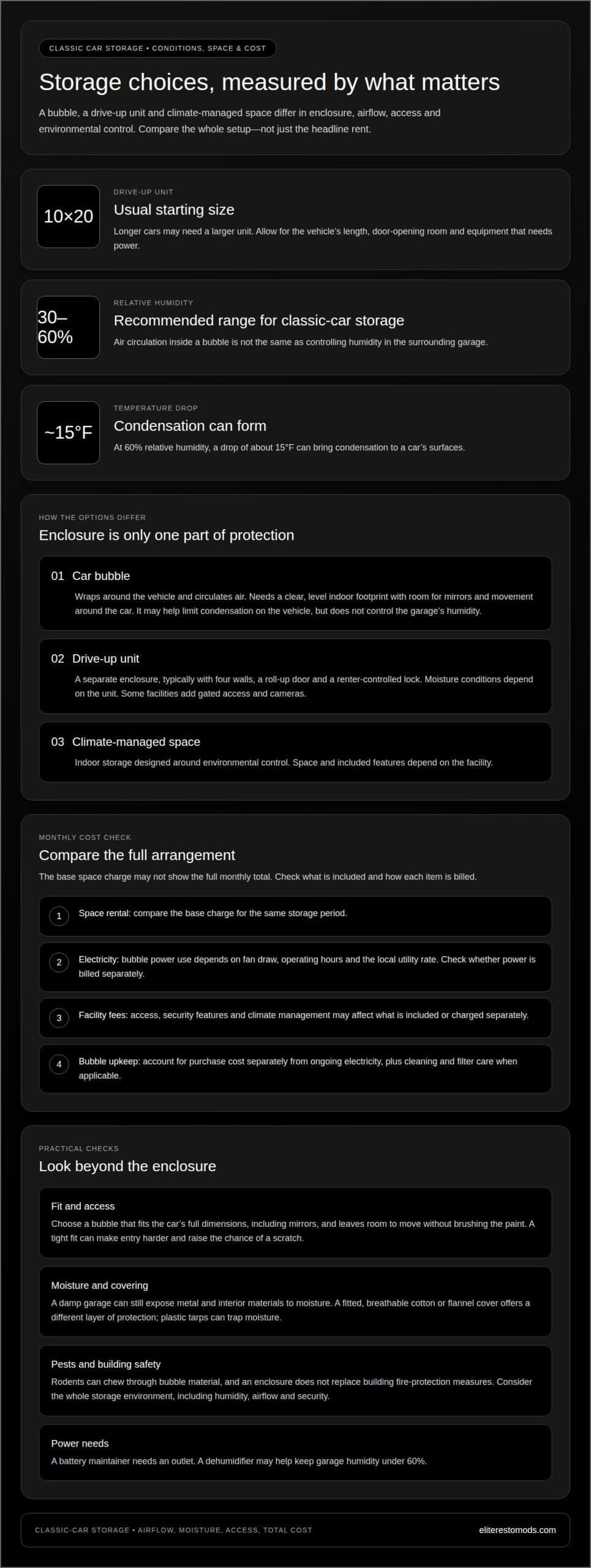
Indoor options range from an individual car bubble to a rented drive-up unit or climate-managed space. Compare enclosure, airflow, access and moisture conditions before choosing a place for your vehicle.
Long-Term Safety and Fire Protection
A car bubble encloses the vehicle and circulates air; it may also cushion a light impact, such as a broom falling against it. Rodents can chew through the material, however, so the enclosure alone won’t resolve pest risks. Nor does a bubble replace fire-protection measures in the building. For long-term storage, consider the whole environment, including humidity, airflow and security.
Bubble Sizing and Space Needs
Choose a bubble around the car’s full dimensions, allowing room for its mirrors and space to move around the vehicle without brushing the paint. A tight fit can make entry harder and increase the chance of a scratch. The bubble’s footprint also needs a clear, level area indoors. For a rented unit, a 10×20 storage unit is the usual starting size, though longer cars may need a larger unit.
Drive-up self-storage gives the renter a separate enclosure: typically four walls, a roll-up door and a renter-controlled lock. Some facilities add gated access and cameras. A climate-managed indoor space prioritizes the storage environment, while a bubble provides an enclosure around the car. Recommended relative humidity for classic-car storage generally falls between 30% and 60%.
| Option | Enclosure | Moisture and airflow | Access and space |
|---|---|---|---|
| Car bubble | Wraps around the vehicle | Circulates air | Needs a clear indoor footprint |
| Drive-up unit | Four walls, roll-up door, renter-controlled lock | Depends on the unit | 10×20 is a usual starting size |
| Climate-managed space | Indoor storage | Designed around environmental control | Space depends on the facility |
Before choosing a unit, account for the car’s length, door-opening room and any equipment that needs power. A battery maintainer requires an outlet, and a dehumidifier may help keep garage humidity under 60%. Choose a bubble for an indoor area where its footprint fits; choose a unit or managed space when the building environment, lockable enclosure or facility access matters more.
Classic-car storage costs
A collector’s monthly storage cost is more than the space rental. Compare the base charge with climate control, electricity, access rules and security features. A drive-up unit may include different services from a managed indoor facility. For a collector car, those differences affect both the monthly bill and storage conditions.
A bubble’s electricity use depends on the fan’s power draw, operating hours and local utility rate. Maintenance may include inspecting the enclosure, keeping air intakes clear, and cleaning or replacing a filter if the model uses one. The purchase cost is separate from ongoing power use. Include both when comparing a bubble with indoor storage.
Facility fees can also change the total. Gated entry, cameras, after-hours access and climate management may affect what’s included in a storage arrangement. Check how electricity is billed and whether access or security features carry separate charges. A written breakdown makes it easier to compare the same storage period and services across options.
- Separate the monthly space charge from electricity and facility fees.
- Include bubble upkeep, such as cleaning and filter care when applicable.
- Compare what each option provides for access, security and environmental control.
For example, a low base rent may not mean the lowest overall cost if power or access is billed separately. A bubble also uses electricity, and its maintenance needs depend on the design and operating environment. Compare the full arrangement, not just its advertised starting charge.
For a classic that needs a managed indoor environment, climate-controlled storage is an alternative to running a bubble in a private garage. Before deciding, compare the conditions and costs included with indoor storage against the bubble’s power and upkeep.
Condensation from temperature changes
Temperature shifts can turn moisture in garage air into condensation on a classic car. A bubble moves air around the vehicle, but the room’s climate still affects the result.
Condensation and Corrosion Prevention
At 60% relative humidity, a temperature drop of about 15°F can bring condensation to a car’s surfaces. A bubble may help keep condensation off the vehicle, but it should not be treated as a way to control moisture throughout the garage. Understanding the classic car bubble storage pros and cons means considering both the enclosure and the room where it sits.
A damp garage can still expose metal and interior materials to moisture, even when air is moving around the car. A fitted, breathable cotton or flannel cover offers a different layer of protection. Plastic tarps can trap moisture, so they’re not a substitute for breathable coverage.
Potential Damage to Paint, Tires, and Trim
A bubble doesn’t inherently damage paint, tires or trim. Dust or grit trapped between a surface and a cover can scratch paint if either shifts, so store the vehicle clean and dry. Make sure the enclosure doesn’t press against delicate trim, and consider tire preparation separately from the choice of covering.
Rodents can chew through bubble material and reach a stored car. That makes the garage itself part of the decision, especially when wiring, upholstery or rubber components are vulnerable. The pros and cons of classic car bubble storage therefore depend on the surrounding space, not just the bubble’s contact with the finish.
Ventilation and Humidity Control
A storage bubble’s fan circulates air around the vehicle, which can reduce stagnant pockets. Air movement isn’t the same as humidity control, however, and it doesn’t regulate the garage’s temperature. Climate-managed storage addresses the indoor environment, not just airflow around the car.
Keep the bubble’s airflow unobstructed and store the car dry. After a sharp temperature change, check for damp surfaces or moisture in the garage. If the room remains humid, address that condition directly; circulation alone can’t remove moisture from the entire space.
Do car storage bubbles prevent rust, dust, mold, and corrosion?
A bubble can shield a classic from airborne dust and incidental contact, but it doesn’t remove moisture from the storage environment. Rust and corrosion still depend on moisture reaching metal, so the garage’s condition and the car’s preparation matter.
Concrete floors deserve attention. A sealed plastic vapor barrier laid over concrete helps block moisture from below. The National Ready Mixed Concrete Association says soil beneath a slab on grade typically sits near 100 percent relative humidity. That moisture source matters even when a bubble circulates air around the vehicle.
Mold is a separate concern. Upholstery, carpet and foam padding can develop mold within days to weeks when humidity isn’t dried out. One account described mold damage after a classic Rolls was sealed in a capsule for six months of indoor winter storage. An enclosure alone won’t address moisture already inside the car.
- Clean and dry the car before storage, including its interior and undercarriage.
- Use a sealed vapor barrier over concrete to help limit moisture rising through the floor.
- Keep the storage space dry and maintain airflow around the vehicle.
Dust protection differs from corrosion prevention. A bubble creates a barrier against settling dust, while limiting corrosion requires attention to damp surfaces and moisture beneath the car. A breathable fitted cover can protect the finish inside the bubble; plastic sheeting directly over the car may trap moisture.
Dry conditions can change the equation. One owner reported storing two vehicles for 12 months and 16 months in a dry climate. That example highlights why the surrounding environment matters alongside the enclosure. A bubble doesn’t eliminate every risk, especially when moisture is already trapped inside or the building stays damp.
For a classic that needs a more managed environment, explore climate-controlled storage as an alternative to relying on a bubble alone.
Elite Restomods: Consignment Program
If you decide to sell rather than keep storing your classic, Elite Restomods’ Consignment Program offers a natural next step. After weighing bubble and indoor storage, you may shift from protecting the car to planning its next chapter. Consignment gives you a way to pursue that sale through Elite Restomods.
If you’re keeping the vehicle, Elite Restomods’ Climate-Controlled Storage offers an indoor alternative when a garage bubble doesn’t suit your priorities. The choice depends on whether your immediate goal is managed storage or moving toward a sale. Each path serves a different need, while your plans for the car guide the decision.
If selling your classic is the next step, contact Elite Restomods to discuss the Consignment Program.
Choose storage that supports your next chapter
The right storage choice should serve more than the months your classic sits still. It should fit how you want to use, preserve or eventually part with the vehicle. Weighing the pros and cons of classic car bubble storage can help, but your ownership plans should guide the decision.
If you intend to keep and enjoy the car, consider how its storage needs fit your longer-term plans. If those plans change, Elite Restomods also offers a Consignment Program, Custom Build Services and Elite Certified Restomods. Each offers a different path for a classic, from sale to a custom build or a restomod.
Let the car’s future guide the next move, not just the storage space available today. For help considering a storage option, contact Elite Restomods about storage. Your classic deserves a thoughtful plan for the road ahead.
Frequently Asked Questions
What Is Bubble Storage?
Bubble storage is an enclosure placed around a parked vehicle, usually inside a garage or another covered space. It creates a physical barrier between the car and dust or incidental contact while circulating air around the vehicle. Unlike a building, the bubble doesn’t provide a roof or control the room’s climate. The garage’s condition still matters.
What is the best way to store a classic car?
The best approach is a clean, dry indoor space and preparation suited to the vehicle. Before storage, wash and dry the car, then decide whether to use a battery tender or disconnect the battery. A battery maintainer needs a power outlet. Avoid basic trickle chargers, which can create a fire hazard. The car’s condition and storage duration guide the details.
What is a classic car storage bubble and how does it work?
A classic-car bubble is an enclosure that surrounds a parked car and uses a fan to circulate air inside. The moving air helps reduce stagnant pockets around the vehicle. Unlike a fitted cover, the bubble forms its own enclosure; unlike a storage building, it doesn’t manage the room’s overall climate. The fan also requires electricity.
What are the pros and cons of storing a classic car in an inflatable bubble?
An inflatable bubble can help keep dust and light accidental contact away from a classic, making it useful in a clean indoor garage. Its limitations matter just as much: it won’t fix a damp storage environment or stop rodents from reaching the car. It suits a garage with good conditions, not a space where moisture or pests remain unresolved.
How much do classic car storage bubbles cost in the United States?
The total cost in the United States depends on the bubble’s purchase price, electricity use and ongoing maintenance. Fan power and local utility rates affect operating costs; the enclosure’s size and design affect the initial expense. When comparing it with rented indoor storage, include facility rent, power access and climate-control fees. Compare the full cost over the same storage period.
How do car storage bubbles compare with a garage, car cover, or climate-controlled storage?
A garage provides the building enclosure, while a bubble adds a separate air-circulating barrier around the car. A fitted cover takes less space and shields the finish from dust, but it doesn’t surround the vehicle with circulating air. Climate-controlled storage focuses on the indoor environment itself. Choose according to whether your priority is a surface cover, an enclosure or environmental management.