

The lowest quote may be the wrong choice if the service is unclear or communication is poor. Finding a trustworthy auto transport company means weighing the full offer, not just the price at the bottom of the quote.
Price matters, especially when you’re planning a move or arranging transport for a prized vehicle. But a useful comparison also considers the transport method, pickup expectations, carrier reputation, and how shipment updates are handled.
This guide explains how to compare quotes on equal terms, understand what can affect shipping costs, and assess a company’s reputation and communication before deciding. Use these steps to balance price and service, from pickup through delivery.
Key Takeaways
- Compare quotes on the same route and transport terms so the lowest figure doesn’t distract from differences in service.
- Clarify how pickup and delivery updates are communicated, and what information you can expect during transit.
- Use carrier reputation and insurance details alongside the quote when weighing your options.
- For a classic or high-value vehicle, consider how enclosed transport fits your priorities for protection during shipping.
How Much Does a Car Shipping Company Cost?
Shipping quotes vary by route, vehicle, timing, and transport method. Compare matching details first, then weigh price against protection, reputation, and communication.
Quote and Price Comparisons
Request quotes with the same pickup and delivery locations, vehicle details, dates, and carrier type. Then compare what each quote includes, whether the price can change, and how delays or schedule changes are handled. A lower initial figure may not cover the same service if the transport method or pickup terms differ.
Company ratings need context. Look for recurring feedback about quote changes, missed updates, and delivery coordination rather than relying on a single score. When assessing Sherpa, consider its stated company history and shipping volume alongside the detail and consistency of its published records. High volume alone does not prove service quality.
Open Versus Enclosed Transport
Open transport carries vehicles on exposed trailers, while enclosed transport surrounds them during transit. Enclosed shipping generally costs more, offers added protection from road and weather exposure, and may have less availability than open transport. Spring or fall can be useful seasons to consider because milder weather reduces exposure to extreme heat or cold.
| Option | Cost | Protection | Availability |
|---|---|---|---|
| Open | Generally lower | Exposed to the elements | More widely available |
| Enclosed | Generally higher | Enclosed during transit | Can be more limited |
Choose based on your vehicle’s value, exposure concerns, schedule, and budget.
To verify USDOT and MC numbers, search the exact company name and identifiers in Federal Motor Carrier Safety Administration records, then match the results to the business arranging transport. For safety and complaint history, review the carrier’s record and look for repeated concerns, not isolated comments. According to the Federal Motor Carrier Safety Administration, motor carriers transporting property that weighs more than 10,000 pounds require at least $750,000 in insurance.
Spot potentially misleading quotes by checking for unclear terms, pressure to pay quickly, or a price change without an explanation. Before pickup, photograph the vehicle from multiple angles and record existing damage. At delivery, compare its condition with those images and note any new damage on the inspection paperwork.
Customer communication and shipment updates
A clear update plan turns a pickup window into a sequence you can follow. Ask who handles scheduling, how updates arrive, and who will notify you if plans change. Useful milestones include carrier assignment, pickup confirmation, transit progress, and delivery coordination. “In transit” is less helpful than a specific update about the next expected step.
Pickup and delivery timelines vary by route: shorter shipments typically take about a day, while cross-country shipments can take a week to 12 days. Door-to-door service generally means pickup and delivery near the addresses provided, but a large carrier may need an accessible nearby meeting point if local streets or vehicle access make a stop impractical.
Before booking, establish how the company will communicate changes. Ask whether the dispatcher or driver will share revised arrival estimates and whether you’ll receive a call or text before pickup and delivery. A dependable process names a contact and explains how schedule changes will be relayed, rather than leaving you to guess who has the latest information.
- At booking, record the pickup and delivery windows and the agreed contact method.
- When the carrier is assigned, confirm who will provide transit updates.
- Before pickup, keep your phone available and confirm the meeting location.
- At delivery, coordinate a practical time and inspect the vehicle before completing the handoff.
Weather, traffic, route changes, and scheduling conflicts can shift an estimated arrival. A useful update explains what changed, the revised expectation, and when you’ll hear again. If a message gives no next step, ask for a clear follow-up point. Keep written messages with your transport details so everyone refers to the same pickup address, delivery location, and timing.
For a custom-built vehicle, milestone-based communication also matters during the build itself. Custom build services involve a different process from shipment tracking, but clear expectations around key updates help keep each project’s next step visible.
Getting a quote and choosing a carrier
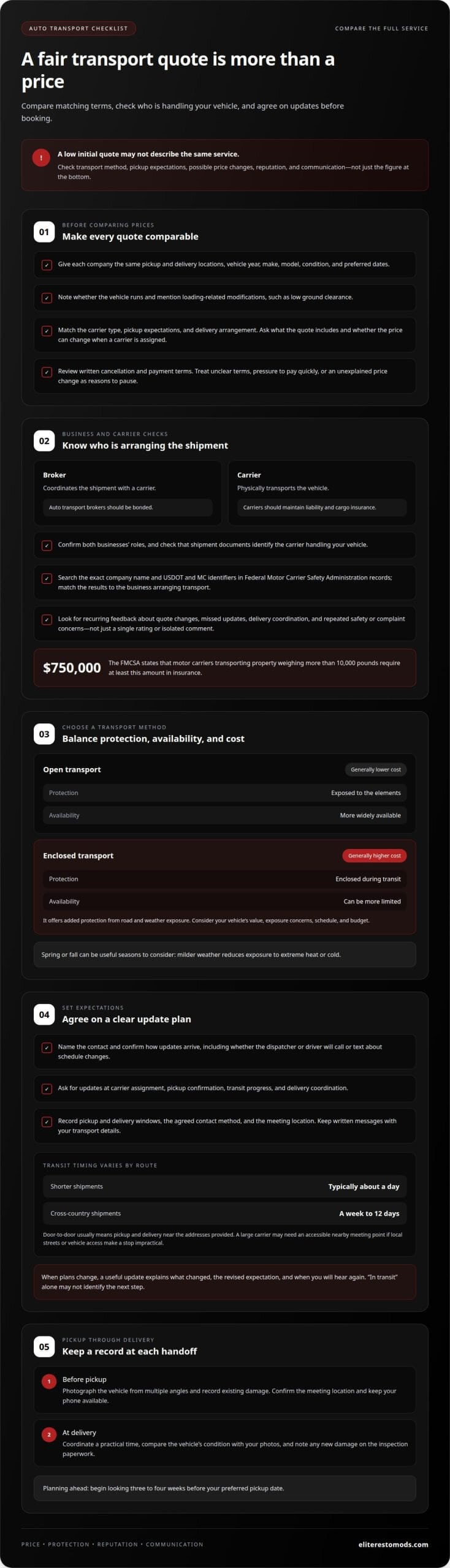
Finding a trustworthy auto transport company starts with accurate shipment details. Provide the pickup and delivery locations, vehicle year, make, model, condition, and preferred dates. Mention whether the car runs and note modifications that affect loading, such as low ground clearance. Shipping prices depend on the route, vehicle, timing, and transport method; request a quote based on those details.
Compare quotes only after aligning those details. Check whether each estimate describes the same carrier type, pickup expectations, and delivery arrangement. Ask whether the quoted amount is firm or may change when a carrier is assigned. An unexplained change, vague payment terms, or pressure to commit before reviewing the agreement makes a fair comparison difficult.
Clarify who is arranging transport. A broker coordinates a shipment with a carrier, while the carrier physically transports the vehicle. Auto transport brokers should be bonded, and carriers should maintain liability and cargo insurance. Confirm both businesses’ roles and ensure the transport documents identify the carrier handling your vehicle. This distinction matters when finding a trustworthy auto transport company.
- Share matching vehicle, route, and timing details with each quoting company.
- Review the written terms, including cancellation and payment conditions.
- Identify the broker and assigned carrier, then confirm insurance information.
- Keep the quote and shipment agreement together for reference.
Timing affects your choices. Begin looking three to four weeks before your preferred pickup date, or six to 12 weeks ahead during peak moving season. That lead time gives you room to compare terms and arrange a carrier without choosing solely because a date is approaching. If your schedule is fixed, explain the constraint when requesting quotes and compare how each option addresses it.
Choose the offer whose written terms match your needs, not simply the lowest initial figure. A clear quote, identified carrier, and defined communication process give you a stronger basis for choosing transport that fits your vehicle and schedule.
Comparing auto transport company reputations
A rating is only a starting point. Patterns across reviews and written terms reveal more about how a business handles communication, cancellations, vehicle condition reports, and damage concerns.
Broker Versus Carrier Reputations
A broker arranges transport, while a carrier physically moves the vehicle, so reviews reflect different responsibilities. A broker’s reputation may depend on clear coordination and accurate expectations; a carrier’s record reflects pickup, handling, and delivery. Neither role is automatically safer. Compare the specific broker and assigned carrier, including broker bonding and carrier liability and cargo insurance.
Contract and Payment Terms
A transport contract should identify the parties, vehicle, route, service terms, estimated schedule, and payment arrangements. Read the cancellation terms closely: note any deadlines, charges, and the process for ending the booking. Confirm when payment is due, which methods are accepted, and whether the agreement explains possible price changes. A polished rating cannot replace clear written terms.
Damage Coverage and Claims
Coverage depends on the carrier’s insurance and the shipment documents, so review both before pickup. Confirm what liability and cargo insurance apply, how exclusions are described, and which party receives a claim. At delivery, document damage on the inspection report, take clear photographs, and promptly notify the carrier and arranging broker. Keep the report, photos, contract, and messages together.
For state-specific consumer protections, consult the relevant state attorney general’s consumer protection office or transportation agency. Compare guidance for the states along your route, then look for recurring concerns in company feedback rather than isolated complaints. A pattern of missed pickups, unexplained quote changes, or unresolved damage reports carries more weight than one unusually positive or negative review.
Use the same criteria for each option: who handles the vehicle, whether the written terms are clear, how coverage works, and whether reported problems receive a documented response. A strong reputation rests on consistent service details, not a star score alone.
Elite Restomods: Enclosed Vehicle Transport
Elite Restomods offers Enclosed Vehicle Transport for owners moving a classic, collectible, or custom vehicle who want protection from exposure during transit. Enclosed shipping can be a considered choice when preserving a finished vehicle’s exterior matters more than choosing the generally lower-cost open option. It may also suit a vehicle that represents years of careful craftsmanship and personal investment.
Before arranging transport, consider the vehicle’s condition, route, schedule, and the level of protection you want. A classic car headed to a new home or a custom build moving between locations may call for a more protective transport method. Choose an option that balances the vehicle’s needs with your shipping priorities.
Contact Elite Restomods to discuss your vehicle and shipment for enclosed transport.
Plan the next chapter for your car
Choosing transport is one part of bringing a cherished vehicle into its next chapter. The same care you bring to finding a trustworthy auto transport company can guide what comes next: deciding how you want to drive, build, or sell a classic car. Make the next step fit your plans, whether that means enjoying a finished restomod or developing a custom build.
Elite Restomods offers Elite Certified Restomods, a Consignment Program, and Custom Build Services for different ownership goals. These options provide distinct paths, from finding a finished vehicle to developing a custom build or preparing a car for consignment.
If you’re considering one of these paths, contact Elite Restomods today to discuss what you have in mind. Your next automotive chapter can begin with a clear plan and a car you’re excited to experience.
Frequently Asked Questions
How Much Does it Cost to Ship a Car?
Car-shipping costs depend on distance, vehicle size and condition, timing, and transport method. For a useful estimate, provide the exact pickup and delivery locations, vehicle details, and preferred dates when requesting a quote. A larger vehicle or one that doesn’t run, for example, may require different arrangements than a standard running sedan. Compare estimates based on matching shipment details before deciding.
How do I choose a carrier to ship a car?
Choose a carrier based on the written shipment terms, insurance information, and responsibility for handling your vehicle. If a broker arranged the shipment, identify the actual carrier before pickup and make sure its name appears in the transport paperwork. Review how the carrier handles vehicle inspections and delivery documentation. A specific contact for shipment questions also helps clarify who is responsible at each stage.
What credentials and insurance should a trustworthy car shipping company have?
Auto transport brokers should be bonded, and carriers should maintain liability and cargo insurance. Ask for the carrier’s legal business name and USDOT and MC numbers, then make sure those details match the transport documents. According to the Federal Motor Carrier Safety Administration, motor carriers transporting property that weighs more than 10,000 pounds require at least $750,000 in insurance. Keep the carrier’s insurance details with your shipment records.
What is the average cost to ship a car in the United States by distance and vehicle type?
These are ranges, not a single national average. They apply to the specified Civic examples; vehicle size, condition, route, and transport choice can affect estimates.