
A car’s transport record is more than a receipt: it creates a written record of the vehicle’s journey. A bill of lading for car transport serves as a receipt, a contract between shipper and carrier, and a vehicle condition report. It records the car’s condition at pickup and delivery, helping document existing damage and any changes during transit.
It’s easy to treat the form as routine paperwork, but its details matter when the vehicle changes hands. Inspection notes and signatures capture what the parties acknowledged, while the transport terms set out their responsibilities.
Here, you’ll learn what the bill of lading records, how to document existing damage, and what to review before signing at pickup and delivery. You’ll also see how it clarifies the carrier’s and shipper’s roles, creating a clearer paper trail for a classic car’s journey from departure to arrival.
Key Takeaways
- Understand how the document serves as a receipt, condition report, and agreement for vehicle transport.
- Learn how pickup and delivery inspections create a record for distinguishing existing damage from changes in transit.
- See how the carrier-shipper terms clarify each party’s responsibilities throughout the vehicle’s journey.
- Know which shipment and vehicle details to review, and when enclosed transport may suit a valuable classic car.
What is a Bill of Lading?
In practical terms, what is a bill of lading for car transport? It’s the document that records the shipment, the carriage agreement, and the vehicle’s condition. These functions connect the car’s physical handoff with the written transport record.
Receipt, Contract, and Condition Report
A car transport bill of lading serves as a receipt, contract of carriage, and vehicle condition report. The receipt records that the shipment was received, the contract sets out the carriage arrangement, and the report captures the car’s observed condition. Together, these functions give the shipper and carrier a shared reference. The signed delivery record also documents that the vehicle reached the consignee.
Pickup and Delivery Inspections
At pickup, the owner and carrier conduct a 360-degree walkaround and record the vehicle’s condition. At delivery, they conduct a second 360-degree inspection and compare the car with the original record. At delivery, what is a bill of lading for car transport useful for? It provides a reference for identifying discrepancies before the handoff is complete.
Recording Vehicle Condition
The condition report can describe existing damage and include a vehicle diagram, sometimes described as a 5-point inspection. Specific notes help distinguish a mark present at pickup from a discrepancy observed at delivery. For instance, identifying a scratch by its panel and location is clearer than a general note saying “scratches.” If the vehicle is inoperable, its status must be noted at pickup.
Bill of Lading Details and Timing
The document is completed at pickup and delivery. The owner signs at both stages or designates a trusted person to sign on their behalf. Before signing, review the vehicle description, condition notes, and shipment details for accuracy. The form can identify the shipper, consignee, carrier, origin, destination, freight details, existing damage, and special instructions. Keep the completed copy as a record of the handoff.
How the BOL documents pre-existing damage
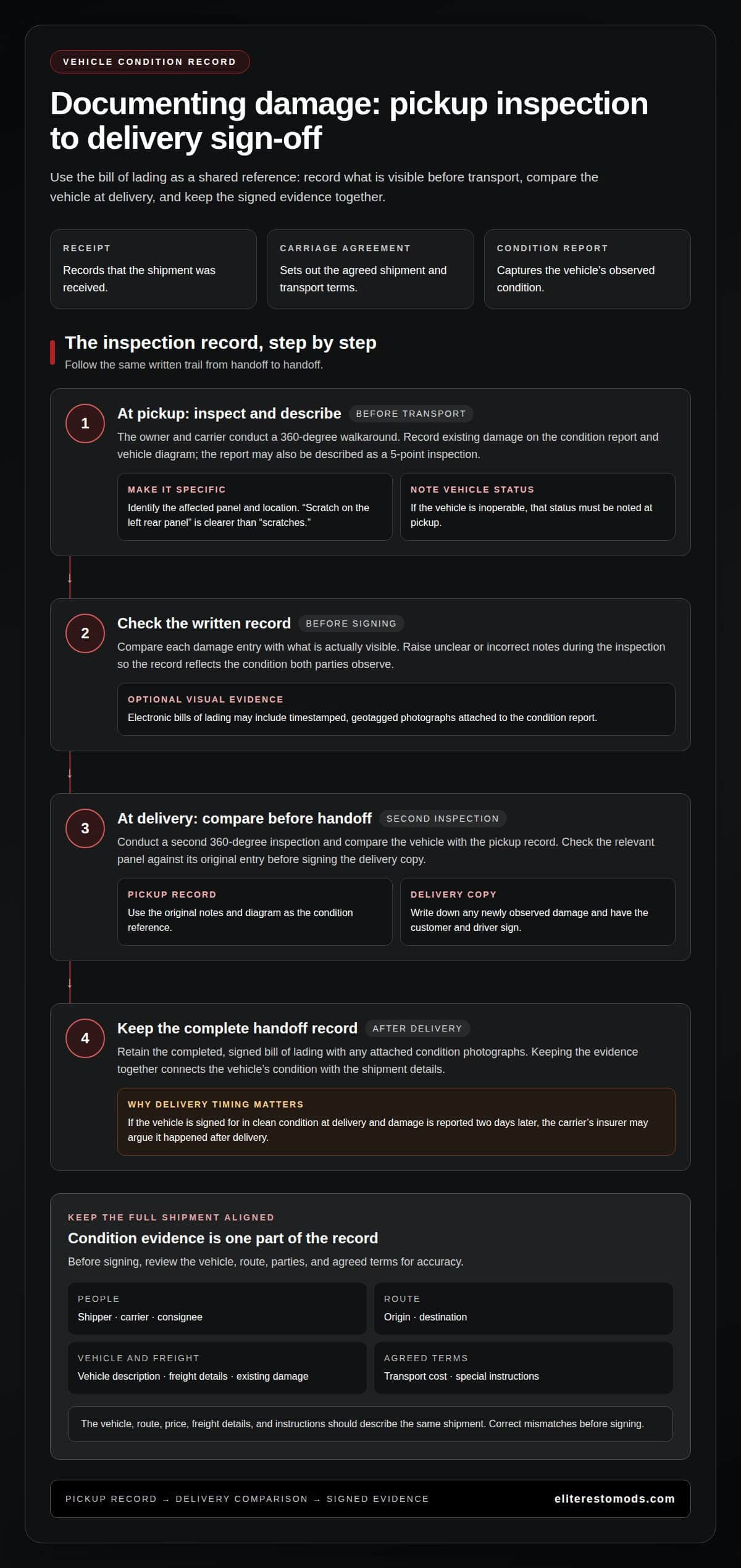
If the bill of lading lists damage, compare each entry with the vehicle’s actual condition. Make sure the description identifies the affected area and accurately reflects what is visible before signing. If an entry is unclear or incorrect, raise the discrepancy during the inspection so the record reflects the condition both parties observe.
A useful damage record distinguishes an existing mark from a change noticed after transport. For example, compare a scratch marked on the pickup diagram with the same panel at delivery. Electronic bills of lading may include timestamped, geotagged photographs attached to the condition report. These images add visual detail to written descriptions and link them to a time and location.
That timeline matters when documenting a possible insurance claim. If the vehicle is signed for in clean condition at delivery and damage is reported two days later, the carrier’s insurer may argue it happened after delivery. Inspect the car before signing the delivery copy and record any newly observed damage there. Keep the signed document and attached condition photos together as a record of the handoff.
The bill of lading also records shipment terms, including the agreed transport cost. Compare the amount with the transportation arrangement before signing, and make sure the document shows the agreed total. Clear cost documentation gives both parties the same figure to refer to if a billing disagreement arises. It also keeps the financial record alongside the vehicle’s condition and shipment details.
Use precise descriptions rather than broad labels: “scrape on the left rear bumper” identifies a location more clearly than “bumper damage.” At delivery, compare the relevant panel with its pickup entry, note any new discrepancy on the delivery copy, and have both the customer and driver sign. Retain the completed record and photographs so the condition evidence stays with the transport details.
Bill of lading as a carrier-shipper contract
A car transport bill of lading serves as a contract between the shipper and carrier. It records the shipment they agreed to undertake, connecting the vehicle with its route and transport terms. For the shipper, that written record clarifies what the carrier is receiving and where the vehicle is meant to go. For the carrier, it identifies the shipment and the parties involved.
The contract role matters because moving a vehicle involves more than handing over keys. The shipper and carrier need a common reference for the vehicle, origin, destination, and agreed price. For example, if the paperwork names one delivery address but the parties arranged another, the mismatch can create confusion about the intended handoff. Accurate shipment details make the agreement easier to understand.
Responsibilities are easier to follow when the record identifies the carrier, shipper, and consignee. The carrier transports the listed vehicle along the agreed route, while the shipper provides it for transport. The consignee is the named party receiving it. These roles distinguish who arranged the shipment from who accepts delivery at its destination.
Read the terms as a connected record, not as isolated fields. The vehicle, freight details, route, price, and special instructions should all describe the same shipment. For example, a note about access or delivery arrangements is useful only if it matches the named destination and the parties’ understanding. Raise any inaccurate detail before signing so the written agreement reflects the arrangement.
Keep the signed copy with related shipment records. If a question arises about the agreed destination, price, or instructions, the bill of lading gives the shipper and carrier a shared document to review. Its value lies in clarity: each party can refer to the same written terms instead of relying only on memory. That makes the transport agreement more precise from pickup through delivery.
What information is included on an auto transport bill of lading?
A vehicle bill of lading brings the shipment’s people, route, cargo, and terms into one record. Check each field for consistency: the vehicle, named parties, pickup and delivery addresses, and agreed price should all refer to the same move. That precision matters for a classic car, since a mismatch can complicate the handoff or create uncertainty about which shipment the document covers.
- Carrier: The carrier’s legal name, MC number, and USDOT number identify the transport company.
- Parties: The shipper and consignee identify who sends the vehicle and who receives it.
- Route: Origin and destination addresses show where the shipment begins and ends.
Freight details describe what the carrier is transporting. For a car shipment, the record can include the vehicle and other shipment items, along with the freight type and quantity. Check that these details identify the intended cargo. If the document lists the wrong vehicle or leaves out an item included in the shipment, have the record corrected before signing.
Condition and handling notes add important context. Existing damage can be described alongside the vehicle details, while special instructions can capture agreed arrangements relevant to transport or delivery. For example, a note about the delivery location should match the destination address. These details connect the written instructions with the actual vehicle and route.
The agreed price is another key field. The bill of lading can record the full transport cost, giving the parties a shared reference for the shipment price. Compare it with the amount agreed for the move and resolve any difference before signing. Together, the carrier identifiers, addresses, cargo description, condition notes, instructions, and price create a practical transaction record.
If enclosed transport suits the vehicle and shipment, explore enclosed vehicle transport.
Elite Restomods: Enclosed Vehicle Transport
Elite Restomods offers Enclosed Vehicle Transport for owners arranging a move for a classic or valuable vehicle. It can be a fitting option when you want the car transported inside an enclosed vehicle rather than on an open carrier. The bill of lading still matters: it records the shipment terms and the vehicle’s documented condition at pickup and delivery.
Before transport, make sure the agreed arrangements and vehicle details are accurately reflected in the shipping paperwork. At handoff, the condition record gives both parties a reference for the car’s state. Careful documentation complements the transport choice, especially for a carefully restored vehicle whose finish and details matter.
For questions about enclosed vehicle transport for your car, contact Elite Restomods.
Put Your Next Move in Motion
Understanding what a bill of lading for car transport records gives you a clearer foundation for planning your vehicle’s next journey. Carry that same care into decisions about the car itself, whether you’re considering an Elite Certified Restomod, a Consignment Program, or Custom Build Services. Each option serves a distinct goal, from finding your vehicle’s next chapter to shaping a bespoke build.
When you’re ready to discuss what comes next for your car, connect with Elite Restomods. Share your plans and the details that matter to you, then take the next step with a clear direction.
Contact Elite Restomods today, and move your automotive vision forward.
Frequently Asked Questions
Can a friend or family member sign the BOL on my behalf?
Yes. If you can’t attend pickup or delivery, you may designate a trusted person to sign for you. Their signature can bind you as the vehicle owner, so choose someone prepared to review the handoff. For example, they should know which visible marks need attention and retain the completed copy. Dealership managers may also be authorized to sign a vehicle transport bill of lading.
What if the driver is rushing me to sign?
Take the time needed to inspect the vehicle and read the document before signing. At delivery, compare the car with its recorded condition and note any new damage on the delivery copy. Have both you and the driver sign the notation. If an entry doesn’t match what you see, identify the specific discrepancy and ask for it to be recorded before completing the handoff.
What is a bill of lading in car transport?
If you’re asking what a bill of lading for car transport is, it’s the shipment record used to document the vehicle, carriage arrangement, and handoff. It gives the parties a written reference for that particular move. For example, the document can connect a named vehicle with its origin and destination, rather than leaving shipment details only in emails or memory.
Who signs the car transport bill of lading?
The vehicle owner and carrier’s driver generally sign the document during pickup and delivery. If the owner can’t be present, a trusted person may sign on their behalf; dealership managers may also be authorized signers. Whoever signs should be prepared to review the paperwork and vehicle handoff. A signature records the signer’s acknowledgment of the information presented at that stage.
Is a car transport bill of lading the same as a vehicle shipping contract or receipt?
It can function as a contract and receipt while also recording the vehicle’s condition. Knowing what a bill of lading for car transport records helps explain why these functions appear together: the document relates the shipment terms to the vehicle received and delivered. For example, its signed delivery record can show which vehicle was handed over and which parties were involved.
Can I get a copy of the bill of lading after car delivery?
Yes. Keep a completed copy of the delivery document with any attached condition pages or photographs. Paper forms may use three-part carbon copies, while electronic records may include digital condition reports. If you noted a delivery discrepancy, retaining the version with the notation and signatures keeps the handoff record together for later reference.