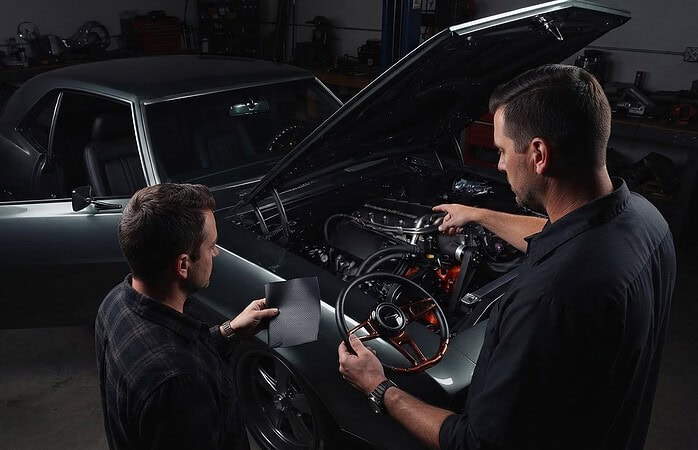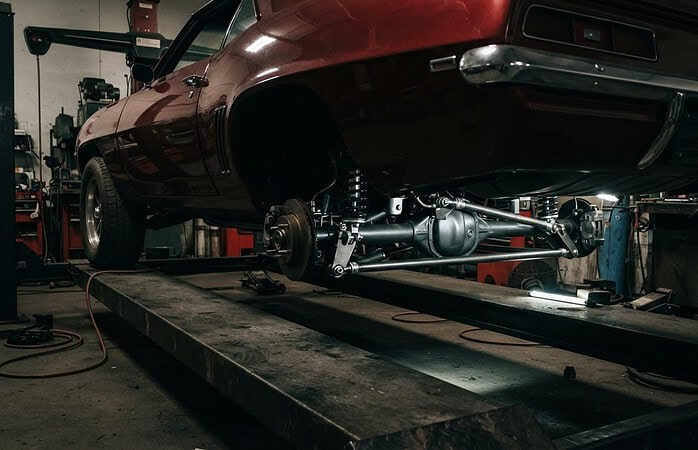

A restomod’s power matters only when the whole car can put it to the road. Dyno tuning a restomod measures horsepower, torque, and the air-fuel mixture while a tuner adjusts fuel delivery and ignition timing. A chassis dyno tests the assembled car on rollers, helping assess how the engine performs in its installed setup.
That feedback is valuable, but it’s only one part of a sound tuning process. Address leaks, damaged wiring, and other mechanical issues before running the car on a dyno. The right method depends on what the build needs.
Learn what dyno tuning involves, which safety checks come first, and how chassis dyno, road, and remote tuning differ for classic cars and restomods. We’ll also look at how the chassis and powertrain work together, so the finished car delivers more than a compelling power figure: it feels composed, responsive, and ready to drive.
Key Takeaways
- Use chassis dyno data to understand how power and torque change under controlled load, not just to chase a peak figure.
- Address leaks, frayed wiring, and other mechanical concerns before dyno testing begins.
- Choose dyno, road, or remote tuning based on the engine conditions and driving behavior that need attention.
- Consider how the chassis, powertrain, and intended road use work together when planning a classic car or restomod build.
What Is Dyno Tuning?
Carbureted engines are tuned through fuel delivery and ignition advance, while EFI systems allow adjustments to fuel and ignition tables. With an engine swap, the tuner works from the installed engine’s configuration and measured behavior, whether testing it in the car or on an engine dyno.
Torque and Power Measurement
A chassis dyno secures the car on rollers and measures how the driven wheels accelerate them under load. Using roller data and engine speed, the system calculates torque and horsepower and displays the results on a graph. Read the curve, not just its peak: where torque rises, holds, or falls shows how the engine delivers power across its operating range.
Break-In and Power Verification
Before a fresh engine makes a full-power run, follow the engine builder’s break-in procedure. That sequence prepares the engine for harder operation; the dyno measures output, it doesn’t replace break-in. Once the engine is ready, controlled runs record its torque and horsepower curve. Compare the results with the build’s intended output and the stated capacity of connected components, rather than treating a peak figure as proof that every part is suitable.
Tuning Across Engine Setups
For a carbureted engine, tuning focuses on fuel delivery and ignition advance, with air-fuel readings showing how adjustments affect the mixture. EFI tuning changes fuel and ignition tables through the vehicle’s computer while the tuner monitors engine data and torque response. An engine-swapped restomod needs a calibration suited to its installed combination. An engine dyno tests the engine separately; a chassis dyno measures it in the assembled car, including how its output reaches the wheels. Choose the test based on what needs measuring.
Pre-tune vehicle inspections and safety checks
Dyno safety starts before the engine is loaded. A sound mechanical baseline and accurate build information help the tuner set sensible limits for testing.
Pre-Tune Vehicle Inspection
Before a run, inspect for fluid leaks, frayed wiring, loose connections, and components that could shift under load. Forced-induction setups also call for a boost leak test and fuel-pressure verification, checks Drive Auto Sports recommends before dyno tuning. These steps can reveal faults that might worsen under sustained engine load. Record and address any identified issue before proceeding.
Engine and Modification Details
Give the tuner the engine’s identity and configuration, whether it’s carbureted or EFI, and whether it’s the factory engine or a swap. Include relevant changes to induction, fuel delivery, ignition, exhaust, and boost control, along with the ECU or engine-management setup. Mention the car’s intended street use and any known drivability concerns. This context helps the tuner interpret logs and plan a calibration for the actual combination.
Preventing Engine Damage
Dyno loading can expose a weak fuel supply, boost leak, wiring fault, or unsafe air-fuel mixture. Monitoring the air-fuel ratio, engine data, and knock helps identify trouble during tuning. Stop a run if readings or engine behavior become abnormal. A boost controller and ECU safety limiters can help constrain pressure or engine operation, but their settings must suit the hardware and tune.
Remote e-tunes generally use a wider safety margin than live custom dyno tuning. Logged acceleration runs show the tuner only the conditions captured in those logs, making accurate vehicle details and useful data essential. In a controlled dyno session, the tuner can observe changes directly under load.
A pre-dyno inspection checks for problems such as leaks and frayed wires before running the car. A forum participant suggested adding gauges and data logging for seasonal tuning before using a dyno.
Choosing between dyno, road, and remote tuning
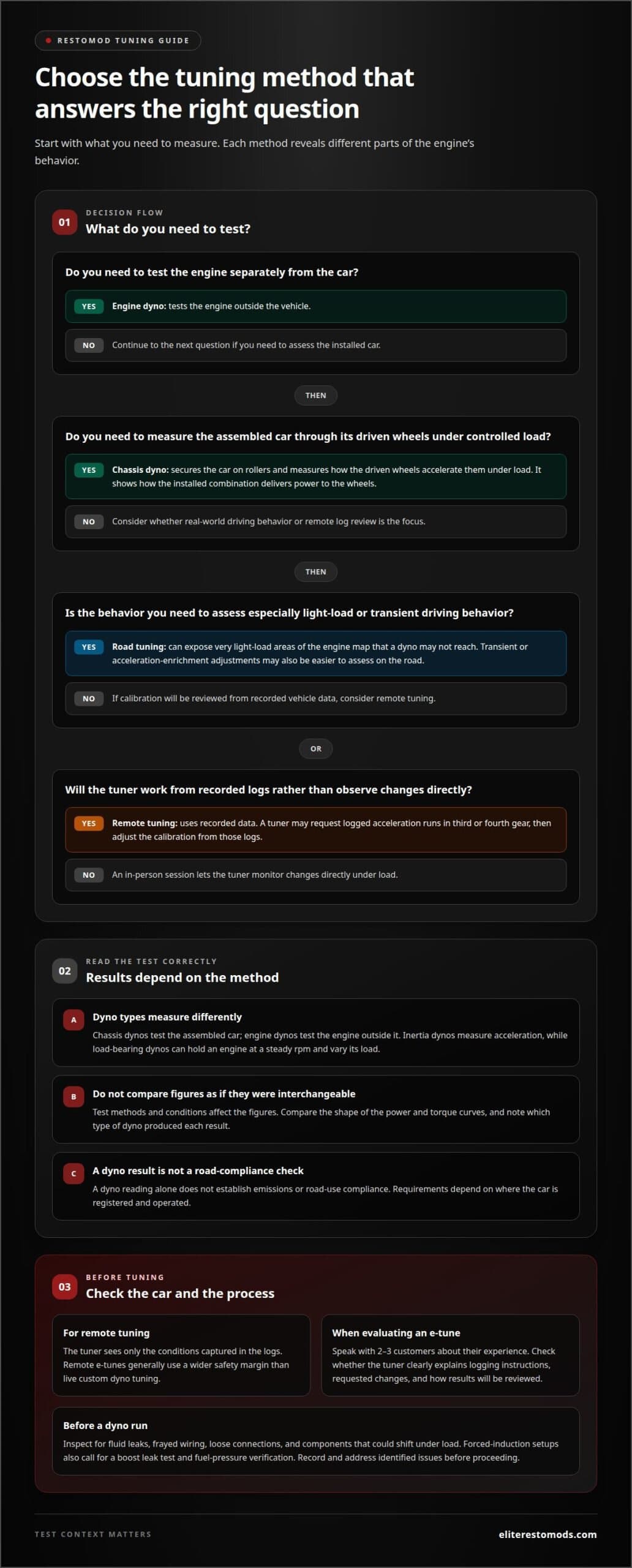
An engine dyno tests an engine separately, while a chassis dyno measures output through the vehicle’s driven wheels. Road and remote tuning add real-world data. The best method depends on what the restomod needs.
When choosing an in-person tuner, prioritize experience with classic and swapped powertrains, clear explanations of test data, and a process that accounts for the car’s intended street use.
Dynamometer Types and Results
Chassis dynos use rollers to test the assembled car; engine dynos test the engine outside it. Inertia dynos measure acceleration, while load-bearing dynos can hold an engine at a steady rpm and vary its load. Results aren’t directly interchangeable because test methods and conditions affect the figures. Compare the shape of the power and torque curves, and note which type of dyno produced each result.
Emissions and Road Legality
A dyno reading alone doesn’t establish whether a restomod meets emissions or road-use requirements. Changes to fuel delivery and ignition can affect exhaust output, so preserve emissions equipment and tune for the vehicle’s intended street use. Requirements depend on where the car is registered and operated; a performance result can’t substitute for compliance.
Road tuning can expose very light-load areas of the engine map that a dyno may not reach. Transient or acceleration-enrichment adjustments may also be easier to assess on the road. Use several baseline runs to see whether power-estimation software produces repeatable results before comparing changes. A controlled dyno remains useful for repeatable loaded testing.
Remote tuning uses recorded data rather than direct observation. A tuner may request logged acceleration runs in third or fourth gear, then adjust the calibration from those logs. That approach relies on the recorded conditions, while an in-person session lets the tuner monitor changes as they happen. For e-tune research, speak with 2-3 customers about their experience, then assess whether the tuner clearly explains logging instructions, requested changes, and how results will be reviewed.
Chassis dyno tuning for classic cars and restomods
A chassis dyno tests the complete automotive combination, not an engine in isolation. For a classic car or restomod, it shows how the engine, transmission, and driven wheels behave together under controlled load.
Chassis Dyno Tuning Process
The vehicle is strapped onto rollers, placed in gear, and run while the tuner monitors live engine data. A computer connection can show how adjustments to fuel delivery or ignition affect the power curve. Between runs, the dyno brake slows the car so it can cool. Review the recorded torque and horsepower curves alongside the engine’s response, rather than focusing only on its highest reading.
Testing the assembled car reflects its installed drivetrain and interaction with the rollers. It can help reveal how a calibration behaves under load, but it doesn’t represent every street condition. A road check after dyno tuning helps assess how the car drives beyond the controlled test environment.
Tuning Cost Considerations
In the United States, dyno-tuning costs depend on the job and are provided after a quote request. Factors include the engine setup, whether it uses a carburetor or EFI, the changes needed, and the time required to reach a stable calibration. An engine swap or drivability concern can call for different work than a straightforward adjustment.
The scope matters. Measuring output differs from diagnosing a fault or refining multiple operating conditions. Clarify the intended result, such as smoother street response or a verified power curve, so the work matches the build.
Dyno Pull Requirements
There’s no fixed number of dyno pulls for every restomod. The tuner establishes a baseline, makes adjustments, then repeats runs to assess their effect on engine data and output. The number needed depends on the starting calibration, issues found, and whether readings remain consistent as the tune develops.
For example, a fuel or ignition adjustment may require another run to compare the revised curve with the baseline. The process also allows for cooling between runs. The goal is a stable result that addresses the tuning objective, not a predetermined pull count.
Planning a build around its intended power and road behavior? Explore custom build services for a tailored restomod project.
Elite Restomods
Elite Restomods helps drivers connect classic-car character with modern performance through Custom Build Services and Elite Certified Restomods. If you’re planning a build, dyno results can inform decisions about engine output and how the complete car should behave on the road. Consider those figures alongside the chassis setup, drivetrain, and intended driving experience.
For a completed restomod, the same principles help explain what a power curve can and can’t tell you. Dyno data is one part of assessing a vehicle, not a substitute for considering its overall configuration and road manners.
Contact Elite Restomods to discuss your restomod plans.
Set the Direction for Your Build
Plan dyno tuning a restomod around the driving experience you want, not just a peak horsepower target. Decide whether the car is meant for relaxed cruising, spirited street use, or a more focused performance build. That priority gives the project direction and connects power goals to the complete vehicle.
For owners considering a sale rather than another build, Elite Restomods’ Consignment Program offers a way to consign a classic vehicle. If you’re developing a project, align the build’s character with how you plan to drive and enjoy it. Heritage and modern capability belong in the same conversation.
When you’re ready to discuss your next step, contact Elite Restomods. Your vision can guide a thoughtful plan for a classic built to be driven.
Frequently Asked Questions
What does dyno tuning a restomod involve?
Dyno tuning measures the car’s output, adjusts its calibration, and assesses how those changes affect engine behavior. The useful result isn’t just a peak horsepower figure: a tuner can interpret the power curve alongside drivability concerns, such as hesitation during acceleration. For a restomod, that context connects measured performance with how the car is meant to feel on the road.
How should a restomod be prepared for dyno tuning?
Bring a concise record of the build, its current tune, and any symptoms you’ve noticed while driving. Note when a hesitation, misfire, or other concern occurs, such as during acceleration or steady cruising. This gives the tuner a practical starting point for interpreting test data. If the engine is newly built, follow the engine builder’s break-in procedure before requesting full-power testing.
What horsepower and torque gains can dyno tuning produce on a restomod?
There’s no standard gain that applies to every build. Reported examples include a 40 HP increase from tuning a 350 Chevy small-block in a 1934 hot rod, and a 50 HP increase alongside a drivability fix on a Mustang with EFI tuning. Those are individual outcomes, not forecasts. Results depend on the engine combination, its existing calibration, and the adjustments it can usefully accept.