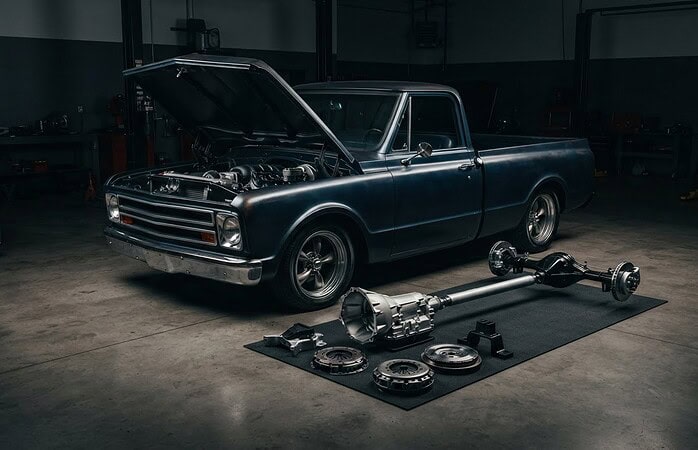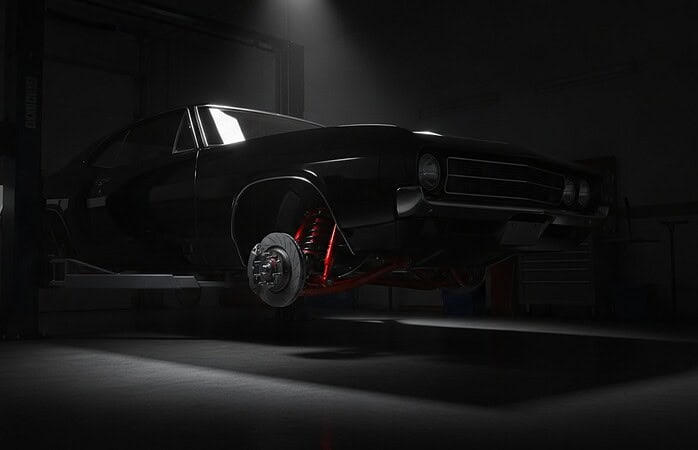

Comfort doesn’t have to come at the cost of a taller stance. Knowing how to make a classic truck more comfortable can start with its shocks: replacing worn or unsuitable shocks can improve ride control without changing ride height. The truck keeps its familiar profile, while the miles feel less punishing.
A shock upgrade alone won’t address every source of discomfort. Suspension setup, driving position, and seat condition all shape the experience behind the wheel. Approach these areas as a coordinated refresh that preserves the truck’s character while improving usability. Consider what shock changes can do, how suspension choices affect ride quality, and where ergonomic or upholstery updates can make a classic cab more comfortable.
Key Takeaways
- Shock replacement or adjustment can improve ride quality without changing ride height; suspension design also influences how the truck handles road impacts.
- Modern audio and Bluetooth can bring everyday convenience to a classic cab while retaining its vintage character.
- Seat position, driving posture and upholstery all contribute to comfort on longer drives, so consider them as part of a coordinated interior refresh.
- For a broader restomod plan, Elite Restomods’ Custom Build Services can bring comfort and modern functionality together; Classic Car Financing may also support the purchase of a classic vehicle.
1. Restomodding Principles Applied To A Functional Truck?
A functional restomod balances vintage character with modern comfort. Start with the parts that shape daily driving: tires, suspension, steering, chassis, drivetrain, and cab equipment. Modern radial tires can smooth the ride and improve handling; an aspect ratio of at least 65 is one recommendation for an older truck. Tire choice should also suit the truck’s weight and intended use.
Suspension and steering upgrades work as a system, not isolated fixes. A professional assesses the existing components, alignment, and intended handling before selecting changes. Independent front suspension can alter how the truck responds over uneven pavement, while steering components influence feedback at the wheel. Pairing those systems thoughtfully helps maintain predictable control and the truck’s factory-inspired stance.
Chassis modernization starts with the frame. Its condition, strength, body mounts, and compatibility with the planned engine and suspension all matter. A modern chassis beneath a vintage body may improve road manners, but it also changes how the structure and components work together. Treat the frame and body as one engineered package.
For power, a 500+ cubic-inch gasoline engine is one possible direction, while transmission choice affects how the truck behaves at speed and under load. A multi-gear transmission with a creeper gear and overdrive offers different operating ranges; modern automatics may have 8-10 speeds. The right combination depends on the truck’s purpose, not just peak power.
Modern audio can add Bluetooth connectivity and familiar features such as Apple CarPlay through a contemporary head unit. Heating and air-conditioning upgrades can use systems designed for classic-truck cabins, with component placement planned around the dashboard and available space.
Suspension, steering, and brake modifications can create safety risks if parts are mismatched or geometry is poorly set. Handling, steering response, and braking balance may become unpredictable. Design and assess these systems together.
Can a professional upgrade shocks without affecting ride height?
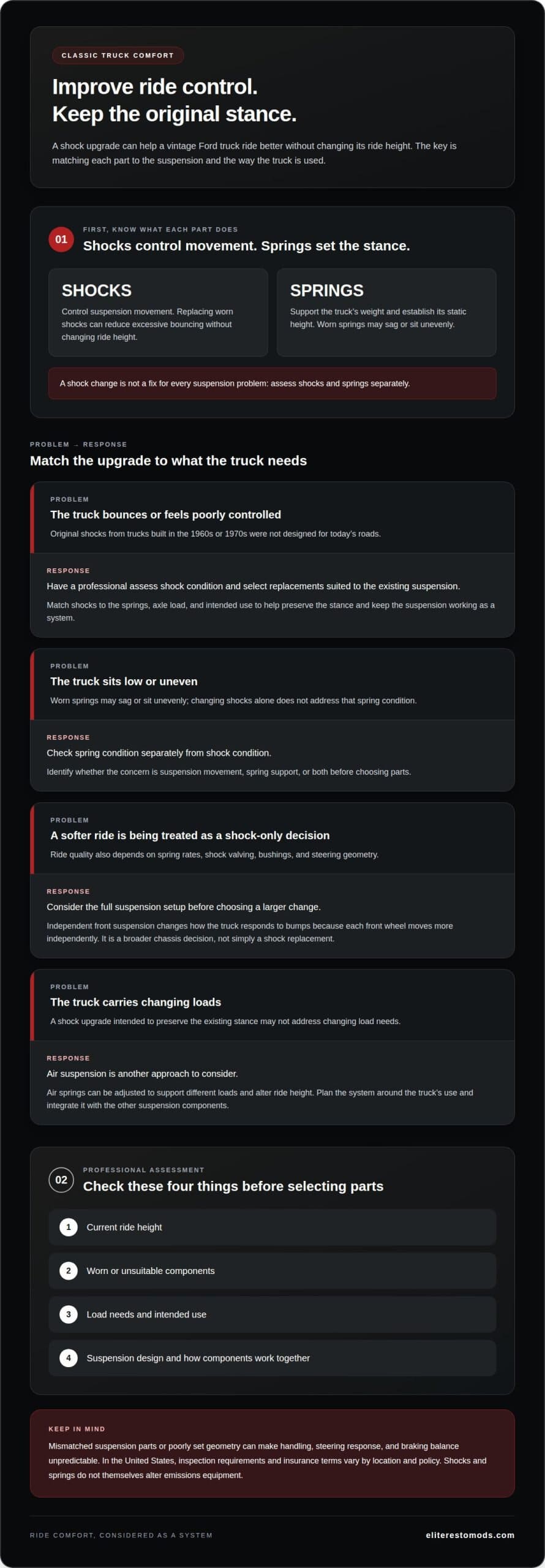
Yes. Replacing or adjusting shocks can improve a vintage Ford truck’s ride without changing its ride height. Stock shocks from trucks built in the 1960s or 1970s weren’t designed for today’s roads, so a professional can assess their condition and select replacements suited to the existing suspension.
Shocks control suspension movement; springs support the truck’s weight and establish its static height. Replacing worn shocks can reduce excessive bouncing, while worn springs may sag or sit unevenly. Assess each issue before selecting parts. Matching shocks to the springs, axle load, and intended use helps preserve the truck’s stance and keep the suspension working as a system.
Independent front suspension can change how a truck responds to bumps because each front wheel moves more independently. Ride quality also depends on spring rates, shock valving, bushings, and steering geometry. Converting to independent front suspension is a larger chassis decision than changing shocks. The conversion must suit the frame and the rest of the suspension, not simply promise a softer ride.
Air suspension offers another approach for trucks carrying changing loads. Air springs can be adjusted to support different loads and alter ride height, unlike a shock upgrade intended to preserve the existing stance. Design the system around the truck’s use and integrate it with the other suspension components.
In the United States, inspection requirements and insurance terms can vary by location and policy. Shocks and springs don’t themselves alter emissions equipment, but consider suspension changes separately from emissions-related modifications.
For a considered upgrade, a professional evaluates the truck’s current ride height, worn components, load needs, and suspension design before recommending changes. If comfort work is part of a larger restomod, plan the broader truck build as one coordinated project.
3. Cab ergonomics and driving fatigue
Comfort starts with the driving position, not just the upholstery. In a classic cab, a seat that sits too low can make the driver reach for the wheel. Evaluate seat height, pedal reach, steering-wheel clearance, and visibility together. The goal is a relaxed posture that preserves the truck’s original stance and keeps controls within natural reach.
Which seat upgrades fit classic trucks and improve comfort on long drives? A rebuilt original bench can retain the vintage appearance, while a supportive replacement seat may suit drivers seeking different cushioning or adjustment. Fit depends on the cab floor, mounting points, door clearance, and steering-wheel position. Custom seat covers can refresh worn upholstery, but they won’t fix a collapsed cushion or poor driving position.
Next, consider how the driver reaches the controls. A steering wheel that crowds the knees, pedals that require an awkward reach, or a shifter that sits too far away can add effort on every trip. Adjusting seat placement and choosing compatible controls can create a more composed driving position without changing the truck’s exterior profile.
Cab comfort also depends on what reaches the driver through the seat and body. A professional can inspect seat mounts, floor condition, and cabin insulation as part of an interior assessment. For example, a loose seat mount can undermine an otherwise well-finished seat, while worn padding may transmit more road feel than intended. These details matter together.
Long-distance driving makes the difference clear. One driver reported covering 3,800 miles in a 2017 Ram diesel dually, including days of roughly 800 miles or more. That modern truck isn’t a direct comparison for a vintage pickup, but it illustrates why seat support and reachable controls matter over extended time behind the wheel.
A cohesive set of cab upgrades considers the driver, seat, and controls as one arrangement. The right choices preserve the cabin’s character while making each drive less demanding. Seat shape, cushion condition, mounting position, and the driver’s preferred posture all guide the final fit.
4. Classic Ford truck upholstery and interior refreshes
A fresh interior can make a classic Ford feel more inviting without erasing its character. A professional starts by assessing the seat frame, springs, foam, and upholstery together. Replacing a cover over collapsed padding won’t restore support. In a 1956 Ford F-100, the cab’s original lines and wraparound windshield can guide material and trim choices.
Seat covers offer a focused refresh when the underlying seat remains sound. If the seat frame or foam is worn, a more complete rebuild may be needed to provide even support. The right finish depends on the truck’s era, existing trim, and the balance you want between period style and everyday use.
How can a professional reduce road noise, vibration, and heat in a classic truck cab? They can inspect the floor, firewall, doors, and headliner, then add suitable sound- and heat-control materials beneath the trim. Address loose panels, worn mounts, and damaged seals at their source instead of covering them with upholstery.
Materials and placement matter. Floor and firewall treatments can help reduce noise and heat entering the cab, while door seals can limit air leaks. A professional fits these layers around pedals, wiring, and trim so they don’t interfere with controls or service access. Reinstalling carpet and panels neatly preserves a finished appearance.
Vibration also travels through seat mounts and interior panels. A professional can inspect those contact points and identify whether movement comes from a loose component or worn support. Treating the cause first helps protect new upholstery from rattles, uneven wear, and shifting during regular drives.
For a cohesive result, coordinate seat material, carpet, door panels, and headliner before work begins. Share the truck’s model, existing interior details, and preferred look to shape the plan. To explore options for a broader classic-truck project, explore classic truck possibilities.
Elite Restomods: Classic Car Financing
Elite Restomods can help you take a considered next step, whether you’re seeking a finished classic or planning a personalized build. Classic Car Financing can support a classic vehicle purchase, while Custom Build Services can shape a truck around your priorities for comfort, drivability, and preserved character.
If you’d rather choose a completed vehicle, Elite Certified Restomods offer a curated route to a fully sorted classic. The right path depends on whether you want a ready-to-drive truck or a bespoke project built around your vision. Financing supports a vehicle purchase; custom building tailors the vehicle itself.
Contact Elite Restomods for guidance on a classic truck purchase or custom build.
Shape the Next Chapter of Your Truck
A thoughtful plan for how to make a classic truck more comfortable starts with how you want to use it. Decide whether you’re prioritizing enjoyable weekend drives, everyday use, or a carefully tailored build. That vision can guide your choices while keeping the truck’s distinctive character at the center.
Explore Elite Certified Restomods if you’re looking for a completed vehicle. If you have a custom direction in mind, Elite Restomods’ Custom Build Services can shape the project around your goals. The Consignment Program offers owners a path to selling an investment-grade classic car. Each option suits a different stage of the classic-vehicle journey.
There’s no need to rush the decision. Bring your ideas, preferred driving experience, and thoughts about the truck’s future into the conversation, then consider which direction feels right. Contact Elite Restomods to discuss your truck and take the next step toward a classic you’ll be proud to drive.
Frequently Asked Questions
Restomodding Principles Applied To A Functional Truck?
A functional restomod pairs a classic truck’s defining design with updates suited to how it will be driven. Start with the intended use: occasional cruising, regular road trips, or carrying loads. That purpose guides decisions about tires, chassis, drivetrain, cab comfort, and modern conveniences. Consider how each change interacts rather than treating upgrades as unrelated additions.
Why Upgrade an Old Truck?
Understanding how to make a classic truck more comfortable can help owners tailor an older vehicle to their routine while preserving its distinctive design. For example, a truck used for regular outings may benefit from attention to road manners or cabin usability. The right scope depends on the vehicle’s condition and the owner’s priorities, not on replacing every original component.
What are the most effective upgrades to make a classic truck ride more comfortably?
The most effective changes depend on what causes discomfort. To decide how to make a classic truck more comfortable, consider whether the main issue is a harsh ride, driver fatigue, road noise, or cabin heat. A professional can assess these symptoms together, then prioritize compatible upgrades so one improvement doesn’t undermine handling, usability, or the truck’s original character.
How much does it cost to upgrade a classic truck’s suspension and shocks?
The cost depends on the truck’s condition, the parts selected, and whether the work involves shocks alone or broader suspension changes. Fabrication, related worn components, and final setup can also affect the project scope. A project-specific quote provides a basis for pricing. The key distinction is between replacing compatible parts and redesigning the suspension.
How do power steering and brake upgrades affect classic truck comfort and drivability?
Power steering can reduce the effort needed to turn the wheel, particularly during low-speed maneuvers. Brake upgrades can change pedal feel and stopping response, so consider the braking system as a matched set suited to the truck’s weight and intended use. Together, these changes can make driving less demanding, but compatibility and installation quality matter.