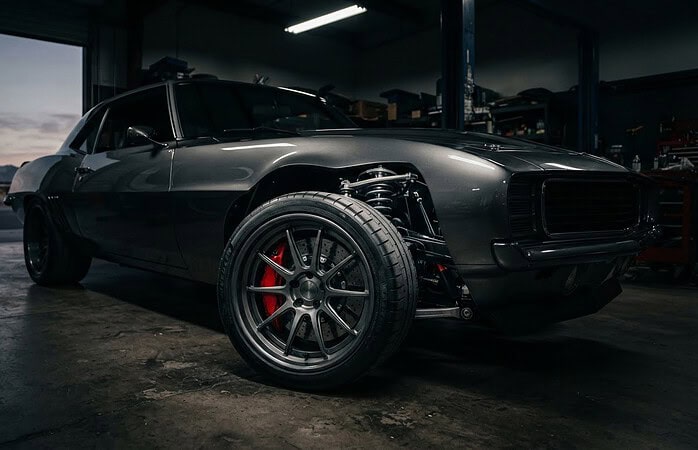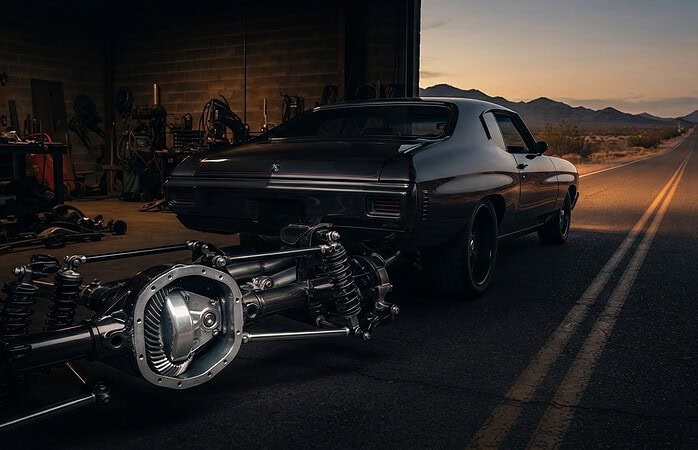

A new gearbox can make a classic truck feel more composed on the highway, but the transmission alone does not make the build. A modern transmission swap for classic truck owners must suit the engine, chassis, intended use, and character of the vehicle. Otherwise, the promise of easier cruising can turn into costly complications.
If you’re weighing overdrive or a different driving feel against added complexity, expense, or a loss of originality, those concerns are worth addressing early. The right choice depends on the whole truck, not just whether you prefer a manual or automatic. This guide compares the main options and their trade-offs, then outlines the vehicle details and supporting systems to evaluate before committing. You’ll also find guidance on choosing between a custom build and a fully sorted restomod, so you can decide how much of the project you want to shape yourself.
Key Takeaways
- Compare manual and automatic transmissions by driving style, intended use, and integration needs, not preference alone.
- A successful modern transmission swap for a classic truck must work with the engine, driveshaft, rear axle, and chassis as a complete system.
- Before seeking advice, record the truck’s engine, current transmission, axle, and intended use to make compatibility discussions more productive.
- Plan the project in sequence: define how you’ll drive the truck, document its current setup, assess fitment, then scope supporting changes.
- Weigh a tailored custom build against a completed, quality-assured restomod to decide how much of the project you want to shape yourself.
Why Consider a Modern Transmission Swap for a Classic Truck?
A classic truck has a presence modern vehicles rarely match, with familiar lines, purposeful proportions, and a direct connection to the road. A later-design transmission can change how the truck behaves in use, but the right result depends on more than the gearbox itself.
A modern transmission swap for classic truck owners means replacing the original gearbox with a later-design unit. It is a focused drivetrain change, not a full restomod, which can involve broader updates to the vehicle. Your goal might be different gearing, a particular operating feel, or better suitability for highway driving. None is guaranteed by the transmission alone. Results depend on the truck, engine, intended use, and how the complete installation is planned.
This video offers a look at the wider integration involved in updating an old truck:
What owners hope to improve with a transmission swap
Start with how you’ll actually drive the truck. An occasional weekend cruiser may call for a different setup than a truck used regularly for longer trips. Some owners value the rhythm and driver involvement of a manual; others prefer the operation of an automatic. If you’re considering a manual, this overview of how a manual transmission works explains its basic components and operation.
Use the driving feel you want to guide the technical discussion. A newer gearbox is not inherently better for every classic truck, and a change that suits one build may not suit another.
Why the gearbox cannot be evaluated alone
The transmission is part of a connected system that includes the engine, driveshaft, rear axle, controls, and chassis. Compatibility must be assessed for the specific vehicle combination, rather than assumed because a transmission was used in another vehicle.
For example, a different transmission may place its output in a different position, affecting driveshaft fit and the rest of the installation. Document the existing configuration before choosing parts, then evaluate the proposed setup as a whole. The goal is not simply to fit a newer gearbox. It is to make the truck feel cohesive while preserving its character and supporting the way you intend to use it.
How a Modern Transmission Swap Fits into the Truck’s Drivetrain
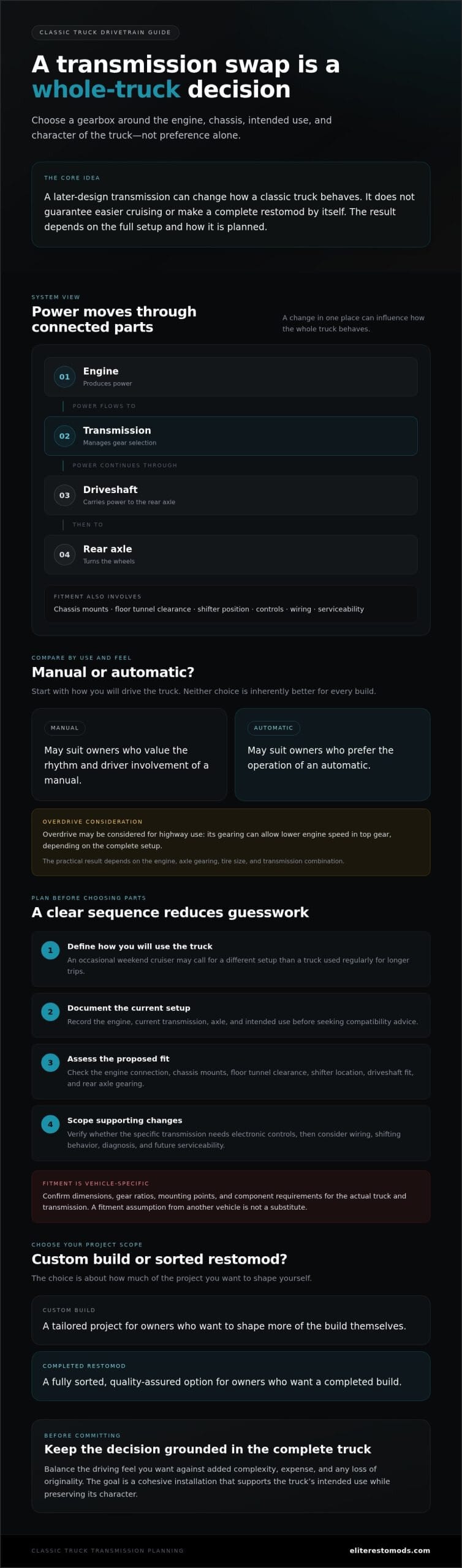
Power moves through a chain of connected components: the engine produces it, the transmission manages gear selection, and the driveshaft carries it to the rear axle, which turns the wheels. A change in one place can influence how the whole truck behaves. That’s why a modern transmission swap for classic truck builds should start with the engine and intended use, not a gearbox selected in isolation.
An overdrive transmission may be considered for highway use because its gearing can allow lower engine speed in top gear, depending on the complete setup. Chevy Hardcore discusses the potential benefits of an overdrive transmission swap, but the practical result in a particular truck depends on its engine, axle gearing, tire size, and transmission combination.
Mechanical fitment and supporting components
Before settling on a transmission, confirm how it will physically and mechanically connect to the truck. Check whether the bellhousing suits the engine, whether the transmission mounts align with the chassis, and whether the unit clears the floor tunnel. Shifter location and access matter as well.
Evaluate the driveshaft for length and fit, and consider how the rear axle gearing will affect the truck’s response in each gear. Exact dimensions, gear ratios, mounting points, and component requirements must be checked against the specific vehicle and transmission. No general fitment assumption replaces this assessment.
Electronic controls and day-to-day operation
Some newer transmissions require electronic controls, but requirements vary by transmission family and application. Verify the control system for the specific unit, then consider its effects on wiring, shifting behavior, and future serviceability. The details can change with the truck’s engine and existing configuration.
Plan for the complete installation: how the shifter will operate, what controls the transmission needs, and how the system will be diagnosed or serviced. These are practical ownership questions to answer before installation, not details to leave until the gearbox is in place.
For an owner planning a broader drivetrain integration, custom build services may be a relevant path to explore. A well-planned build treats the transmission, engine, chassis, and driveline as one coordinated system, with fitment confirmed for the specific truck.
Manual or Automatic? Compare Modern Transmission Options for a Classic Truck
The choice is about more than shifting style. A manual can make each drive feel deliberate and engaging, while an automatic may suit a driver seeking relaxed operation. Either can work in a thoughtfully planned classic-truck build, but the best fit depends on the vehicle, engine, intended use, and integration requirements.
Transmission names are starting points for research, not proof of compatibility. Tremec manual units and automatic families such as the 4L60E and 4L80E each require application-specific evaluation. Compare the whole installation before deciding:
| Choice | Potential appeal | Planning considerations | Details to verify |
|---|---|---|---|
| Modern manual | Direct driver involvement and control over gear changes. | May involve clutch and pedal integration, shifter placement, and fitment planning. | Engine connection, clutch setup, tunnel clearance, mounts, and suitability for intended use. |
| Modern automatic | Relaxed operation for drivers who prefer not to shift manually. | May add control-system, wiring, shifter, and supporting-hardware decisions. | Application fit, control strategy, installation requirements, and serviceability. |
When a modern manual transmission may suit the build
For enthusiasts who enjoy working the gear lever, a manual can preserve a connected, hands-on feel while changing the truck’s gearing. Consider whether the build can accommodate a clutch and pedal arrangement, where the shifter will sit, and whether the transmission will fit the tunnel and chassis. Have a qualified builder assess these details. Performance and durability depend on the specific transmission, engine, and vehicle setup, not the manual label alone.
When a modern automatic transmission may suit the build
An automatic may suit drivers who value ease of operation in regular use or traffic. Integration can involve decisions about electronic controls, wiring, shifter placement, and related hardware. The exact needs vary by transmission family and truck configuration, so ask a qualified builder to confirm the selected unit’s suitability before committing.
Project scope can grow if you choose a transmission before understanding its supporting requirements. A manual may prompt changes around the clutch and pedal; an electronically controlled automatic may require a control and wiring plan. A modern transmission swap for classic truck owners is easier to assess when these decisions are addressed early, alongside fitment and intended use. No option is universally best. Choose the driving character you want, then verify the complete combination before selecting a unit.
Plan a Classic Truck Transmission Swap Before Choosing Parts
Choose the transmission after you understand the truck and how you want to use it. A clear plan surfaces compatibility questions early, before a preferred gearbox turns into a larger project than expected. For a modern transmission swap for classic truck owners, work through these steps:
- Define the use. Note how often and where you expect to drive, from occasional cruising to regular use. Describe the shift feel and operating priorities you want, and decide which changes fit the project’s scope.
- Document the truck. Record the year, make, model, engine, current transmission, rear axle, and known drivetrain modifications. Separate confirmed details from assumptions, and gather any identification information a builder may need to review the vehicle.
- Assess compatibility. Have a qualified builder evaluate the proposed transmission against the engine and truck configuration. Confirm relevant fitment, dimensions, ratios, mounting, driveshaft, shifter, and control requirements for that exact combination.
- Scope the integration. Identify supporting components and decide who will address mechanical fitment, controls, testing, and final setup. Ask which details are verified and which still need inspection or measurement.
Questions to answer before selecting a transmission
Be specific about how you’ll drive. Will the truck mostly take short recreational trips, or will it see regular highway use? Do you want to shift manually, or prioritize relaxed operation? Which aspects of the current truck do you want to preserve, and what supporting work are you prepared to consider? Clear answers give a builder useful context instead of leaving them to infer your priorities from a transmission name.
How to evaluate the complete swap plan
Ask the builder to explain why the proposed unit suits your engine, rear axle, and intended use, and which supporting components the plan includes. Request vehicle-specific verification rather than relying on generic online fitment claims. A transmission that fits one truck or engine combination may not suit another. Keep a written record of confirmed vehicle details, open questions, and decisions as the plan develops. Treat estimates and assumptions as unverified until the relevant details are checked.
If you’re considering a broader, integrated project, explore the custom build process to understand how a build can be approached as a coordinated whole. Thoughtful planning gives each mechanical decision a clear purpose while helping preserve the truck’s character.
Choose Between a Custom Transmission Swap and a Sorted Restomod
Once you understand your goals and the integration decisions, consider how you want to approach the vehicle. A custom project lets you shape a specific truck around your priorities, while a completed restomod lets you evaluate a finished vehicle rather than manage each stage of a build. The right route depends on whether you value tailoring the process or stepping into a sorted vehicle.
When a custom swap project makes sense
A custom build may suit you if you have a particular truck you want to keep and a clear vision for how it should drive. Discuss the full drivetrain plan before committing to transmission components, including how the engine, gearbox, driveshaft, axle, controls, and chassis will work together. This keeps the transmission from being treated as an isolated change.
Custom work also involves choices along the way. You’ll need to weigh driving feel, fitment, supporting systems, and how much of the truck’s original character to preserve. A conversation with a build partner can help clarify the project direction. Before choosing a builder, identify the questions and decision factors that matter most to you.
When a completed restomod may be the better route
If you’d rather assess a finished vehicle than coordinate a build, a fully sorted restomod may be a more direct path. Elite Certified Restomods undergo a rigorous quality assurance process, and the curated inventory consists of fully sorted, investment-grade vehicles. That process is useful context, but it does not replace reviewing the details of an individual vehicle.
Look closely at the specific truck’s drivetrain and build information. Confirm which transmission it has, how it integrates with the engine and other systems, and whether its driving character matches your expectations. Ask about details that are unclear rather than assuming every vehicle has the same configuration.
There’s no single right answer. A custom build offers a tailored direction and a role in shaping the project; a completed restomod lets you evaluate an integrated vehicle before deciding whether it fits your plans. To explore either path, browse available restomods or learn about custom build services.
Build a Classic Truck That Feels Right on Every Drive
A modern transmission swap for classic truck builds works best when the gearbox suits the engine, drivetrain, chassis, and way you plan to use the vehicle. Whether you choose a manual or automatic, the decision should reflect the driving feel you want, with fitment and supporting systems verified for your specific truck.
Start by recording the existing setup and defining your priorities. Then discuss compatibility and the scope of integration before committing to components. If you’d rather shape a project around a truck you own, Elite Restomods offers custom build services. If you prefer a completed vehicle, its Elite Certified Restomods undergo a rigorous quality assurance process.
Both paths can bring classic design and contemporary capability together, with different levels of involvement in the build. Explore Elite Restomods’ custom build services and available restomods to decide which route fits your vision.
Frequently Asked Questions
Is a modern transmission swap worth it for a classic truck?
It can be worthwhile if the new transmission better suits how you want to drive the truck, but the benefits depend on the complete vehicle and project scope. A modern transmission swap for classic truck owners may offer different gearing or a preferred driving feel, yet fitment and supporting changes can add complexity. Weigh those trade-offs against cost, originality, and intended use, then discuss the specific combination with a qualified builder.
Can you put a modern automatic transmission in a classic truck?
Yes, a modern automatic can be installed in some classic trucks if the specific transmission is compatible with the engine, chassis, and drivetrain. Depending on the transmission and vehicle configuration, the plan may need to address mounting, driveshaft fit, shifter placement, wiring, and electronic controls. Ask a qualified builder to verify the application and supporting requirements before choosing a unit or assuming it will fit.
What is the best modern transmission for a classic truck?
There isn’t one best transmission for every classic truck. The right choice depends on the engine, chassis, rear axle, intended driving, and preferred feel. Manual families such as Tremec and automatic families such as the 4L60E or 4L80E are examples to research, not universal recommendations. Compare application-specific requirements, including fitment and controls, and have a qualified builder confirm the proposed combination for your truck.
Does a transmission swap require changing the driveshaft or rear axle?
Not always. A transmission change may affect driveshaft length or fit, so those details should be measured and checked for the specific installation. The rear axle may remain in place, but its gearing still influences how the truck behaves with the selected transmission. Have a builder assess both components as part of the full drivetrain plan rather than assuming either must be replaced or will work unchanged.
Will a modern transmission improve highway driving in a classic truck?
It may, depending on the transmission’s gearing and the rest of the truck’s setup. An overdrive gear can allow lower engine speed at cruising pace in some combinations, but the result depends on factors such as axle gearing, tire size, and engine characteristics. A transmission swap alone does not guarantee better highway comfort or fuel economy. Ask a builder to assess the intended setup and driving conditions.
How do I plan a modern transmission swap for my classic truck?
Begin by defining how you’ll drive the truck and the shift feel you want. Record its year, make, model, engine, current transmission, rear axle, and known modifications. Then ask a qualified builder to assess compatibility, fitment, controls, and supporting components for that specific combination. Separate confirmed details from assumptions, and clarify open technical questions before committing to parts. This keeps the project grounded in the truck’s actual configuration.