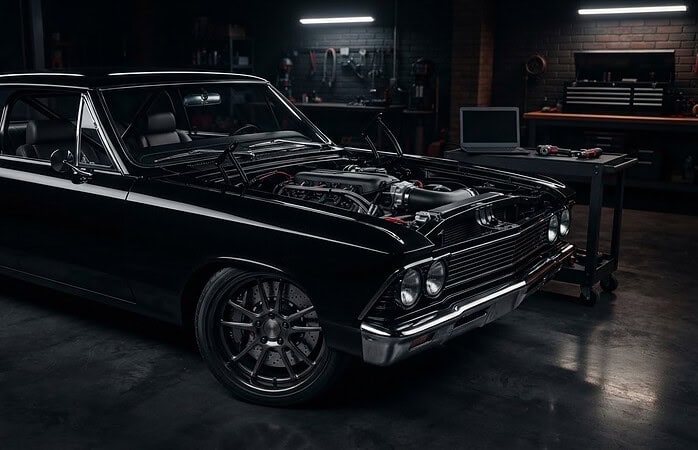

Premium isn’t automatically the safest choice for a carbureted classic. The best fuel for carbureted classic cars depends on the engine’s requirements, the condition of its fuel system, and how long the car sits between drives. A higher octane rating won’t fix every hard-starting or rough-running problem.
It’s reasonable to wonder whether your classic needs premium, ethanol-free gasoline, or both. Fuel choice can affect drivability, but the right answer starts with the engine’s specifications and the materials in its fuel system, not assumptions based on age alone.
This guide explains how octane and ethanol content matter, what to check in the owner’s manual or with the engine builder, and how storage habits can affect your decision. You’ll also learn why fuel symptoms may point to a maintenance issue rather than a need for a different grade. The goal is dependable driving, with choices guided by the car’s engineering and its current condition.
Key Takeaways
- Choose fuel based on the engine’s requirements, tune, and manufacturer guidance. No grade or formulation is right for every classic.
- Separate octane from ethanol content: octane helps resist knock, while ethanol compatibility depends on the fuel-system components.
- Find the best fuel for carbureted classic cars by comparing the engine’s octane needs with fuel composition and system condition, not by assuming premium is always better.
- Before changing fuel, confirm specifications and inspect the system. Hard starting or rough running may call for diagnosis rather than a different grade.
- For storage, follow fuel and stabilizer product guidance, then keep notes on fuel choices, storage habits, and recurring symptoms.
What Is the Best Fuel for a Carbureted Classic Car? Start With the Engine
The best fuel for carbureted classic cars is the fuel that matches the engine’s requirements, current tune, and manufacturer or engine-builder guidance. There’s no single grade or formulation that’s automatically right for every classic. Even cars of the same model year can have different engine specifications, fuel-system materials, or modifications, so start by identifying the car’s actual configuration.
A carburetor meters fuel into incoming air through mechanical passages and adjustments. Unlike a modern fuel-injected engine, it doesn’t rely on electronically controlled injectors. That difference can affect how the engine responds to fuel and operating conditions, but it doesn’t establish one universal fuel rule. For a foundational overview of fuel characteristics, see Gasoline properties.
Octane measures resistance to engine knock. It isn’t a universal score for fuel quality. A particular engine may require a higher rating, but that doesn’t automatically mean higher octane will improve performance in every classic. Octane and ethanol content are separate considerations, and neither should be used as a shortcut for identifying the correct fuel.
Why a carbureted engine can respond differently to modern gasoline
Carburetors use airflow, fuel passages, and mechanical calibration to deliver a combustible mixture. Designs vary, as do fuel lines, seals, gaskets, and other components. Age, condition, and previous repairs matter too. Fuel formulation and operating conditions can affect starting or drivability, but symptoms alone don’t prove that a different grade is needed. Treat general fuel advice as a starting point, not a vehicle-specific specification.
Which vehicle information should guide the first fuel decision?
Start with the owner’s manual and engine documentation, then determine whether the engine has been modified. If reliable records are available, compare compression, ignition timing, and carburetor setup with the engine’s stated requirements. Don’t assume factory specifications still apply if major components have changed.
- Confirm the engine’s fuel and octane recommendations in its documentation.
- Record known changes to the engine, ignition, or carburetor.
- Ask a qualified mechanic or engine builder when specifications are missing or unclear.
Knowing what’s installed turns fuel selection from guesswork into a reasoned decision. Keep that information with the car’s maintenance and configuration records. It gives you a useful reference when choosing fuel or discussing a running issue with a mechanic.
How Octane, Ethanol, and Fuel Volatility Affect Classic-Car Performance
Fuel behavior has more than one dimension. Octane, ethanol content, and volatility describe different properties, so changing one won’t necessarily address a problem caused by another. The right choice depends on the engine’s specification and the condition of its fuel system.
Does a classic car need premium or high-octane fuel?
Octane indicates gasoline’s resistance to knock, abnormal combustion that can sound like pinging under load. The required rating depends on the engine’s design and tune. Follow the owner’s manual or reliable engine-builder guidance rather than defaulting to premium. The U.S. Energy Information Administration’s Octane rating explained resource outlines how octane ratings relate to knock resistance.
If you hear pinging, don’t assume a higher grade will solve it. Ignition timing, engine condition, and other factors may contribute, so treat the sound as a reason to investigate. A mechanic can help distinguish an octane requirement from a tuning or mechanical issue. Premium is useful when the engine calls for it, not simply because the car is old.
What ethanol content and volatility can mean for older fuel systems
Ethanol content is separate from octane. Compatibility depends on the specific fuel-system materials and their condition, including hoses, seals, and carburetor components. Some older materials may be less suitable for ethanol blends, but carbureted classics don’t all have identical systems or histories. Check vehicle documentation and component guidance before drawing conclusions or changing fuel just because the car has a carburetor.
Volatility describes how readily fuel vaporizes. Gasoline formulations can vary with season and location, and those differences may affect starting or operation under particular conditions. A hard-starting engine isn’t proof that fuel volatility is the problem. Carburetor adjustment, ignition condition, and other maintenance factors can also matter. Avoid assuming one seasonal blend suits every climate or vehicle.
Fuel age and storage conditions can also affect starting and drivability. If a classic sits between drives, note how long the fuel has been in the tank and follow the fuel or stabilizer manufacturer’s storage directions. An additive isn’t a substitute for checking compatibility or diagnosing recurring symptoms.
To choose the best fuel for carbureted classic cars, assess these factors separately: verify the engine’s octane requirement, confirm fuel-system compatibility, and consider how the car is used and stored. This measured approach helps protect reliable operation without treating premium, ethanol-free fuel, or an additive as a universal fix.
Regular, Premium, Ethanol-Free, or Additives: Which Fuel Choice Makes Sense?
Compare fuels by what they provide, then match those characteristics to the engine’s documented requirements. Regular and premium differ mainly in octane rating, while ethanol content is a separate feature that can vary by fuel. Ethanol-free gasoline and additives may suit particular circumstances, but neither is a universal upgrade.
| Choice | Octane | Ethanol content | Availability and vehicle-specific caveats |
|---|---|---|---|
| Regular | Typically 87 at U.S. retail stations | May contain ethanol; check the pump label and supplier details | Widely sold, but use only if its octane meets the engine’s requirements. |
| Premium | Typically 91-94 at U.S. retail stations | May contain ethanol; premium does not mean ethanol-free | Choose it when the engine specification calls for its octane, not simply because it’s a classic. |
| Ethanol-free gasoline | Varies by product | No ethanol, as indicated by the product | Availability varies. Confirm current product details and verify octane suitability for the engine. |
| Fuel additives | Depends on product; don’t assume it raises octane | Doesn’t necessarily change the fuel’s ethanol content | Use only for a documented need, and follow the label and fuel-system guidance. |
When should an owner consider ethanol-free gasoline?
Consider it if vehicle or component documentation identifies an ethanol-compatibility concern, or if the car’s use and storage pattern make a particular fuel appropriate. Penn State Extension discusses how ethanol affects older engines, including potential effects on some fuel-system materials. That general information doesn’t prove every carbureted classic needs ethanol-free fuel, or guarantee improved performance. Check the supplier’s current formulation and confirm it meets the engine’s octane requirement.
Do lead additives or fuel stabilizers solve every problem?
No. A lead-replacement product may be relevant for some engines, but the need depends on engine design and prior modifications. Verify it with engine documentation or a qualified mechanic or builder. A stabilizer is intended for a particular storage use, not to repair stale fuel, incorrect tuning, or a failing component. Follow product directions, including suitability for the fuel and system, and don’t combine products unless their guidance supports it.
The best fuel for carbureted classic cars is a vehicle-specific choice: select the required octane first, assess documented compatibility, then consider whether ethanol-free fuel or an additive addresses a verified need. If symptoms persist, investigate the engine rather than switching products at random.
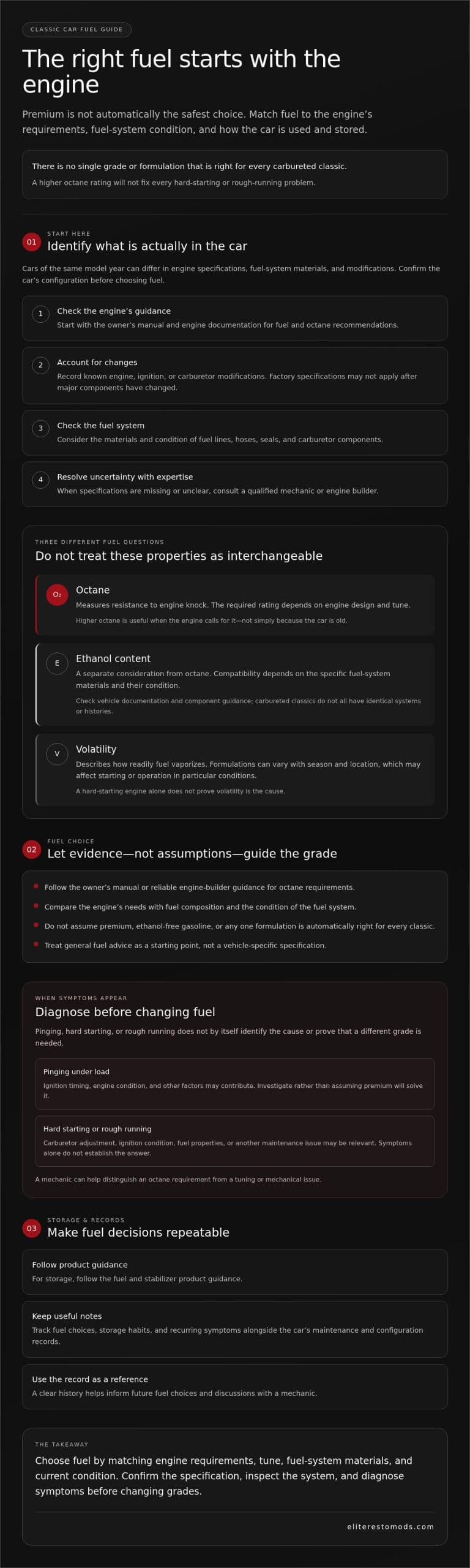
How to Choose and Store Fuel for a Carbureted Classic Car
A consistent routine makes fuel decisions easier to assess and helps separate a fuel issue from a mechanical one. Start with reliable records, make one considered choice at a time, then note how the car responds. The best fuel for carbureted classic cars isn’t a guess based on symptoms alone. It’s a decision grounded in the engine’s requirements and the car’s condition.
A practical checklist before filling the tank
- Confirm the specifications. Check the owner’s manual and engine documentation for fuel and octane requirements. Account for known engine modifications rather than assuming factory guidance still applies.
- Review the fuel system. If component compatibility is uncertain or the car has undocumented changes, ask a qualified mechanic or engine builder to assess it.
- Choose fuel to match. Verify the fuel’s current octane and ethanol information with the supplier, and ensure it meets the engine’s documented needs.
- Keep a simple record. Note the fuel used, when it was added, how long the car sat, and any starting or running symptoms. Change one factor at a time where practical so the result is easier to interpret.
Storage needs the same attention. Don’t assume a universal safe storage duration or container. Follow the fuel supplier’s handling guidance and the container manufacturer’s instructions. If considering a stabilizer, confirm that it’s suitable for the fuel and vehicle, then follow its label. Those directions, not a general rule of thumb, should guide use.
What to check when the car starts or runs poorly
Note when the symptom appears. Does the engine struggle only on a cold start, after heat soak, following a period of storage, or soon after refueling? This pattern can help a technician narrow down possible causes, but it doesn’t identify one on its own. Fuel age or condition may be relevant, as may carburetor adjustment, ignition, or fuel delivery.
Diagnose recurring symptoms before changing fuel grades. Moving from regular to premium won’t correct a blocked passage, poor ignition, or another mechanical fault. Adding more products shouldn’t replace diagnosis either. If poor starting or rough running persists, have the vehicle assessed by a qualified professional and share your fuel and symptom notes.
For owners considering broader changes to a classic, explore custom build services to discuss the vehicle’s configuration and goals.
Make Fuel Choice Part of Reliable Classic-Car Ownership
Dependable operation starts with an engine in sound condition and fuel that suits its documented requirements. No pump label can replace an understanding of what’s under the hood. The best fuel for carbureted classic cars is the choice that fits the engine’s specification and fuel system, not a habit carried over from another vehicle.
Keep a simple ownership record: note the fuel used, storage periods, maintenance or configuration changes, and recurring symptoms. If a starting or running issue appears, those details give a mechanic useful context and help you see whether a change made a difference. Be consistent, and investigate a problem rather than masking it with repeated fuel or additive changes.
Questions to ask before changing a classic car’s fuel routine
- Is the engine original, modified, or supported by reliable build documentation?
- Does the owner’s manual or engine builder specify an octane requirement or additive need?
- What evidence connects a mechanic’s recommendation to this engine and its actual fuel-system components?
Clear answers help separate a verified requirement from a general rule of thumb. If the vehicle’s history is incomplete, gather the available records and ask a qualified mechanic or engine builder to assess the configuration before changing the routine.
When a vehicle review or build conversation may help
Prospective buyers can use the same careful approach. Review documented vehicle details, including what’s known about the engine and modifications, rather than assuming a car’s age or appearance reveals its fuel requirements. Elite Restomods describes its inventory as fully sorted and subject to rigorous quality assurance. That can support a more informed ownership decision, but it doesn’t mean a particular vehicle has a carburetor or needs a specific fuel.
Explore the current classic-car inventory and review the available details for each vehicle. For a classic meant to be driven and enjoyed, a well-documented configuration and thoughtful maintenance are as important as its presence on the road. Let the car’s verified specifications guide fuel decisions, and keep the records that make reliable ownership easier to sustain.
Keep Your Classic Ready for the Road
The best fuel for carbureted classic cars isn’t a universal grade or a premium label. It’s the fuel that meets the engine’s documented octane needs and suits the condition of its fuel system. Ethanol content, storage habits, and fuel age also matter, so base decisions on reliable vehicle guidance rather than assumptions.
Keep notes on what you use, how the car is stored, and when symptoms appear. If hard starts or rough running recur, look for the cause before switching grades or adding products. A properly maintained, well-understood engine is the foundation of dependable classic-car ownership.
That same focus on readiness shapes Elite Restomods. The company describes its inventory as fully sorted and subject to rigorous quality assurance, with an ownership mission centered on classic cars ready for reliable driving. Fuel guidance remains specific to each vehicle, but careful preparation makes every drive more rewarding.
Explore Elite Restomods to browse its classic cars and services for owners planning their next build or purchase.
Frequently Asked Questions
Is ethanol-free gas best for carbureted classic cars?
Not automatically. The best fuel for carbureted classic cars depends on the engine’s requirements, fuel-system materials, and how the vehicle is used. Ethanol-free gasoline may be worth considering if records show compatibility concerns or the car spends long periods in storage, but it isn’t a guaranteed fix for hard starting or rough running. Check the vehicle documentation and the fuel supplier’s current product details before choosing.
Does a carbureted classic car need premium gas?
Only if the engine’s specifications or a qualified professional indicate that higher octane is required. Octane measures resistance to knock, not overall fuel quality or performance. If the engine pings, confirm its fuel requirement and have its timing, tune, and condition assessed. Premium may be appropriate for an engine that calls for it, but using it without checking won’t necessarily improve operation or address the cause of a symptom.
Can modern gasoline damage a carbureted classic car?
It depends on the vehicle. Fuel formulation, ethanol content, storage time, and the fuel system’s materials and condition can all influence compatibility. Don’t assume every classic is incompatible with modern gasoline, or that one alternative fuel is automatically safe. Check reliable vehicle or component guidance, including the specified octane, and ask a knowledgeable mechanic if the fuel lines, seals, or carburetor components are unknown or showing signs of deterioration.
What happens if I use the wrong octane in a classic car?
The effects depend on the engine and its requirements. Fuel below the specified octane may contribute to knock under some operating conditions. A higher grade than needed, however, doesn’t automatically improve performance. If you hear pinging or notice a change in how the car runs, don’t guess at the fix. Confirm the engine’s documentation and ask a qualified professional to check the fuel requirement, tune, timing, and engine condition.
Should I use a lead substitute in a carbureted classic car?
Carburetion alone doesn’t determine whether an engine needs a lead-replacement product. Relevant details include engine design, valve-seat configuration, modifications, and manufacturer or engine-builder guidance. Verify those details before selecting an additive, and follow the product directions if a qualified source confirms it’s suitable. A lead substitute isn’t a universal requirement and won’t correct unrelated issues such as poor ignition, incorrect carburetor adjustment, or worn components.
How should I store gasoline for a classic car?
Follow the vehicle, fuel-container, and additive manufacturers’ instructions, and account for how long the car will sit before use. Fuel can change during storage, but suitable precautions depend on the product and conditions. Don’t rely on a universal storage period, container recommendation, or additive dose. If storage will be extended or you’re unsure how the guidance applies to your vehicle, ask a qualified mechanic for advice specific to its fuel system.
Can bad fuel cause hard starting or rough running in a carbureted car?
Fuel age or an unsuitable formulation may contribute, but similar symptoms can also come from carburetor condition, ignition, fuel delivery, or engine problems. Note when the issue occurs, such as after storage or soon after refueling, and share those details with a mechanic. If symptoms persist, have the vehicle diagnosed before repeatedly changing fuel grades or adding products. A methodical check can help identify the actual cause.