
The most convincing air-conditioning setup for a classic car isn’t always the one that looks most original. A vintage air conditioning systems review is most useful when it compares complete systems with custom under-dash setups, weighing cabin appearance, installation demands, and the balance between preserving factory character and adding modern comfort.
That distinction matters when you want to enjoy the car on the road, not just admire it in the garage. This comparison looks at how different setups approach fit and appearance, and what owners report about installation and day-to-day use. You’ll get a clearer sense of which trade-offs deserve attention, from working with existing components to fitting a new system without losing the car’s character.
Key Takeaways
- Compare complete systems with custom under-dash setups by considering cabin appearance, installation demands, and how much original character you want to retain.
- Use owner accounts to understand the installation experience, while remembering that results can depend on the vehicle and the work involved.
- Assess compatibility in the context of the car’s existing layout and components, not just its make or model.
- Recognize that system reliability depends on the installation as well as the equipment, so the details of the build matter.
Comparisons with competing air conditioning systems
A Vintage Air system sits between preserving factory equipment and building a custom setup. Its Heritage Series is offered in three options, giving buyers distinct configurations to compare. A vintage unit may preserve period character, while an aftermarket system can support more comprehensive modernization. Start by comparing the car’s existing equipment with the cabin appearance you want.
Factory air conditioning can retain original controls and dashboard details, but its condition matters. A replacement or custom under-dash system changes the installation approach and may be more visible inside the cabin. A complete aftermarket package and a one-off setup also differ in how components are selected and fitted. Compare the finished layout, not just the system name.
The Suzuki Samurai offers a useful example of age affecting that decision. On May 24, 2020, an owner described the original air-box plastic as 32 years old. In a vehicle with aged components, preserving every factory part may involve different trade-offs than replacing or adapting pieces. Consider dashboard space, existing ductwork, and how much original material the installation retains.
For hot-weather driving, judge a Vintage Air system by cabin cooling, airflow at the seats, and performance in traffic and at cruising speed. These outcomes depend on system selection, installation, cabin sealing, and how air reaches occupants. A useful comparison considers the whole setup, rather than treating the air-conditioning unit as the only factor.
Use these practical comparison points:
- Appearance: Compare visible vents, controls, and under-dash components against the original interior.
- Fit: Account for the vehicle’s dashboard, air-box, and existing equipment.
- Purpose: Decide whether retaining factory character or adding modern comfort matters more.
A classic car with original air conditioning presents a different starting point from a Samurai with aging air-box plastic. The strongest vintage air conditioning systems review weighs these differences alongside the owner’s priorities. Compare installation styles against the specific car before judging a system by its name alone.
Customer reviews and installation experiences
Owner accounts are most useful when they describe the car, installation work, and results, rather than just giving a rating. For warranty and support, refer to the documentation supplied with the specific Vintage Air system, and keep purchase and installation records.
Installation Experiences
Installation experiences vary with dashboard layout, existing components, and the installer’s familiarity with the vehicle. A review of a complete system fitted to one model may not reflect the work required for a custom under-dash setup in another. Look for specifics: what needed adapting, how controls and vents were positioned, and whether the finished cabin met the owner’s expectations.
An account describing only a successful first start says little about the full installation. More useful is a report explaining fitment, airflow, and adjustments made after the initial test. These details help distinguish a straightforward fit from a project requiring careful integration with the car’s existing interior.
Reliability and Common Problems
Reliability reviews should explain what changed over time and how the system performed in different driving conditions. Note reports of inconsistent cooling, restricted airflow, unusual sounds, or unpredictable controls. These are symptoms to investigate, not proof of a defect in every Vintage Air installation.
Installation details matter when interpreting those reports. Weak airflow, for instance, could relate to vent placement or duct routing, while a cooling complaint may involve the wider system setup. A review identifying the symptom and eventual repair is more valuable than a broad claim that a unit is flawless or unreliable.
Read customer accounts as individual experiences, then compare the details that match your car. A Vintage Air owner’s report is more relevant when it identifies the vehicle, system configuration, installation approach, and conditions of use. Separate firsthand observations from general opinions, and give more weight to reports explaining both the issue and its resolution.
For a project involving multiple upgrades, integrated classic-car build planning can help frame air conditioning as part of the complete interior and mechanical vision. That perspective matters when a new system must complement the car’s existing character rather than function as an isolated addition.
What vehicles are compatible with Vintage Air systems?
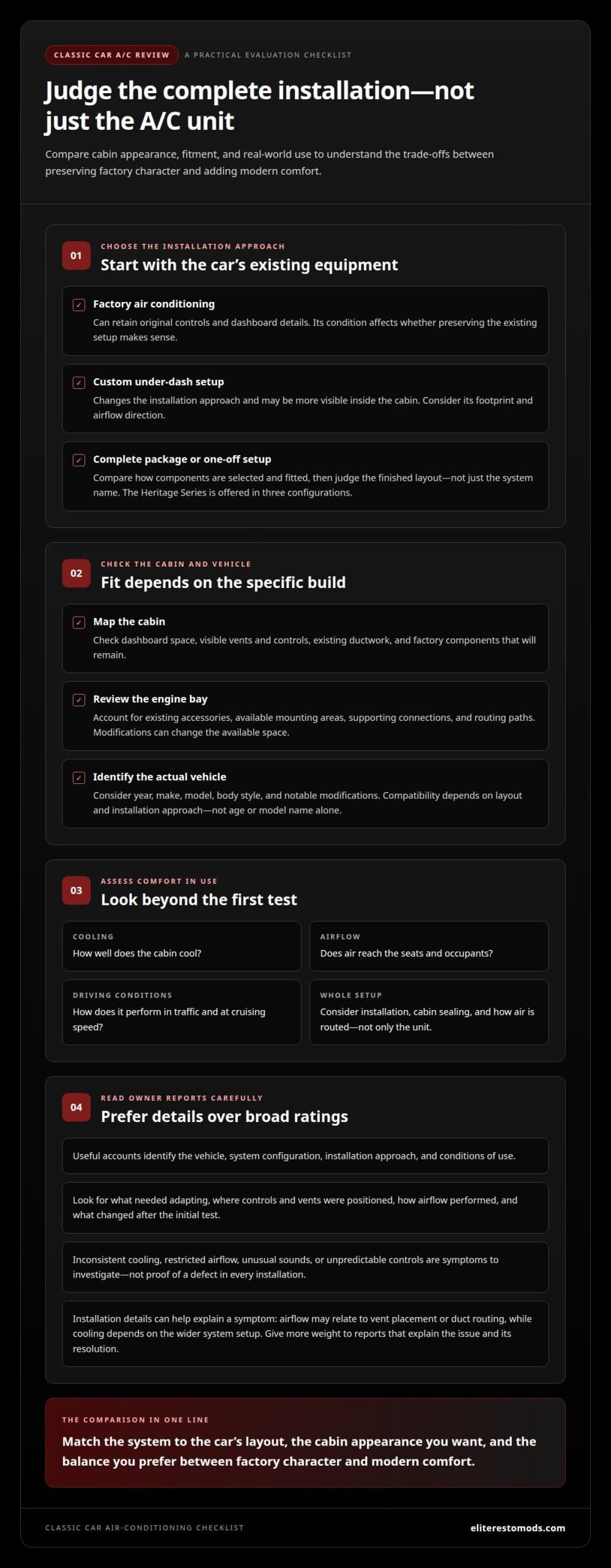
Compatibility depends on the vehicle’s layout and installation approach, not simply its age. A classic coupe, pickup, or roadster can present different packaging challenges, even when each needs cabin air conditioning. Assess the specific year, make, model, body style, dashboard, and engine-bay arrangement before choosing a system.
Start with the cabin. The dashboard determines available space for the evaporator, controls, and vents. Existing ductwork and factory air-conditioning components also affect how a replacement integrates. In a car without factory air, an under-dash unit may be an option, but its visible footprint and airflow direction become key fitment considerations.
The engine bay creates another set of constraints. A system needs room for its engine-driven components and supporting connections, while existing accessories compete for space. A modified engine bay can differ considerably from the original configuration. Evaluate the actual build, not just the model name or a factory-era parts description.
Use a consistent fitment review:
- Identify the vehicle: Record its year, make, model, body style, and notable modifications.
- Map the cabin: Locate dashboard space, vents, controls, duct routes, and retained factory components.
- Review the engine bay: Note existing accessories, available mounting areas, and routing paths.
- Define priorities: Decide whether discreet integration or a visible custom installation suits the interior.
A restored car with an intact dashboard calls for a different design discussion than a modified hot rod with a reworked interior. Both require attention to component placement, airflow paths, and access for future service. These details determine whether a proposed installation suits the vehicle as built.
A useful compatibility review connects the vehicle’s configuration to the intended cabin result. Compare the system’s installation approach with the car’s interior and engine-bay layout, then account for existing modifications. This makes the fitment decision specific to the vehicle, rather than relying on broad assumptions about classic cars.
What are common problems and reliability issues with Vintage Air systems?
A cooling complaint does not automatically mean a Vintage Air component is faulty. The symptom may point to airflow, electrical supply, refrigerant circulation, or installation details. Start diagnosing by noting when the problem appears, such as at idle, during highway driving, or after the cabin heats up.
Weak airflow calls for attention to the vents, duct routing, and blower operation. If one outlet feels different from another, compare airflow across the cabin before replacing parts. A blocked or poorly directed duct can affect comfort even while the system operates. Check that the controls select the intended mode and air reaches the seats.
Warm air calls for a separate diagnostic path. Note whether cooling changes between idle and cruising, then assess the system as a whole. Compressor operation, electrical connections, refrigerant circulation, and heat entering through the cabin can each affect the result. A symptom log gives a technician a clearer starting point than a general report that the system “doesn’t cool.”
Unusual sounds or intermittent operation also need context. Record whether a noise occurs when the air conditioning engages, whether it changes with engine speed, and whether the controls or airflow change at the same time. These observations help distinguish a mounting or connection concern from a control or operating issue. One owner’s experience does not establish a universal Vintage Air defect.
For a methodical review, document these points:
- Conditions: Note idle, traffic, and cruising behavior.
- Air delivery: Compare vent output and selected control modes.
- Changes: Record sounds, intermittent operation, or shifts in cooling.
- Installation: Preserve details about routing, connections, and adjustments.
Clear diagnosis protects the car from unnecessary parts replacement. If the air-conditioning system is part of a broader restoration, plan a custom classic-car build around its mechanical and interior requirements.
Elite Restomods
Elite Restomods helps classic-car owners consider comfort upgrades as part of their vehicle’s larger vision. If air conditioning is part of a broader transformation, Custom Build Services can bring mechanical choices, cabin details, and the car’s original character into one cohesive plan. The aim is a classic that feels carefully composed and ready to drive.
For buyers seeking a completed vehicle, Elite Certified Restomods offer another route. Owners preparing to sell can explore the Consignment Program, while Climate-Controlled Storage supports vehicle care between drives or during a project. Each option serves a different stage of ownership, from finding a finished build to planning what comes next.
To discuss your classic car and its next chapter, contact Elite Restomods.
Shape the next chapter of your classic
A vintage air conditioning systems review can inform your decision, but the key question is how comfort should fit the car you want to drive. Treat the installation as part of the vehicle’s broader design, with mechanical choices and interior details working in harmony. That perspective can guide you whether you’re refining a current build, considering a finished classic, or preparing to sell a vehicle.
Elite Restomods offers Custom Build Services for owners shaping a classic around their priorities. Elite Certified Restomods provide a path to a completed vehicle, while the Consignment Program supports owners ready to place theirs with new custodians. Each option suits a different point in the ownership journey, with the car’s character at the center.
Bring your vision and questions into the next conversation. Contact Elite Restomods to discuss your build, and move toward a classic made to be enjoyed on the road.
Frequently Asked Questions
What are Vintage Air conditioning systems, and which models are available?
Vintage Air systems are aftermarket air-conditioning setups for adding or updating climate control in classic cars. The Heritage Series is one named line, offered in three options. The right configuration depends on the vehicle’s cabin layout and installation needs. Compare how each option suits the car’s dashboard, interior appearance, and intended use, rather than choosing by model name alone.
How efficient are Vintage Air systems in hot-weather driving?
Hot-weather performance depends on system selection, installation, cabin sealing, and how air reaches occupants. Assess cooling and airflow in both traffic and at cruising speed.