
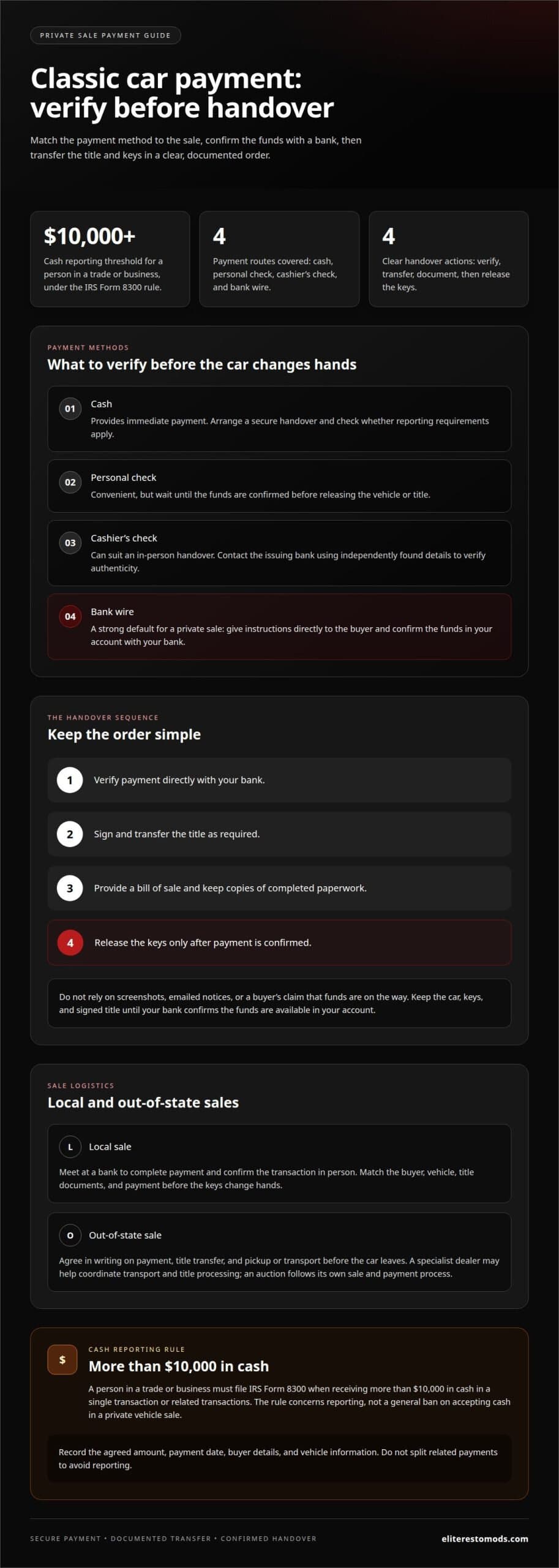
The best way to receive payment for a classic car is to use an arrangement that lets you verify the funds before transferring the title and keys. Private sellers need a clear, verifiable handover, while specialist dealerships can make payment part of a documented sale. For rare or exclusive cars, agreed terms and a careful record of the transaction matter. According to the Internal Revenue Service, a person in a trade or business must file Form 8300 when they receive more than $10,000 in cash in a single transaction or related transactions.
A classic car carries more than a sale price. Its provenance, condition, and standing in the collector market can make the closing process feel as important as the car itself. This guide explains how payment methods differ between private sales and specialist dealerships, what to consider when selling a rare or exclusive vehicle, and how to handle the transfer with confidence. You’ll find a practical framework for choosing a payment arrangement that suits the sale and supports a secure handover.
Key Takeaways
- Choose a payment method that lets you confirm funds before handing over the title and keys.
- For a private sale, understand how to verify a cashier’s check and avoid relying on a payment image or claim alone.
- Coordinate wire-transfer details carefully, and wait until the funds are confirmed in your account before completing the handover.
- Cash buyers and sellers can use different routes: Elite Restomods’ Classic Car Financing can support buyers considering a classic vehicle.
Private sellers and specialist dealerships
Private sellers manage payment and paperwork directly, while specialist dealers can coordinate a more documented sale. The right method depends on the buyer’s location, the vehicle’s value, and how the funds will be verified.
Comparing Cash, Personal Checks, and Bank Checks
For a private classic-car sale, cash can provide immediate payment, but arrange a secure handover and check whether any reporting requirements apply. A personal check is convenient, but wait until the funds are confirmed before releasing the vehicle or title. A cashier’s check can work for an in-person handover, provided you verify its authenticity with the issuing bank.
Dealers may coordinate payment with title processing, while private sellers handle each step themselves. Agree on how the payment will be delivered and verified before setting a handover. Monthly payments belong to a financing transaction, not an informal substitute for settled sale funds.
Choosing Payment for Local and Out-of-State Sales
For a local sale, buyer and seller can meet at a bank to complete payment and confirm the transaction in person. This provides a clear opportunity to match the buyer, vehicle, title documents, and payment before the keys change hands. Keep a signed bill of sale and copies of the completed paperwork.
An out-of-state sale takes more coordination because the buyer and vehicle may be in different places. Agree in writing on the payment method, title transfer, and pickup or transport before the car leaves. A specialist dealer may help coordinate transport and title processing, while an auction follows its own sale and payment process.
Cash Payment Limits and Reporting Rules
There is no general cash-payment limit stated here for a private vehicle sale. However, the reporting rule depends on whether the seller is acting in a trade or business. According to the Internal Revenue Service, a person in a trade or business must file Form 8300 when they receive more than $10,000 in cash in a single transaction or related transactions.
Reporting rules concern documentation, not a ban on accepting cash. Record the agreed amount, payment date, buyer details, and vehicle information. Don’t split related payments to avoid reporting. Keep a clear record of the transaction instead.
Verifying Cashier’s Checks and Wire Transfers
To reduce scam risk, contact the bank using details you find independently, not a number supplied with the check. Ask the bank to verify a cashier’s check before handing over the title or vehicle. For a wire transfer, give payment instructions directly to the buyer and confirm the funds in your account with your bank.
Complete the sale in order: verify payment, sign and transfer the title as required, provide a bill of sale, then release the keys. Don’t rely on screenshots, emailed notices, or a buyer’s claim that funds are on the way. Even when a collector’s vehicle attracts competitive interest, a careful handover remains the seller’s best protection.
What is the safest payment method when selling a classic car privately in the US?
A bank wire initiated by the buyer and confirmed directly with your bank is a strong default for a private classic-car sale. It creates a payment record and avoids carrying a large amount of cash. Agree on the method before the buyer travels, especially if the car is rare or the sale requires remote coordination.
Put the payment terms in writing alongside the sale price, vehicle identification number, and handover conditions. Confirm that the buyer’s name matches the person purchasing the car. If someone else will send the funds, pause and document the reason before accepting payment. A mismatch can complicate the sale record and leave it unclear who is buying the vehicle.
Before arranging pickup, establish these safeguards:
- Share wire instructions directly with the buyer through a trusted channel, then confirm them by voice using a number you already know.
- Ask your bank how it will identify a completed incoming wire, and rely on its confirmation rather than a buyer’s screenshot or email.
- Keep the car, keys, and signed title until your bank confirms the funds are available in your account.
Watch for last-minute changes at closing. A buyer who proposes an unfamiliar payment route, asks you to refund an overpayment, or pressures you to release the car before payment is confirmed has changed the agreed terms. Stop the handover and resolve the discrepancy through your bank. Don’t send money to a third party as part of the sale.
Once payment is confirmed, complete the title transfer and bill of sale in line with your state’s requirements. Keep copies of the signed documents and the bank’s transaction record. This orderly process gives both parties a clear account of the sale, payment, and release of the classic car.
A vehicle inspection is recommended when buying a classic because its condition can greatly affect its price. In a private sale, the buyer can assess the car while the agreed payment safeguards remain in place. An inspection doesn’t replace the need to confirm payment with the bank before handing over the car, keys, and signed title.
Are cashier’s checks safe for classic car payments?
A cashier’s check can work for a classic-car purchase, but the document alone doesn’t prove the funds are genuine. For a private seller, the best way to receive payment for a classic car is to authenticate the check with the issuing bank and confirm the deposit process with your own bank. Treat a polished-looking check as a payment method to verify, not proof that the sale is complete.
Call the issuing bank using a number from its independently located website or directory, not contact details printed on the check or supplied by the buyer. Provide the check number, amount, date, and purchaser’s name. Ask whether the bank issued the check and whether its details match. A buyer’s receipt or photograph may help identify the transaction, but it doesn’t replace direct confirmation with the bank.
At handover, compare the check with your written sale agreement. Confirm that the payee is correct, the amount matches, and the vehicle identification number is consistent across your paperwork. If the buyer offers more than agreed and asks you to return the difference, stop the transaction. Don’t issue a refund or release the car based on an overpayment claim.
Choosing the best way to receive payment for a classic car also means understanding your bank’s deposit status. A displayed balance or provisional credit may not mean the payment is complete, so don’t treat an app screen as final confirmation. Keep the vehicle, keys, and signed title until your bank confirms the funds are available and the check has been processed. If the issuing bank can’t validate the check or details conflict, pause the sale and arrange another payment method before transferring ownership. Keep the check, deposit record, sale agreement, and bank correspondence with your title paperwork.
How can sellers safely accept a wire transfer for a classic car?
Start by including the wire terms in the sale agreement. Record the classic car’s vehicle identification number, agreed amount, buyer’s legal name, and payment deadline. Share your bank instructions directly with the buyer through a secure channel. Don’t post account details in a public listing or rely on a forwarded message as proof of payment.
Before the buyer sends funds, contact your bank using a number you already trust. Confirm which account details the buyer needs and how the bank will identify an incoming wire. Then call the buyer using a separately verified number to confirm they received the correct instructions. This second check can uncover altered emails or last-minute changes to payment details.
Use this sequence for the handover:
- Sign a sale agreement that connects the payment to the specific vehicle.
- Have the buyer initiate the wire using the agreed instructions.
- Contact your bank through its established channel to confirm receipt and availability.
- Only after confirmation, complete the title paperwork and release the keys.
A payment screenshot, email notification, or buyer’s banking-app display isn’t confirmation from your bank. If the buyer says the transfer is delayed, keep the car and title documents with you. If the amount differs from the contract, stop and resolve the mismatch through both banks before proceeding. Never return an alleged overpayment to a different account.
For an out-of-state purchase, agree when transport can collect the car and make pickup conditional on confirmed payment. Don’t provide keys or release authorization to the carrier while the wire remains unconfirmed. Keep the signed agreement, title-transfer records, bank confirmation, and pickup details together. A clear paper trail connects the buyer, funds, vehicle, and handover, giving both parties a precise record of the transaction.
Plan pickup around distance, seasonal demand, and route availability. Compare open and enclosed carrier options. Enclosed transport is often more expensive and typically recommended because it offers additional protection from weather and road debris.
Elite Restomods: Classic Car Financing
Elite Restomods offers Classic Car Financing for buyers planning to acquire a classic vehicle. It can be a useful next step when you’ve found the right car and want to consider financing as part of the purchase. Financing supports the buying decision, but it doesn’t replace a clear sale agreement or confirmed payment arrangements between buyer and seller.
For buyers drawn to classic-car character and restomod capability, Elite Certified Restomods offer another option to explore. The right approach depends on the vehicle you’re considering and how you plan to complete the purchase. Set out the payment terms, vehicle details, and handover process clearly from the outset.
If you’re considering a classic-car purchase and want to discuss financing, contact Elite Restomods.
Make your next classic-car move with confidence
Choosing the best way to receive payment for a classic car brings clarity to the sale and can mark the beginning of a new chapter with the right vehicle or project. Consider what you want from ownership next: a carefully selected classic, a custom build, or support bringing a car to market. Elite Restomods offers Elite Certified Restomods, a Consignment Program, and Custom Build Services for different stages of that journey.
Let your next step reflect the car’s character and your plans for it. Whether you’re refining a build vision or preparing to sell a cherished vehicle, a conversation can help you explore the direction that fits. Contact Elite Restomods to discuss your classic-car plans and take the next step with confidence.