
One alarm isn’t enough. The strongest security systems for classic car storage layer an intruder alarm with CCTV, indoor and outdoor camera coverage, controlled access, and vehicle-level deterrents. A practical CCTV benchmark is to cover the building frontage and use at least two internal cameras, showing both the approach and the cars inside.
It makes sense to want more than a warning siren when a cherished classic is out of sight. The right combination can help deter unauthorized entry, record activity, and protect the vehicle itself, without relying on one device to do every job. This guide compares alarms, camera placement, access controls, and layered security, then explains how climate-controlled storage fits into caring for a classic between drives.
Key Takeaways
- Choose an alarm setup that suits the storage environment, and keep its components maintained so alerts remain useful.
- Plan CCTV coverage around entry points and interior sightlines to capture activity inside and outside the building.
- Use indoor and outdoor cameras for complementary views, with placement that reduces blind spots.
- Layer facility access controls with vehicle-level deterrents so protection doesn’t depend on one device alone.
1. Intruder alarm installation and maintenance
A storage alarm should detect an intrusion early, then make the event difficult to ignore. For a garage, motion detectors are recommended for identifying intruders within 30 feet. Position them to cover likely access routes while reducing blind spots behind stored equipment or vehicle rows. A wireless garage-door tilt sensor can also alert when the door tilts or lifts above a 45-degree angle.
Plan installation around both the building and the car. Some classic-car alarm systems don’t need to connect to the vehicle, helping preserve an original cabin and avoid modifying period wiring. Before choosing a vehicle-mounted system, consider where its sensors, wiring, and control units will go. A concealed installation can preserve the car’s appearance, while sensors at garage doors and other entry points monitor the storage space.
An audible alarm provides an immediate warning when a sensor detects activity. It can draw attention to an attempted entry, but sound alone won’t show what triggered the system or what happened. Pair the siren with alerts to a designated person, and use cameras for visual context. Some vehicle tracking systems also alert you to attempted unauthorized access, providing another signal beyond the building alarm.
Keep the system dependable with a regular maintenance routine. Test door contacts, motion sensors, the siren, and alert delivery after installation, then retest after repairs or changes to the garage layout. For example, a moved shelf may block a detector, while a loose door contact can prevent a reliable trigger. Record faults and repairs to spot recurring issues. If the alarm has backup power, include it in service checks.
For a classic stored behind a secured door, combine early detection with an audible warning and a verified alert route. Each layer has a distinct role: detect, warn, and communicate. The car’s own alarm can add protection, especially if it operates independently of the original vehicle wiring.
2. CCTV coverage
Start with the facility’s perimeter and interior, not a camera aimed only at the car. A practical baseline covers the building frontage and includes at least 2 internal cameras. The exterior view can record approaches to entrances, while interior views capture activity around stored vehicles. Together, these perspectives help establish where an incident began and how it moved through the building.
Map camera views before installation. Place one interior camera to show the main access route and another to cover areas hidden from the entrance view. Make sure parked cars, pillars, or open doors don’t block important sightlines. At the frontage, frame doors and approach paths clearly so people entering or leaving appear in the recording.
Lighting shapes what exterior CCTV can capture after dark. Use exterior lighting that stays on continuously for good-quality picture recording, or movement-triggered lighting linked to the CCTV system. The first option gives the camera steady illumination; the second activates light when movement occurs. Check the view at night, including shadows cast by vehicles, walls, or landscaping near the entrance.
Protect recording equipment as carefully as camera coverage. Keep the hard disk recorder in a suitable locked metal box or another secure building. Separating it from the camera area can make footage harder to access if someone reaches the cameras. Routinely check camera status, confirm recordings are being retained, and make sure the recorder is locked after maintenance.
Test coverage by walking each entrance route, then reviewing footage from the frontage and both internal cameras. Confirm the recording shows doors, movement paths, and vehicle areas without major obstructions. Clear images can help document damage or theft and may be useful when organizing car insurance records. CCTV works best as part of a security plan, not as a substitute for controlled access or an alarm.
3. Indoor and outdoor security cameras
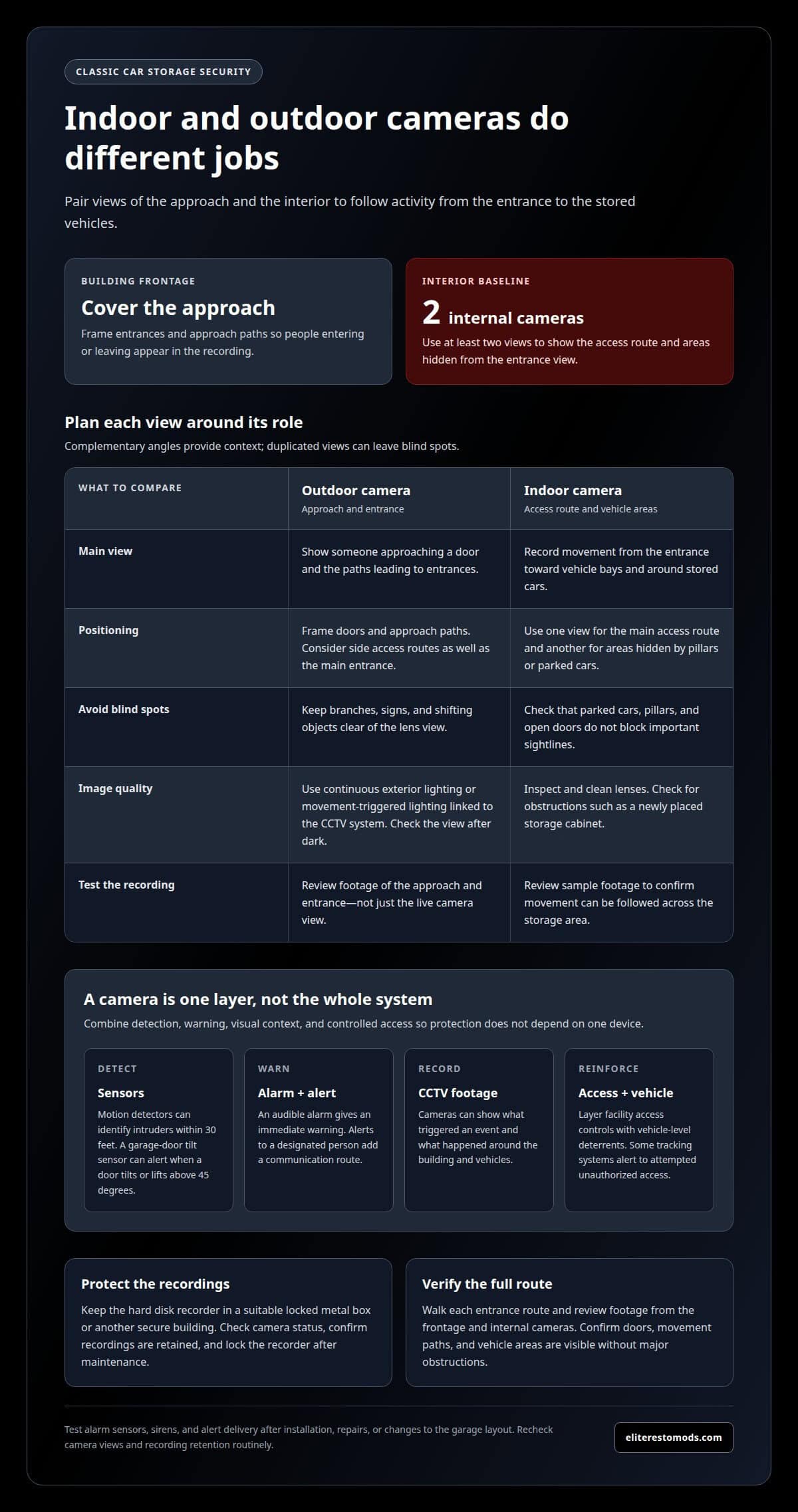
Indoor and outdoor cameras have different roles. An exterior camera can show someone approaching a door, while an interior view can record movement near a stored vehicle. Plan both perspectives together: an outside camera may capture someone entering, and an inside camera can show which aisle they take.
Position outdoor cameras to capture approach paths and entrances, rather than pointing only at a wall or gate. Keep lenses clear of branches, signs, and objects that could shift into view. A camera near a building entrance can record the threshold, while another covers a side access route. Don’t rely on a single angle to show every approach.
Decide what each indoor camera needs to show. One might cover the route from the entrance to the vehicle bays; another can monitor areas concealed by pillars or parked cars. Aim to capture movement around a classic without placing the lens so close that it records only a small section of bodywork. A wider view provides useful context.
Protect image quality with regular upkeep. Dust on an indoor lens or water spots on an outdoor housing can obscure details. During routine checks, inspect each camera’s view and clear anything blocking it. A newly positioned storage cabinet could hide a doorway from an interior camera, while seasonal foliage could obstruct an exterior view.
Review sample footage from both indoor and outdoor cameras, not just the live image. Confirm that you can follow someone from the outdoor approach into the interior and across the relevant storage area. If the sequence is unclear, adjust camera angles or add coverage at the transition point. This practical test can reveal gaps a floor plan may miss, ensuring the views complement rather than duplicate each other.
4. Layered security for classic cars
For vehicle storage, monitored alarms and motion sensors detect activity, while cameras record what happens. Combine them: a sensor can trigger an alert, and footage can show the event. No single layer does every job.
There isn’t one best GPS tracker for every classic car. Choose a system that supports recovery, and consider installing tracking devices in two separate locations. Some systems can be activated to help law enforcement track a stolen vehicle. Costs depend on the device and installation, so compare those factors rather than assuming one price fits every setup.
For fire protection, use smoke detection or a fire alarm, and consider a sprinkler system for flame protection. A facility’s fire detection may combine smoke and heat detection, integral sounders, and manual call points. Professional inspection and maintenance every six months helps keep the system serviceable.
Insurance requirements vary by policy and vehicle, so review the policy’s specific security and storage conditions. For break-in resistance, secure entrance doors with a five-lever or closed-shackle heavy-duty padlock. Electric shutters can be isolated with a key switch; manual shutters can use key-operated shutter pins. Store vehicle keys off site in a locked safe, and keep the hard disk recorder in a locked metal box or another secure building.
Protect a classic during long-term storage with building security and vehicle-level deterrents. A hidden kill switch can interrupt power to the ignition, battery, or fuel pump, while replacement door locks can resist older unlocking techniques. Remember that thieves may tow a non-running car, so immobilization alone isn’t enough. Keep titles in a safe lockbox, and never leave keys in the ignition when the car is unattended. Secure storage pricing in the United States depends on location, space, climate control, and service level; the amount is provided after a quote request.
Elite Restomods: Climate-Controlled Storage
Elite Restomods offers Climate-Controlled Storage for owners who need a dedicated place to keep a classic between drives. Alarms, cameras, and access controls address unauthorized entry; climate control supports the car’s preservation while it’s stored. Consider both security and care when planning storage.
Consider climate-controlled storage when a home garage doesn’t meet your needs or you want a controlled environment for a vehicle that spends extended periods off the road. The right choice depends on your car and how you plan to enjoy it again. Contact Elite Restomods to discuss Climate-Controlled Storage for your classic.
Plan the Next Chapter of Ownership
Choosing security systems for classic car storage is part of a larger ownership decision: how you want to preserve, enjoy, and eventually move your vehicle forward. Your plans may evolve, from storing a cherished car between drives to commissioning a bespoke build or preparing for a future sale. Elite Restomods offers Elite Certified Restomods, Custom Build Services, and a Consignment Program for owners considering those next steps.
If dedicated storage is the immediate priority, start a conversation about the vehicle and your storage needs. Contact Elite Restomods about storage security to discuss the next step for your classic. With a considered plan in place, you can look forward to the next drive with confidence and renewed anticipation.
Frequently Asked Questions
What Are the Best Anti-Theft Measures for Classic Cars?
The strongest approach combines a secured storage space with an entry alarm and vehicle-level immobilization or tracking. For example, a hidden kill switch can interrupt ignition power while a tracker supports recovery efforts. Choose devices suited to the car’s electrical layout and intended use; an older vehicle may need a non-invasive installation to preserve its original cabin and wiring.
What are other security measures you can take?
Etching the vehicle identification number into the windows and windshield can help deter theft and identify the car if it’s stolen. Keep the title and spare keys outside the vehicle, and use a visible deterrent when the car is parked unattended. For street or open-lot parking, a fitted, tied-down cover can also make a classic harder to remove quickly.
What security systems are best for classic car storage?
The most useful security systems for classic car storage combine detection, visual records, and controlled access. An alarm or motion sensor can flag activity, while cameras help show what happened and where. Prioritize coverage of both the storage building and vehicle access, then consider a tracker to support recovery. The right balance depends on the storage layout and car.
How should classic cars be protected from theft, vandalism, and unauthorized access?
Use layered protection for entry, vehicle movement, and evidence of an incident. Secure doors and shutters, limit access to keys, and keep vehicle documents in a separate locked location. For vandalism, clear sightlines around parking spaces and reliable recorded footage can help establish when damage occurred. Keep a dated condition record with photographs to document the car’s state before storage.
What are the best GPS trackers for classic cars, and what do they cost?
There isn’t one best GPS tracker for every classic car. Choose a system that supports recovery and consider installing trackers in two separate locations. Costs depend on the device and installation.