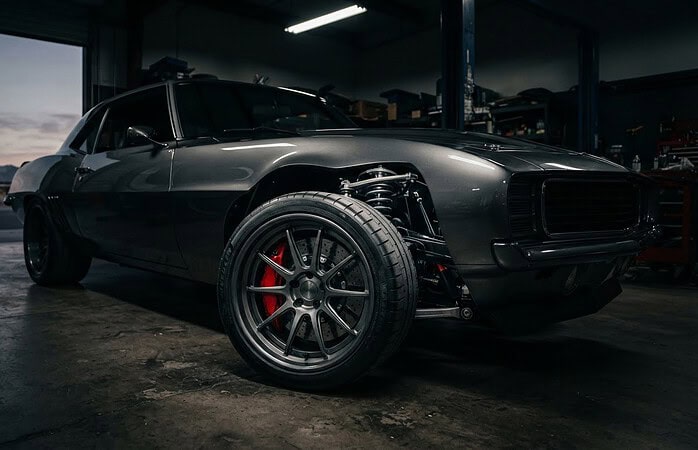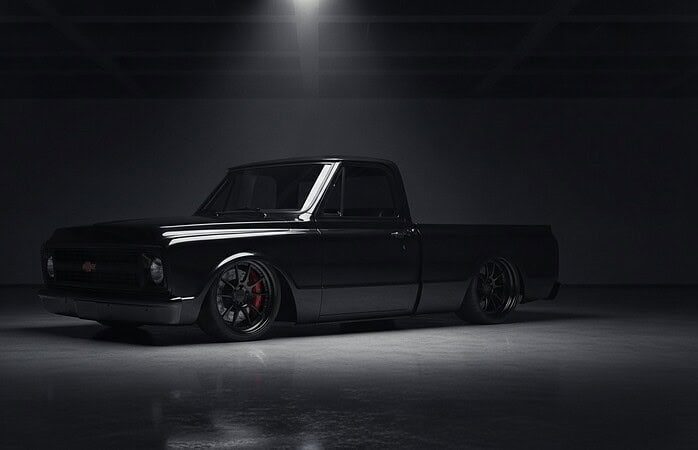

The wheel that looks right may be the wrong place to start. Choosing wheels for pro touring builds begins with diameter and brake clearance: many builds need large brakes, making at least 17 inches a practical starting point. According to Billet Specialties, 18-inch wheels are the most popular Pro-Touring size.
Diameter is only one part of the decision. Width and offset affect fitment, while material and spoke design influence strength, weight, and classic character. Any wheel you choose must work with the car’s suspension, brakes, tires, and bodywork.
This guide explains how those choices work together, from aggressive widths and backspacing to cast, flow-formed, and forged construction. You’ll also compare five-spoke and multi-spoke designs, see why some builds use larger rear wheels, and get a practical decision guide for matching appearance with modern performance. The result: a wheel package chosen for the whole build, not just the first impression.
Key Takeaways
- Match wheel width and offset to the car’s available clearance; aggressive fitments can require body modifications.
- Compare cast, flow-formed, and forged construction by how each balances strength and weight for your build.
- Choose spoke design for both the period-correct look and the practical needs of a performance-focused car.
- Let brake clearance and tire availability guide diameter, then weigh that fitment against the stance you want.
Aggressive wheel widths and offsets
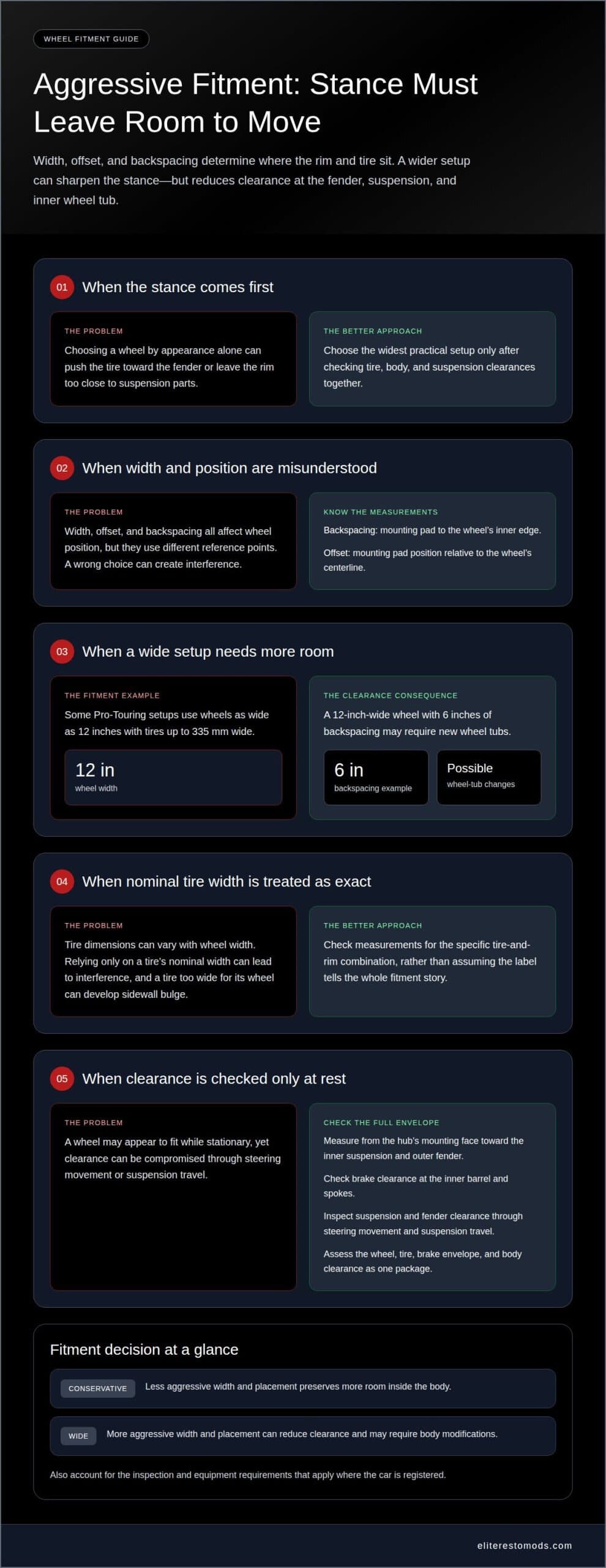
Wheel width, offset, and backspacing determine where the rim and tire sit in relation to the body. A wider setup can sharpen the stance, but it leaves less clearance at the fender, suspension, and inner wheel tub.
Custom Backspacing and Offsets
Backspacing measures from the wheel’s mounting pad to its inner edge; offset describes the mounting pad’s position relative to the wheel’s centerline. Both affect how far the wheel sits inward or outward, but they use different reference points. Some Pro-Touring setups use wheels as wide as 12 inches with tires up to 335 mm wide. A 12-inch-wide wheel with 6 inches of backspacing may require new wheel tubs.
Wheel prices vary by width, diameter, material, finish, and customization. Compare these details alongside fitment information when assessing value. No single brand suits every build.
| Fitment option | Width and position | Main consideration |
|---|---|---|
| Conservative fitment | Less aggressive width and placement | Preserves more room inside the body |
| Wide Pro-Touring fitment | Up to 12 inches wide; 6-inch backspacing example | May require wheel-tub changes |
Choose the widest practical setup only after accounting for tire, body, and suspension clearances.
Fitment Measurement and Clearance Checks
Measure the space from the hub’s mounting face toward the inner suspension and outer fender, then compare it with the wheel’s width and backspacing. Check brake clearance at the wheel’s inner barrel and spokes, and inspect suspension and fender clearance through steering movement and suspension travel. Because tire dimensions can vary with wheel width, use measurements for the specific tire and rim combination.
Inspection and equipment requirements vary, so account for the rules that apply where the car is registered.
Common Fitment Mistakes and Risks
A common mistake is choosing a wheel based only on diameter or appearance. Incorrect backspacing can leave the rim too close to suspension components or push the tire toward the fender. A tire that is too wide for its wheel can develop sidewall bulge, which may affect handling. Relying on a tire’s nominal width without checking its measurements on the selected rim can also lead to interference.
Before buying, assess the wheel dimensions, tire measurements, brake envelope, and available body clearance as one package. A striking stance matters, but so does unobstructed movement under load and through turns.
Cast, flow-formed, and forged wheel materials
Wheel construction affects weight and strength, as well as how the finished wheel suits a Pro-Touring car. Compare the manufacturing method with the wheel’s load rating and intended use.
Cast Wheel Construction
A cast wheel is made by pouring molten aluminum into a mold, where it cools into shape. This differs from flow-forming and forging: the initial form comes from a mold, rather than a cast barrel being shaped under pressure or a forged blank being machined. Before deciding whether a cast wheel suits the build, compare its design and load rating.
Flow-Formed Wheel Construction
A flow-formed wheel starts as a cast blank, then rollers shape and stretch its barrel. That process distinguishes it from conventional casting, while its cast starting form differs from a forged blank. Consider the finished wheel’s construction and rating together, rather than assuming the manufacturing method alone determines whether it suits a Pro-Touring car.
Forged and Billet Aluminum Construction
A forged monoblock wheel is machined from a solid aluminum piece. One described example starts as a 100-pound chunk of aluminum and loses about 80 pounds during machining. Billet describes material machined from a solid block; forged construction describes how that material was formed. Compare each wheel’s actual construction and load rating, not just the “billet” label.
Load Ratings and Construction
Choose a wheel with a load rating suited to the vehicle’s weight and intended use. The U.S. Government Publishing Office explains that wheels must be light yet strong enough to transmit driving power, carry the load, and resist side strains during skidding and rapid turns. This requirement matters more than choosing a material by name alone. Cast, flow-formed, and forged wheels all need adequate capacity for their application.
For a cohesive build, material choice should work with the car’s wider engineering plan. The custom build process connects individual decisions to the complete vehicle.
Five-spoke versus multi-spoke wheel designs
Spoke pattern defines the wheel’s visual character, while construction determines whether it’s one piece or assembled from sections. Compare style, piece count, and hub fit as separate considerations.
Five-Spoke Designs
A five-spoke wheel has five main spokes extending from the hub to the rim. Its open pattern creates a classic performance look that suits vintage-inspired builds and leaves the brakes more visible. Compared with multi-spoke designs, it makes a simpler visual statement. Assess the specific wheel’s construction and brake clearance rather than judging by spoke count alone.
Multi-Spoke Designs
A multi-spoke wheel has more than five spokes, creating a denser pattern across its face. This detailed look can complement a contemporary Pro-Touring build or provide a refined contrast to classic bodywork. Spoke count alone doesn’t establish strength or fit. Compare the wheel’s design, construction, and brake clearance instead of assuming more spokes mean greater capability.
Modern aluminum wheels come in one-, two-, and three-piece designs, and any of the three can be strong enough for Pro-Touring builds. A one-piece wheel is a single unit; two-piece and three-piece designs join multiple sections. Piece count describes construction, not spoke pattern, so you can consider a five-spoke or multi-spoke look separately.
Hub fit matters as much as face design. A hubcentric wheel’s center bore fits closely over the vehicle’s hub, helping center the wheel during installation. If the wheel’s center bore is larger than the hub, a correctly sized hubcentric ring fills the gap. Match the ring’s inside diameter to the hub and its outside diameter to the wheel bore. This fitment detail is separate from spoke pattern and piece count.
Choose a design that suits the car’s character, then assess piece count and hub fit as separate specifications.
Wheel diameter and available sizes
Diameter affects brake clearance, tire sidewall, and classic proportions. For Pro-Touring, choose a size around the brake package and intended driving, not appearance alone.
Some Pro-Touring tires have a 30 percent aspect ratio, creating a low-profile sidewall. Tire size must suit the wheel’s width, overall diameter, and available clearance. A tire that is too wide for its rim can bulge at the sidewall and affect handling, so consider the complete tire-and-wheel combination.
No single wheel-and-tire combination fits every Camaro or Mustang. Model year, brake package, suspension, and body clearance all affect fitment. Treat published combinations as starting points, then match the actual wheel and tire dimensions to the specific car’s hardware and available space.
Diameter and weight affect both the drive and the stance. A larger wheel generally leaves less sidewall when overall tire diameter stays similar, which can make the ride feel firmer over road impacts. A heavier wheel adds unsprung mass and affects suspension response; wheel construction and tire choice also influence braking and handling.
Many Pro-Touring builds use 17- or 18-inch wheels to accommodate big brake kits, and some use rear wheels as large as 20 inches. Billet Specialties reports that 18-inch wheels are the most popular Pro-Touring size. A 15-inch steel wheel presents a different compromise: low-profile tires are difficult to find, and aren’t available unless using a full race tire.
Use this decision order: confirm brake clearance, establish the tire’s overall diameter and width, then choose a wheel diameter that supports both. A 17-inch or larger diameter suits many builds with large brakes, while an 18-inch wheel offers a common Pro-Touring starting point. The right combination still depends on the Camaro’s or Mustang’s specific configuration.
Include these measurements in a custom build plan, selecting wheel diameter alongside the car’s brakes, tires, and intended use.
There is no single tire size that works best for every Pro-Touring build; match the tire’s width and overall diameter to the wheel, brakes, and available clearance. Some Pro-Touring tires use a 30 percent aspect ratio for a low-profile sidewall, but the right choice depends on the car’s configuration and intended driving.
Elite Restomods: Custom Build Services
Elite Restomods’ Custom Build Services can make wheel selection part of a broader vehicle plan. This is a natural next step when you want diameter, width, offset, and design considered together as part of the build.
An integrated approach connects the wheels’ appearance with the car’s mechanical requirements and overall character. A period-inspired five-spoke design or modern multi-spoke face can be considered within the same project, with fitment decisions tailored to the vehicle being built.
Ready to discuss a custom Pro-Touring project and its wheel direction? Contact Elite Restomods.
Shape the next stage of your build
The next decision is not simply which wheel looks right. Consider how you want the finished car to feel on the road and how each choice supports that character. Use that intent as your brief: describe the driving experience you want, the visual era you want to evoke, and the compromises you’re willing to make. This gives each design decision a purpose beyond appearance.
A considered approach to choosing wheels for pro touring builds supports the whole vehicle. Elite Restomods’ Custom Build Services can bring those priorities into a complete project. Elite Certified Restomods and the Consignment Program offer other options for buyers and owners considering a classic performance car.
Your build should feel unmistakably yours, from its first design choice to the miles ahead. Start a conversation with Elite Restomods about your build and take the next step toward a classic made for the road.
Frequently Asked Questions
How do you choose wheel diameter and width for a pro touring car?
Choosing wheels for pro touring builds starts with the brake package, tires, and intended driving. For example, a car with upgraded calipers needs enough clearance inside the wheel barrel, while the tire’s approved rim-width range limits wheel width. Assess front and rear fitment separately, since steering and body clearances can differ. Treat diameter, width, and tire dimensions as one coordinated choice.
What wheel offset and backspacing fit common pro touring cars?
No single offset or backspacing fits every Camaro or Mustang. When choosing wheels for pro touring builds, account for the model generation, suspension, brake components, axle position, and body modifications. Establish the mounting position from the vehicle’s configuration, then compare candidate wheels against it. A familiar model name alone doesn’t determine the right specification.
How do forged, flow-formed, and cast wheels compare for pro touring use?
Choose based on the wheel’s documented construction, load rating, and role in the build, rather than assuming one manufacturing method is automatically best. A street-driven car may call for a balance of strength and weight, while a highly customized project may put greater emphasis on a particular design or construction. Compare the wheel’s specifications with the vehicle’s requirements before settling on material and finish.
What tire sizes and aspect ratios work best for pro touring builds?
There is no single tire size for every build. Some setups use tires up to 335 mm wide, and some Pro-Touring tires have a 30 percent aspect ratio; match the specific tire measurements to the wheel width and available clearance.
What wheel and tire combinations fit popular pro touring models like Camaros and Mustangs?
Fitment varies by model year, brakes, suspension, and body clearance. Many builds use 17- or 18-inch wheels for brake clearance, but match the actual wheel and tire dimensions to the car’s hardware and available space.