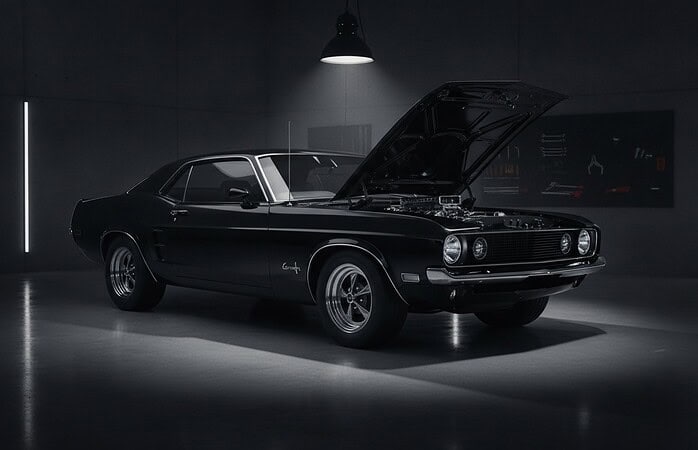

A flawless six-figure paint job can hide a mountain of mechanical sins. It’s a sobering reality in a market where high-quality builds often start at $300,000; sometimes, what looks like a bespoke masterpiece is actually a collection of mismatched parts waiting to fail. You’ve likely felt that familiar anxiety while browsing listings, wondering if the suspension geometry was truly engineered or if those performance brakes are just bolted onto a decaying frame. Identifying the signs of a bad restomod build is the only way to protect your capital and your safety.
Classic soul. Modern power. We understand that you’re looking for more than a museum piece. You want a turn-key machine that marries iconic aesthetics with professional engineering. This guide will show you how to look past the “lipstick on a pig” aesthetics to evaluate the actual mechanical integrity of the vehicle. You’ll learn to spot red flags in everything from wiring harnesses to title legitimacy, ensuring your next acquisition is a fully sorted investment ready for the daily drive. We’re breaking down the seven critical warnings every serious collector must recognize before the first turn of the key.
Key Takeaways
- Identify hidden structural issues and frame misalignments that a fresh coat of paint cannot mask to ensure your investment is built on a solid foundation.
- Distinguish between a cohesive engineering masterpiece and a collection of mismatched performance parts that lead to drivetrain disharmony and cooling failures.
- Recognize the signs of a bad restomod build by evaluating the electrical “rat’s nest” and cabin ergonomics that often separate professional builds from amateur projects.
- Learn the importance of a comprehensive Build Book and transparent documentation to verify the source and quality of every component from the crate engine to the brakes.
- Understand the value of the “fully sorted” standard, which includes extensive road testing to ensure modern reliability meets vintage soul.
Surface-Level Perfection vs. Structural Integrity
A mirror-like finish can be the ultimate deception. While the industry defines a restomod as a classic vehicle updated with modern technology, the execution of that vision varies wildly between shops. A truly elite build requires a foundation as strong as the new engine it carries. If the chassis is compromised, the entire project is a liability. You must look past the gloss to find the truth. Iconic style. Modern engineering. These elements must exist in total harmony.
One of the most common signs of a bad restomod build is a focus on aesthetics at the expense of structural soundness. A flawless exterior does not guarantee a rust-free chassis. Often, an over-restored engine bay that prioritizes chrome over accessibility is designed to distract you from poor metal work hidden beneath the surface. True craftsmanship is visible in the places most people never look.
To better understand the core philosophy of a high-quality build, watch this helpful video:
The “Lipstick on a Pig” Phenomenon
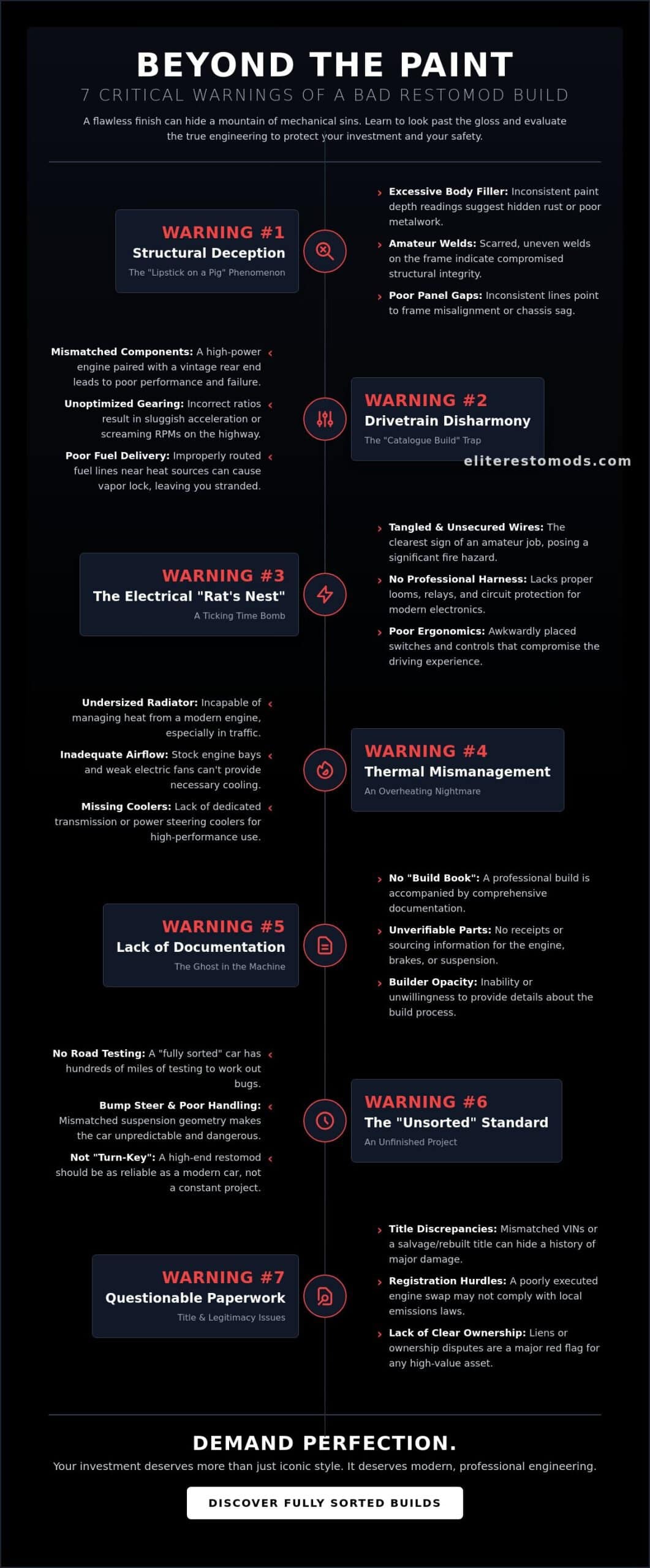
High-gloss paint is a powerful tool for masking underlying oxidation and subpar weld quality. In the world of high-end machinery, we look for perfection in the substrate, not just the clear coat. Amateur builders often use excessive body filler to smooth out panels rather than performing meticulous metal work. We recommend using a paint depth gauge during your inspection. Consistent readings suggest professional craftsmanship; wildly varying numbers indicate a heavy reliance on Bondo. Watch for overspray on weatherstripping or chassis components. These are the tell-tale marks of a rushed job that lacks a professional build process.
Frame and Chassis Examination
Modern power requires modern support. When a builder drops a high-torque LS3 or a Gen 4 Coyote V8 into a vintage frame, the chassis must be reinforced to handle the visceral twist of the engine. Inspect the frame rails for signs of heat stress or amateurish welding. If the metal looks scarred or the welds lack the clean, rhythmic appearance of a master, the car’s integrity is in question. Inconsistent panel gaps are another red flag. If the door lines don’t match the fenders, it often points to frame misalignment or a chassis that has begun to sag under the weight of unengineered components. Mismatched suspension geometry can also lead to bump steer, where the car changes direction unexpectedly over road imperfections. A bespoke machine should feel planted and predictable, not like a beast struggling against its own bones.
Drivetrain Disharmony: Why Mismatched Components Kill Performance
A restomod is an engineered system, not a parts bin experiment. Many builders succumb to the “catalogue build” trap, selecting high-profile components that look impressive on a spec sheet but fail to communicate with each other on the road. This lack of systemic harmony is one of the clearest signs of a bad restomod build. When a modern 480-horsepower Gen 4 Coyote V8 is paired with a vintage rear end and an unoptimized gear ratio, the result is a sluggish beast that fails to deliver the visceral thrill you expect. Classic style. Modern power. These must work in unison.
Proper engineering requires calculating the synergy between the torque curve and the final drive. If the ratios are mismatched, you’ll find yourself either screaming at high RPMs on the highway or bogged down in the city. Fuel delivery is another common failure point. High-pressure EFI systems require meticulous plumbing; poor routing near exhaust heat leads to vapor lock, leaving you stranded while the engine starves. Understanding what to look for in a restomod involves looking deeper than the engine cover to see how these systems interact under load.
Thermal Management and Airflow
Managing the roar of a performance beast creates immense heat. Many builders cram high-horsepower engines into vintage bays without upgrading the airflow. You must verify if the radiator and electric fan setup are rated for the engine’s actual output during stop-and-go traffic. Without a dedicated transmission cooler and proper heat shielding around the floorboards, that high-performance dream quickly becomes an uncomfortable, overheating nightmare. We look for bespoke cooling solutions that ensure your drive remains as cool as it is exciting, regardless of the external temperature.
Braking and Power Imbalance
Brute force requires refined restraint. We often see builds with “too much motor” for their stopping power. While seeing high-end names like Wilwood or Baer on the calipers is a good start, they must be properly proportioned to the vehicle’s weight and power. A mismatched master cylinder or an inadequate vacuum booster leads to a wooden, inconsistent pedal feel. If you are looking for a vehicle where every component is balanced for peak performance, explore our current inventory of elite-certified machines. True automotive excellence is found in the meticulous balance of power and poise. Every stop should be as confident as every start.
The “Rat’s Nest” and Ergonomic Failures
The interior is your sanctuary. It’s where the visceral connection between driver and machine is forged. However, even the most meticulously hand-stitched leather cannot compensate for a poorly engineered cabin. One of the most insidious signs of a bad restomod build is found in the electrical architecture and the ergonomic layout of the cockpit. A true master builder treats the wiring loom with the same reverence as the paint finish. It’s the nervous system of the vehicle. If it’s compromised, the dream of turn-key reliability disappears instantly. Classic soul. Modern refinement. These shouldn’t just be marketing terms; they must be felt in every switch and dial.
Poorly planned cabin ergonomics ruin the driving experience. We see it often: a beautiful car that is physically painful to drive. Mismatched components in the interior lead to excessive noise, vibration, and harshness, which destroys the grand touring potential of the vehicle. This is the difference between a bespoke piece of functional art and a kit-based assembly. Understanding what to know before buying a restomod requires you to look beneath the upholstery and behind the dash to ensure the engineering matches the aesthetics. If you want to see how we handle these intricate details, explore our meticulous build process.
Wiring and Loom Integrity
Electrical failure is the primary reason restomods end up on the back of a trailer. Amateur work is easy to spot if you know where to look. Peering under the dashboard often reveals a rat’s nest of tangled wires and “vampire clips” that pierce insulation. These are dangerous shortcuts. A professional build utilizes a modern fuse block and organized, labeled wiring harnesses. Poor grounding is the root of most phantom electrical issues. If the builder didn’t take the time to establish clean, dedicated ground points, you’ll be chasing gremlins for the life of the car. We look for clean routing and weather-pack connectors that protect the system from the elements.
The Geometry of the Driver’s Seat
Engineering a comfortable cockpit is a matter of precise geometry. The alignment of the steering column, seat, and pedals must be perfect. Many builds suffer from offset pedals, which force the driver into an unnatural position and cause significant leg fatigue during long tours. We also evaluate the integration of modern HVAC systems. A system like Vintage Air should operate seamlessly, with vents and controls integrated into the dash rather than hanging awkwardly below it. As of 2026, a truly fully sorted build must also include professional calibration of any integrated ADAS features. This ensures that modern safety sensors work in harmony with the vintage chassis, providing a driving experience that is as safe as it is exhilarating.
Red Flags in Documentation and Builder Transparency
Transparency is the hallmark of a master. In the world of high-performance machinery, a vehicle’s documentation is just as critical as its drivetrain. If a builder is hesitant to share the “how” and “what” of a project, it’s time to walk away. Meticulous records are the only way to verify the engineering integrity we’ve discussed in previous sections. A restomod without a paper trail is a mystery that will eventually become an expensive problem. Professionalism is transparent. Excellence is documented.
One of the most telling signs of a bad restomod build is the absence of a “Build Book.” This isn’t just a folder of receipts; it’s the autobiography of the car. Vague descriptions like “rebuilt engine” or “performance transmission” are massive red flags. In 2026, you should expect to see specific details, such as a Gen 4 5.0L Coyote V8 Power Module or the new 6.7-liter LS6 crate engine. If a builder cannot or will not provide a detailed service and maintenance history, they are not standing behind their craftsmanship. You deserve to know every nut and bolt that went into your investment.
The Build Book Requirement
A comprehensive Build Book is a non-negotiable asset for any elite-level vehicle. It must contain a granular list of every component, including specific part numbers and the manufacturers used. This is vital for future maintenance. Imagine trying to source a replacement seal for a bespoke HVAC system without a part number. You should also look for:
- High-resolution photo documentation of the raw metal work before any paint or filler was applied.
- Detailed wiring schematics for all custom electrical work and modern ECU integration.
- Dyno sheets that verify the actual performance output of the drivetrain.
- Alignment and suspension geometry specs tailored to the car’s modern components.
Without these, you’re essentially buying a black box. True automotive art requires a blueprint.
Provenance and Legal Verification
Legitimacy starts with the paperwork. Discrepancies in the VIN and Title can lead to legal or insurance nightmares that no amount of horsepower can fix. You must ensure the vehicle is titled correctly and that the physical VIN tag matches the documentation perfectly. Buying a car with a “salvage” or “rebuilt” title history is a significant risk that often destroys future resale value. For those seeking a secure, high-performance investment, reviewing Classic Car Restomods for Sale: The 2026 Guide to Investment-Grade Performance will help you understand the documentation standards required for investment-grade machinery. If you’re ready to partner with a builder who values precision and absolute transparency, explore our custom build services where every detail is preserved for posterity.
The Path to a Fully Sorted Elite Restomod
The journey from a vintage shell to a high-performance masterpiece is arduous. While many builders stop once the car looks the part, the distinction between a completed project and a fully sorted vehicle is vast. A fully sorted restomod is one where every mechanical quirk has been identified, analyzed, and eliminated through rigorous testing. This is the stage where the signs of a bad restomod build are most apparent to the uninitiated; if a car hasn’t been road-tested under varying conditions, it’s merely a display piece. We believe that a true icon is meant to be driven. Classic aesthetics. Modern reliability. This is the standard we demand for every vehicle that carries the Elite name.
Investment-grade vehicles require a specialized quality assurance process that transcends a simple checklist. It involves a deep understanding of how modern components interact with a sixty-year-old chassis. We prioritize a rigorous 500-mile break-in period because the first few hundred miles are when heat cycles and vibration reveal the hidden flaws in a build. If a fastener is going to loosen or a seal is going to weep, it should happen under our watch, not yours. This commitment to perfection is what separates a world-class curator from a hobbyist shop.
The Elite Quality Assurance Process
Every vehicle in our care undergoes a multi-point inspection designed to reveal even the most microscopic inconsistencies. This comprehensive shake-down process is where we iron out the mechanical quirks that plague lesser builds. We don’t just check the fluids; we monitor thermal management during prolonged idling and evaluate suspension behavior at highway speeds. You can learn more about our meticulous standards on the Elite Restomods process page. By the time a car reaches our showroom, it has already proven its mettle on the open road, ensuring your first drive is as flawless as the finish.
Bespoke Artistry and Modern Reliability
The soul of American muscle is brute force, but the future of the hobby is refined comfort. Our goal is to simplify the transition for collectors who want the roar of a beast without the headache of vintage maintenance. Every build represents a marriage of hand-stitched luxury and relentless performance engineering. Choosing a vehicle that has already been through our rigorous vetting ensures you avoid the common signs of a bad restomod build that often plague the private market. We invite you to experience this duality firsthand. View our current Elite Restomods inventory to find a curated selection of ready-to-drive icons that have been vetted against the highest industry standards. Your childhood dream is waiting. It’s time to make it a high-performance reality.
Secure Your Automotive Legacy
Distinguishing the signs of a bad restomod build is the most critical step in protecting your investment and your safety. We’ve journeyed through the mechanical intricacies that separate a “bolt-on” project from a bespoke piece of functional art. From the structural foundation of the chassis to the systemic harmony of the drivetrain; true excellence requires a master’s touch. A flawless exterior should never be an excuse for unengineered shortcuts or a lack of transparent documentation.
You deserve the visceral thrill of high performance paired with the refined elegance of luxury craftsmanship. Every vehicle we offer features Elite Certified Quality Assurance, providing turn-key reliability for daily driving and modern performance that honors its vintage soul. Why gamble on an unknown builder when you can acquire a fully sorted machine that has been vetted through our rigorous testing process? Take the next step toward the high-performance reality you’ve always envisioned.
Explore Our Curated Inventory of Fully Sorted Elite Restomods
Your journey with a modern classic starts here. Drive with the confidence that only meticulous engineering can provide.
Frequently Asked Questions
What is the most common mechanical failure in a restomod?
Electrical system failures are the most frequent mechanical issues in restomod builds. Most problems stem from “vampire clips” and ungrounded circuits that fail under the load of modern EFI systems. These “rat’s nest” wiring jobs lead to phantom parasitic draws and eventual complete power loss. Spotting these electrical shortcuts is one of the clearest signs of a bad restomod build. A professional build uses a modern fuse block and dedicated grounding points.
How can I tell if a restomod is truly “fully sorted”?
A vehicle is truly fully sorted when it has successfully completed a documented 500-mile break-in period. This testing should involve multiple heat cycles and varied driving conditions to stress-test the cooling and braking systems. Look for a builder who can provide data logs or a test-drive diary. This proves the mechanical quirks were ironed out before the car reached the showroom floor. It ensures the transition from classic style to modern power is seamless.
Why do some restomods handle poorly despite having modern suspension?
Poor handling often results from unengineered suspension geometry or a failure to reinforce the vintage chassis. Bolting modern coilovers to a sagging, original frame won’t fix unpredictable behavior. The chassis must be stiff enough to handle the increased cornering loads. If the geometry isn’t calculated correctly, you’ll experience “bump steer” where the car changes direction without steering input. A bespoke build requires a reinforced foundation to manage modern performance.
Is a crate engine always better than a rebuilt original engine?
A modern crate engine is generally superior for turn-key reliability and performance consistency. Engines like the Gen 4 Coyote or LS3 are engineered to meet strict 2026 standards and often come with a manufacturer warranty. While a rebuilt original engine maintains numbers-matching status, it lacks the sophisticated thermal management and fuel efficiency of a factory-new power module. We prioritize these modern modules for their unrivaled power and ease of use.
How do I verify the quality of the bodywork under a fresh paint job?
Using a digital paint depth gauge is the most effective way to identify hidden body filler. Consistent readings across the panels suggest professional metal work, while high readings indicate heavy Bondo use. You should also inspect the panel gaps in direct sunlight. Uneven spacing between doors and fenders often signals underlying structural issues or poor panel alignment during the restoration. True craftsmanship is found in the substrate, not just the clear coat.
What documents should I ask for when buying a restomod from a private seller?
You should request a comprehensive Build Book containing a complete list of component part numbers and manufacturers. This is vital for identifying signs of a bad restomod build that lacks professional documentation. Verify that the title is clean and matches the physical VIN tag exactly. Ask for wiring schematics and photo evidence of the metal work performed before the final paint was applied. Without these, future maintenance becomes a guessing game.
Can a bad restomod build be fixed, or is it a total loss?
Most bad builds can be corrected, but the financial investment often rivals the cost of a new project. Re-engineering a mismatched drivetrain or gutting a “rat’s nest” electrical system requires hundreds of hours of professional labor. If the frame has been improperly modified or shows heat stress, the vehicle might be structurally compromised. We recommend starting with an elite-certified machine to avoid these costly pitfalls and ensure your investment is protected.
Why is NVH (Noise, Vibration, Harshness) so high in some custom builds?
High NVH levels are usually caused by inadequate sound deadening and improper drivetrain angles. Builders often overlook the importance of high-end insulation like Dynamat in the floorboards and doors. Additionally, if the engine and transmission aren’t perfectly aligned with the rear end, you’ll feel a constant vibration through the seat. A bespoke build prioritizes cabin comfort as much as raw power, ensuring a grand touring experience rather than a raw, track-focused one.