
What if the mirror-finish paint on that vintage silhouette is merely a sophisticated mask for structural decay? You’ve spent years dreaming of the perfect drive, but the anxiety of hidden rust or a temperamental engine swap often stalls the journey before it begins. Understanding what to look for when buying a restored car is the difference between owning a piece of functional art and inheriting a mechanical nightmare. It’s a delicate balance. You want the visceral soul of the past, but you require the unwavering reliability of 2026 engineering.
We believe a true collector’s vehicle should be fully sorted and ready for the open road, not just a static display. This guide empowers you to master the art of the evaluation. You’ll gain the confidence to scrutinize mechanical integrity, from the precision of the drivetrain to the artisanal finish of the interior. We’ll outline exactly which documentation you must demand to verify fair market value and ensure your investment is built to last. From identifying high-performance hardware to understanding the nuances of modern classic imports, you are about to bridge the gap between a long-held dream and a tangible reality.
Key Takeaways
- Differentiate between a mere cosmetic refresh and the structural integrity of a true frame-off build to ensure your investment is built on a flawless foundation.
- Evaluate the integration of high-performance modern powertrains to ensure the successful marriage of vintage soul and contemporary operational reliability.
- Recognize the importance of artisanal interior finishes and advanced sound deadening that transform a classic cabin into a premium, ergonomic driving environment.
- Master what to look for when buying a restored car by insisting on a detailed build book that documents every technical specification and mechanical component.
- Understand the rigorous benchmarks of a fully sorted vehicle to ensure your restomod is ready for immediate, high-performance enjoyment on the open road.
Beyond the Paint: Assessing Structural Integrity and Metalwork
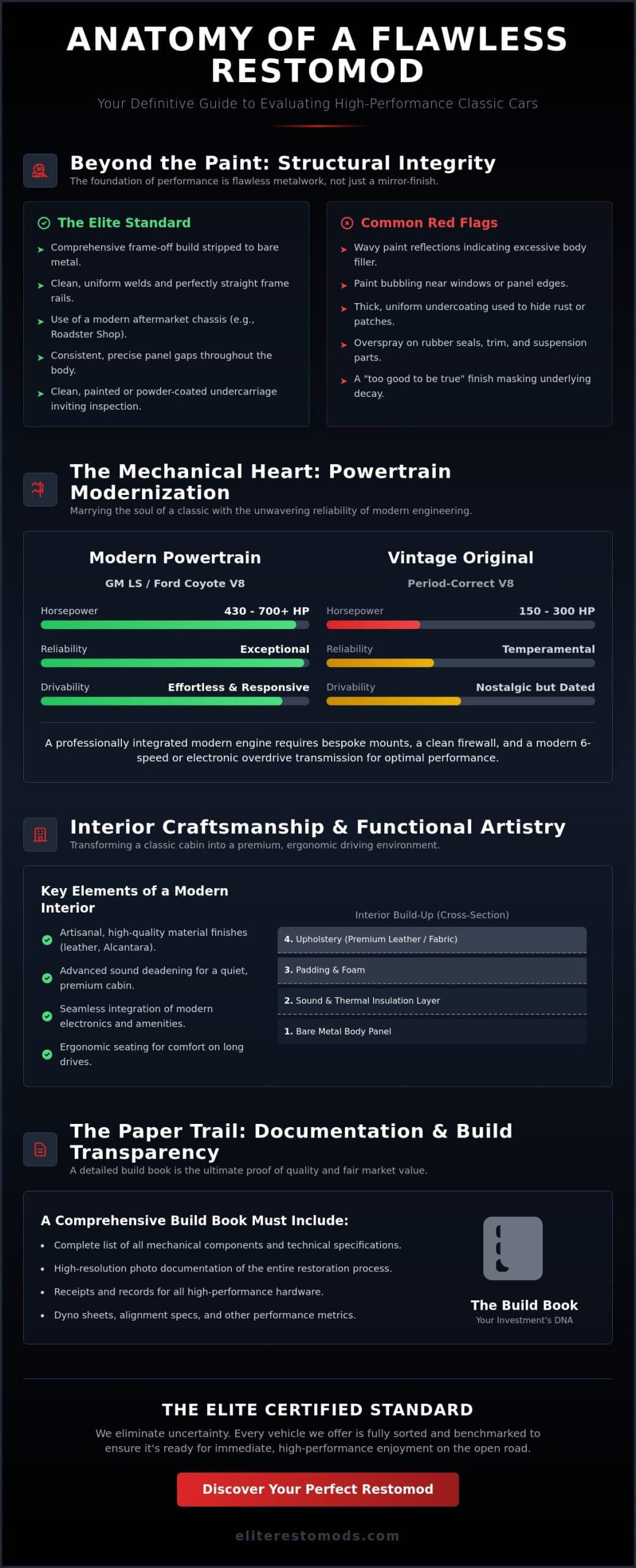
A flawless finish is intoxicating. It draws the eye and stirs the soul. However, the true value of a restomod lies far beneath the clear coat. When considering what to look for when buying a restored car, you must prioritize the structural integrity of the metal. High-performance modernization demands a foundation that can handle significantly increased torque and cornering forces. Without a rigid, rust-free skeleton, even the most expensive paint is merely a temporary mask for inevitable failure.
There is a profound difference between a cosmetic refresh and a comprehensive, frame-off build. A cosmetic project focuses primarily on visual impact. It might hide decades of oxidation behind fillers and fresh pigment. In contrast, a master-level restoration involves stripping the vehicle to its bare essence. By understanding vehicle restoration levels, you can distinguish between a car that looks the part and one that is engineered for another century of service.
To better understand the nuances of a professional vehicle inspection, watch this helpful breakdown:
Identifying Hidden Rust and Poor Metal Work
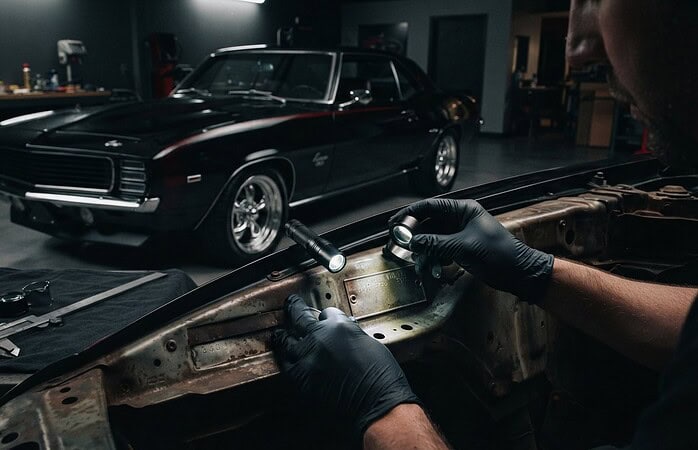
Precision requires the right tools. A paint depth gauge is your best ally during an inspection. It reveals the thickness of the finish, exposing areas where excessive body filler replaces genuine metal. You should pay close attention to the rocker panels, cowl vents, and floor pans. These are the traditional battlegrounds for corrosion. Beware of a pristine undercarriage that seems too uniform. Often, thick undercoating is used as “lipstick on a pig” to hide patches or active rot. A truly sorted build will show clean, painted, or powder-coated metal that invites inspection, a hallmark of our meticulous restoration process.
Look for these specific red flags during your physical inspection:
- Inconsistent panel gaps that suggest poor alignment or frame twist.
- Wavy reflections in the paint that indicate excessive filler use.
- Bubbling at the base of the windshield or rear window, signaling deep-seated rust.
- Overspray on rubber seals and trim, a sign of a rushed cosmetic job.
Chassis and Suspension: The Foundation of Modern Performance
The chassis is the spine of the machine. It dictates both safety and soul. When evaluating what to look for when buying a restored car, inspect the weld points and frame rails for absolute straightness. Modern restomods often move beyond refurbished original parts. Many elite builds utilize an entirely new aftermarket chassis from manufacturers like Roadster Shop or Art Morrison. These components provide modern suspension geometry, which fundamentally alters the driving experience. They replace the vague, floating sensation of vintage steering with the razor-sharp precision of a contemporary sports car. A reinforced frame prevents body flex during high-torque acceleration, ensuring that the brute force of a modern engine doesn’t compromise the structural integrity of the vintage shell. This is the marriage of raw power and refined control.
The Mechanical Heart: Evaluating Powertrain Modernization
The roar of a high-performance engine is the heartbeat of any build. It’s the visceral center of the driving experience. When evaluating what to look for when buying a restored car, the shift toward modern powerplants like the GM LS series or the Ford Coyote V8 is undeniable. These engines offer a reliable 430 to 700 horsepower, transforming a vintage chassis into a modern predator. However, the engine itself is only half the story. You must scrutinize the integration. A professional build features bespoke engine mounts and a clean firewall, avoiding the cluttered look of a rushed installation.
Transmission choice is equally critical for a vehicle meant to be driven. While a period-correct four-speed manual has nostalgic charm, a modern six-speed manual or an electronic overdrive automatic is superior for the modern era. These units allow for aggressive acceleration while maintaining comfortable RPMs at 2026 highway speeds. While these builds are unique, following official FTC buyer guidance regarding independent mechanical inspections remains a foundational step for any savvy collector. It ensures the mechanical heart beats with precision rather than hidden flaws.
Fuel Management and Electrical Systems
Reliability starts with modern fuel management. Electronic Fuel Injection (EFI) has largely replaced the temperamental carburetors of the past, offering turn-key starting and consistent performance across varying altitudes. Inspect the wiring harness with a critical eye. It should be a dedicated, modern loom with professional routing and secure, weather-sealed connectors. The electrical demands of EFI, high-end audio, and modern climate control require a high-output alternator and a robust battery system. Our current inventory showcases the pinnacle of this electrical integration, where every wire is tucked and every connection is permanent.
Cooling and Braking for the Modern Era
Modern horsepower generates significant heat. A high-performance build requires a complete rethink of the cooling system. Look for high-capacity aluminum radiators paired with dual electric fans controlled by the engine management system. This setup ensures thermal stability even in heavy traffic. Stopping power must also match the engine’s brute force. Power disc brake conversions, often featuring multi-piston calipers from brands like Wilwood or Baer, are essential. They provide the confidence to push the car to its limits. Finally, evaluate the power steering. A modern rack-and-pinion setup or a high-pressure steering box provides the refined feedback necessary for a truly sorted driving experience.
Interior Craftsmanship and Functional Artistry
The cockpit is your command center. It’s the intimate space where heritage meets the human touch. When determining what to look for when buying a restored car, don’t be captivated by a period-correct dashboard alone. True luxury is found in the invisible details. Premium acoustic insulation is essential. It transforms a rattling vintage shell into a serene, high-end sanctuary. Without this layer of modern refinement, the visceral roar of the engine becomes a tiring distraction rather than a soulful symphony. A master builder understands that a premium driving environment requires a silent foundation.
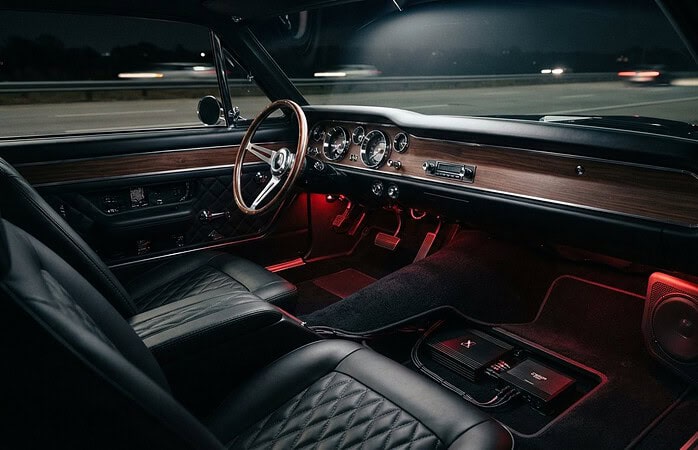
Artisanal upholstery is a hallmark of a bespoke project. You should look for hand-stitched, full-grain leather that rivals the interiors of modern luxury marques. The goal is functional artistry. You want the seat to offer the lateral support of a modern performance car while retaining the iconic silhouette of the classic era. This duality defines our approach to custom build services, where every stitch reflects a commitment to perfectionism. If the interior feels like a compromise, the entire build likely follows suit. Every touchpoint should feel deliberate and high-end.
Modern Creature Comforts and HVAC
Climate control is the ultimate modern necessity. Test the effectiveness of integrated HVAC systems, such as those from Vintage Air, to ensure they provide consistent cooling in peak summer heat. The controls should operate with a tactile, premium feel, rather than the loose feedback of original sliders. Modern gauges and digital displays must be integrated seamlessly. They should provide accurate data at a glance without shattering the nostalgic atmosphere of the cabin. Finally, evaluate the audio system. High-end components should be hidden from view, preserving the vintage aesthetic while delivering modern acoustic clarity.
Safety Upgrades in a Classic Shell
Safety is the silent partner of high-performance driving. Modern three-point seat belt conversions are non-negotiable for any vehicle meant for the open road. Inspect the seating for modern structural integrity and secure mounting points. In high-horsepower builds, look for subtle chassis stiffening or integrated roll cages that provide protection without compromising the artisanal finish. The quality of the interior fit and finish is a direct reflection of the builder’s meticulousness. If the carpet fitment is poor or the trim is misaligned, it’s a strong indicator that the mechanical work may also lack the necessary precision.
The Paper Trail: Documentation and Build Transparency
History is written in ink, not just steel. A true restomod is a complex assembly of sophisticated modern systems integrated into a vintage shell. When you’re determining what to look for when buying a restored car, the documentation is your most powerful diagnostic tool. A disorganized stack of faded receipts is a red flag. It suggests a fragmented build process rather than a cohesive engineering vision. You must demand a professional build book. This document serves as the technical blueprint of the vehicle, detailing every modification from the gauge of the wiring to the specific torque specs of the suspension components.
Transparency creates value. It provides the buyer with the confidence that the vehicle was built to a high standard, not just a price point. A comprehensive build book significantly bolsters the long-term investment potential and fair market value of the car. It transforms a machine into a documented asset. Professional appraisals further solidify this standing, providing an unbiased valuation based on the quality of the craftsmanship and the rarity of the build. This level of detail is exactly what we provide through our meticulous restoration process, ensuring every client understands the soul of their machine.
Analyzing the Component List and Sourcing
Exclusivity is defined by the quality of the parts. Your inspection of the paperwork should reveal name-brand components from reputable manufacturers like Brembo, Holley, or Tremec. Understanding the warranty status of modern crate engines is vital for 2026 collectors. A professional shop will provide clear documentation for these warranties, ensuring that your high-performance investment is protected. Verifying the history of the restoration shop is equally critical. Look for a proven track record of elite builds and a reputation for standing behind their work. This due diligence separates a bespoke masterpiece from a generic assembly.
The Importance of a Professional Pre-Purchase Inspection
Never buy a restored car based on photographs alone. An independent Pre-Purchase Inspection (PPI) is an absolute necessity. A general mechanic may understand modern commuters, but a specialized classic car inspector possesses the eye for vintage nuances. They know where shortcuts are typically hidden, from improper body mounts to poorly integrated wiring looms. This report serves as your ultimate protection. It provides a systematic breakdown of the vehicle’s current state, allowing you to use the findings as a powerful negotiation tool. A fair price is only possible when the mechanical integrity of the build is fully exposed and verified.
The Elite Certified Standard: Eliminating Uncertainty
Confidence is the ultimate luxury. While the private market is filled with beautiful silhouettes and enticing exhaust notes, it often lacks the technical transparency required for a true investment. When you evaluate what to look for when buying a restored car, the distinction between a finished project and a fully sorted machine is paramount. A fully sorted vehicle has undergone rigorous real world testing to ensure every modern system behaves with factory like precision. It’s the difference between a machine that looks ready and one that is truly prepared for a cross country journey. Our Elite Certified Restomods represent this peak of operational reliability, where the brute force of a modern powertrain is perfectly tempered by refined, artisanal finishes.
Buying from a master builder and curator eliminates the anxiety of the unknown. Private sales frequently mask structural flaws or inconsistent wiring that only surface after the transaction is complete. A professional standard involves a systematic quality assurance process that scrutinizes every weld, fluid line, and electrical connection. With the global vintage car market projected to reach 52.8 billion dollars by 2034, the importance of purchasing an investment grade asset has never been higher. You aren’t just buying a car. You are acquiring a bespoke piece of functional art backed by professional authority.
The Value of a Curated Inventory
Professional sourcing is the gatekeeper of quality. A curated collection ensures that every vehicle meets a specific benchmark of mechanical integrity and aesthetic excellence before it ever reaches the showroom floor. This meticulous selection process filters out the “lipstick on a pig” restorations, focusing instead on builds with documented frame off histories and name brand components. Whether you are seeking a muscle car icon or a 2001 model year import becoming eligible under the 25 year rule, a specialized dealership provides the peace of mind that only comes from expert oversight. Explore our current selection of investment grade vehicles in the Elite Restomods Inventory.
Comprehensive Support Beyond the Sale
The journey doesn’t end when the keys are handed over. True exclusivity is defined by the support systems that simplify the ownership experience. Professional curators provide access to specialized tools that private sellers cannot match, including enclosed vehicle transport to protect your asset during delivery. For those looking to preserve their investment, secure, climate controlled storage is essential to prevent the environmental degradation of bespoke leather and sensitive electronics. We also facilitate the acquisition process through Elite Restomods Services, where clients can access classic car financing with rates as low as 4.74 percent APR for qualified buyers as of June 2026. This comprehensive approach ensures that your focus remains on the visceral excitement of the drive, while we handle the intricacies of the legacy.
Securing Your Automotive Legacy
The pursuit of a vintage machine is a journey into the heart of design and the soul of performance. By mastering the nuances of what to look for when buying a restored car, you’ve moved beyond the surface level of aesthetic appeal. You now understand that a true investment is defined by structural perfection, seamless mechanical integration, and a transparent paper trail. This knowledge is your shield against the common pitfalls of the collector market, transforming anxiety into the confidence of a seasoned curator. The ultimate goal is a vehicle that doesn’t just sit in a showroom, but thrives on the open road.
We invite you to browse our inventory of fully sorted, investment-grade restomods to see these standards in action. Every vehicle in our collection undergoes the rigorous Elite Certified quality assurance process to ensure it delivers modern reliability without compromising its iconic heritage. With the support of our expert classic car financing partners and the security of nationwide enclosed vehicle transport, the path to your dream car is clear and professional. Your next great drive is waiting. It’s time to experience the perfect marriage of brute force and refined comfort.
Frequently Asked Questions
Is it better to buy a restored car or restore one myself?
Buying a professionally restored car is generally more efficient and cost-effective than starting a project from scratch. Restoring a vehicle yourself often leads to project creep, where costs and timelines expand far beyond initial estimates. By purchasing a finished build, you bypass years of logistical hurdles and part sourcing delays. You gain immediate access to a fully sorted machine that has already undergone rigorous technical validation and engineering.
How can I tell if a restored car has hidden rust?
Use a paint depth gauge and a high-intensity light to scrutinize common trouble spots like rocker panels and cowl vents. Excessive body filler will show as thick readings on the gauge, suggesting that metal was patched rather than replaced. Inspect the undercarriage for thick, fresh undercoating, which is a common tactic used to mask structural oxidation. A professional pre-purchase inspection is the most reliable way to uncover these hidden flaws.
What is the difference between a restoration and a restomod?
A traditional restoration focuses on returning a vehicle to its original factory specifications using period-correct parts. A restomod, or restoration-modernization, preserves the vintage aesthetic while integrating contemporary performance components. This includes high-output modern crate engines, advanced suspension geometry, and premium interior comforts. The goal of a restomod is to create a machine that looks like a classic but performs with the reliability and brute force of a 2026 supercar.
Are restomod cars a good financial investment in 2026?
High-quality restomods have shown strong market resilience as the global vintage car market is projected to reach 52.8 billion dollars by 2034. Unlike standard vehicles that lose 40 to 50 percent of their value within three years, well-maintained collectors often appreciate. The key to investment value lies in the documentation and the reputation of the builder. A professionally modernized classic remains a highly sought-after asset for its unique blend of style and usability.
What modern upgrades are most important for a daily driver classic?
Reliability and safety are the most critical factors for a daily driver classic. Prioritize electronic fuel injection for turn-key starting and power disc brake conversions for modern stopping power. High-capacity cooling systems and modern HVAC integration ensure the cabin remains a premium environment regardless of external conditions. These upgrades transform a temperamental vintage machine into a dependable, high-performance partner for regular use on modern roads.
How do I verify the quality of a professional restoration shop?
Request a comprehensive build book from previous projects and verify the shop’s track record through client references. A master builder will provide a technical blueprint of their work, detailing every mechanical component and artisanal finish. Understanding what to look for when buying a restored car involves scrutinizing the shop’s commitment to transparency. Look for organized facilities and a consistent portfolio of builds that emphasize long-term operational reliability and perfectionism.
Should I buy a restored car with an LS swap or an original engine?
The choice depends on whether you value historical preservation or modern performance. An original engine offers unmatched nostalgia and period-correct character, which is vital for certain purist collectors. However, an LS swap or Coyote engine delivers significantly higher horsepower and effortless reliability for those who intend to drive their car frequently. Modern swaps provide a visceral, high-torque experience that original drivetrains simply cannot match in a 2026 driving landscape.
What should I expect to pay for a high-quality restomod?
Pricing for a bespoke restomod varies significantly based on the rarity of the donor vehicle and the complexity of the modernization. Factors such as a custom aftermarket chassis, artisanal leather interiors, and high-performance crate engines drive the valuation. While we do not quote specific prices, these builds represent a significant investment in functional art. You are paying for the thousands of hours of expert craftsmanship and engineering required to bring a vintage dream into a high-performance reality.