
A gleaming coat of paint can hide a multitude of sins, but it cannot fix a compromised soul. You understand the visceral thrill of a vintage silhouette, yet you likely also know the gnawing anxiety that comes with a high-stakes investment. It’s the persistent fear that beneath a concours-level shine lies a foundation of structural neglect and mechanical shortcuts. Identifying the signs of a bad classic car restoration is the only way to separate a true masterpiece from a dangerous money pit.
We’ll help you look past the aesthetic finish to identify hidden structural flaws and cosmetic cover-ups, ensuring your asset is truly elite and fully sorted. This guide provides a clear inspection framework to help you navigate the current market correction with absolute confidence. We’ll explore how to detect the tell-tale ripples of excessive body filler, the erratic behavior of poorly wired electrical systems, and the subtle indicators of mechanical unreliability. By the end, you’ll have the technical vision to distinguish between a botched build and a bespoke piece of functional art that’s built to be driven.
Key Takeaways
- Learn to distinguish between a superficial cosmetic flip and a true ground-up build by identifying the “lipstick on a pig” phenomenon common in the collector market.
- Master the use of magnets and paint depth gauges to expose structural red flags, such as excessive body filler and hidden rust, that compromise the vehicle’s integrity.
- Evaluate the precision of mechanical integration by inspecting engine bay logic and identifying the messy wiring harnesses that often signal a botched modern engine swap.
- Discover how to spot the signs of a bad classic car restoration through subtle interior warning signs like poor upholstery tension and inconsistent gauge functionality.
- Understand the long-term value of investing in a fully sorted vehicle that balances visceral heritage with the reliable performance of modern engineering.
The Hidden Dangers of Cosmetic-Only Restorations
A mirror-like finish is a seductive trap. It’s often the first of several signs of a bad classic car restoration. Many sellers engage in a quick cosmetic flip, prioritizing speed over substance. This is the classic “lipstick on a pig” scenario. They focus on the immediate visual impact to distract from underlying structural decay. A true masterpiece requires a deep dive into the chassis. Understanding the formal definitions of Conservation and restoration of road vehicles helps clarify why a professional build must go beyond the surface.
Visual appeal is the greatest distractor from mechanical failure. The psychological lure of fresh paint on an unverified chassis is powerful. It appeals to your desire for nostalgia and beauty. However, a car that looks like a showpiece but drives like a relic is a failure of craftsmanship. We believe a vehicle must be a marriage of brute force and refined comfort. Anything less is a compromise. To better understand how a proper restoration unfolds versus a quick fix, watch this helpful video:
Surface Shine vs. Structural Integrity
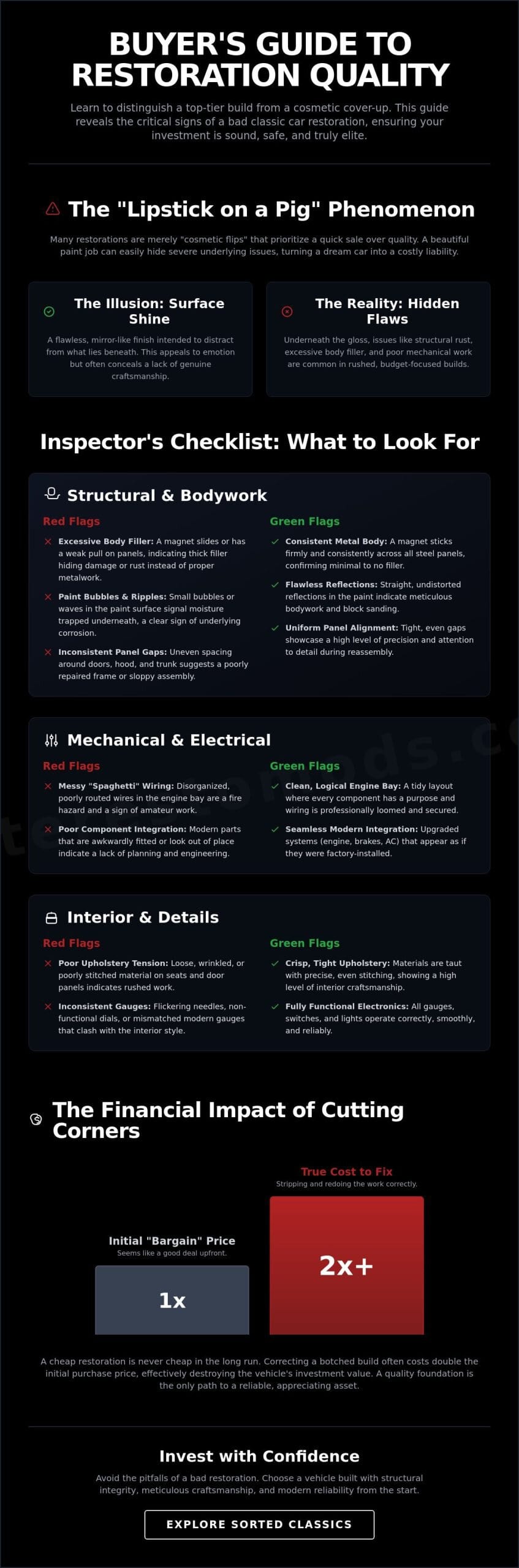
A deep shine can hide a multitude of metalwork sins. High-quality primers and meticulous block sanding create a foundation for longevity. Conversely, cheap body filler is a temporary mask for rot. It’s common to find fresh paint applied directly over existing corrosion in botched builds. Within a year, that moisture trapped beneath the surface will cause the paint to bubble and lift. You can often detect this by looking for slight irregularities in the reflection or using a paint depth gauge to find excessive material. True quality is felt in the metal, not just seen in the clear coat.
The Cost of Cutting Corners
Fixing a botched build is an expensive endeavor. It often costs double the original price to strip a car back and do the work correctly. A ‘cheap’ restoration is never actually cheap. It’s a liability. Poorly executed work destroys the value of an investment-grade vehicle. Our restoration process emphasizes transparency and structural perfection from the start. We ensure that every panel is straight and every weld is secure. This meticulous nature preserves the soul of the vintage asset while providing modern reliability. Don’t let a beautiful exterior blind you to a compromised foundation.
Structural Red Flags: Identifying Bodywork Sins and Hidden Rust
The skeleton of a vintage machine tells a story that paint tries to rewrite. When investigating the signs of a bad classic car restoration, you must look beyond the gloss to find the honest structure of the vehicle. A world-class build begins with steel, not chemicals. If the foundation is compromised, the entire project is a ticking clock of decay. You aren’t just buying a look; you’re investing in the structural integrity of a functional piece of art.
A simple magnet is your most powerful ally against deception. It should pull consistently across every fender, door skin, and quarter panel. If the magnet slides or drops, you’ve found non-metallic filler. While small amounts are standard for final block sanding, thick layers suggest a failure to perform proper metalwork. This is one of the most common restoration mistakes made by shops looking to save time. True craftsmanship involves shaping steel, not sculpting plastic. If you’re seeking a vehicle that has already passed these rigorous structural standards, you can browse our curated inventory of sorted classics.
The Magnet Test and Metal Consistency
Consistent metal thickness is vital for high-performance driving. It ensures the chassis handles torque without flexing or cracking. Modern Bondo is a far cry from the factory lead used in the 1960s; it’s porous and prone to failure if applied too thick. We look for metal consistency that matches the original factory specifications. Anything less is a shortcut that compromises the vehicle’s soul and safety.
Panel Alignment and Geometry
Symmetry is the hallmark of professional assembly. Inspect the gaps between the doors, hood, and fenders. They should be uniform and parallel from top to bottom. Uneven gaps suggest more than just poor adjustment. They often point to a twisted frame or a body that wasn’t braced during a floor pan replacement. High-speed stability depends on this geometric harmony. Doors should click shut with a light touch, not a heavy shove.
Don’t ignore the dark corners. Floor pans, trunk drops, and frame rails are where the “lipstick on a pig” approach fails. Bubbling paint in these areas isn’t just a cosmetic flaw. It’s metal oxidation reaching out from the inside. Poor welding, such as overlapping patch panels without proper butt-welding, creates moisture traps. These traps ensure the car will rot again. A truly elite build features clean, continuous welds that disappear under a light coat of high-quality chassis black, reflecting a commitment to perfectionism that lasts for decades.
Mechanical Malpractice: When Modern Components Are Poorly Integrated
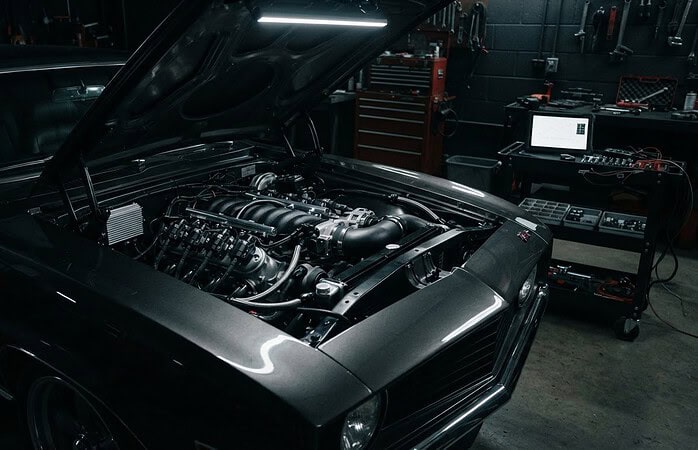
A true restomod is a symphony of engineering, not a chaotic collection of aftermarket parts. One of the most glaring signs of a bad classic car restoration is a lack of mechanical cohesion under the hood. It’s easy to drop a high-horsepower crate engine into an engine bay. It’s far more difficult to integrate it with the precision required for reliable daily driving. When you open the hood, you should see a logical layout of components, high-end specialized hardware, and professional-grade plumbing. If the engine bay looks like a cluttered afterthought, the performance will likely follow suit.
Look for the birds’ nest. A hacked wiring harness is a hallmark of a botched build. In modern engine swaps, the electrical system serves as the vehicle’s nervous system. If you see exposed wires, excessive electrical tape, or mismatched connectors, the build’s reliability is compromised. Professional builders use bespoke looms and bulkhead connectors to ensure clean, reliable power delivery. Mismatched drivetrain components are another red flag. If the car vibrates at highway speeds, it’s often due to improper driveshaft angles or a failure to balance high-performance mechanical components. These issues lead to premature failure and a driving experience that feels unrefined and dangerous.
The Marriage of Old Steel and New Power
Modern horsepower requires more than just a bigger engine. It demands a reinforced foundation. High-torque engines can literally twist an original, unreinforced frame over time. Inspect the chassis near the engine mounts for stress cracks or signs of flex. A professional build utilizes upgraded mounts and frame stiffeners to handle the brute force of a modern powerplant. Our custom build services prioritize this structural harmony, ensuring the chassis can support the performance we demand from it. Professional-grade plumbing for fuel and cooling is equally vital to prevent vapor lock and overheating during spirited drives.
Braking and Suspension Integration
Bolt-on parts don’t guarantee performance. Many botched restorations feature high-end suspension components that haven’t been tuned to the specific weight and balance of the car. This leads to erratic handling and poor steering feedback. Similarly, mismatched master cylinders can result in a wooden pedal feel or, worse, inconsistent braking force. A fully sorted vehicle requires a master builder who understands the relationship between bore size, pedal ratio, and caliper piston area. Precision is non-negotiable when transitioning from vintage slop to modern operational reliability. You should feel the road with confidence, not fight the machine for control.
Interior and Electrical Warning Signs: The Precision Test
The interior of a vintage asset is where the connection between driver and machine is forged. It should be a sanctuary of hand-stitched leather and mechanical precision. However, the cabin often reveals the most damning signs of a bad classic car restoration. While the exterior might dazzle under showroom lights, the interior exposes the shortcuts taken by those who lack a curator’s eye. A master builder treats the underside of a dashboard with the same reverence as the hood’s surface. If the hidden areas are neglected, the soul of the build is compromised.
Start with a simple sensory evaluation. The smell test rarely lies. A cabin that reeks of raw fuel or stagnant dampness indicates fundamental failures in plumbing or weather stripping. These aren’t just minor inconveniences; they are safety hazards and precursors to structural rot. Move your hand across the dashboard and test every switch. Functional consistency is non-negotiable. If a gauge flickers or a modern HVAC system struggles to maintain a steady temperature, the integration is flawed. These glitches suggest a builder who prioritized visual impact over modern operational reliability.
Electrical Integrity and Modern Comfort
A clean wiring layout is the hallmark of a master builder. Peer beneath the steering column. If you find a tangled “rat’s nest” of mismatched wires and plastic crimp connectors, you’ve found a botched build. This lack of organization leads to parasitic draws and intermittent failures that are a nightmare to diagnose. High-performance builds often feature electronic fuel injection (EFI) systems. These require stable voltage and pristine grounding to function correctly. Poorly grounded circuits are common signs of a bad classic car restoration, causing erratic engine behavior and electronic interference that ruins the driving experience. Our custom build services eliminate these risks by utilizing bespoke wiring looms and industrial-grade hardware.
Artisanal Finish and Material Quality
Luxury craftsmanship is felt in the tension of the leather and the alignment of the stitching. Evaluate the door panels and seat covers for uniform grain patterns. Mismatched materials or loose upholstery tension suggest a cheap “kit” interior rather than a bespoke creation. A truly elite restomod uses high-end sound deadening material hidden beneath the carpet. The choice of insulation reveals the builder’s commitment to refined comfort. If the cabin is noisy and vibrates excessively at speed, the restoration is merely a cosmetic mask. True excellence is found in the silent, smooth operation of a vehicle that has been meticulously transformed into a piece of functional art.
Protecting Your Investment: The Value of Elite Certified Restomods
Precision is a choice. Every red flag we’ve explored, from the bubbling of hidden oxidation to the erratic pulse of a hacked wiring harness, represents a failure of professional vision. Recognizing the signs of a bad classic car restoration is the only way to safeguard your legacy and your capital. A true investment-grade vehicle must be more than a visual triumph. It must be a mechanical masterpiece. This level of excellence is not accidental; it is the result of a systematic, meticulous approach to craftsmanship that prioritizes modern operational reliability alongside traditional aesthetics.
Documented build photos and receipts are non-negotiable for any elite project. These records provide the developmental narrative of the vehicle, proving that every weld was secure and every component was high-performance grade. Without this transparency, you’re buying a mystery. In a 2026 market where collector car values are experiencing a correction, the distinction between a ‘driver quality’ flip and a professional build is the difference between a depreciating asset and a blue-chip investment. Buyers are increasingly prioritizing usability, and only a documented, rigorous build process can guarantee that a vehicle is ready for the rigors of the open road.
The ‘Fully Sorted’ Standard
A vehicle is only truly ready for the road when it has been fully sorted. This means the car has undergone extensive real-world testing to ensure that the marriage of old steel and new power is harmonious. We focus on investment-grade quality assurance, eliminating the common signs of a bad classic car restoration through a series of grueling performance benchmarks. Our Elite Restomods Process is designed for transparency, ensuring that no detail is too small to be overlooked. From the tension of the artisanal leather to the geometry of the suspension, every element is refined until it meets our standard of perfection.
Securing Your Automotive Legacy
Protecting your asset requires a commitment that extends beyond the initial build. Utilizing a professional consignment program ensures that when it’s time to evolve your collection, the value of your masterpiece is recognized by those who understand its soul. Furthermore, the peace of mind provided by climate-controlled storage is essential for preserving the integrity of a fresh build. It prevents the environmental degradation that can lead to the very structural sins we’ve discussed today. By combining world-class building techniques with enclosed vehicle transport and specialized maintenance, you ensure that your dream remains a tangible, high-performance reality. Experience the pinnacle of automotive excellence and explore our inventory of fully sorted restomods today.
Securing Your Automotive Legacy
Navigating the collector market requires more than just an appreciation for vintage aesthetics; it demands the technical vision to look beneath the surface. You now possess the framework to identify the signs of a bad classic car restoration, from the tell-tale ripples of excessive body filler to the erratic behavior of a compromised electrical system. A true investment is found where brute force meets refined comfort, resulting in a machine that is as reliable as it is beautiful. Excellence is never accidental. It is the result of meticulous engineering and a curator’s eye for detail.
Our commitment to perfectionism is reflected in the Elite Certified standard. This process utilizes a rigorous quality assurance framework and fully documented build histories to eliminate the anxiety of hidden flaws. We safeguard your investment from the moment it leaves our facility by providing national enclosed vehicle transport. Your journey from a long-held dream to a high-performance reality should be defined by confidence and visceral excitement. It’s time to demand more from your vintage assets and invest in a build that stands the test of time.
Discover Investment-Grade, Fully Sorted Restomods and take the first step toward owning a vehicle that is built to be driven and destined to endure.
Frequently Asked Questions
How can I tell if a classic car has hidden rust without stripping the paint?
Look for “bubbling” paint, which indicates oxidation trapped beneath the surface. You should also inspect the underside of the floor pans and frame rails for fresh undercoating that might be masking rot. Using a digital paint depth gauge provides a non-invasive way to measure material thickness, revealing where filler has been used to bridge rust holes. These subtle indicators are essential when investigating the signs of a bad classic car restoration.
What is the most common mechanical failure in a poorly done restomod?
Overheating and electrical failures are the most frequent culprits in botched builds. High-performance engines generate significantly more heat than vintage units, requiring a master builder to integrate high-capacity cooling systems and custom shrouding. If the electrical system uses generic crimp connectors instead of bespoke looms, you’ll likely face intermittent shorts and parasitic draws. True reliability requires a marriage of brute force and modern engineering precision.
Is a magnet test enough to find body filler in a classic car?
A magnet test is a useful starting point but it’s not foolproof. While a magnet will reveal thick layers of Bondo, it won’t detect modern non-metallic fillers or thin layers of lead. For a truly professional assessment, you need a digital paint depth gauge to confirm consistent metal thickness across the entire body. This tool helps you look past the aesthetic finish to find the honest structure of the vehicle.
Why do some restomods vibrate at high speeds even with new parts?
High-speed vibrations are often caused by incorrect driveline angles or a failure to balance the rotating assembly. When modern transmissions are integrated into old frames, the pinion angle must be precisely shimmed to prevent U-joint binding. If the chassis hasn’t been reinforced to handle the increased torque, frame flex can also induce harmonic vibrations that ruin the driving experience. Precision is non-negotiable when transitioning from vintage slop to modern performance.
What documents should I ask for when buying a restored classic car?
You should demand a comprehensive build book that includes high-resolution photos of the metalwork and chassis stages. Ask for itemized receipts for high-performance mechanical components and a complete wiring schematic for any modern EFI or HVAC systems. These documents provide a developmental narrative, proving the vehicle is a bespoke piece of functional art. Without this transparency, you’re buying a mystery that could become a financial pitfall.
Can a bad interior restoration affect the car’s mechanical reliability?
Yes, poor interior work often masks critical electrical and mechanical failures. If the dashboard hasn’t been properly braced after modern gauge integration, it can lead to steering column play or loose wiring that shorts against the metal structure. A botched interior can also hide fuel fumes or dampness, indicating that the plumbing or weather stripping has failed. These are common signs of a bad classic car restoration that compromise the vehicle’s soul.
How does a ‘fully sorted’ restomod differ from a standard restoration?
A fully sorted restomod has undergone hundreds of miles of real-world testing to refine its modern operational reliability. Unlike a standard restoration that might look perfect on a show floor, a sorted car has had its suspension tuned, its EFI mapped, and its cooling system stressed. It’s the difference between a “trailer queen” and a high-performance machine ready for daily driving. This level of refinement ensures your investment is truly elite.
What are the signs of a poorly integrated modern engine swap?
Look for a “rat’s nest” of wiring and poorly executed plumbing as primary indicators. A botched modern engine swap often features notched frame rails that haven’t been reinforced, compromising the vehicle’s structural integrity. You should also check for a lack of clearance between the headers and the steering box or fuel lines. If the engine bay looks like a cluttered afterthought, the performance and safety of the build will likely follow suit.