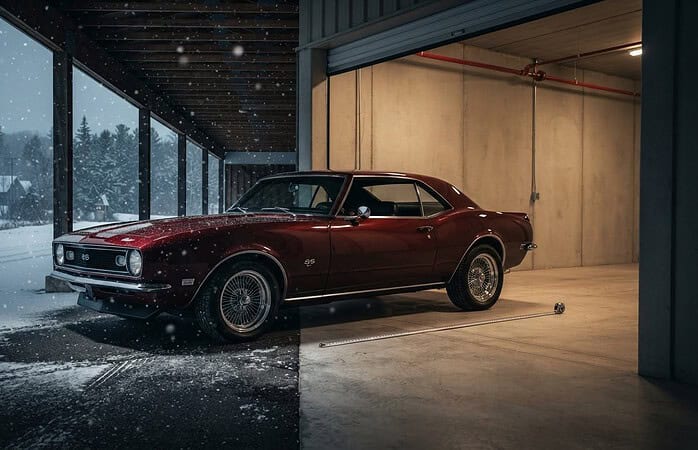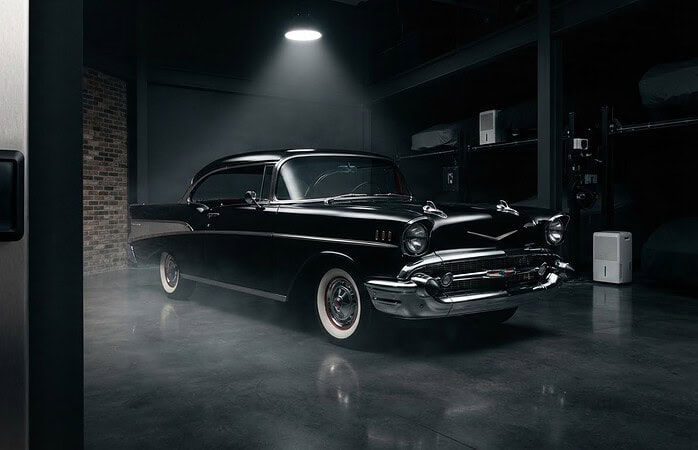

A standard garage is often the slowest way to destroy a masterpiece. For the owner of an Elite Certified restomod, a parking space is never just a parking space; it’s a sanctuary for a bespoke piece of functional art. You understand that the soul of a vintage asset requires more than a simple roof to survive the off-season. Meeting the specific collector car storage requirements is the only way to prevent the heartbreak of dry-rotted seals or the catastrophic failure of modern ECUs. It’s about more than just aesthetics. It’s about preserving the marriage of brute force and refined comfort that defines your vehicle.
We know the anxiety that comes with leaving a high-performance machine idle for months. You worry if the battery tender is enough or if the facility down the street actually understands humidity stabilization. This 2026 Professional Preservation Guide promises to transform that uncertainty into confidence. We’ll explore the technical environmental standards and mechanical protocols required to maintain peak operational reliability. From air filtration to fluid stabilization, you’ll gain a definitive checklist to ensure your investment remains turn-key ready for the first drive of spring.
Key Takeaways
- Understand the critical difference between simple parking and technical preservation to protect your bespoke vehicle from invisible threats like electrolytic corrosion.
- Learn why maintaining a precise temperature range between 50°F and 70°F is the gold standard for preventing fluid separation and material expansion.
- Master the technical collector car storage requirements that protect sensitive modern ECUs and manage the complexities of ethanol-blended fuels.
- Establish a comprehensive pre-storage protocol that uses artisanal detailing to shield your investment from long-term surface contamination.
- Discover the advantages of professional management over self-storage, focusing on active battery tending and high-level security protocols.
The High Stakes of Collector Vehicle Preservation
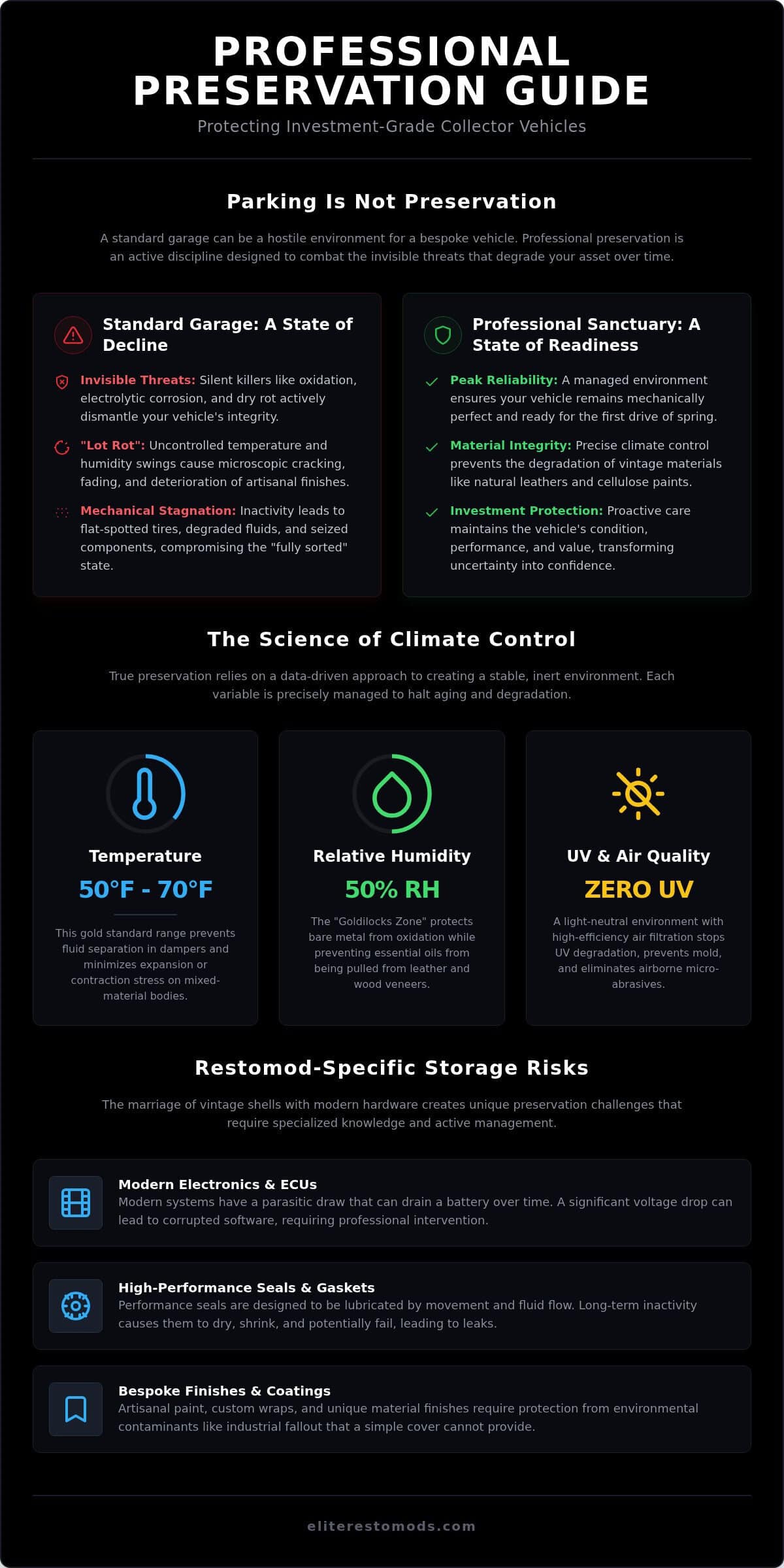
The ownership of a bespoke vehicle is a stewardship of history. While a daily driver is built to withstand the rigors of the elements, an investment-grade machine demands a higher echelon of care. The concept of vehicle preservation goes beyond keeping the dust off the hood. It’s a battle against invisible enemies that thrive in the shadows of neglect. Oxidation, dry rot, and electrolytic corrosion are silent killers. They work tirelessly to dismantle the integrity of your asset.
When we deliver a vehicle, it’s in a “fully sorted” state. This means every bolt is torqued, every system is synchronized, and the car is mechanically perfect. Improperly meeting collector car storage requirements can quickly compromise this state. Even a few months of static storage in an unrefined environment can lead to flat-spotted tires or degraded fluids. Adhering to professional collector car storage requirements ensures the vehicle remains a high-performance reality rather than a static display. You can explore our services to see how we maintain these standards during the build process.
The Vulnerability of Vintage Assets
Vintage materials are temperamental. Cellulose paint and natural leathers are organic components that breathe and react to their surroundings. In a standard residential garage, these materials face “lot rot,” a condition where temperature swings and humidity spikes cause microscopic cracking and fading. A garage that feels safe to you is often a liability for a high-value build. It doesn’t have the stabilization necessary to keep these artisanal finishes from deteriorating over time.
Restomod-Specific Storage Risks
Restomods present unique challenges because they marry vintage shells with modern performance hardware. Modern electronics and ECUs are prone to parasitic draw, which can drain a battery and potentially corrupt software if voltage drops too low. High-performance seals are designed to be lubricated by movement; long-term inactivity causes them to shrink and leak. Protecting bespoke finishes from environmental contaminants like salt air or industrial fallout requires more than a simple car cover. It necessitates a managed environment that understands the mechanical intricacies of the 21st-century components living under a classic skin.
Environmental Requirements: The Science of Climate Control
True climate control is an active discipline. It involves the precise regulation of temperature, humidity, and air filtration to create a static environment for your asset. For investment-grade vehicles, the ideal temperature range sits between 50°F and 70°F. This isn’t an arbitrary choice. This range prevents fluid separation in high-performance dampers and minimizes the expansion or contraction of mixed-material bodies. When metal, carbon fiber, and wood parts expand at different rates, structural stress occurs. Maintaining a steady thermal baseline is a core pillar of professional collector car storage.
Humidity management is the next technical frontier. We target 50% relative humidity as the “goldilocks” zone for preservation. Anything higher invites oxidation on bare metal components; anything lower pulls essential oils from artisanal leather hides and wood veneers. Coupled with this is the absolute requirement for UV protection. Direct sunlight is a silent abrasive. It bleaches interiors and degrades the molecular structure of bespoke paint finishes. A professional facility ensures your vehicle lives in a light-neutral environment to prevent this degradation. Understanding these collector car storage requirements is essential for any serious owner.
Humidity and the Corrosion Cycle
Fluctuating humidity levels trigger a destructive cycle. When warm, moist air meets a cold chassis, condensation forms in hidden cavities. These micro-droplets are the catalysts for electrolytic corrosion. Professional facilities utilize vapor barriers in the flooring to prevent ground moisture from rising through the concrete. We also employ high-accuracy hygrometers to monitor the micro-climates surrounding each vehicle. This data-driven approach is what separates professional climate-controlled storage from a standard warehouse.
Air Quality and Filtration
Stagnant air is a breeding ground for mold and mildew. Proper air quality requires constant circulation and high-efficiency filtration to protect your investment. This process involves several critical factors:
- Preventing particulate buildup: Airborne dust acts as a microscopic abrasive on high-gloss clear coats.
- VOC Mitigation: Volatile Organic Compounds can leach from plastics and tires, eventually degrading rubber seals if not filtered out.
- Biological Control: Active airflow ensures that moisture cannot settle, effectively neutralizing the threat of fungal growth on organic interior surfaces.
Meeting these collector car storage requirements ensures the mechanical and aesthetic integrity of your build remains uncompromised. It’s the difference between a car that merely survives the winter and one that emerges in peak, turn-key condition.
Mechanical and Electrical Requirements for Modern Classics
Preserving a restomod mechanical soul requires a shift in perspective. Fulfilling technical collector car storage requirements means looking beneath the artisanal paint and into the heart of the machine. Unlike purely vintage assets, a modern classic often utilizes advanced fuel injection and digital management systems. These components demand active stewardship. You cannot simply park the car and walk away. Mechanical dormancy is an invitation for fuel degradation and tire deformation.
Fuel stability is perhaps the most immediate concern. Modern ethanol-blended fuels are hygroscopic, meaning they actively pull moisture from the atmosphere. Over months of sitting, this leads to phase separation and the formation of corrosive resins that can clog high-pressure injectors. We recommend using a high-quality stabilizer or, in some specific restomod applications, a full system drain. Simultaneously, tire preservation is vital. High-performance rubber is designed for grip, not for holding a static load. Without proper inflation or the use of tire cradles, flat-spots will develop, ruining the smooth ride quality we achieved during our Elite Certified build process.
Electrical Systems and Battery Tending
Modern ECUs are the brains of your build. They require a consistent, clean voltage source to maintain adaptive memory and fuel trim tables. Simple battery disconnection is often a mistake; it resets these critical parameters and can lead to poor driveability when you first turn the key. There is a profound difference between a standard trickle charger and a smart battery tender. A smart tender monitors the battery’s health, delivering only the necessary current to prevent sulfation while protecting delicate wiring harnesses. This active management also safeguards bespoke infotainment systems and security modules from the risks of a deep discharge.
Fluid Dynamics and Seal Health
Old oil is a chemical liability. During the combustion process, oil becomes contaminated with acids and moisture. If left to sit, these contaminants can etch engine bearings and internal surfaces. We always advocate for fresh fluids before the vehicle enters storage. A common mistake is starting the car periodically and letting it idle. This practice is actually counterproductive. Idling fails to reach the temperatures needed to evaporate internal condensation, often leaving moisture trapped in the exhaust and crankcase. Instead, we focus on exercising the brake and clutch systems manually. This keeps the seals lubricated and prevents the pistons from seizing in their bores, ensuring the car remains a turn-key reality.
The Professional Pre-Storage Protocol
The transition from the open road to a period of dormancy is a delicate evolution. To maintain the integrity of a bespoke build, one must follow a rigorous, systematic workflow. This protocol ensures the vehicle remains in the same “fully sorted” state it was when it left the workshop. It’s about perfectionism. Every detail matters. By adhering to specific collector car storage requirements, you transform a simple storage period into a controlled preservation cycle. This structured approach mirrors the Elite Restomods process, where every step is designed to protect the soul of the machine.
Step 1: Deep Decontamination
Before the car is tucked away, it must be surgically clean. Organic matter like bug splatter or tree sap contains acids that can permanently pit even the highest-quality clear coats. A professional detail is a sacrificial barrier. We remove road salts and corrosive grime from the undercarriage, areas often overlooked but highly susceptible to oxidation. Applying a premium wax or ceramic coating provides a microscopic shield against environmental settling. It ensures that when you unveil the car, the paint depth and clarity remain as visceral as the day it was finished.
Step 2: Mechanical Preparation
Mechanical health is maintained through proactive measures. Topping off all fluids minimizes the headspace in reservoirs, which effectively reduces the surface area where condensation can form. We pay close attention to the cooling system, ensuring the mixture is optimized for any potential ambient temperature shifts. Tire preservation is equally technical. We slightly over-inflate the tires or utilize specialized tire cradles to maintain their perfect roundness. This prevents the flat-spotting that plagues high-performance rubber after months of static load. This level of preparation is a fundamental part of the collector car storage requirements for any investment-grade asset.
Step 3: Interior and Soft Goods Care
The cabin is a sanctuary of artisanal materials. Natural leather requires conditioning to replenish the essential oils that prevent drying and cracking in stable environments. We use high-capacity desiccant bags to manage any residual interior moisture, protecting the delicate electronics and fabric headliners. A subtle but critical step is window positioning. Cracking the windows slightly allows for air pressure equalization, preventing seal deformation while maintaining the internal atmosphere.
Documenting this entire condition is the final act of the curator. It provides a clear baseline for insurance and valuation purposes, ensuring your investment is protected from every angle. If you are ready to secure your vehicle’s future, consider our climate-controlled storage options to complete the ownership journey.
Strategic Storage Solutions for High-Value Assets
Selecting a sanctuary for your vehicle is a strategic decision. It transcends simple logistics. It’s the final, critical step in the “fully sorted” ownership experience. While a standard garage offers shelter, it lacks the sophisticated infrastructure required to meet professional collector car storage requirements. High-value assets demand an environment that actively works to preserve their mechanical and aesthetic integrity. This isn’t just about parking; it’s about curated stewardship. Professional management ensures your asset doesn’t just sit; it thrives. You can explore the full range of Elite Restomods services to see how we integrate preservation into the total ownership lifecycle.
Facility Selection Criteria
A premier storage facility must offer security that goes far beyond a simple lock and key. We look for 24/7 surveillance integrated with restricted access protocols. This ensures that only authorized personnel ever approach your bespoke machine. Fire suppression is another technical hurdle. Standard water-based sprinklers can be as damaging as the fire itself to a classic interior or sensitive electronics. Professional facilities utilize gaseous or dry-pipe systems specifically designed for automotive environments. The staff’s expertise is equally paramount. You need curators who understand the nuances of high-performance mechanical components and the delicate nature of artisanal finishes. They must know how to handle an exotic without compromising its “fully sorted” status.
The Elite Restomods Advantage
We treat storage as an extension of our craftsmanship. Our facility provides climate-controlled environments tailored specifically for investment-grade cars. We don’t just store your vehicle; we maintain it. Our program includes active battery tending and periodic maintenance checks to ensure the car remains turn-key ready. This proactive approach addresses the technical collector car storage requirements that passive self-storage facilities ignore. In self-storage, the burden of preservation falls on you. With us, that responsibility belongs to master builders who understand the soul of your asset.
The transition from storage to the street should be seamless. Because we understand the modern mechanical intricacies of your build, we can move a vehicle from our facility to transport or service without friction. Whether you’re looking to protect a recent acquisition from our Elite Restomods inventory or seeking a long-term sanctuary for a custom build, our solutions bridge the gap between a dream and a high-performance reality. It’s the ultimate peace of mind for the discerning collector. Your car is an investment. Treat it like one.
Securing the Legacy of Your High-Performance Asset
Preserving a bespoke vehicle is an active commitment to excellence. We’ve explored the necessity of climate-stabilized environments and the technical nuances of managing modern electronics in vintage shells. Proper stewardship ensures that when the season changes, your car remains a turn-key reality rather than a mechanical liability. It’s about protecting the soul of the machine through meticulous environmental and mechanical protocols.
Mastering the specific collector car storage requirements is the final step in the “fully sorted” ownership experience. It’s the difference between a machine that slowly degrades and one that retains its visceral power and resale value. Your investment deserves a sanctuary that understands the marriage of brute force and refined comfort.
Protect your investment with Elite Restomods secure storage. Our secure, climate-controlled facilities offer specialized care for restomod electronics, ensuring your digital systems stay as sharp as the paintwork. With nationwide enclosed transport available, we bring the highest standard of preservation directly to your doorstep. Your masterpiece is ready for its next chapter; let’s ensure it remains as exhilarating as the day it was built.
Frequently Asked Questions
Is climate control really necessary for classic car storage?
Active climate regulation is non-negotiable for preserving investment-grade assets. Fluctuating temperatures cause materials like metal and wood to expand at different rates, leading to structural stress and microscopic paint cracking. A stabilized environment also prevents the condensation cycles that trigger deep-seated corrosion in chassis cavities. Meeting these collector car storage requirements ensures your vehicle remains a high-performance reality rather than a deteriorating relic of the past.
How often should I start my collector car while it is in storage?
You should avoid starting your car unless you intend to drive it long enough to reach full operating temperature. Brief periods of idling fail to evaporate internal condensation, which can lead to moisture buildup in the exhaust and crankcase oil. If the car must remain static, it’s better to leave the engine dormant while maintaining the battery and fluids. This preserves the mechanical state we establish during our build process.
What is the ideal humidity level for storing a car with a leather interior?
The ideal humidity level for preserving artisanal leather interiors is 50% relative humidity. This zone prevents hides from drying out and cracking while remaining low enough to inhibit mold growth. Maintaining this precise balance is a critical part of technical collector car storage requirements. It ensures that the organic materials in your cabin stay supple and vibrant for the long term, protecting the tactile luxury of your investment.
Can I store my restomod with a full tank of gas?
Storing a restomod with a full tank of stabilized fuel is generally recommended to minimize the headspace where condensation can form. Since modern ethanol-blended fuels are hygroscopic, they actively attract moisture, which can lead to phase separation and fuel system corrosion. Using a high-quality stabilizer or opting for ethanol-free fuel helps protect high-pressure injectors and modern fuel management systems during periods of inactivity.
Do I need to put my car on jack stands for winter storage?
You don’t need to put your car on jack stands; in fact, leaving a suspension unloaded for months can stress bushings and seals. A better approach is to use specialized tire cradles or slightly over-inflate the tires to 50 PSI to prevent flat-spotting. This maintains the perfect roundness of high-performance rubber without compromising the mechanical geometry of your chassis or putting unnecessary strain on the suspension components.
What is the best way to prevent rodents from damaging my stored vehicle?
The best way to prevent rodent damage is to utilize a professionally managed, sealed facility that employs integrated pest management. Rodents are attracted to the organic materials in wiring harnesses and insulation, often causing catastrophic electrical failures. Ensure the cabin is free of any food residue and consider using high-quality desiccant bags. A secure, restricted-access facility provides the first and most effective line of defense against these pests.
Should I use a car cover inside a climate-controlled storage facility?
Using a car cover is optional in a filtered, climate-controlled environment, but if you choose one, it must be a high-quality, breathable material. Non-breathable covers can trap residual moisture against the paint, leading to clouding or osmotic blistering of the finish. In a facility with active air filtration, a cover serves primarily as a sacrificial barrier against accidental contact rather than a necessity for cleanliness.
What are the common insurance requirements for professional vehicle storage?
Insurance providers typically require notification of the storage location and may mandate specific security protocols for high-value assets. You should verify that the facility meets their standards for fire suppression and restricted access. Documenting the vehicle’s condition before storage is also a standard requirement for maintaining valuation coverage. Always check with your specific carrier to ensure your bespoke build remains fully protected while it is dormant.