
The dream of piloting a vintage masterpiece often dissolves the moment you face a morning commute in a vehicle with a temperamental carburetor and drum brakes. You want the soul of a 1960s icon, but the mechanical fragility of original parts turns a joyride into a nightmare of roadside repairs. It’s a common frustration for enthusiasts seeking the best classic cars for daily driving. We agree that a vehicle should be an extension of your lifestyle, not a source of constant anxiety. The visceral roar of a V8 is only satisfying when you have the absolute confidence that it will fire up every single time.
This guide reveals the most desirable platforms that bridge the gap between heritage design and modern operational excellence. You will discover how to identify a classic with modern performance potential, ensuring your investment is a fully sorted machine rather than a bottomless money pit. We are exploring five iconic models, from the first-generation Ford Bronco to the Chevrolet Camaro, that offer the best aftermarket support and structural integrity for a high-end restomod build. By integrating LS or Coyote powerplants with bespoke interiors, these vehicles transform from static displays into functional art. Prepare to find an investment-grade asset that thrives on the open road.
Key Takeaways
- Learn how to balance heritage design with modern mechanical real estate to ensure your vintage asset is capable of handling contemporary traffic.
- Discover why the 1967-1969 Camaro and first-generation Ford Bronco remain the best classic cars for daily driving due to their exceptional aftermarket support and structural versatility.
- Explore the investment potential of the Chevrolet C10 and K5 Blazer, which offer a unique open-air experience without sacrificing modern luxury or performance.
- Understand the necessity of integrated modern climate control and high-performance engine swaps like the LS or Coyote for a truly reliable, turn-key experience.
- Identify the critical steps for sourcing a rust-free donor vehicle to protect the long-term value of your bespoke automotive masterpiece.
The Anatomy of an Ideal Daily Driver Restomod Candidate
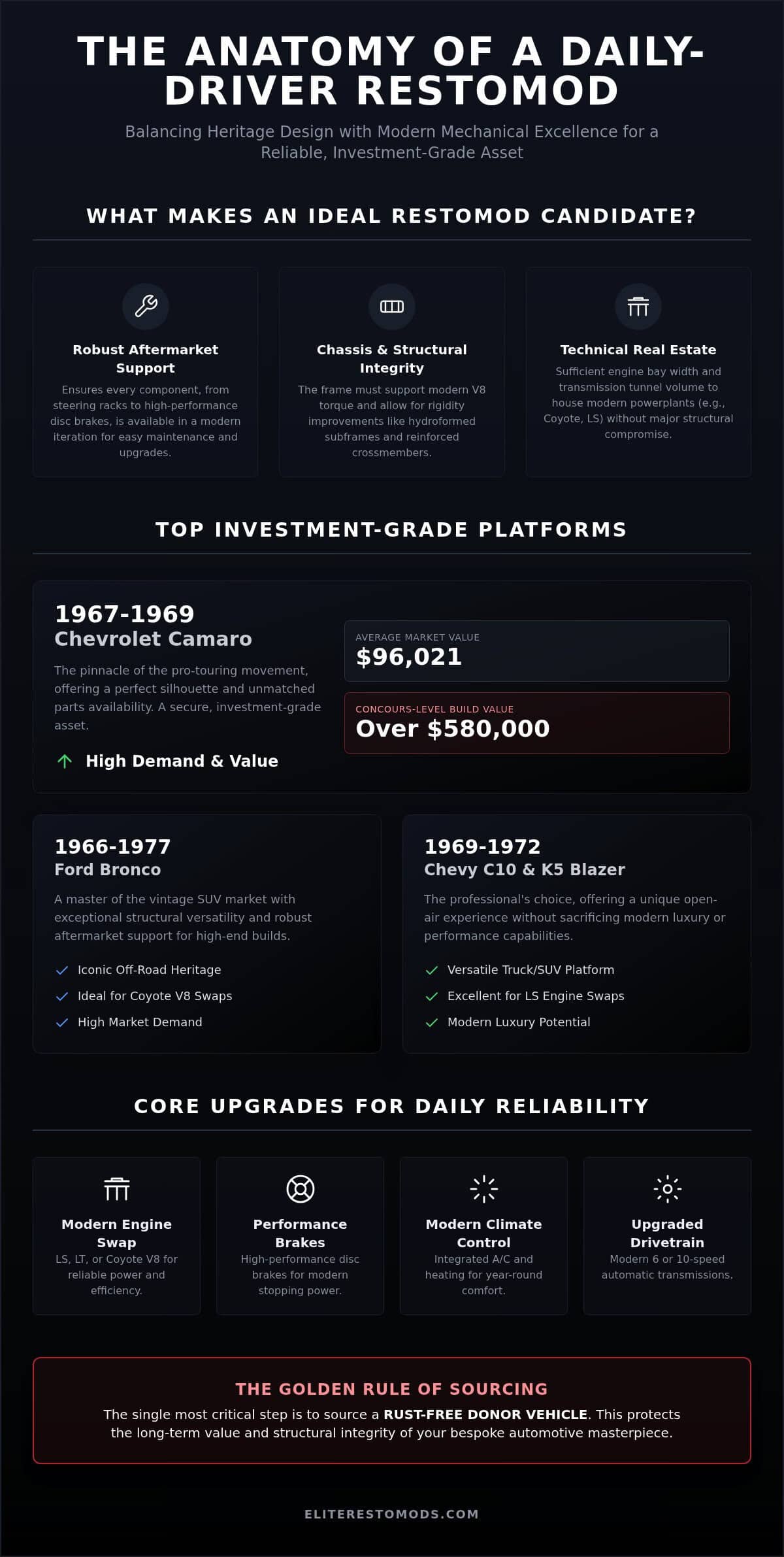
Selecting the right foundation is the most critical step in creating a reliable masterpiece. It requires a discerning eye. You must spot a platform that offers both timeless aesthetics and the physical space for modern hardware. Not every vintage frame can support the demands of 21st-century commuting. The best classic cars for daily driving are those that possess a robust aftermarket ecosystem. This ensures that every component from the steering rack to the high-performance disc brakes is available in a modern iteration. Beyond simple parts availability, the chassis must offer the potential for improved rigidity. A classic car with a flexible frame will never deliver the precise handling expected of a modern luxury vehicle. We look for platforms where hydroformed subframes and reinforced crossmembers can be integrated to handle the increased torque of a contemporary V8 engine.
To better understand this concept and see how these platforms are evaluated, watch this helpful video:
The Balance of Heritage and Modernity
A true Elite Certified Restomod preserves the iconic silhouette while quietly integrating sophisticated upgrades through a rigorous quality assurance process. Preserving original body lines isn’t just about nostalgia. It is a calculated move to protect long-term investment value. Imagine the sharp contrast of polished vintage chrome against the crisp, focused beam of modern LED lighting. This creates a visual tension that defines high-end craftsmanship. Inside, the cabin must remain a sanctuary. Integrating modern climate control systems is non-negotiable for daily comfort. This requires a platform with a dashboard architecture that can discreetly house updated ducting and electronic controls without ruining the period-correct aesthetic.
Technical Real Estate and Powertrain Integration
Performance starts with space. Modern DOHC engines like the Ford Coyote are physically wider than their vintage predecessors. This makes engine bay width a primary concern for any serious build. Similarly, the transmission tunnel must accommodate the larger casings of modern 6-speed or 10-speed automatics without requiring extensive floor surgery that might compromise the vehicle’s structural integrity. We prioritize vehicles that allow for these technical integrations while maintaining a clean, professional appearance under the hood. The best classic cars for daily driving provide the necessary volume to house these powerplants while maintaining structural integrity. The ideal restomod platform is one that accepts modern architecture with minimal structural compromise.
The 1967-1969 Chevrolet Camaro: A Timeless Performance Canvas
The first-generation Camaro is more than a muscle car. It’s a cultural touchstone. For those seeking the best classic cars for daily driving, the 1967-1969 platform represents the absolute pinnacle of the pro-touring movement. This era of F-body design offers a perfect silhouette that has never gone out of style. Beyond the aesthetics, the primary reason this platform dominates the restomod market is its unmatched parts availability. You can source every single component, from individual body panels to advanced hydroformed subframes, from the modern aftermarket. This makes maintenance straightforward and ensures that your vehicle remains on the road rather than stuck in a shop. Market analysis from early 2026 shows that well-built Camaro restomods command an average price of $96,021, with high-end, concours-level builds reaching over $580,000. This high demand ensures that a fully sorted example is not just a vehicle, but a secure, investment-grade asset.
The LS and LT Engine Advantage
The small-block Chevy architecture remains the heartbeat of the modern restomod industry. Utilizing an aluminum-block LS or LT engine provides a significant weight advantage over original iron-block powerplants. This weight reduction directly improves front-to-rear balance, resulting in sharper turn-in and more predictable handling during your daily commute. Integrating modern electronic fuel injection is the key to turn-key reliability. It eliminates the cold-start struggles and vapor lock issues common with vintage carburetors, allowing the car to perform flawlessly in any weather condition. You can experience this seamless blend of heritage and modern power by exploring our current performance muscle car inventory, where we showcase vehicles engineered for the modern road.
Suspension and Braking for Modern Traffic
To truly transform a 1960s icon into a daily driver, the chassis must evolve. Archaic rear leaf springs are often replaced with sophisticated multi-link suspension setups that provide superior axle control and ride quality. This transition allows the Camaro to track straight over uneven pavement and remain composed during high-speed cornering. Modern traffic also demands modern stopping power. Oversized braking systems from manufacturers like Wilwood or Baer are essential for managing the increased horsepower of a modern V8. These systems offer consistent pedal feel and significantly shorter stopping distances. When these mechanical intricacies are meticulously tuned, the result is a refined ride quality that rivals contemporary luxury sports cars while retaining the visceral soul of a classic.
The 1966-1977 Ford Bronco: Mastering the Vintage SUV Market
The first-generation Ford Bronco is no longer a simple off-roader. It’s a lifestyle icon. It captures the adventurous spirit of the 1960s while providing the vertical, commanding view of the road that modern drivers crave. For those identifying the best classic cars for daily driving, the Bronco offers a unique combination of compact dimensions and rugged capability. This platform has transitioned from a utilitarian workhorse into a bespoke piece of functional art. High-end restomod versions now command prices starting around $264,900, reflecting the meticulous engineering required to make a vintage truck feel like a contemporary luxury SUV. With a median value appreciation of 74% over the last five years, these vehicles represent a stable intersection of passion and investment.
Coyote Power and Drivetrain Refinement
The heart of a premier Bronco build is often the Ford 5.0L Coyote engine. This high-revving powerplant provides the linear power delivery and reliability necessary for modern highways. Fitting this wide DOHC engine into the narrow Bronco engine bay is a technical feat that requires professional execution. Our Elite Certified Restomods standards ensure that the drivetrain integration is seamless, pairing the Coyote with a modern 10-speed automatic transmission for effortless urban driving. Upgrading to modern power steering and hydroboost braking systems is non-negotiable. These enhancements eliminate the wandering steering and heavy pedal feel of the original design, ensuring safe operation in dense traffic. Modern 4WD systems allow for smooth transitions between environments, making the Bronco as capable on a rain-slicked city street as it is on a coastal trail.
Bespoke Interiors and Modern Tech
The transformation continues inside the cabin. We replace the original spartan vinyl with artisanal leather interiors that offer ergonomic support for long commutes. Every stitch is a testament to luxury craftsmanship, providing a tactile experience that matches the vehicle’s external beauty. Integrating modern technology requires a delicate touch. We install sophisticated infotainment and high-fidelity sound systems that provide full connectivity without disrupting the iconic lines of the classic dashboard. You can learn more about how we manage these complex transformations by exploring our meticulous build journey. The result is a vehicle that feels as refined as a modern premium SUV while retaining the soul of a 1960s legend. It’s a sanctuary of leather and polished metal, engineered to withstand the rigors of daily use without losing its vintage charm.
The 1969-1972 Chevrolet C10 and K5 Blazer: The Professional Choice
The classic truck market has experienced a meteoric rise, evolving from a niche interest into a cornerstone of the investment-grade collector market. Once dismissed as budget-friendly projects, the 1969-1972 Chevrolet C10 and K5 Blazer are now frequently featured in world-class automotive collections. This generation of GM trucks represents a technical sweet spot for those seeking the best classic cars for daily driving. They offer a spacious cabin and a footprint that accommodates modern suspension geometry with ease. A fully sorted C10 doesn’t just provide utility; it offers a refined driving experience that belies its fifty-year-old origins. By integrating modern independent front suspension and advanced chassis components, we transform these vehicles into machines that handle with the poise of a contemporary luxury sedan.
The Versatility of the C10 Chassis
The C10 chassis is a masterclass in versatility, supporting a broad range of restomod styles from low-slung pro-touring builds to elevated cruisers. To achieve a truly contemporary feel, we replace the vague, original steering box with modern rack and pinion steering. This delivers the precise, weighted feedback expected of a high-performance machine. Every movement becomes deliberate. The engine bay is famously cavernous, allowing for the effortless installation of LS and LT powerplants without compromising access for maintenance. If you have a specific vision for a vintage truck, our custom build services provide the expert consultation needed to realize that dream.
The Investment Appeal of the K5 Blazer
The K5 Blazer stands as the ultimate open-air alternative to the vintage SUV. Its removable top offers a unique experience that combines the ruggedness of a truck with the freedom of a convertible. As of early 2026, bespoke K5 Blazer restomods from specialized shops carry a starting price of $245,000, with high-end builds often exceeding $300,000. These figures reflect the complex structural requirements of a high-horsepower build. Removing the top places immense stress on the body, requiring reinforced frames and integrated roll cages to maintain rigidity under the torque of a modern V8. This level of engineering ensures the vehicle remains composed on the highway. For a deeper look into the market dynamics of these assets, view our 2026 guide to investment-grade performance. The result is a vehicle that commands attention at a show and delivers total confidence on a daily commute.
Investing in Excellence: How to Source and Build Your Masterpiece
The journey to owning a bespoke automotive masterpiece begins long before the first wrench turns. It starts with a vision. To secure the best classic cars for daily driving, you must first identify a foundation that possesses absolute structural integrity. A rust-free donor vehicle is the only way to protect your long-term investment. Many enthusiasts fall into the trap of purchasing a project based on visual charm; they soon discover that the original steel is a lattice of oxidation and poorly executed repairs. We prioritize mechanical sorting and modern reliability above all else. A beautiful paint job is meaningless if the vehicle can’t withstand the rigors of a morning commute. You’ve got to define your primary use case early. A performance-oriented build requires different cooling capacities and suspension tuning than a refined daily commuter intended for urban traffic.
The Professional Sourcing Advantage
Finding an investment-grade foundation in 2026 requires more than a casual search of online marketplaces. The risks of purchasing unrestored projects without a professional mechanical inspection are substantial. Hidden frame damage or internal engine wear can quickly turn a dream into a financial burden. Our expert sourcing services provide a critical layer of protection, utilizing a national network to locate vehicles that meet our rigorous standards. We look for high-integrity icons that are suitable for a transformative journey. For a deeper understanding of this procurement process, consult our 2026 guide to finding investment-grade icons. This ensures your project starts on solid ground rather than a compromised frame.
The Elite Certified Difference
Choosing an Elite Certified Restomod means choosing perfection. Every vehicle undergoes a rigorous quality assurance process designed to eliminate the money pit reputation of traditional restorations. These are fully sorted, turn-key machines ready for immediate use. We don’t just build cars; we curate assets. Beyond the build, our professional consignment program and climate-controlled storage options ensure your masterpiece remains protected from the elements and market volatility. This is the bridge between a long-held dream and a tangible, high-performance reality. We invite you to view our current collection of available masterpieces and begin your own developmental narrative today. Every detail is an opportunity for excellence.
Secure Your Place in Automotive History
Driving a vintage icon shouldn’t be a compromise between aesthetic soul and mechanical reliability. We’ve explored how legendary platforms like the first-generation Camaro and the versatile K5 Blazer represent the best classic cars for daily driving when they’re engineered with modern mechanical real estate. These vehicles are no longer just relics of a bygone era. They’re functional art pieces capable of navigating modern traffic with the poise of a contemporary luxury sedan. By prioritizing structural integrity and high-performance engine integrations, you transform a nostalgic dream into a dependable reality.
Every Elite Certified Restomod undergoes a rigorous multi-point quality assurance process to ensure it’s investment-grade and fully sorted. We curate these builds for both visceral performance and everyday reliability. Whether you require specialized financing or national enclosed transport, our team is prepared to bridge the gap between your vision and the open road. It’s time to experience the marriage of brute force and refined comfort. Explore our current inventory of Elite Certified Restomods and find the masterpiece that matches your lifestyle. Your modern classic is waiting.
Frequently Asked Questions
What is the best classic car for a daily driver in 2026?
The 1967-1969 Chevrolet Camaro and the 1966-1977 Ford Bronco are widely considered the best classic cars for daily driving in 2026. These platforms offer a unique balance of iconic styling and immense engine bay real estate for modern powertrain swaps. Their popularity ensures that high-quality replacement parts are always available. This accessibility eliminates the downtime often associated with rare vintage models. Choosing a platform with extensive aftermarket support is the key to reliable commuting.
How much does it cost to build a daily driver restomod?
Building a professional restomod involves significant investment in both engineering and high-end materials. While project costs vary based on the donor vehicle’s condition, high-end, turn-key builds for models like the Bronco can start around $264,900 according to industry data. These figures reflect the meticulous labor required to integrate modern electronics and climate control systems. A professional build ensures that every component is fully sorted. This protects the long-term value of the asset while providing a reliable driving experience.
Are restomods more reliable than original classic cars?
Restomods are significantly more reliable than original classics because they replace temperamental vintage components with modern hardware. Swapping a dated carburetor for electronic fuel injection provides turn-key starting in any weather. Modern cooling systems and electronic ignitions eliminate the common failure points that plague original survivors. This transformation allows you to enjoy the soul of a vintage design with the absolute confidence of contemporary engineering. It’s the difference between a static display and a functional machine.
What is the best modern engine for a daily driver classic car?
The GM LS series and the Ford Coyote 5.0L are the premier choices for modern daily drivers. These engines provide a linear power delivery and high-revving reliability that original powerplants cannot match. They are designed for high-mileage use and offer seamless integration with modern automatic transmissions. Choosing an LS or Coyote swap ensures that your vehicle has the torque necessary for highway speeds while remaining fuel-efficient. Their widespread use also means that service and diagnostic support are available nationwide.
Can a restomod classic car handle modern highway speeds?
A properly engineered restomod handles modern highway speeds with ease and composure. By installing modern overdrive transmissions and high-performance suspension systems, these vehicles maintain low RPMs at 70 MPH while tracking straight. Original classics often struggle with vibration and high engine noise at these speeds. Upgraded multi-link rear suspensions and independent front setups provide the stability needed for safe lane changes. This results in a refined ride quality that rivals contemporary luxury sports cars on long journeys.
How do I ensure a restomod car holds its investment value?
Ensuring long-term value requires a focus on build quality and documented provenance. Starting with a rust-free, high-integrity donor vehicle is the most critical step for protecting your investment. You should prioritize mechanical excellence over purely aesthetic upgrades. A fully sorted, Elite Certified vehicle with a rigorous quality assurance history commands a premium in the collector market. Maintaining detailed records of the build process and using industry-standard high-performance components will ensure the asset remains desirable for future collectors.
What are the most important safety upgrades for a daily driver classic?
Modern safety upgrades are essential for any vehicle intended for regular road use. High-performance disc brakes from manufacturers like Wilwood or Baer significantly reduce stopping distances compared to vintage drums. Installing modern rack and pinion steering provides the precise control needed to avoid hazards. You should also integrate LED lighting for better visibility and three-point seat belts for occupant protection. These technical enhancements don’t just add safety; they improve the overall tactile connection between the driver and the road.
Is it better to buy a finished restomod or build one from scratch?
Buying a finished, fully sorted restomod is the most efficient path to immediate enjoyment. It eliminates the long lead times and potential cost overruns associated with a custom build. A turn-key vehicle has already undergone a rigorous testing process to ensure every system is synchronized. However, a custom build allows for total personalization of every aesthetic and mechanical detail. Your decision should depend on whether you prioritize immediate road time or the journey of creating a bespoke piece of functional art.