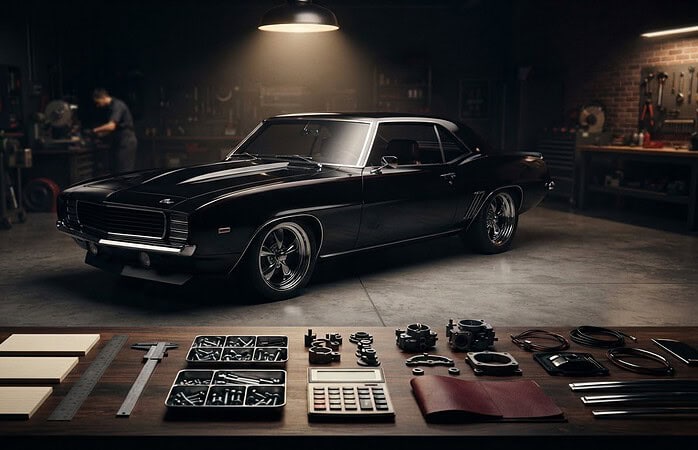

A restomod doesn’t run on a universal calendar. The average timeline for a restomod project depends on the car’s condition and what you want it to become, from focused mechanical upgrades to paint, bodywork, and a fully customized interior.
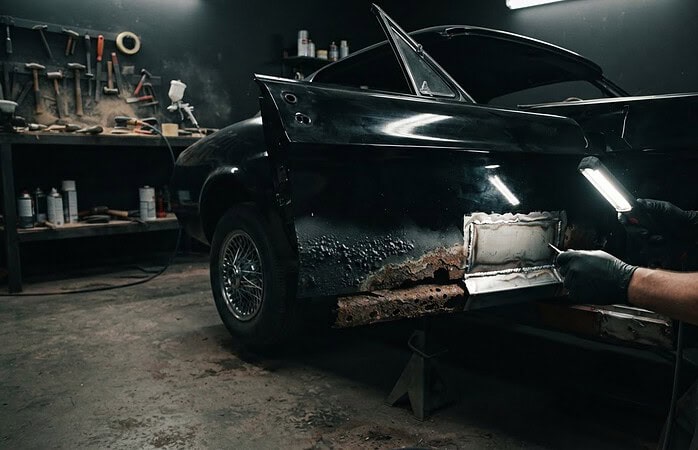
It’s natural to want a clear estimate before committing, especially when the car will be out of your hands during the build. A useful schedule depends on the project’s scope and sequence, not simply the number of tasks on a list. Disassembly can reveal hidden rust or earlier repairs that change the work ahead. Parts selection, custom fabrication, and the timing of owner decisions can also affect progress.
This guide explains the main stages of a restomod build, the dependencies that influence them, and practical ways to reduce avoidable delays. You’ll learn what to define before work begins, which decisions may affect the sequence, and how to assess whether a proposed schedule accounts for your car and its intended upgrades.
Key Takeaways
- Use the average timeline for a restomod project as a planning reference, not a fixed promise for a bespoke build.
- Map the major stages from defining the scope to final review, while allowing for tasks to overlap or plans to change when new information emerges.
- Prioritize the upgrades that matter most. Vehicle condition, parts dependencies, and connected workstreams all influence the build sequence.
- Keep decisions moving by documenting priorities, resolving dependent choices promptly, and agreeing on how updates and scope changes will be handled.
- Understand how mechanical upgrades, paint and bodywork, and interior customization each contribute to your custom build’s scope.
Why There Is No Single Average Timeline for a Restomod Project
The appeal is easy to picture: the unmistakable lines of a classic paired with modern capability and the confidence to enjoy it on the road. The harder part is knowing how long that transformation will take. An average can offer context, but it can’t account for every car’s condition, every owner’s priorities, or the finish a particular build requires.
A restomod schedule depends on scope and sequencing, not one universal duration. A focused mechanical upgrade is a different undertaking from a build combining mechanical work with body repairs, fresh paint, and a tailored interior. Even similar-looking cars can need different work once their condition and goals are assessed. That’s why the average timeline for a restomod project is best treated as a planning reference, not a dependable promise for an individual build.
For a visual introduction to the choices involved in planning a restomod, watch this video:
What does an average restomod timeline actually tell you?
A broad benchmark helps frame early conversations, but it isn’t a project-specific schedule. Two vehicles that appear to start in similar condition may need different work because their previous repairs, wear, or owners’ goals differ. The distinction matters: a restomod modernizes a classic rather than returning it to original specification, as described in Conservation and restoration of road vehicles. The chosen upgrades shape the plan.
Why project scope changes the schedule
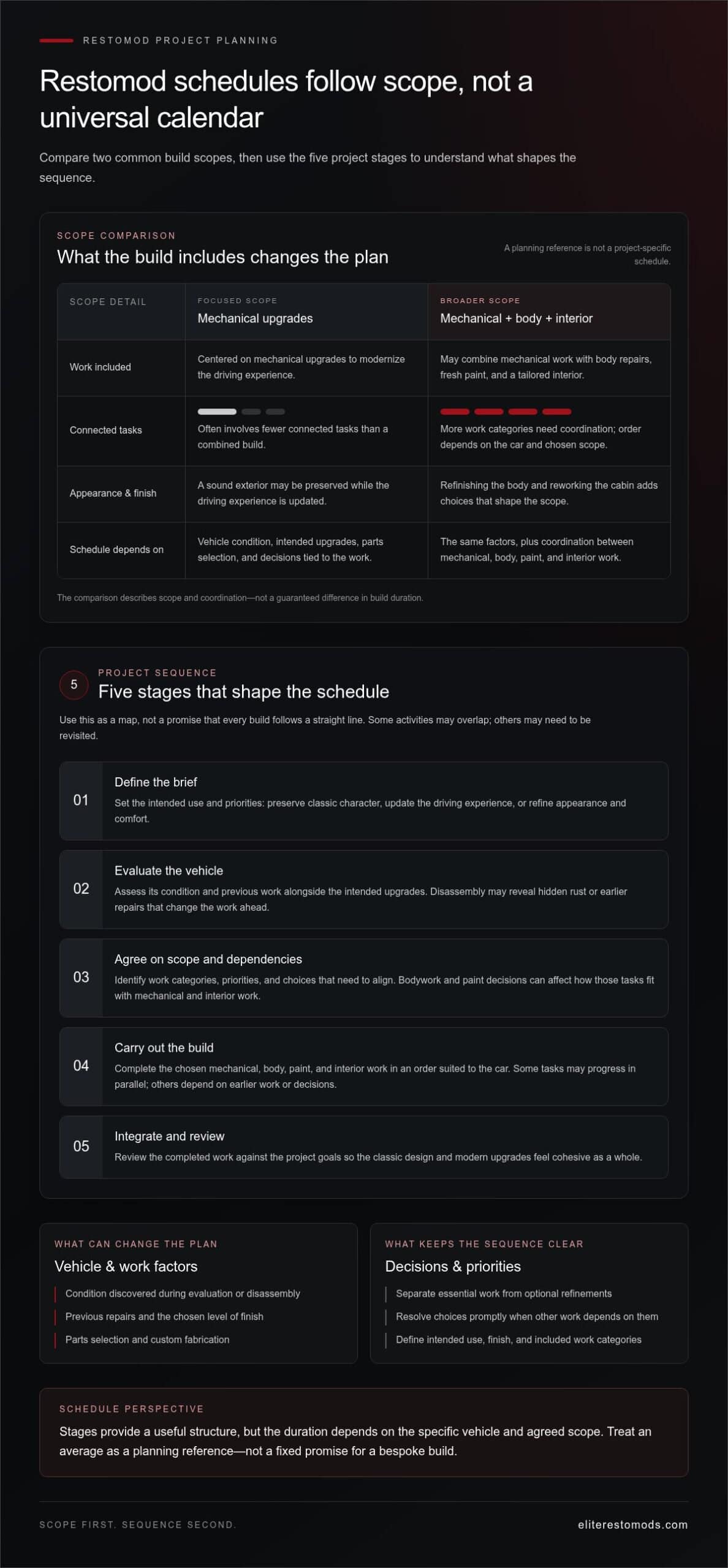
Start by defining what the finished car should do and feel like. A project centered on mechanical upgrades may involve fewer connected tasks than one combining mechanical work with body repairs, paint, and interior customization. The vehicle’s condition also matters: issues identified during evaluation can add work or change the order of planned tasks.
The desired finish affects the scope, too. Preserving a sound exterior while updating the driving experience calls for a different plan than refinishing the body and reworking the cabin. These choices determine what needs coordination, which tasks depend on others, and when decisions must be made. A clear brief turns a vision into a workable sequence. Elite Restomods’ custom build services include mechanical upgrades, paint and bodywork, and interior customization.
Craftsmanship is part of the schedule. Fit, finish, and the integration of modern components with a classic design require thoughtful planning. Parts selection can influence when a task proceeds, while decisions about materials, finishes, or priorities may affect work that depends on those choices. A well-framed project makes these dependencies easier to identify early, so expectations reflect the actual scope rather than a generic calendar.
Before settling on a schedule, separate essentials from options: what must change for the car to meet your goals, and what would be desirable if the scope allows? This distinction gives the build direction and makes later discussions about adjustments more productive. Define the intended use, level of finish, and work categories you want included. Then the schedule can be shaped around your car and priorities instead of an average that may describe a very different build.
The Main Stages That Shape a Restomod Project Schedule
A project schedule is easier to understand when you can see the decisions and work behind it. The stages below offer a useful map, not a promise that every build will follow the same path or move in a straight line. The average timeline for a restomod project can’t be calculated from stages alone; durations depend on the specific vehicle and agreed scope.
A restomod typically moves from a clear brief to vehicle assessment, planned work, build and integration, then final review. Use that sequence to understand the project’s milestones, while recognizing that some activities may overlap and others may need to be revisited.
- Define the brief. Establish how you want to use the car and what matters most, such as preserving its classic character, updating its driving experience, or refining its appearance and comfort.
- Evaluate the vehicle. Consider its existing condition and previous work alongside the intended upgrades. This can reveal where the initial plan needs adjustment before the work is fully mapped out.
- Agree on scope and dependencies. Identify the work categories, priorities, and choices that need to align. For example, bodywork and paint decisions may affect how those tasks fit alongside mechanical and interior work.
- Carry out the build. Complete the chosen mechanical, body, paint, and interior work in an order suited to the car. Some activities may progress in parallel; others depend on earlier work or decisions.
- Integrate and review. Bring the completed work together and review the result against the project’s goals. This stage helps ensure the classic design and modern upgrades feel cohesive as a whole.
From project brief to an agreed scope
The brief connects your vision to a practical work plan. Describe the car’s intended use, the qualities you want to preserve, and the modern capability you hope to introduce. Then rank your priorities. A clear hierarchy distinguishes essential work from optional refinements and keeps decisions aligned as the project develops.
Build work, integration, and final review
Mechanical upgrades, bodywork, paint, and interior customization aren’t always isolated tasks. Their order depends on the vehicle and chosen scope, and coordination may require revisiting an earlier decision. Integration deserves its own place in the plan: the goal is for each part of the build to work with the others, not simply to complete separate tasks.
Use the sequence to discuss progress and decision points, not to infer a fixed duration for each phase. A project may return to assessment or refine its plan when new information emerges. That doesn’t make the sequence useless; it makes the plan responsive to the car instead of rigidly tied to a generic calendar. Elite Restomods’ custom build process shows how a commissioned project can take shape around its goals and scope.
Before work begins, clarify which choices need your input and which parts of the plan depend on them. Connecting decisions to the project sequence helps everyone understand what can proceed and what must wait. A well-managed build protects the craft while giving you a clearer view of how the car is moving from original character toward modern capability.
Which Restomod Build Factors Can Extend or Simplify the Schedule?
A focused upgrade and a full transformation place different demands on a build plan. Updating a defined mechanical area may involve fewer connected workstreams than combining mechanical upgrades with body repairs, paint, and interior customization. Broader scope doesn’t automatically mean a particular duration, but it does create more relationships to coordinate: one choice or task may affect what can happen next.
Vehicle condition, parts selection, and the finish you want all shape those relationships. Use the table to assess common schedule influences without assigning unverified durations.
| Project factor | Potential schedule effect | Planning response |
|---|---|---|
| Focused versus broad scope | More workstreams can create additional dependencies and coordination. | Set priorities and distinguish essential work from optional refinements. |
| Vehicle condition | Newly identified needs can change the task list or work order. | Use observations of the actual car to revisit the plan. |
| Parts selection and supply | Tasks that depend on selected components may need to be sequenced around them. | Resolve component choices early and track which work depends on them. |
| Late scope changes | Additions may affect materials, connected tasks, and planned work already underway. | Review the impact on the full scope before approving a change. |
How vehicle condition and parts availability affect timing
Initial observations inform the plan, but work can reveal conditions that weren’t apparent beforehand. A newly discovered repair need, for example, may require the team to reassess related tasks before proceeding. Parts are another dependency: selection can influence fit, compatibility, and the order in which connected work makes sense. Project-specific findings are more useful than generic estimates because they reflect the actual car and chosen components.
How custom choices and scope changes affect timing
Changes can ripple through a build. Adding bodywork may affect paint planning; changing interior choices can alter material requirements and related tasks. A mechanical addition may also need coordination with other planned work. If a choice is made after dependent work has been planned or started, the build team may need to revise the sequence rather than simply insert the request.
That’s why a broad average can’t predict an individual build accurately. The average timeline for a restomod project describes no specific vehicle, parts plan, or finish. Before approving an addition, clarify what it changes: the work itself, the materials, the tasks that rely on it, and any work that may need to be revisited. This keeps scope decisions visible and expectations aligned with the actual plan.
A practical way to simplify coordination is to group choices by dependency. Decide which components and finishes must be selected before related work can proceed, and which preferences can remain open without affecting the sequence. Keep a written record of the approved scope and revisions so you and the build team share the same understanding. Precision at decision points supports craftsmanship; it doesn’t mean rushing the work.
How to Keep a Restomod Project Moving Without Rushing the Craft
A well-managed build isn’t about pushing every task faster. It’s about keeping priorities, decisions, and workmanship aligned so the car can progress without avoidable uncertainty. Your role is to stay clear on what matters, resolve choices that affect upcoming work, and understand how proposed changes may alter the plan.
Use this practical sequence to support momentum while respecting the time and attention careful craftsmanship requires:
- Write down the priorities. Record how you want to use the car, which qualities of its original character matter most, and which upgrades are essential.
- Capture the agreed scope. Keep a shared record of selected mechanical, body, paint, and interior work, along with the choices that shape each area.
- Resolve dependent decisions. Identify choices that need to be settled before related work can proceed, such as selecting a finish before the relevant paint work is planned.
- Review proposed changes before approving them. Discuss how an addition could affect materials, connected tasks, and the existing sequence.
- Keep updates useful. Agree on how you’ll receive project updates and how decisions requiring your input will be raised.
Make decisions early and document the agreed scope
A written scope gives everyone a shared reference point. Keep it focused on the intended result, selected work, and approved revisions. If priorities shift, update the record rather than relying on memory or scattered conversations. This helps distinguish a considered change from a misunderstanding, and settled choices can reduce uncertainty or rework caused by conflicting assumptions.
Making decisions early doesn’t mean every detail must be fixed before the car is assessed. It means considering dependencies as you make choices. If you’re deciding between two interior finishes, for instance, clarify whether the selection affects materials or other planned work. The goal is alignment, not an assumed delivery date.
Use clear communication to manage schedule changes
Useful updates should explain more than what’s already been completed. Ask for a clear picture of the next work, any tasks that depend on it, and decisions needed from you. That context helps you respond with purpose instead of guessing what is holding up progress. Agree on a practical way to communicate, without assuming a particular update cadence unless it’s part of your project arrangement.
If the scope changes, discuss the consequences before treating the addition as a simple adjustment. A new mechanical upgrade may affect connected work; a paint or interior choice may require a revised sequence or materials plan. Understanding those effects helps you make an informed choice and keeps expectations grounded in the build as it stands.
Schedule management should protect the quality of the finished car, not reward shortcuts. Craftsmanship takes thoughtful coordination, especially when classic character and modern capability must come together as one cohesive result. Elite Restomods’ custom build process offers a starting point for understanding how a clear process can support shared expectations. If you’re ready to shape your priorities into a commissioned build, explore Elite Restomods’ custom build services and start defining the project around your goals.
Planning a Custom Restomod Build With Elite Restomods
A custom restomod starts with a vision: keep the lines and character that make a classic unmistakable, then shape its capability around the way you want to enjoy it. Elite Restomods’ custom build services include mechanical upgrades, paint and bodywork, and interior customization. The right combination depends on the vehicle and your priorities, so start by discussing the car, its intended use, the work you have in mind, and what matters most to you.
That focus helps turn an idea into a defined project without assuming a universal calendar. The average timeline for a restomod project can’t set the schedule for your particular vehicle. A project-specific plan needs to reflect its condition, selected work, and the choices that connect each part of the build.
Turn the vision into a defined build brief
Begin by deciding what should remain unmistakably classic and what you want to feel modern. Consider the car’s intended use, your performance goals, and the finish you want inside and out. Then prioritize: which changes are essential to the experience, and which would be welcome refinements? A clear brief gives the project a coherent direction. Recommendations can then be tailored to the actual vehicle and scope rather than relying on a generic template.
Describe the experience you want, not just a list of parts or finishes. For example, explain whether preserving the car’s visual character while updating its mechanical capability is the priority, or whether you want a more comprehensive transformation. Those distinctions help frame the work across mechanical upgrades, body and paint, and interior customization, and make it easier to discuss how the selected elements fit together.
Choose between commissioning a build and buying a completed restomod
Commissioning a build lets you shape the project around your priorities and the specific vehicle. It’s a collaborative path from vision to finished car. If you’d rather consider a vehicle that has already been completed, an Elite Certified Restomod offers a different route. A commissioned build is shaped around the owner’s project, while an inventory vehicle is already completed. Browse the current restomod inventory as you weigh which approach suits you.
Before discussing a project, bring together a concise picture of the vehicle, how you plan to use it, the work you’re considering, and your highest priorities. You don’t need every detail resolved. A clear starting point makes it easier to identify which choices shape the scope and which can be refined as the plan develops.
For a build shaped around your goals, explore Elite Restomods’ custom build services and begin developing a project-specific path for your classic.
Give Your Classic a Clear Direction
The first useful step isn’t choosing a finish or setting a date. It’s deciding what you want the car to become. Picture the roads you hope to drive, the character you want to preserve, and the changes that would make the experience feel unmistakably yours. Those priorities create a stronger foundation for discussing scope and building a project-specific plan than relying on the average timeline for a restomod project alone.
Bring your ideas together, even if some details are still open. A focused conversation can turn a long-held vision into a considered path forward, with decisions grounded in the car and the work it needs. The result is not simply a refreshed classic, but a machine shaped for the way you want to enjoy it.
Start shaping your custom build with Elite Restomods, and take the next step toward bringing your vision to life.
Frequently Asked Questions
Is there a standard timeline for a restomod project?
No, there isn’t one schedule that applies to every restomod. A broad average can help frame expectations, but it can’t account for a specific car’s condition, chosen work, or parts dependencies. For a useful planning reference, distinguish the build’s scope from its sequence: what work is included, and what needs to happen before another task can proceed? Base expectations on documented project details, not assumptions.
How long does a custom restomod build take from start to finish?
The duration depends on the vehicle and selected work, so the average timeline for a restomod project can’t give an exact answer for an individual build. A focused mechanical project differs from one that also includes bodywork, paint, and interior customization. In a project-specific discussion, clarify what’s included, how tasks connect, which decisions are still open, and what could prompt the plan to change.
What part of a restomod project can take the longest?
There’s no single stage that always takes the longest. For one vehicle, a condition issue may reshape the work; for another, a selected component may affect when related tasks can proceed. Rather than assume paint or mechanical work will dominate, look at the build’s dependencies. Identify which tasks rely on earlier decisions or parts, and what findings could change that sequence.
Can changing the build specifications delay a restomod project?
Yes, a specification change can affect the schedule if it changes materials, approved work, or tasks that depend on one another. Its impact depends on what changes and how far the build has progressed, so it shouldn’t be assigned a fixed duration. Record the decision and discuss how it affects the planned work before proceeding. That keeps expectations aligned without compromising the quality of the finished car.
Does a restomod project timeline include finding the car?
It depends on whether a vehicle has already been selected. A build-only schedule and a project that also includes locating a suitable classic have different starting points. Keep the sourcing stage distinct when comparing timelines, and define which activities an estimate covers. Elite Restomods offers vehicle sourcing alongside custom build services, so a project discussion can distinguish finding the right car from the work planned to transform it.
Is buying a completed restomod faster than commissioning a custom build?
Buying a completed restomod can avoid waiting for a new custom build to be completed, but it offers an existing specification rather than one shaped around your priorities. Consider how well the vehicle’s condition, features, and intended use match what you want. If tailoring the car to your vision matters most, commissioning may suit you better. The right path depends on whether you value a completed vehicle or a build shaped around your goals.