
A buyer says they’re ready to purchase your classic car today, but they’re remote, want to arrange transport, and ask you to handle an unexpected payment detail. The message may sound convincing. Still, avoiding scams when selling a classic car online starts with treating every inquiry as an unverified transaction, not a sure thing.
It’s natural to feel encouraged when someone shows immediate interest in a car you’ve cared for and maintained. But enthusiasm isn’t proof of identity, a legitimate offer, or cleared funds. A deliberate process can help you spot warning signs before sharing sensitive information or handing over the keys and title.
This guide explains how to assess suspicious messages and offers, verify a buyer, and set a clear sequence for payment, title transfer, and vehicle handover, including when a transporter is involved. It also covers consignment as another option. Elite Restomods provides professional marketing and sales representation for owners who would rather not manage every buyer interaction themselves.
Key Takeaways
- Set a verification process before treating an enthusiastic inquiry as a serious offer.
- Keep buyer communication documented and limit the personal information you share early in the conversation.
- Recognize overpayments, third-party payers, and requests to forward money as reasons to pause and verify.
- Compare private selling with consignment to weigh personal control against professional marketing and sales representation.
- When avoiding scams when selling a classic car online, follow a clear sequence for buyer checks, payment, paperwork, and vehicle handover.
Why Classic-Car Sellers Need a Verification Process Before Trusting an Online Buyer
There’s a particular thrill in finding someone who seems to understand the car. They recognize its model year, ask about its history, and appear ready to make an offer. But enthusiasm is only the start of a conversation. A convincing inquiry doesn’t prove who the buyer is, whether the money is real, or what they intend to do next. A steady verification process helps protect both the vehicle and the story behind it.
An online listing can reveal more than details about the car. Photos and descriptions may show where it’s stored or when it may be unattended. Detailed mechanical answers are useful, but personal details and ownership documents deserve careful handling. Payment, title paperwork, and collection each create a separate point where you need clarity. A buyer’s promise to pay is not the same as verified receipt of funds.
That distinction is central to avoiding scams when selling a classic car online. The goal isn’t to assume every stranger is dishonest. It’s to make sure each step is supported by consistent details and independently confirmed information, rather than excitement or pressure.
What makes a classic-car online sale different?
A distinctive vehicle invites detailed questions about provenance, restoration, originality, condition, and parts. Those questions can be entirely reasonable, especially when a buyer is considering a remote purchase and can’t view the car immediately. Distance alone isn’t proof of bad intent. The useful distinction is whether the buyer’s requests fit a coherent process and leave room for ordinary checks.
Photos, a Vehicle Identification Number (VIN), ownership records, and a proposed collection plan all help establish what’s being sold and how the handover might work. A VIN can help identify a vehicle; see this overview of the Vehicle Identification Number (VIN). Share information deliberately: public listing details should describe the car, while sensitive documents and exact storage details call for more discretion.
Which warning signs deserve a pause?
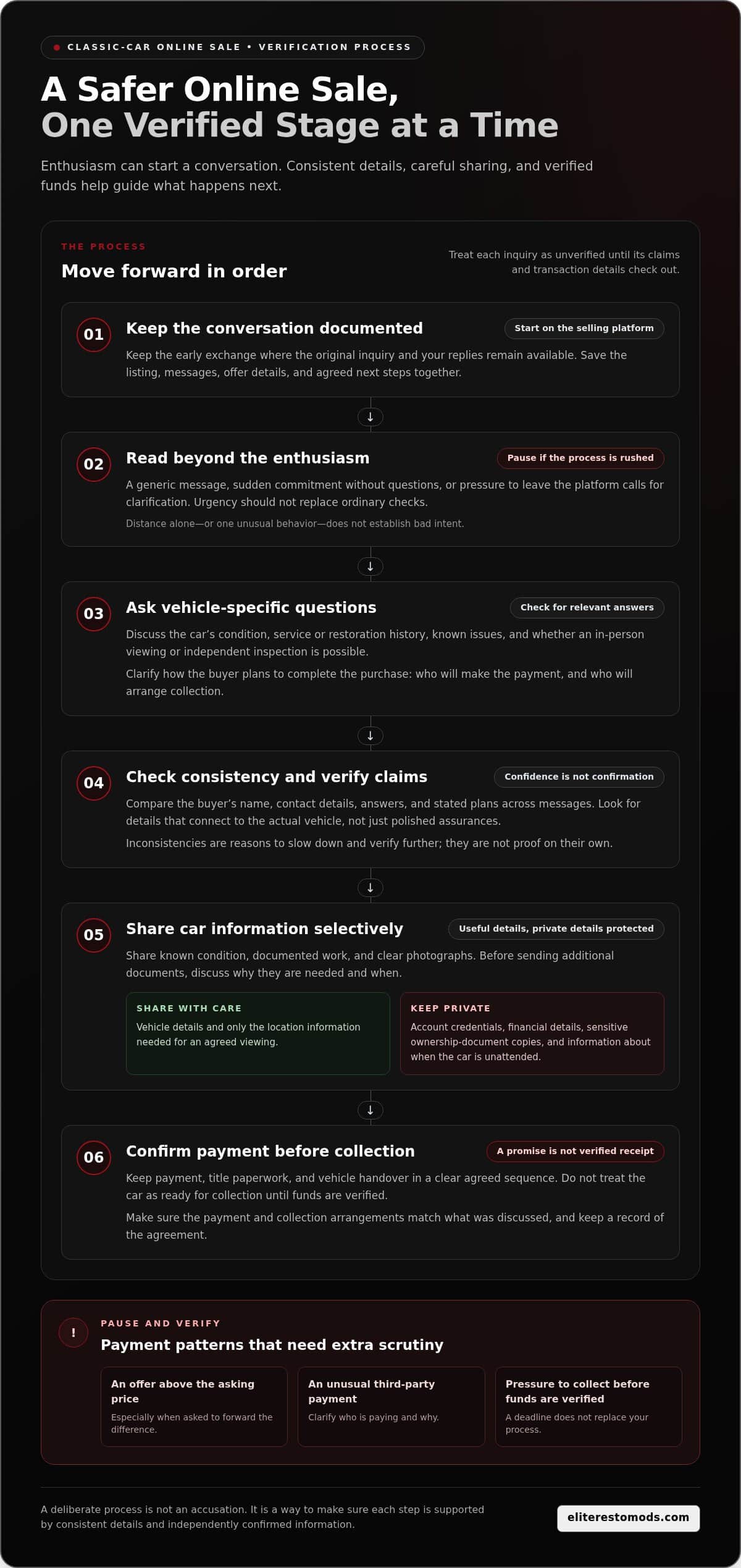
Urgency becomes concerning when it’s used to bypass ordinary questions or change the agreed sequence. Pause if a buyer offers more than the asking price and asks you to forward the difference, proposes an unusual third-party payment, or pushes for collection before funds are verified. These patterns warrant scrutiny, but one behavior alone doesn’t establish fraud.
Look for consistency across the conversation. Does the buyer discuss specific details of the car, answer reasonable questions, and explain who will pay and arrange collection? Evasive answers, changing names or payment details, and refusal to discuss an inspection or handover plan are reasons to slow down and verify further. Keep a record of what was agreed, and don’t let a claimed deadline replace your process.
How to Screen Online Buyers and Verify Their Claims Step by Step
A measured screening process helps turn an appealing first message into a conversation you can assess. Keep the early exchange on the selling platform when possible, where the original inquiry and your replies remain available. Don’t share account credentials, financial details, or unnecessary personal information to prove you’re a genuine seller.
Move through the conversation in a deliberate order. First, read the inquiry closely. Next, ask questions that clarify the buyer’s interest and plans. Then compare their answers with details you can verify. A credible inquiry stays consistent across checkable details, not just confident language.
How should sellers assess messages and buyer identity?
Start with the basics: does the person’s name and contact information remain consistent, and do their stated plans make sense across messages? These checks can reveal discrepancies, but none proves identity on its own. A generic note that could describe any car, a sudden commitment without questions, or a rushed request to leave the platform are reasons to slow down and ask for clarification.
Invite specific, relevant discussion. A serious prospective buyer may want to understand the car’s condition, service or restoration history, known issues, and whether an in-person viewing or independent inspection is possible. You can ask what they’d like to inspect and how they plan to complete the purchase, including who will make the payment and arrange collection. Their answers should connect to the actual vehicle rather than feel copied from a template. Save the original listing and keep messages, offer details, and agreed next steps together. A clear record makes changes easier to spot.
Take inconsistencies seriously without jumping to a verdict. The Department of Justice wire fraud case is a reminder that classic-car transactions can be targeted by sophisticated schemes. Apply that lesson practically: verify claims rather than relying on polished messages or assurances.
What should a seller share before a viewing?
Give a prospective buyer useful information about the car, such as its known condition, documented work, and clear photographs, while keeping private details private. Avoid sending financial or account information, copies of sensitive ownership documents, or images that reveal more about your home and routines than the vehicle. If a buyer needs additional documentation, discuss its purpose and timing before sharing it.
For a viewing, agree on the arrangements directly and share only the location details needed to attend. Avoid describing when the car is typically unattended or revealing unrelated property information. If you prefer not to manage each inquiry and viewing conversation yourself, professional consignment can provide marketing and sales representation. Elite Restomods’ classic-car consignment services offer an alternative for sellers seeking that support.
Keep the tone courteous and the boundaries clear. A genuine buyer should be able to discuss the car and proposed next steps without requiring premature access to your personal information.
How to Protect Payment, Paperwork, and Vehicle Handover
A classic-car sale isn’t complete just because a message says the payment has been sent. Screenshots, emailed confirmations, and a buyer’s description of a transfer are not independent proof that funds have reached your account or are available. Before the buyer travels or a transporter is scheduled, agree in writing on the payment method, how you’ll verify its status, and what must be completed before the car leaves.
How can sellers reduce payment-related risk?
Use your financial institution’s trusted contact details or account tools to check payment status. Don’t rely on a phone number, link, or contact information supplied in a payment message. If anything is unclear, pause the handover until your institution can explain what the transaction status means.
An overpayment, a payment from someone other than the buyer, or a request to send part of the money to a buyer-selected intermediary deserves careful scrutiny. These circumstances aren’t automatic proof of fraud, but they complicate the transaction and should be resolved before proceeding. Don’t return an alleged excess payment or forward money on the buyer’s behalf based only on a promise, screenshot, or email. Keep the agreed payment path direct and documented.
For added context about vehicle records, sellers can consult the National Insurance Crime Bureau VINCheck using the vehicle’s VIN. Treat it as one reference point, not as verification of a buyer’s identity, payment, or right to take possession.
How should paperwork and collection be handled?
Prepare a written record that identifies the vehicle and captures the agreed terms, payment status, and handover details. Keep copies of relevant communications and note when the car, keys, and documents change hands. Requirements for title transfer and other sale documents vary by state, so verify the applicable state requirements before signing or releasing paperwork. Don’t assume one general checklist covers every transaction.
Keep the keys and vehicle in your control until payment is independently verified and required documentation is complete. If a transporter will collect the car, coordinate the arrangement directly with the buyer. Record who is taking custody, when the vehicle is released, and what was handed over. Don’t let a driver’s arrival or a buyer’s urgency replace the agreed sequence.
Release the vehicle only after payment has been independently verified and the handover documented. This keeps the final step tied to evidence rather than expectation and gives both parties a clear record of how the transaction concluded.
Owners who want professional representation for marketing and sales can explore classic-car consignment services. Consignment is a different selling route, not a reason to skip clear payment, paperwork, and custody arrangements. Careful process remains essential when avoiding scams when selling a classic car online.
Private Sale or Consignment: Which Online Selling Route Fits Your Situation?
Choosing how to sell is also choosing how much of the process you want to manage. A private online sale gives you direct control over the listing and buyer conversations. Consignment adds professional marketing and sales representation. Neither route guarantees a particular outcome or removes the need for a clear transaction process.
| Consideration | Private sale | Consignment |
|---|---|---|
| Control | You manage the listing, negotiation, and sale decisions directly. | Professional representation handles marketing and sales activity. |
| Seller workload | You coordinate inquiries, viewings, paperwork, and collection. | Some marketing and buyer communication responsibilities shift to the representative. |
| Buyer communication | You screen and communicate with prospective buyers yourself. | A representative supports the sales process and buyer interactions. |
| Marketing support | You prepare and manage your own online listing. | Marketing is part of the professional representation. |
The right fit depends on the time and involvement you want to bring to the sale. Professional representation changes who manages parts of the process; it doesn’t guarantee against scams. In either route, clarify responsibilities and keep payment, paperwork, and handover steps documented.
When might a private online sale suit the owner?
A private sale may suit an owner who is comfortable preparing accurate listing details, responding to questions, arranging viewings, negotiating directly, and coordinating the final transaction. You retain close control over how the car is presented and how discussions proceed. That control comes with responsibility: you handle buyer communications and manage each sale step yourself. Private selling isn’t inherently unsafe or unsuitable, but it does require active oversight.
Consider the practical work, not just the appeal of managing the sale independently. Can you give inquiries consistent attention, keep records organized, and coordinate buyer visits and collection around your schedule? A thoughtful listing can introduce the car to potential buyers, but you remain the point of contact from first inquiry through handover.
What does professional consignment change?
With consignment, Elite Restomods provides marketing and sales representation for classic cars and restomods. This gives owners a professional sales route without requiring them to handle every buyer interaction themselves. The owner retains ownership until the vehicle sells, while the representative supports the marketing and sales process. This arrangement can suit sellers who value professional presentation and prefer a more supported route.
Explore the consignment process overview to understand how representation works. Consignment doesn’t mean stepping away from important decisions or assuming every transaction risk disappears. Understand how responsibilities are divided and continue to treat payment and handover as deliberate steps. For owners weighing professional support against managing a private listing, consignment services for classic cars offer an alternative to consider when avoiding scams when selling a classic car online.
If professional representation fits the level of support you want, explore classic-car consignment options.
A Safer Online Sale Starts With a Clear Plan, and the Right Support
A well-presented classic deserves a selling process with the same attention to detail. Before listing, decide what information you’ll share, how you’ll handle inquiries, and what must happen before the car changes hands. A written plan helps keep the sale steady if a buyer introduces pressure or asks to change the agreed steps.
What should sellers prepare before publishing a listing?
Gather accurate vehicle details, clear photographs, and the ownership documents you may need during the sale. Note known condition details and history so your listing and later answers remain consistent. Decide in advance which personal information will stay private, where you’ll keep buyer communications, and how you’ll arrange viewings without revealing unrelated details about your home or routine.
Set the transaction sequence before the first offer arrives. Use this checklist as a starting point:
- Prepare a truthful listing and organize supporting vehicle information.
- Keep early inquiries documented and assess the buyer’s details and plans.
- Agree on payment arrangements, then verify payment independently before moving forward.
- Complete the applicable paperwork and record who receives the vehicle and keys.
For a private sale, you’ll coordinate each step yourself. Decide how you’ll respond to requests for exceptions, and use the same sequence for every buyer. Consistency makes it easier to recognize when a proposed change needs a closer look.
When should a seller pause or choose professional representation?
Pause if a buyer repeatedly pressures you to move faster, proposes unclear payment arrangements, asks you to send money elsewhere, or gives details that don’t line up. One unusual request doesn’t automatically establish fraud, but you don’t have to proceed while questions remain unanswered. Revisit the original terms, seek clarity, and continue only when the details make sense and your process can be followed.
Also weigh the work involved in a private sale. Preparing and maintaining a listing, communicating with prospective buyers, and coordinating sale steps all take attention. If you’d rather have professional support with marketing and sales representation, consignment offers another route. Elite Restomods provides that representation for classic-car sellers. It doesn’t guarantee a fraud-free transaction, so clear responsibilities and careful decisions still matter. The consignment process overview explains how professional representation can fit into a sale.
There’s no need to choose a selling route under pressure. Consider how much of the process you want to manage personally, then choose the approach that suits your time and desired involvement. A deliberate plan is a practical foundation for avoiding scams when selling a classic car online, whether you sell privately or seek representation.
If professional marketing and sales support fits your needs, explore classic-car consignment support.
Set Your Sale in Motion With Confidence
A classic car carries more than craftsmanship. It holds memories, careful decisions, and the character of another era. Give its next chapter a thoughtful beginning by choosing a selling route that matches how involved you want to be, then let a clear process guide your decisions instead of the pressure of a promising message. That steady approach is at the heart of avoiding scams when selling a classic car online.
If you’d prefer support presenting the vehicle and managing the sales process, Elite Restomods specializes in high-quality classic cars and restomods, with professional marketing and sales representation through its consignment program. It’s an option for owners who want professional representation while their vehicle enters the market.
Your next step is to explore professional classic-car consignment and decide whether that support suits your plans for the car. A considered sale honors the vehicle’s history while making room for its next owner to enjoy the drive.
Explore professional classic-car consignment
Frequently Asked Questions
Is it safe to sell a classic car online?
Yes, an online sale can be handled safely if you make decisions based on verified information rather than promises. Treat the listing as the start of a screening process, not proof that a buyer or offer is legitimate. For example, if someone wants to complete the entire sale remotely, agree on how identity, payment, paperwork, and collection will be confirmed before committing. A careful process supports avoiding scams when selling a classic car online, but no selling route removes every risk.
What are the most common scams when selling a classic car online?
Common warning patterns include fake payment confirmations, counterfeit checks, overpayments followed by requests to refund the difference, and supposed buyers asking sellers to pay a transporter or intermediary. Some inquiries may also pressure you to skip ordinary checks or hand over the car before payment is verified. A single unusual request doesn’t prove a scam, but it’s a reason to pause and examine the full transaction before taking another step.
How can I tell if an online car buyer is legitimate?
You can’t establish legitimacy from one message or identity check alone. Look for a coherent conversation: the buyer refers to details of your specific car, answers reasonable questions, and gives consistent information about viewing, payment, and collection. A buyer who avoids discussing the vehicle while insisting on an immediate commitment deserves extra scrutiny. Keep communication on the listing platform at first, and don’t treat a polished profile or confident tone as proof.
Should I accept a cashier’s check when selling a classic car?
Be cautious. Cashier’s checks can be counterfeit, and an apparent deposit or available balance may not mean the check has fully cleared. Before releasing the vehicle or signing over documents, contact your financial institution using contact details you find independently and ask whether the funds are verified and available. Don’t rely on a buyer’s receipt, a screenshot, or a message claiming the check has cleared.
What should I do if a classic-car buyer overpays me?
Don’t spend, refund, or forward the excess money while its status is uncertain. Contact your financial institution through a trusted channel and explain that the payment exceeds the agreed sale amount. Be especially cautious if the buyer asks you to send the difference to a transporter, relative, or other third party. Keep the transaction paused until the payment issue is resolved directly and the buyer’s proposed next steps are clear.
Is consignment safer than selling a classic car privately?
Consignment isn’t a guarantee against scams, but professional representation can change who manages marketing and sales conversations. A private seller handles those tasks personally, while consignment may suit an owner who wants support presenting the vehicle and managing parts of the sales process. Before choosing, consider how much time you can devote to buyer inquiries and coordination. Whatever route you take, understand the roles and responsibilities involved.
Should I share my classic car’s VIN in an online listing?
Decide what to disclose based on how you’re presenting the car and the questions buyers need answered. A VIN can help a prospective buyer research a vehicle, but avoid pairing vehicle details with unnecessary personal information, such as your home address or predictable schedule. You can discuss the VIN with a serious prospect through a direct channel and use it consistently in vehicle-related records. Don’t send unrelated account or financial details with it.