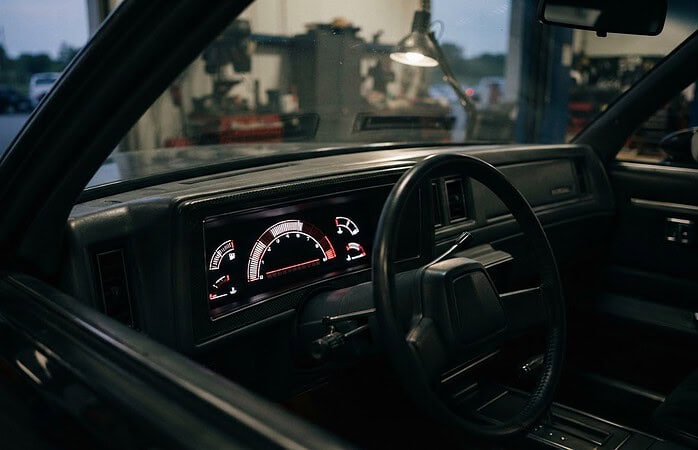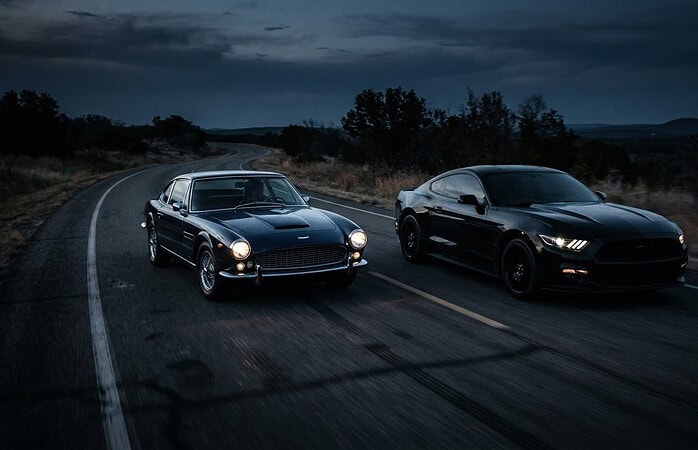

A longer upgrade list does not automatically make one build better. In the resto-mod vs. resto-cruiser decision, a restomod typically pairs classic styling with modern mechanical, comfort, or performance upgrades. A resto-cruiser usually prioritizes relaxed, usable driving and the car’s original character. The distinction is about priorities, not a fixed formula: either build can include selective modern improvements.
Both approaches preserve the appeal of classic cars, but suit different preferences. You might want contemporary capability and a more extensive transformation, or a car that feels faithful to its roots and is ready for comfortable drives. The right direction depends on how you plan to use it, which changes matter most, how much originality you want to retain, and what work the car needs.
This comparison covers how the two styles differ in intended use, modification priorities, budget considerations, and preservation. You’ll get a clearer sense of which build philosophy fits your plans and which trade-offs to consider before changing a component.
Key Takeaways
- Start with how you’ll drive the car, then weigh the project’s scope against your budget and timeline.
- Choose upgrades around the experience you want, from modern performance and comfort to a more relaxed, classic feel.
- Decide which original details matter most before changing components, since performance upgrades can alter a car’s historic character.
- Compare the build styles by their priorities, not just their parts list; both can blend vintage appeal with selective modern improvements.
Choosing a build based on budget and intended use
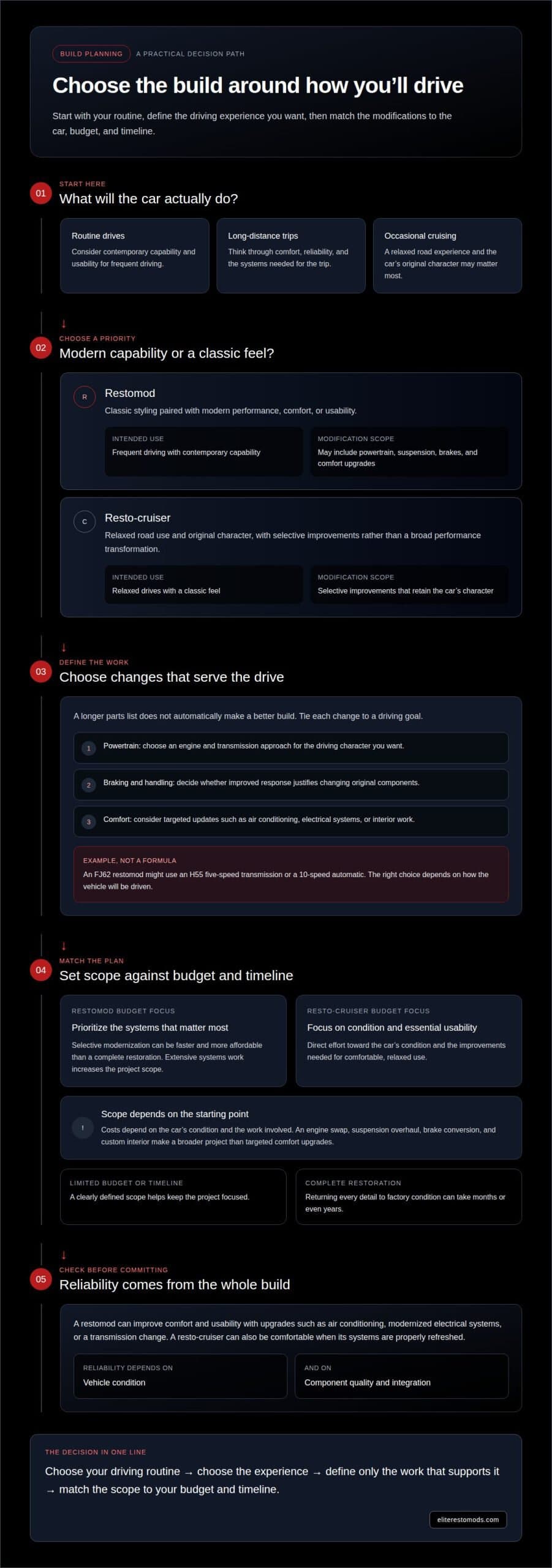
A restomod suits drivers who want classic styling with modern performance, comfort, or usability. A resto-cruiser emphasizes relaxed road use and original character, with selective upgrades rather than a broad performance transformation. Start by deciding whether you’ll use the car for routine drives, long-distance trips, or occasional cruising.
Which is more reliable and comfortable for daily driving? A restomod can improve comfort and usability with upgrades such as air conditioning, modernized electrical systems, or a transmission change. Reliability depends on the vehicle’s condition and the quality and integration of its components. A resto-cruiser can also be comfortable when its systems are properly refreshed.
Budget depends on the project’s scope. For someone with a limited budget or timeline, a restomod may be a faster, more affordable option than a complete restoration, particularly when the goal is selective modernization rather than returning every detail to factory condition. Costs still depend on the car’s starting condition and the work involved. An engine swap, suspension overhaul, brake conversion, and custom interior make for a broader project than targeted comfort upgrades.
Use this comparison to establish priorities before choosing parts:
| Build option | Intended use | Modification scope | Budget focus |
|---|---|---|---|
| Restomod | Frequent driving with contemporary capability | May include powertrain, suspension, brakes, and comfort upgrades | Set priorities; extensive systems work increases scope |
| Resto-cruiser | Relaxed drives with a classic feel | Selective improvements while retaining the car’s character | Direct effort toward condition and essential usability |
For example, an H55 five-speed transmission is one possible FJ62 restomod upgrade; the right choice depends on how the vehicle will be driven. A limited timeline also favors a clearly defined scope, since a full restoration can take months or even years.
First choose a build that suits your driving routine, then set the modification scope to match your budget and timeline.
Differences in restoration and modification priorities
A restomod combines restoration with purposeful mechanical, electrical, or interior upgrades. The goal is to retain the classic car’s visual identity while making it more capable or comfortable. An engine swap, air conditioning, upgraded brakes, or a custom interior can all support that goal. Each change should suit how you plan to drive the car, rather than simply add equipment.
A resto-cruiser puts greater emphasis on relaxed driving and the vintage experience. It may have selective modifications that preserve the car’s familiar character instead of pursuing a broad performance overhaul. For example, an owner might prioritize dependable operation and cabin comfort while keeping the original engine and overall feel. The practical distinction is that a restomod can significantly change how a car performs, while a cruiser-oriented build aims to make classic motoring more enjoyable.
How do resto-mods and resto-cruisers compare in performance and handling? Restomods may improve response with engine, suspension, and brake upgrades. Upgraded A-arms and Panhard bars can improve turning and throttle response while retaining the main features of the original suspension. When modifications are limited, a resto-cruiser’s handling generally stays closer to the car’s original character.
Modern transmissions can also change the driving experience. A newer transmission may reduce engine speeds, supporting quieter performance, better fuel efficiency, and slower wear. An FJ62 restomod, for example, may use an H55 five-speed transmission or a 10-speed automatic. Those choices reflect different powertrain priorities, not a required formula for every build.
Do resto-mods or resto-cruisers have different registration, insurance, or emissions requirements? The build labels alone do not determine those requirements. The vehicle’s location, title classification, modifications, and intended use can all matter for registration, insurance, and emissions.
To define your build, list the changes that directly support your driving goals:
- Choose an engine and transmission approach based on the desired driving character.
- Decide whether improved braking and suspension response justify changing original components.
- Set a comfort priority, such as air conditioning or interior updates, without adding unrelated modifications.
Originality and historical preservation
A complete restoration aims to return a classic car to factory condition, leaving limited room for customization. Builders may use reconditioned original components, period-correct replacements, or New-Old-Stock OEM parts. Each choice affects how closely the finished car reflects its original specification. A resto-cruiser can take this preservation-minded approach while prioritizing enjoyable road use.
A restomod takes a different approach: preserve the recognizable design, then adapt selected systems for modern driving. Larger wheels, for example, can accommodate modern performance tires, but may also change the car’s original stance and feel. An engine swap or modern interior represents a more substantial departure. Consider which visual and mechanical details define the car’s identity for you.
Which type holds its value better at resale? A tastefully completed full restoration, especially one retaining matching numbers, can command a high price. Restomods appeal to buyers seeking specific modern upgrades, but finding someone who shares the owner’s tastes may be more challenging.
Originality involves more than paint and trim. A matching-numbers car retains its original engine and other identified components, strengthening its connection to factory specification. Period-correct parts can preserve the intended appearance without requiring every component to be original. A restomod’s appeal, by contrast, often depends on how well its upgrades complement the classic design.
Before choosing a direction, identify the details you most want to preserve:
- Record the original engine, transmission, wheels, and interior features you want to retain.
- Separate period-correct repairs from modern upgrades, such as performance tires or a replacement powertrain.
- Consider whether future buyers are more likely to value factory specification or the particular upgrades you prefer.
For a 1963 Aston Martin DB5, preserving its original character may be central to the project. On a modified classic, modern components can serve a different purpose. A clear record of retained parts and changes helps explain the build’s priorities to future owners, whether the result favors historical fidelity or contemporary capability.
Similarities between the build styles
Both approaches start with a classic car and aim to make it enjoyable on the road. The difference is less about whether upgrades are included and more about how much they change the driving experience. A resto-cruiser may receive carefully selected improvements, while a restomod may use them more extensively. Either way, the finished car balances vintage design with practical use.
Both builds often involve choices about wheels and tires, transmissions, disc brakes, suspension, and infotainment. These components affect one another. Tire choice influences stance and road feel; suspension settings shape the car’s response; and brakes contribute to driver confidence. Planning changes as a complete package helps keep the car’s appearance and behavior coherent.
Both styles also depend on sound restoration work before upgrades can deliver their intended benefits. A new entertainment system cannot compensate for a poorly functioning electrical system, and new suspension components will not resolve unrelated mechanical issues. Assess the vehicle’s condition first, then separate essential repairs from optional enhancements. This sequence gives every modification a clear purpose.
There’s room for personal taste in either approach. One owner might retain a classic dashboard while adding discreet infotainment to preserve a period feel inside the cabin. Another might choose more visible changes to the wheels and tires. The same component can suit either philosophy when its design, fit, and effect align with the owner’s priorities. The label matters less than the decisions behind the build.
Use these shared considerations to shape a coherent plan:
- Identify the systems that affect how you’ll drive and enjoy the car.
- Decide which upgrades should remain visually subtle and which can define its character.
- Coordinate wheel, tire, suspension, and brake choices rather than treating each as an isolated change.
- Address the vehicle’s existing condition before prioritizing optional equipment.
Both paths can preserve a classic car’s recognizable silhouette while improving its usability. If you’re shaping a build around your preferred balance of heritage and modern function, explore custom build services.
Elite Restomods: Elite Certified Restomods
Elite Restomods offers Elite Certified Restomods for drivers who want classic styling with modern capability. If you already own a vehicle and want to tailor it to your driving preferences, Custom Build Services can help shape the project. Whether you want to preserve more of the car’s original character or make broader upgrades, that choice can guide the build.
For owners considering a sale, the Consignment Program offers a way to sell a classic car. Climate-Controlled Storage provides another option for a vehicle when it isn’t being driven. These services support different stages of ownership, from choosing a finished restomod to caring for a car between drives.
Contact Elite Restomods to discuss which option best fits your plans for a classic car.
Shape a build that feels unmistakably yours
Turn your preferences into a clear creative brief. Describe how you want the car to feel behind the wheel, which details make it authentic, and what changes you’re willing to embrace. This gives the resto-mod vs. resto-cruiser decision a personal measure beyond the labels: the finished car should reflect how you want to experience it.
Consider what you want to preserve, what you’d change, and which compromises might diminish the car’s character for you. A focused brief can guide discussions about a finished vehicle or custom project, keeping design and engineering decisions connected to your vision.
When you’re ready to explore that vision, contact Elite Restomods to discuss the direction you have in mind. Your next classic can honor its history while carrying your own signature forward.
Frequently Asked Questions
What is a Restomod?
A restomod combines restoration with updates to a classic car’s systems, keeping its vintage identity recognizable while modernizing selected functions. The term describes a build approach, not one fixed parts list. A 1963 Aston Martin DB5, for example, could receive carefully chosen mechanical or cabin upgrades without losing its distinctive classic form. The owner determines how much of the original driving experience to retain.
What upgrades are likely?
Potential upgrades depend on the car’s condition and the owner’s goals. A build might update electrical, fuel, or powertrain systems, then add comfort features suited to regular driving. For in-car media, a hidden input adapter can connect a modern player or smartphone while retaining the original entertainment controls. Coordinating upgrades helps avoid mismatches between the car’s systems and its intended use.
What is a resto-mod car?
A resto-mod is a classic vehicle that has been restored and modified, rather than returned strictly to factory specification. Its body and design can still evoke the original model, while selected components reflect the owner’s preferences. For example, an owner might retain a familiar cabin layout while modernizing media connectivity. The finished car reflects a chosen balance of vintage character and contemporary function.
What are the main differences between a resto-mod and a resto-cruiser?
A resto-mod generally allows a broader transformation, while a resto-cruiser usually favors relaxed driving and a closer connection to the car’s original feel. When weighing resto-mod vs. resto-cruiser, consider how visible and extensive you want the changes to be. A driver seeking sharper performance may accept more alterations; someone who values a familiar vintage experience may prefer a restrained approach.
Which is more original: a resto-mod or a resto-cruiser?
A resto-cruiser is generally more original when its build retains more factory components and appearance. But the label alone does not settle the question: one cruiser may have extensive changes, while a restrained restomod may preserve much of its original specification. Compare the vehicle’s engine, interior, exterior details, and documented modifications. Looking at each component gives a clearer picture than relying on the build name.
What modern upgrades are common in resto-mods and resto-cruisers?
Both styles can include modern features, but the extent and presentation may differ. Disc brakes, suspension components, infotainment, and updated wheels or tires can appear in either type of build. A discreet media adapter, for example, lets a modern device connect while retaining a simple, factory-style entertainment setup. The owner’s preferred appearance and driving feel determine which upgrades fit.