
A digital instrument cluster for classic cars can bring modern instrumentation into a vintage cabin, but fitment depends on the vehicle and the specific panel. Available examples include LED panels designed for 1984-1987 Buick Regals and 1973-1987 Chevy trucks. The right choice balances the information and display style you want with the way the system integrates into the car.
The appeal is clear: a crisp digital display can modernize the driving experience without erasing a classic interior’s character. But the panel is only part of the decision. Compatibility, installation requirements, and any surrounding restoration work all matter.
Learn what digital displays can show, what affects their cost, and how to plan modern instrumentation as part of a classic-car restoration. We’ll also cover how a custom build can bring contemporary function and vintage design together.
Key Takeaways
- Match a digital panel to the vehicle’s make and model year first; fitment varies across classic and newer vehicles.
- Compare what the display presents and how it suits your driving needs, not just its appearance.
- Panel pricing depends on factors such as compatibility and the scope of the work involved, so consider the full restoration plan alongside the panel.
- When modern instrumentation is part of a wider restomod vision, a custom build can bring contemporary function and classic character together.
Digital displays and vehicle information
A digital display can replace traditional needles with illuminated readouts, but its capabilities depend on compatibility and signal inputs. Start with the car’s exact make, model, and year, then compare the display’s functions with the vehicle’s existing systems.
Vehicle and Model-Year Compatibility
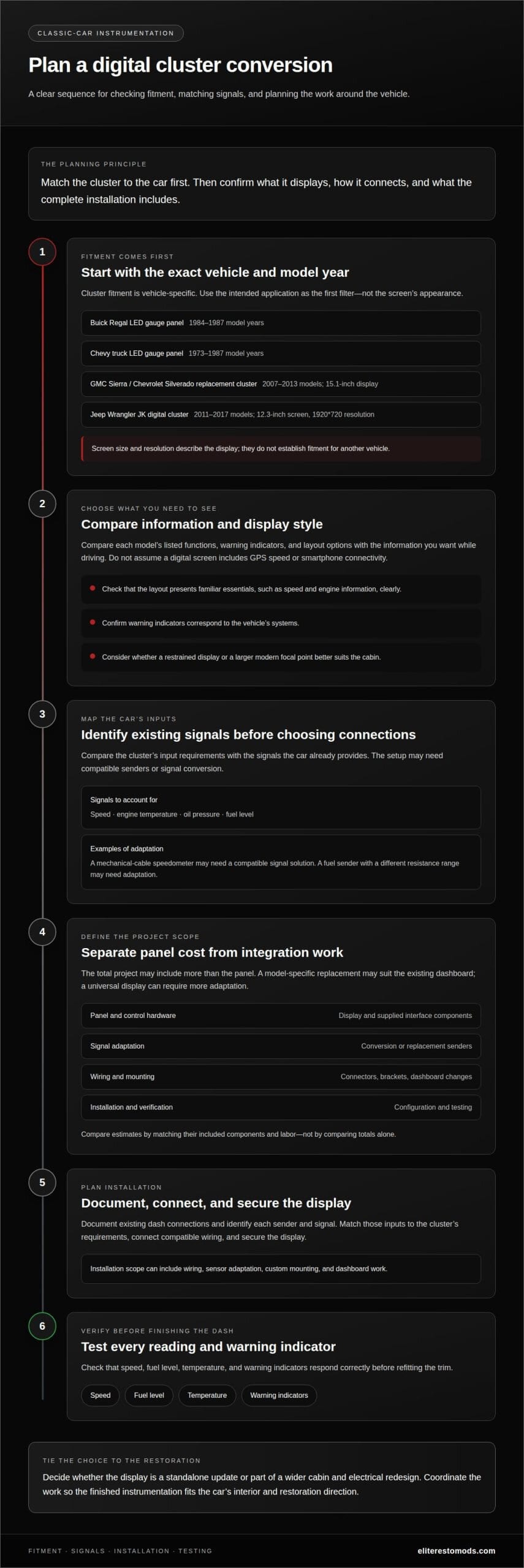
Fitment is vehicle-specific. A Buick Regal LED digital gauge panel is designed for 1984-1987 model years, while an LED Digital Gauge Panel is compatible with Chevy trucks from 1973-1987. A 15.1-inch replacement cluster is listed for GMC Sierra and Chevrolet Silverado models from 2007-2013. These examples show why matching the model year matters as much as choosing a display style.
A digital cluster listed for Jeep Wrangler JK models from 2011-2017 has a 12.3-inch screen and 1920*720 pixels of resolution. An OBD2 gauge display, by comparison, has a 2.8-inch HD LCD. Screen size and resolution describe the display, not whether it fits another vehicle. Compare the cluster’s intended vehicle fitment before considering its appearance or layout.
Display Features and Connectivity
Which digital clusters offer GPS speed, warning lights, customization, and smartphone connectivity? Features vary by display, so don’t assume a digital screen includes GPS speed or smartphone connectivity. Compare each model’s listed functions, warning indicators, and layout options with the information you want to see while driving.
Warning lights should correspond to the vehicle’s systems, and customization can affect how clearly key readings stand out. In an older car, check whether the cluster presents familiar essentials, such as speed and engine information, in a legible layout.
Do digital instrument clusters affect a classic car’s title, inspection, or roadworthiness rules in the United States? Changing the display alone does not determine these outcomes. Title, inspection, and roadworthiness requirements depend on applicable state rules and the vehicle’s circumstances. Treat instrumentation as separate from title identity and overall safety compliance.
What adapters or sensors are needed to connect a digital dash to an older engine and transmission? It depends on the cluster’s input requirements and the signals the car already provides. The setup may need compatible senders or signal conversion for speed, engine temperature, oil pressure, or fuel level. Map the existing sensors and transmission signal before choosing a display.
Digital panel prices
A digital panel’s price is only one part of the conversion budget. The complete installation may also involve wiring, sensors, adapters, and dashboard work. A compact display with straightforward connections has a different scope from a replacement cluster that needs new signals and custom mounting. Separate the panel cost from installation and integration when comparing project totals.
Cost depends on the vehicle and project scope. Key factors include fitment, display design, included electronics, and installation. A model-specific replacement may suit the existing dashboard, while a universal display can require more adaptation. Screen size is only part of the difference: consider how the panel connects to the car’s electrical and mechanical systems.
Use this checklist to understand what a quoted panel package covers:
- Panel and control hardware, including the display and any supplied interface components.
- Signal conversion or replacement senders for speed, fuel level, temperature, and oil pressure.
- Wiring, connectors, mounting brackets, and any changes needed behind the dashboard.
- Installation, configuration, and testing of displayed readings and warning indicators.
Each item affects the project differently. For example, an older speedometer driven by a mechanical cable may need a compatible signal solution for a digital display to show speed. A fuel sender with a different resistance range may also need adaptation. These details can turn a panel swap into a broader instrumentation conversion.
Compare quotes by matching their inclusions, not just their totals. One estimate may cover only the panel; another may include wiring, sensor adaptation, installation, and testing. Check what each estimate covers, then compare the same components and labor. This clarifies the total investment and helps prevent a low panel price from obscuring additional integration work.
For a classic-car restoration, decide whether the display is a standalone update or part of a broader cabin and electrical redesign. Coordinating these decisions can reduce duplicated dashboard work and help the finished instrumentation feel cohesive.
Modern instrumentation in classic car restoration
A modern cluster changes the cabin’s visual style and how the driver reads vehicle information. Decide whether the display should preserve the car’s original character or support a broader contemporary redesign.
Available Digital Cluster Options
Classic-car projects generally take one of two approaches: a vehicle-specific replacement or a universal display adapted to the dashboard. A replacement is designed for a particular application, while a universal unit may need custom mounting and more integration work. Compare the layout, finish, readability, and connections with the car’s interior and electrical system.
A restrained display, for example, may suit a period-style cabin, while a larger screen can become a deliberate modern focal point. The right choice depends on whether the restoration prioritizes original appearance, updated usability, or a thoughtful balance of both.
Installation and Wiring
How do you install and wire a digital instrument cluster in a classic car? Document the existing dash connections and identify each sender and signal, then match those inputs to the cluster’s requirements. Secure the display, connect compatible wiring, and test every reading before refitting the trim.
Check that speed, fuel level, temperature, and warning indicators respond correctly. Label wires during removal to make troubleshooting easier, and keep grounds clean and connections protected. Map the required connections before cutting any original harnesses.
Common Problems and Reliability Risks
What are common problems and reliability risks with digital dashboards in classic cars? Mismatched sender signals can cause inaccurate readings, while poor grounds or loose connectors can make displays intermittent. A cluster without a needed warning indicator may also leave the driver without a familiar alert.
Test each function under operating conditions, not just with the ignition on. Compare readings with suitable independent gauges, check that connectors are secure and routed properly, and test warning lamps individually. Heat, vibration, and limited dashboard depth can affect placement and connections, making installation quality as important as screen appearance.
Before final assembly, record the cluster’s wiring, sender types, and configuration settings. These notes can help with future diagnosis and preserve useful details if the dashboard is serviced or the car’s electrical system changes.
What digital instrument clusters are available for classic cars?
Options range from model-specific replacement panels to compact diagnostic displays. Each serves a different purpose: replacing the original instrument assembly, updating a familiar gauge panel, or adding a separate source of vehicle information. The right category depends on the dashboard, existing signals, and the driver’s preferred balance of period character and modern presentation.
LED gauge panels offer a direct visual change within an instrument-panel format. A full replacement cluster takes a broader approach, replacing the original display assembly rather than supplementing it. An OBD2 gauge display is another category, using a separate screen rather than necessarily replacing the factory cluster. These product types aren’t interchangeable, so decide whether you want a replacement, an update, or an additional display.
Use the vehicle’s make, model, and year to narrow the options. Then compare the stated fitment with the dashboard opening and available electrical signals. A panel designed for a specific dashboard, for example, may need less physical adaptation than a universal screen. Electrical compatibility still matters: physical fit does not mean the display can read every signal the car produces.
Before choosing, list the information you need while driving, such as speed, fuel level, or engine readings. Compare that list with each unit’s stated functions, then consider screen placement, visibility, and how the display will look alongside the rest of the cabin. A discreet LED panel creates a different visual effect from a prominent replacement screen.
Assess the installation as part of the complete restoration plan. A cluster that requires wiring, mounting, or sensor changes can affect surrounding dashboard work. Decide whether the display will stand alone or coordinate with other cabin updates. This helps you compare cluster types by practical fit and design, not appearance alone.
Elite Restomods: Elite Certified Restomods
Elite Restomods offers Elite Certified Restomods for drivers seeking a thoughtfully completed classic with modern capability. If a digital cluster is part of a broader vision, Custom Build Services can shape the restoration around the vehicle’s character, instrumentation goals, and intended use.
Consider this approach when weighing a complete restomod against updating an existing classic. The choice involves more than the display: cabin design, vehicle systems, and the overall build direction should work together. Elite Restomods also offers a Consignment Program and Climate-Controlled Storage for owners planning to sell or preserve a vehicle.
Contact Elite Restomods to discuss your classic-car plans.
Shape the Next Chapter of Your Classic
Let the next decision serve the car as a whole. Before choosing a digital instrument cluster for classic cars, picture the driving experience you want and how the cockpit should feel behind the wheel. That vision can guide choices beyond the display, from the cabin’s finish to the balance of original character and modern function.
For a broader transformation, Elite Restomods offers Custom Build Services and Elite Certified Restomods. Its Consignment Program can suit owners considering a different vehicle or a new direction for their current one. Each path begins with understanding what matters most to you and the car.
Bring your ideas, priorities, and vehicle plans into the conversation. Discuss your classic-car project with Elite Restomods, and take the next step toward a build that feels unmistakably yours.
Frequently Asked Questions
How much does a digital instrument cluster for a classic car cost?
Cost depends on the vehicle and project scope. Key factors include fitment, display type, required adapters or sensors, wiring, installation, and calibration. A panel-only purchase differs from a complete installation. Compare what each estimate includes, especially whether testing and integration are part of the project.
Which digital dash kits fit popular classic car makes and models?
Choose a kit only if its listed fitment matches the car’s exact make, model, and model year. A familiar nameplate isn’t enough: different generations may have distinct dashboard openings, connectors, and signal requirements. Compare the kit’s intended application with the car’s existing instrumentation and electrical setup to tell a direct-fit panel from one that needs adaptation.
How do aftermarket digital clusters compare with restoring original gauges?
Aftermarket clusters change the cabin’s appearance and present information in a contemporary format, while restoring original gauges preserves the factory-style look and controls. The right choice depends on the restoration’s priorities. For a period-focused build, restoring original gauges may better support authenticity; for a restomod with broader interior updates, a digital display can complement the modernized design.
Can a digital cluster work with a classic car’s original sensors and sending units?
A digital cluster can work when it accepts the signals from the car’s existing sensors and sending units. Compatibility depends on signal type and range, not simply on whether a sender is present. An original fuel sender, for example, may need an interface if its output doesn’t match the display. Identify each sender and compare its output with the cluster’s input requirements.
How do you calibrate speed, fuel, temperature, and tachometer readings on a digital cluster?
Calibrate each reading using the cluster’s setup procedure and the correct input and reference for that channel. Set speed using the vehicle’s speed signal, then configure fuel readings to match the sender’s range. Check temperature against a reliable reference, and set the tachometer input for the engine’s ignition signal. Recheck readings after setup and correct any channel that remains inconsistent.