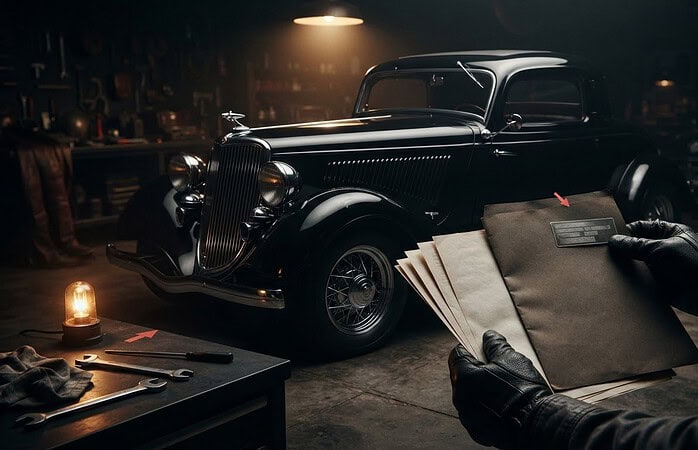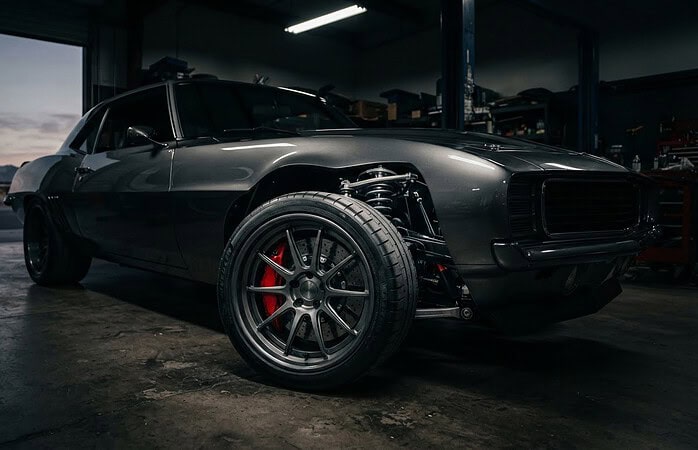

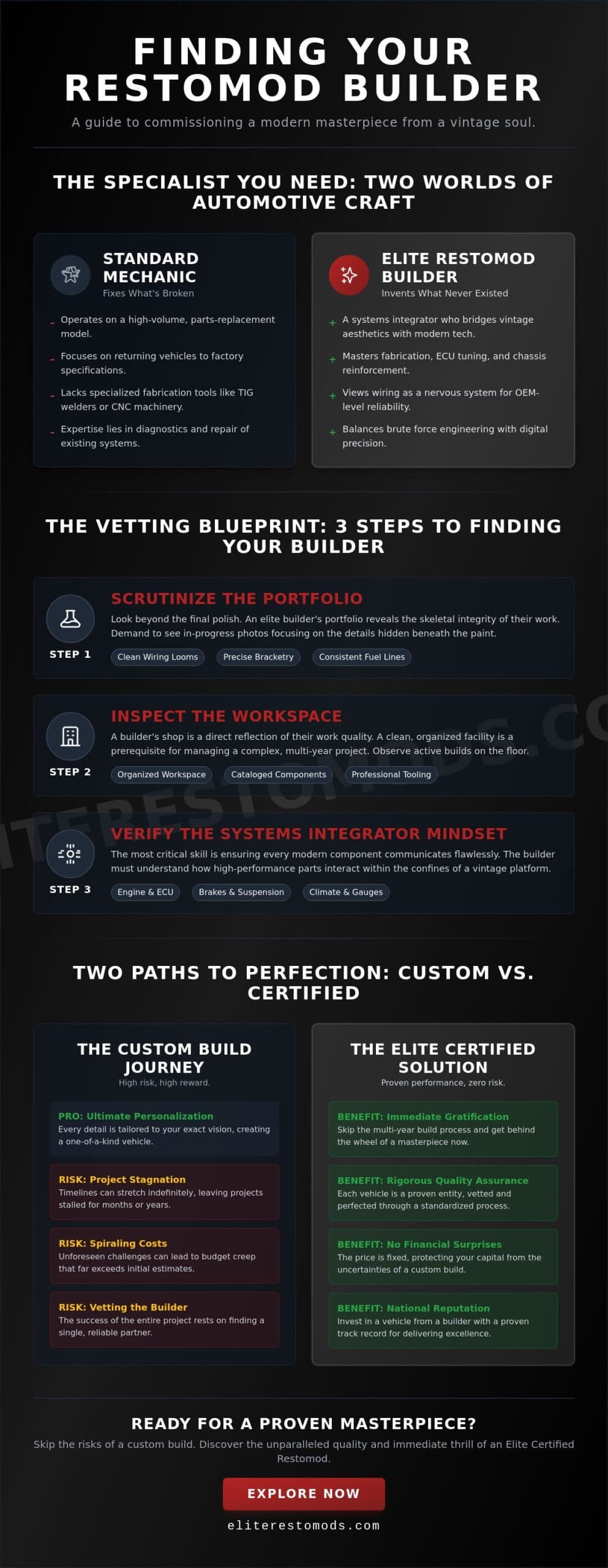
A standard mechanic fixes what’s broken, but a restomod builder must invent what never existed. Finding a mechanic for a restomod is less about locating a repair shop and more about commissioning a master of systems integration. It’s a high-stakes search for a partner who can bridge the gap between vintage aesthetic and modern performance. Raw power requires refined control.
You’ve likely felt the anxiety of watching a project stall in a shop while timelines stretch and costs spiral toward the unknown. It’s natural to worry that a beautiful exterior might hide a mechanical nightmare that’s unreliable on the open road. You deserve a transparent relationship with a builder who values precision as much as you value the visceral thrill of the drive. Your vehicle is functional art, not just a machine.
This guide provides the framework to vet elite technicians capable of delivering a daily-drivable masterpiece. We’ll explore how to evaluate specialized craftsmanship, navigate the 30-20-20-30 budgeting rule, and ensure your investment remains protected through every stage of this transformative journey. Discover how to turn a long-held dream into a high-performance reality.
Key Takeaways
- Identify the specific hybrid skillset required to bridge the gap between traditional aesthetics and contemporary mechanical reliability.
- Gain clarity on the vetting process when finding a mechanic for a restomod, focusing on shop organization and the precision of their active custom portfolios.
- Protect your capital by learning to steer through the complexities of build timelines and the financial structures that prevent project stagnation.
- Realize why elite craftsmanship often requires looking beyond your local area and how professional logistics can secure a superior result.
- Compare the transformative journey of a custom build against the immediate gratification and rigorous quality assurance of turnkey Elite Certified Restomods.
Understanding the Skillset Required for an Elite Restomod Build
The evolution of the automobile has created a unique breed of technician. An elite restomod builder isn’t just a mechanic; they’re a historian who respects the lines of a 1967 Fastback and an engineer who understands the telemetry of a modern supercar. Finding a mechanic for a restomod requires looking beyond the local service bay. You need someone who can weld a custom chassis while simultaneously tuning a complex ECU. This duality is rare. It requires a technician who can transition from the heavy-handed force of metal fabrication to the delicate precision of digital diagnostics without missing a beat.
General service shops operate on a high-volume, parts-replacement model. They lack the English wheels, TIG welders, and CNC machinery necessary for bespoke fabrication. When you’re integrating a 700-horsepower Hellcat engine into a vintage frame, the structural demands change entirely. The builder must reinforce the pillars and floor pans to handle the torque, ensuring the car doesn’t twist under pressure. It’s a marriage of brute force and refined comfort. Without the right specialized tooling, a shop will inevitably cut corners, leading to the project creep that haunts so many collectors.
To better understand the level of detail and specialized equipment required for these builds, watch this helpful video:
The Gap Between Restoration and Restomodding
Traditional restoration is about preservation. It’s the pursuit of factory chalk marks and period-correct bias-ply tires. Restomodding is transformative. It requires a deep understanding of the build process, specifically how modern electronic fuel injection (EFI) and high-performance fuel mapping breathe life into an old block. When understanding the term restomod, one must realize it demands pro-touring suspension geometry that standard restoration shops simply aren’t equipped to calculate or install. They must manage the intricate dance of modern power steering pumps and high-amperage alternators within the tight confines of a vintage engine bay.
The Systems Integrator Mindset
This professional is a systems integrator. They don’t just bolt on parts; they ensure every component talks to the next. They understand how a modern six-piston braking system interacts with a vintage master cylinder and why a high-output Coyote engine requires a custom-shrouded cooling solution to survive summer traffic. A restomod mechanic is a master of functional automotive art. Finding a mechanic for a restomod means identifying someone who views wiring harnesses as a nervous system, ensuring that modern luxuries like climate control and digital gauges function with OEM-level reliability. Their expertise ensures that the visceral thrill of a classic drive is never interrupted by the mechanical failures of the past.
Essential Vetting Criteria for Your Custom Restomod Builder
Finding a mechanic for a restomod requires a discerning eye that looks past the high-gloss clear coat. You’re searching for a facility where technical mastery meets an obsessive attention to detail. A shop’s portfolio should showcase more than just finished products; it must reveal the skeletal integrity of their builds. Look for consistency in how they route fuel lines, the cleanliness of their wiring looms, and the precision of their bracketry. If a shop excels at custom build services, they’ll be proud to show you the guts of their machines. The visceral thrill of the drive depends on what’s hidden beneath the metal.
Visit the shop in person before committing your asset. An elite builder maintains a workspace that reflects the quality of their output. Organization isn’t a luxury; it’s a prerequisite for managing the thousands of components involved in a multi-year project. Observe the active builds on the floor. Are the components for a 1972 K5 Blazer or a first-gen Bronco carefully cataloged, or are they scattered? High-end restoration requires specialized skills for restoration that are often honed through years of dedicated study and practice. A clean, systematic shop is a reliable indicator of a disciplined build process.
Technical Proficiency and Modern Hardware
Ask about their approach to modern integration. Can they handle the complexities of a Gen 4 Coyote swap or a Hellcat 6.2 Hemi? You need a builder who understands aftermarket wiring harnesses and can perform in-house ECU tuning. Verify their TIG welding capabilities for custom exhaust fabrication. Ensure they partner with industry-standard vendors like Roadster Shop, Baer, or Wilwood. Their ability to marry these contemporary components to a vintage frame determines the vehicle’s ultimate reliability.
Project Management and Transparency
Transparency is the antidote to project creep. A master builder uses a systematic approach to track labor and parts. Given that high-end shops often charge an average of $135 to $150 per hour for labor, you need a clear breakdown of where every dollar goes. They should provide a digital paper trail of photo documentation throughout the journey. This ensures you’re never surprised by mechanical discoveries during the tear-down phase. When you’re finding a mechanic for a restomod, their communication style is just as vital as their fabrication skill.
Don’t ignore the cabin. A true restomod merges brute force with refined comfort. Assess their upholstery capabilities. They should be able to integrate modern seat heaters, bespoke sound systems, and sound-deadening materials into an artisanal, period-correct interior. If you’re ready to see how these elements come together in a finished masterpiece, explore our current inventory of elite builds to witness this level of craftsmanship firsthand.
Navigating the Risks of Custom Build Timelines and Budgets
The transition from a vintage relic to a high-performance masterpiece is a high-stakes endeavor. While the visceral thrill of a Gen 4 Coyote engine in a classic frame is undeniable, the path to completion is often littered with half-finished projects. Finding a mechanic for a restomod who respects your capital is just as critical as finding one who understands torque curves. Many collectors fall into the trap of choosing a shop based on the lowest hourly rate. This is a false economy. Lower rates often mask a lack of specialized equipment or a team that learns on your dime. A master fabricator charging $150 per hour will often complete a task in half the time, and with far more precision, than a generalist charging $85.
Financial transparency starts with the contract structure. In the elite tier of the industry, “time and materials” agreements are the standard. The inherent unknowns of a 60-year-old chassis make flat-fee quotes a significant risk; they often lead to cut corners when the shop realizes they’ve underquoted the labor. Reliable professionals, often networked through the Automotive Restoration Market Organization (ARMO), prioritize accuracy over low-ball estimates. They understand that a concours-level build can require 4,000 to 5,000 hours of labor, and they budget accordingly to prevent project stagnation.
Managing the Scope of Your Build
Scope creep is the primary driver of budget overruns. To combat this, you must define a fully sorted end goal before the first bolt is turned. This means selecting your drivetrain, suspension, and interior finishes during the planning phase. A phased build approach allows for milestones that maintain momentum. You might focus on the chassis and powertrain integration first, ensuring the mechanical soul is sound before moving to the artisanal interior. Quality restomodding is a journey of meticulous refinement. It’s about ensuring every modern upgrade interacts seamlessly with the heritage of the vehicle.
Communication Standards for Success
The best technical skill is useless without professional communication. When finding a mechanic for a restomod, look for shops that utilize modern project management software. These platforms allow you to track parts procurement, such as a custom-ordered $12,650 Ford Coyote crate engine, and view real-time labor logs. Establish a recurring schedule for progress reports and high-resolution photo updates. Be wary of shops that are over-leveraged or under-staffed. If a builder is hesitant to provide a clear timeline for the next phase of work, it’s a red flag that your project may be sidelined for others. Consistency and clarity are the hallmarks of a master builder.
The Advantage of Choosing a Proven National Builder
Geographic proximity is a comforting convenience for standard maintenance; it is a dangerous metric for high-level craftsmanship. When finding a mechanic for a restomod, the primary objective is technical mastery, not a short commute. A local shop might offer a friendly handshake, yet lack the specialized jig tables or the deep experience with modern-to-vintage wiring integration that a national leader provides. Your vehicle is an investment-grade asset. It deserves a builder who views it as functional art rather than just another job on the lift.
Logistics are no longer a barrier to excellence. Professional enclosed vehicle transport ensures your classic arrives at a premier facility without exposure to road debris or weather. National builders leverage vast sourcing networks to secure rare trim pieces or high-performance components that local shops struggle to find. This reach extends to every facet of the build, from bespoke interior hides to the latest suspension geometry. By looking beyond your zip code, you gain access to a world-class curator who understands the soul of your car and the vision to modernize it perfectly.
The Value of Specialized Expertise
A shop that specializes in your specific model is worth every mile of transport. Whether it’s a first-gen Bronco or a K5 Blazer, model-specific expertise prevents the costly trial-and-error often found in generalist shops. These elite facilities offer climate-controlled environments and state-of-the-art diagnostic equipment to ensure every LS swap or Coyote integration is flawless. Reviewing how a custom restomod builder executes these services provides a blueprint for long-term mechanical reliability. Technical precision is the foundation of luxury.
Ensuring Long-Term Support
The relationship doesn’t end when the car leaves the shop. National builders provide a level of post-delivery support that local shops often cannot match. They stand behind their craftsmanship with formal warranties and have established protocols for maintenance or post-delivery adjustments. This track record of success is a hallmark of an elite builder. It offers peace of mind that your investment is protected by professionals who value their reputation as much as you value your car. When finding a mechanic for a restomod, prioritize a partner who is committed to the vehicle’s entire lifecycle.
If you’re ready to partner with a team that delivers national-level excellence, contact us to discuss our custom build services today.
Skipping the Build: The Case for Elite Certified Restomods
The allure of a custom project is often tempered by the reality of the calendar. While finding a mechanic for a restomod is a noble pursuit for those with years to spare, the modern collector often seeks immediate gratification. A bespoke build can easily consume 4,000 to 5,000 hours of specialized labor, translating to years of anticipation and technical hurdles. Choosing an Elite Certified vehicle bypasses the uncertainty of the shop floor. You step directly into the driver’s seat of a machine that has already undergone the rigorous transformation from vintage icon to modern performer. It is the pinnacle of functional art, ready for the open road today.
Purchasing a “fully sorted” restomod is frequently the more sound financial decision. When you calculate the raw cost of a donor vehicle, a $12,650 Ford Coyote crate engine, and specialized labor rates of $150 per hour, the final invoice for a custom build can be staggering. Turnkey vehicles offer a transparent price point for a product that has been engineered to a specific standard. This eliminates the fear of project creep and the hidden mechanical failures that often plague unproven builds. You aren’t just buying a car; you’re securing investment protection through verified craftsmanship.
The Fully Sorted Standard
A vehicle is only truly ready for daily driving once it has survived a battery of real-world tests. The “fully sorted” standard means the cooling system has been pushed in heavy traffic, the modern EFI has been mapped for various altitudes, and the pro-touring suspension has been dialed for both comfort and cornering. You can explore the current classic car restomods for sale to see the level of excellence required for this certification. These vehicles aren’t just displayed; they’re meant to be utilized and enjoyed with the confidence of modern engineering.
Simplifying the Ownership Experience
By opting for a certified icon, you eliminate the inherent risk of finding a mechanic for a restomod who might lack the necessary integration expertise. The path to ownership is further streamlined through specialized classic car financing tailored for high-performance assets. If the specific model you desire isn’t currently in the showroom, a professional classic car sourcing service can bridge the gap. They leverage national networks to find the exact specifications you crave, ensuring your dream car meets the highest standards of mechanical and aesthetic perfection. Your journey ends where the road begins.
Drive the Future of Automotive Heritage
Finding a mechanic for a restomod is a transformative decision that dictates the longevity and reliability of your vintage asset. You now understand that elite craftsmanship requires a rare hybrid of historical reverence and modern engineering precision. Whether you choose to navigate the complexities of a custom build with a proven national partner or decide to bypass the multi-year timeline entirely, the objective remains the same. You deserve a machine that offers the visceral thrill of the past with the unwavering confidence of the present.
The distance between your vision and the open road has never been shorter. Our Elite Certified Quality Assurance ensures that every vehicle meets a standard of perfection that generalist shops simply cannot replicate. With specialized classic car financing and national enclosed transport available, we provide a seamless bridge to high-performance ownership. Brute force meets refined comfort; heritage meets innovation.
It’s time to claim a masterpiece that is meant to be driven, not just displayed. View our current inventory of fully sorted restomods to find your next icon. Your journey toward ultimate automotive excellence begins today.
Frequently Asked Questions
How do I know if a mechanic is qualified to work on my restomod?
Qualified builders display a rare hybrid of historical reverence and modern engineering precision. You should look for a portfolio that showcases complex systems integration, such as modern EFI tuning and custom chassis reinforcement, rather than simple cosmetic repairs. An elite technician can articulate how contemporary high-performance components will interact with your vehicle’s specific vintage architecture. They treat every project as a bespoke piece of functional art.
What is the average cost of labor for a professional restomod build?
High-end restoration shops typically charge an average of $135 per hour for labor. Specialized fabricators who handle complex metalwork and custom integration can command $150 per hour or more. These rates reflect the specialized tooling and high-end lexicon of skills required to marry brute force with refined comfort. While these costs are higher than general repair rates, they’re essential for protecting your investment through world-class craftsmanship.
How long should a full restomod restoration typically take?
A concours-level restomod can require 4,000 to 5,000 hours of meticulous labor. Depending on the shop’s current projects and the complexity of your custom fabrication, this often translates to a timeline of 18 to 36 months. This duration allows for a systematic, logical breakdown of the technical work. Rushing this transformative journey often compromises the operational reliability and aesthetic finish that define a premium build.
Is it better to find a local mechanic or ship my car to a specialist?
Technical expertise and a proven reputation should always take priority over geographic convenience. Finding a mechanic for a restomod who specializes in your specific model, such as a first-gen Bronco or K5 Blazer, often saves time and capital by avoiding the trial-and-error common in generalist shops. Professional enclosed vehicle transport makes national-level expertise accessible, ensuring your vintage asset is handled by a master builder who understands its soul.
What are the most important questions to ask a restomod builder?
Inquire about their specific experience with modern powertrain swaps like the Chevrolet LS376 or the Ford 5.0-Liter Coyote. Ask for a detailed breakdown of their project management process and how they document labor hours and parts procurement to prevent project creep. It’s also vital to discuss their approach to electrical systems, as modern engine integration requires a sophisticated understanding of contemporary wiring and digital diagnostics.
Can a general mechanic install a modern LS engine swap?
While a general mechanic can physically bolt an engine into a bay, they often lack the specialized skills for true systems integration. Finding a mechanic for a restomod ensures that the high-pressure fuel systems, custom cooling solutions, and complex wiring harnesses are engineered for long-term reliability. Without this specialized expertise, you risk an unreliable build that fails to deliver the daily-drivable performance you desire from a modern-to-vintage conversion.
What happens if the mechanic discovers more rust during the project?
A professional builder will document the discovery with high-resolution photos and provide a transparent, logical breakdown of the necessary structural repairs. Rust is a common reality in vintage assets, often hiding beneath decades of paint and filler. Addressing these issues early is critical for safety. It ensures the chassis is strong enough to handle the visceral power of a modern high-performance drivetrain without compromising the vehicle’s integrity.
Should I buy a project car or a finished restomod?
Buying a finished, Elite Certified restomod provides immediate gratification and eliminates the stress of managing a multi-year build. For many collectors, the transparency of a “fully sorted” vehicle is a more sound financial investment than the unpredictable timelines of a custom project. This path offers a high-performance icon that has already undergone rigorous road testing and quality assurance, allowing you to enjoy the drive from day one.