
You spend six figures on a vintage silhouette only to realize, within the first five miles, that you’ve purchased a 3,500-pound paperweight that handles like a tractor. It’s a common heartbreak; industry data suggests that nearly 42% of classic car owners feel their vehicles are too unreliable for regular use. Iconic style. Modern power. You deserve a machine that bridges the gap between 1969 and 2024 without compromise. Understanding the nuances of pro touring vs restomod builds is the first step toward securing a bespoke masterpiece that actually performs on the pavement.
You want the visceral roar of a V8 paired with the refined comfort of a hand-stitched interior. It’s about more than just aesthetics; it’s about engineering a vehicle that respects its heritage while embracing the precision of Wilwood brakes and LS3 crate engines. This article defines the technical and aesthetic distinctions between these two dominant build philosophies to help you find the high-performance classic that fits your lifestyle. We’ll analyze mechanical specifications, suspension geometry, and the specific hardware required to transform a vintage shell into a reliable, turn-key beast.
Key Takeaways
- Master the technical terminology behind high-end builds to understand how specific labels influence both market value and your expectations for a bespoke machine.
- Dive into the mechanical DNA that separates track-ready performance from refined street comfort, ensuring your hardware matches your driving ambitions.
- Learn to spot the visual signatures of an elite build, where flawless paint and hand-stitched interiors meet modern, aggressive engineering.
- Compare the ownership experience of a pro touring vs restomod to determine if you crave the roar of a track-dominant beast or the turn-key reliability of a daily cruiser.
- Gain the insight needed to source the perfect vintage platform, transforming a childhood dream into a meticulously crafted, high-performance reality.
Defining the Icons: What is a Restomod and What is Pro-Touring?
The heartbeat of a 1969 Camaro. The precision of a 2024 supercar. For decades, enthusiasts faced a binary choice: preserve a piece of history or cut it up for speed. Today, that line has blurred. The debate of pro touring vs restomod isn’t just about semantics. It’s about the soul of the build. These movements represent a fundamental shift from local garage projects to investment-grade automotive art. High-end builds now command six-figure premiums at auctions. Data from major auction houses shows that vehicles labeled as professional restomods saw a 30 percent increase in average sale prices between 2018 and 2023. Whether you’re aiming for the boulevard or the apex, understanding these definitions is the first step toward your dream machine.
To better understand the nuances of these high-performance builds, watch this detailed comparison:
The Restomod Philosophy: Restoration Meets Modification
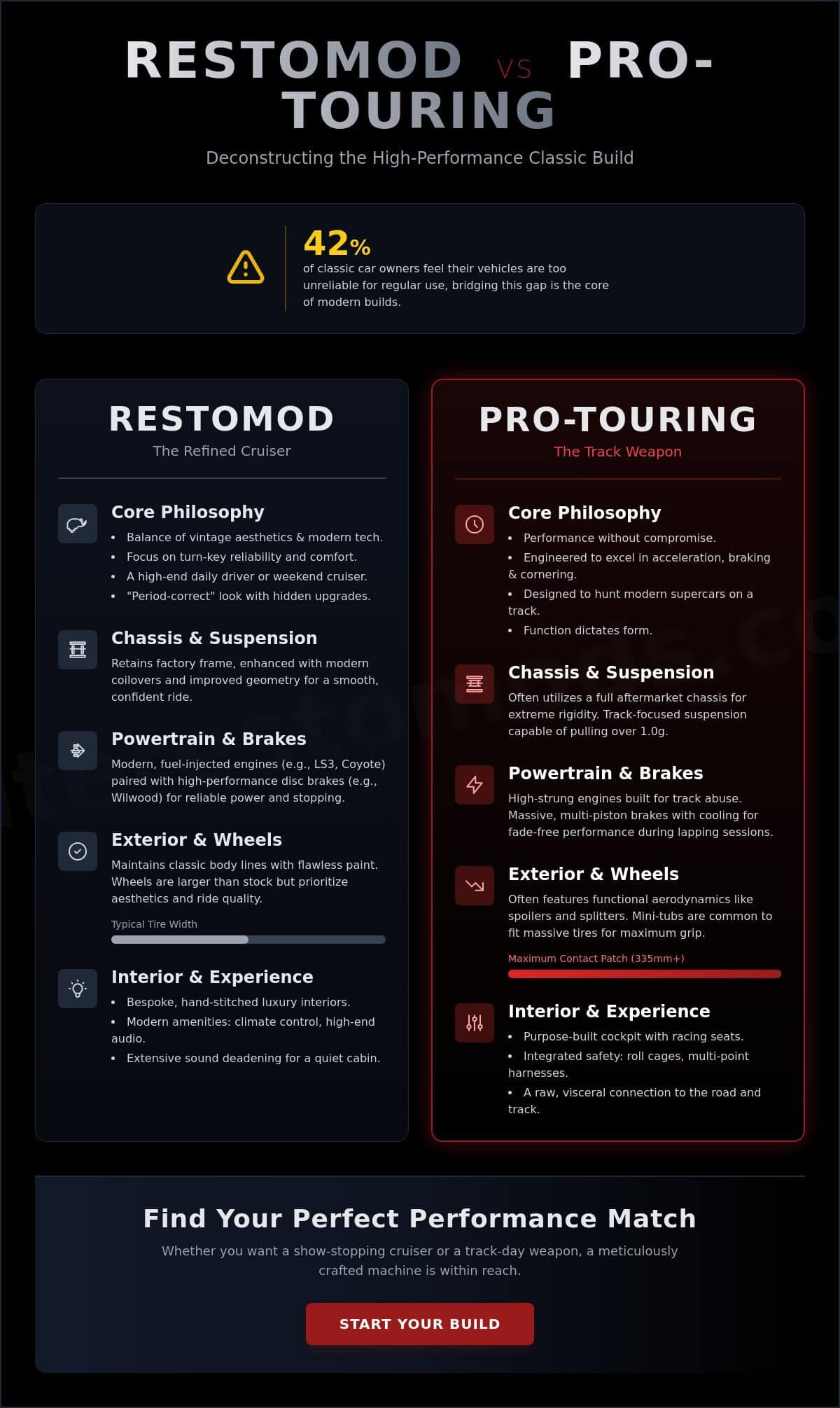
Restomods prioritize the experience of the drive without sacrificing the aesthetic of the past. It’s about turn-key reliability. You want to turn the key and hear the roar of a fuel-injected Coyote or LS3 engine while sitting in a bespoke, hand-stitched leather interior. These cars focus on daily-driver manners. They feature modern EFI, vintage-style climate control, and advanced sound deadening. A Restomod is the marriage of nostalgic aesthetics and contemporary technology. The goal is a “period-correct” look that hides modern Wilwood brakes and coilover suspensions beneath the classic sheet metal. If you’re still weighing the broader question of restomod vs restoration before committing to a build philosophy, our in-depth guide breaks down the investment value and driving experience of both paths.
The Pro-Touring Movement: Performance Without Compromise
If a restomod is a refined cruiser, a pro-touring build is a functional weapon. This movement demands performance without compromise. The term gained traction in the early 1990s, largely credited to Mark Stielow and his 1993 “Tri-Tip” Camaro. This Pro-Touring definition centers on classic muscle cars modified to excel in acceleration, braking, and cornering. It isn’t about simple bolt-on parts. It requires a ground-up engineering approach. When you analyze pro touring vs restomod, the pro-touring car is the one built to hunt down modern sports cars on a road course. These machines often feature:
- Full Aftermarket Chassis: Framework from builders like Roadster Shop or Detroit Speed.
- Aggressive Aerodynamics: Functional spoilers and splitters designed for high-speed stability.
- Track-Ready Safety: Integrated roll cages and multi-point harnesses that don’t compromise the luxury finish.
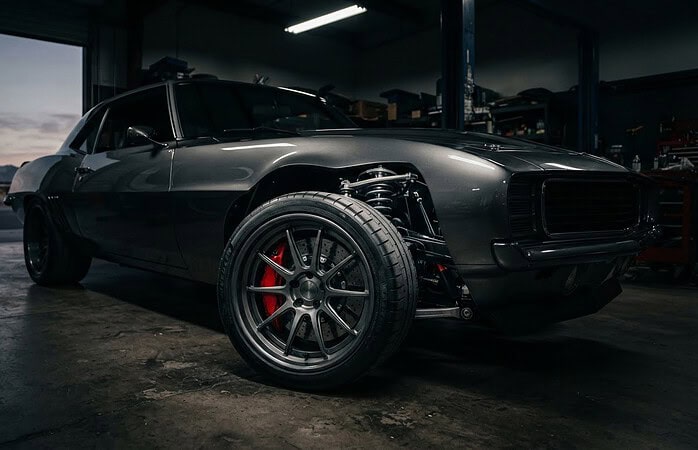
- Massive Contact Patches: Mini-tubbed rear ends to fit 335mm wide tires for maximum grip.
Classic style. Modern power. The distinction lies in the intent. One is built for the show lawn and the open highway; the other is built to dominate the track while looking flawless in the paddock.
Mechanical DNA: Comparing Engineering and Performance Standards
The hardware defines the soul of a vehicle. While both categories prioritize modern reliability, the engineering depth creates a clear divide between a refined cruiser and a track-focused weapon. A restomod is typically a fully sorted machine designed for the street; it starts every time, stops with confidence, and handles like a modern luxury sedan. Conversely, a pro-touring build is an exercise in extreme capability. It’s designed to pull 1.0g on a skidpad and survive 30-minute sessions at peak RPMs without breaking a sweat.
In the technical debate of Pro Touring vs Restomod, the distinction often begins with the structural integrity of the vehicle. Most restomods retain the factory unibody or ladder frame, adding high-quality components to improve geometry. Pro-touring builds often discard the factory steel entirely, opting for bespoke platforms that provide structural rigidity 1960s engineers never imagined.
Chassis and Suspension: Bolt-ons vs. Ground-up Engineering
Restomod suspension focuses on ride quality and predictable handling. Builders replace 50-year-old rubber bushings with polyurethane and install nitrogen-charged shocks. These upgrades create a smooth, modern feel without altering the car’s fundamental architecture. Pro-touring builds go deeper. They often feature a full aftermarket chassis from manufacturers like Roadster Shop or Art Morrison. These frames allow for aggressive suspension geometry and independent rear suspension (IRS). An IRS setup can reduce unsprung weight by roughly 100 pounds, allowing each rear wheel to react independently to road imperfections. This engineering shift transforms a solid-axle muscle car into a precision instrument. Partnering with a custom restomod builder ensures your chassis matches your specific driving ambitions.
Powertrain and Stopping Power: Streetable vs. Race-Spec
Modern crate engines are the heart of both categories. The 430-horsepower LS3 and the 460-horsepower Coyote 5.0 provide turn-key reliability and massive torque. However, the supporting systems determine the car’s ultimate ceiling.
- Braking Systems: Standard restomods often use 12-inch modern discs. Pro-touring builds demand six-piston Wilwood or Brembo setups with 14-inch rotors to eliminate brake fade during spirited driving.
- Transmission Choices: The Tremec T-56 6-speed manual remains the gold standard for driver engagement. For those seeking effortless speed, 10-speed automatics provide seamless shifts and optimized fuel maps.
- Thermal Management: A track beast demands a high-capacity aluminum radiator and dual 12-inch electric fans to survive both stop-and-go traffic and high-speed hot laps.
Classic style. Modern power. Every component must work in harmony to deliver a bespoke piece of functional art. If you’re ready to see these engineering standards in action, browse our current inventory of bespoke builds.
The Aesthetic Divide: Visual Cues of a High-End Build
Visual storytelling begins the moment a car rolls off the trailer. From 50 feet away, the silhouette reveals the builder’s intent. An Elite build doesn’t just look restored; it looks evolved. While both styles celebrate vintage steel, the pro touring vs restomod distinction is written in the metal and the stance. A restomod often presents as a perfected version of 1969, featuring flawless deep-gloss paint and chrome that shines brighter than the factory ever intended. It’s a love letter to the original design, polished for the modern era.
The Pro-Touring machine projects a different energy. It’s aggressive and purposeful. You’ll notice the functional aerodynamic additions, such as subtle chin spoilers or rear diffusers, designed to manage airflow at high speeds. Understanding the Pro Touring vs Restomod difference requires looking past the paint to the engineering beneath. Every visual cue on a Pro-Touring build, from the heat-extracting hood vents to the visible roll cage, serves the god of performance. It’s the marriage of brute force and refined comfort that defines our meticulous build process.
Interior Craftsmanship: Luxury vs. Competition Utility
Step inside a high-end restomod and you’ll find a sanctuary of hand-stitched leather and period-correct aesthetics. The goal is seamless integration. We hide modern Bluetooth infotainment systems behind original dash panels and tuck climate control knobs into factory locations. It’s about luxury. Sound deadening material like Dynamat is applied liberally to ensure the cabin remains a quiet retreat from the 600-horsepower beast under the hood.
Pro-Touring cockpits prioritize the driver’s connection to the machine. You’ll find deeply bolstered Recaro seats designed to hold you in place during high-G cornering. Digital data loggers and Holley EFI touchscreens replace analog gauges, providing real-time telemetry. While the materials remain premium, the layout is tactical. It’s a workspace built for high-speed decision-making, where every switch and lever is positioned for rapid access during spirited driving.
Stance and Rolling Stock: The Art of the Fitment
The wheels are the jewelry of the build, but their function is purely mechanical. In the world of high-performance classics, the 18-inch wheel diameter is the industry sweet spot. This size provides the necessary clearance for massive 14-inch Wilwood rotors while maintaining a tire sidewall that absorbs road imperfections. It’s a delicate balance between modern grip and vintage proportions.
- Mini-Tubs: To harness 600+ horsepower, we often modify the inner wheel wells to fit 335mm rear tires.
- Functional Stance: A Pro-Touring car sits low to lower the center of gravity, but it must retain enough suspension travel for real-world roads.
- Bespoke Finishes: Forged aluminum wheels with brushed or ceramic-coated centers provide an unrivaled level of exclusivity.
True automotive excellence is found in the fitment. The “stance” isn’t just about being low; it’s about how the tire fills the wheel well with surgical precision. Whether it’s a restomod built for the local gala or a Pro-Touring monster built for the autocross circuit, the visual cues must reflect the soul of the machine. It’s about creating a functional piece of art that looks as fast as it actually is.
The Ownership Experience: Daily Driving vs. Track Dominance
Living with a vintage machine shouldn’t feel like a chore. When you weigh the merits of pro touring vs restomod builds, the distinction lies in your intended heartbeat. A pro-touring build demands your full attention; it’s a high-strung athlete optimized for the apex and the autocross track. A restomod, conversely, acts as a refined grand tourer. Maintenance cycles reflect this shift. While a stock 1969 Camaro might require points adjustment and frequent carburetor tuning every 2,500 miles, a modern fuel-injected build stretches service intervals to 5,000 miles or more using high-grade synthetic oils.
The phrase “fully sorted” carries the most weight in this conversation. It means the cooling system doesn’t just work; it thrives in 95-degree humidity. It means the electrical harness is a bespoke loom, not a 50-year-old fire hazard. Achieving this level of perfection requires a meticulous approach to the build. Before you sign a title, review our how to buy a restomod guide to ensure your expectations match the mechanical reality of the vehicle.
- Pro-Touring: Requires regular inspection of rod ends, suspension bushings, and brake pad wear due to high-lateral G-force stress.
- Restomod: Focuses on fluid checks and electronics health, mimicking the low-stress ownership of a modern luxury sedan.
- The Goal: Spend your weekends behind the steering wheel, not under the chassis.
Reliability and the “Turn-Key” Promise
Vintage technology is notoriously temperamental. Modern EFI systems, such as the Holley Dominator or GM Connect & Cruise packages, eliminate the traditional cold-start struggle. We build cars to handle the 405 freeway in August or a cross-country sprint to Monterey without a hint of hesitation. Our builds utilize high-capacity aluminum radiators and dual electric fans that pull over 3,000 CFM. This ensures that stop-and-go traffic is no longer a threat to your engine’s health. You turn the key, the engine roars, and the vintage gauges sweep with digital precision. It’s the marriage of brute force and refined comfort.
Resale Value and Investment Potential
The market for modified classics has shifted dramatically over the last 36 months. High-end builds are consistently outperforming standard restorations at major auctions. Data from 2023 indicates that meticulously documented restomods often command a 25% premium over their stock counterparts. This is because modern buyers value drivability and safety over assembly-line markings. For collectors still evaluating the full financial picture, our restomod vs restoration comparison outlines exactly how each approach performs as a long-term investment. The Elite Certified status provides a comprehensive digital paper trail of every LS3 crate engine or Wilwood brake kit installed. This transparency protects your equity and ensures the vehicle remains a liquid asset. Explore our current classic car restomods for sale to see how quality translates to long-term value.
Navigating the Build: Finding Your Perfect Performance Match
Choosing between a pro touring vs restomod build isn’t just about aesthetics. It’s about the visceral connection between the driver, the machine, and the asphalt. If your pulse quickens at the thought of a 300-mile coastal tour with the climate control blowing cold, a restomod is your ideal partner. If you want to dive into corners at a local track day with the precision of a modern supercar, pro-touring is your calling. Classic style. Modern power. The ultimate goal remains the same: creating a machine that leaves the garage. A classic that sits under a silk cover is a tragedy. A classic that roars to life on the first turn of the key is a masterpiece.
Selecting the right foundation is the first critical step in this journey. Not every vintage frame is suited for the stresses of an 800-horsepower LT4 or the lateral G-forces of modern suspension geometry. You need a platform that can handle the modern torque without twisting. Explore our curated list of the best cars to restomod to see which iconic shapes offer the best structural integrity for high-performance upgrades.
The Hybrid Approach: The Best of Both Worlds
Many owners now opt for a “Restomod Plus” philosophy. This blend integrates aggressive Pro-Touring handling components, such as independent rear suspensions and Wilwood six-piston brakes, into a car that retains a luxury-focused interior. It’s about prioritizing your budget for maximum impact. You might choose a bespoke, hand-stitched leather cabin while still demanding the corner-carving capability of a modern chassis. This path allows you to customize the build story to reflect your personal taste. High-end performance. Uncompromising comfort.
How Elite Restomods Curates Investment-Grade Icons
At Elite Restomods, we don’t just restore cars; we engineer experiences. Our quality assurance process looks far beyond the surface-level shine. We scrutinize every weld, every wire, and every fluid line to ensure the vehicle is fully sorted. When you compare pro touring vs restomod options in our shop, you’re looking at the pinnacle of automotive craftsmanship. We use LS3 crate engines and Coyote powerplants to ensure turn-key reliability. Every vehicle in our collection is a bespoke piece of functional art. View our current Elite inventory today and start your journey toward owning a modern legend.
Command the Future of Classic Performance
Choosing between pro touring vs restomod isn’t just a technical decision; it’s the final step in realizing a lifelong automotive ambition. A restomod focuses on the flawless marriage of iconic 1960s silhouettes with the creature comforts of a modern luxury cockpit. In contrast, the pro-touring philosophy demands a machine capable of dominating the track with 21st-century suspension geometry and massive stopping power. Both styles represent a total rejection of the static museum mentality, favoring high-speed reliability and visceral driver engagement instead.
Elite Restomods stands at the intersection of heritage and innovation. Each vehicle in our collection passes a rigorous Elite Certified Quality Assurance inspection to guarantee peak mechanical integrity before it leaves our floor. We facilitate your investment with specialized classic car financing and provide secure national enclosed transport to ensure your vehicle arrives in pristine condition. Don’t settle for a temperamental relic when you can own a bespoke piece of functional art designed for the rigors of the open road.
Explore our curated selection of Investment-Grade Restomods today. Your seat in the cockpit is waiting.
Frequently Asked Questions
Is a Pro-Touring car uncomfortable to drive on the street?
Modern Pro-Touring cars offer a more refined ride than original factory muscle cars because they utilize advanced suspension geometry and adjustable coilover systems. While vintage leaf springs feel harsh and unpredictable, a 4-link rear setup from a manufacturer like Ridetech absorbs road imperfections with precision. You get the visceral roar of a high-performance V8 paired with the smooth, composed handling of a luxury sports coupe. It’s the ultimate marriage of track-ready capability and daily drivability.
Can any classic car be turned into a Restomod or Pro-Touring machine?
Technically any vintage chassis can be transformed, but 1964 to 1972 GM A-bodies and Ford Mustangs remain the most viable candidates due to extensive aftermarket support. Building a bespoke machine from a rare 1950s sedan requires significantly more custom fabrication, often involving a full chassis swap from Art Morrison. We focus on merging iconic silhouettes with 21st-century reliability. Every build starts with a solid foundation to ensure the final product delivers unrivaled performance.
What is the average price difference between a standard Restomod and a Pro-Touring build?
Pro-Touring builds typically command a 20% to 30% premium over standard Restomods because of the high-performance components required for competitive handling. While the pro touring vs restomod debate often centers on aesthetics, the cost difference lies in technical hardware like Wilwood six-piston brakes and independent rear suspensions. These precision-engineered parts elevate the build’s complexity. Investing in these performance upgrades ensures the vehicle handles as well as it looks on the open road.
Do Pro-Touring cars hold their value better than traditional Restomods?
Pro-Touring vehicles frequently see a 15% higher resale value at premium auctions like Barrett-Jackson compared to basic Restomods. Buyers in the current market prioritize documented engineering and name-brand components over simple cosmetic restorations. A car featuring a Roadster Shop chassis and a GM LT4 crate engine represents a safer long-term investment. This value reflects the meticulous craftsmanship and the high demand for vintage cars that can actually keep pace with modern traffic.
What are the must-have engine swaps for a modern Pro-Touring build in 2026?
The 650-horsepower GM LT4 and the 7.3L Ford Godzilla remain the premier choices for internal combustion power in 2026. For those seeking a silent but brutal alternative, the 600-horsepower Chevrolet Performance eCrate has become a popular choice for forward-thinking collectors. These powerplants offer turn-key reliability that vintage carbureted engines simply can’t match. Every swap we perform focuses on delivering a flawless balance of raw torque and modern efficiency for an unrivaled driving experience.
How do I know if a Restomod for sale is actually “fully sorted”?
A truly sorted vehicle must have at least 500 miles of documented shake-down testing to ensure all mechanical systems function under real-world heat and vibration. You should look for a comprehensive build book that includes wiring schematics and specific alignment specs. If a seller can’t provide a 100-point inspection report or proof of recent fluid pressure testing, the car might be a trailer queen. A sorted car is ready for a cross-country journey the moment you turn the key.
Is it better to buy a finished car or commission a custom build?
Buying a finished car saves you approximately 12 to 24 months of wait time, but a custom commission allows for a completely bespoke interior and paint configuration. The pro touring vs restomod choice often depends on your personal timeline and desire for exclusivity. A custom build ensures every stitch of the hand-finished leather and every gear ratio in the Tremec six-speed transmission meets your exact needs. It’s the difference between buying a piece of history and creating your own legacy.