
What if the most dangerous component of your vintage icon isn’t its age, but its original engineering? You cherish the visceral roar of the engine and the timeless silhouette of your muscle car, yet the terrifying sensation of brake fade during a spirited drive is a reality no enthusiast should have to endure. Manual drum systems require an exhausting physical effort that feels increasingly out of place on 2026 roads. Many owners are now upgrading classic car brakes to disc to ensure their investment remains both safe and driveable. We understand that your vehicle is more than a machine; it’s a bespoke piece of functional art that deserves modern reliability.
This guide explores how a professional disc brake conversion bridges the gap between vintage style and modern performance for a safer, more exhilarating driving experience. We will detail how these upgrades provide the confidence-inspiring stopping power and refined pedal feel of a modern sports car while meticulously preserving your vehicle’s aesthetic heritage. You will discover the technical intricacies of premium kits, the latest safety standards, and the transformative journey of bringing a classic legend into the modern era.
Key Takeaways
- Understand the inherent safety risks of vintage drum technology and how to eliminate dangerous brake fade for consistent performance in modern traffic.
- Discover how the physics of clamping force replaces unpredictable pedal response with the firm, communicative feel of a modern sports car.
- Compare the nuances of manual and power-assisted systems to determine which master cylinder configuration suits your specific driving requirements.
- Explore the systematic engineering required when upgrading classic car brakes to disc, from spindle preparation to selecting 2026-standard high-performance fluid.
- Learn how a holistic build approach ensures your upgraded stopping power coexists perfectly with the vehicle’s original aesthetic heritage.
The Critical Case for Disc Conversions in Modern Traffic
Driving a vintage masterpiece should be a symphony of power and grace. However, the reality of 2026 road conditions often turns a Sunday cruise into a high-stakes exercise in risk management. Original drum brakes were designed for an era of empty boulevards and bias-ply tires. Today, the density of traffic and the sheer velocity of modern commuting demand more than what 1960s engineering can provide. Upgrading classic car brakes to disc isn’t just about performance; it’s about closing a dangerous technological gap that grows wider with every passing year.
Modern tire compounds offer levels of mechanical grip that were unimaginable when your car first left the showroom. While these tires can hold the asphalt with tenacity, original drum systems often lack the consistent clamping force to utilize that traction effectively. By integrating modern disc brake technology, you transform the vehicle’s kinetic energy into heat far more efficiently than the enclosed, heat-trapping design of a drum ever could. This ensures that your stopping power finally matches the capabilities of your high-performance rubber.
To better understand how this transformation affects your vehicle’s behavior on the road, watch this helpful video:
Understanding Brake Fade and Heat Dissipation
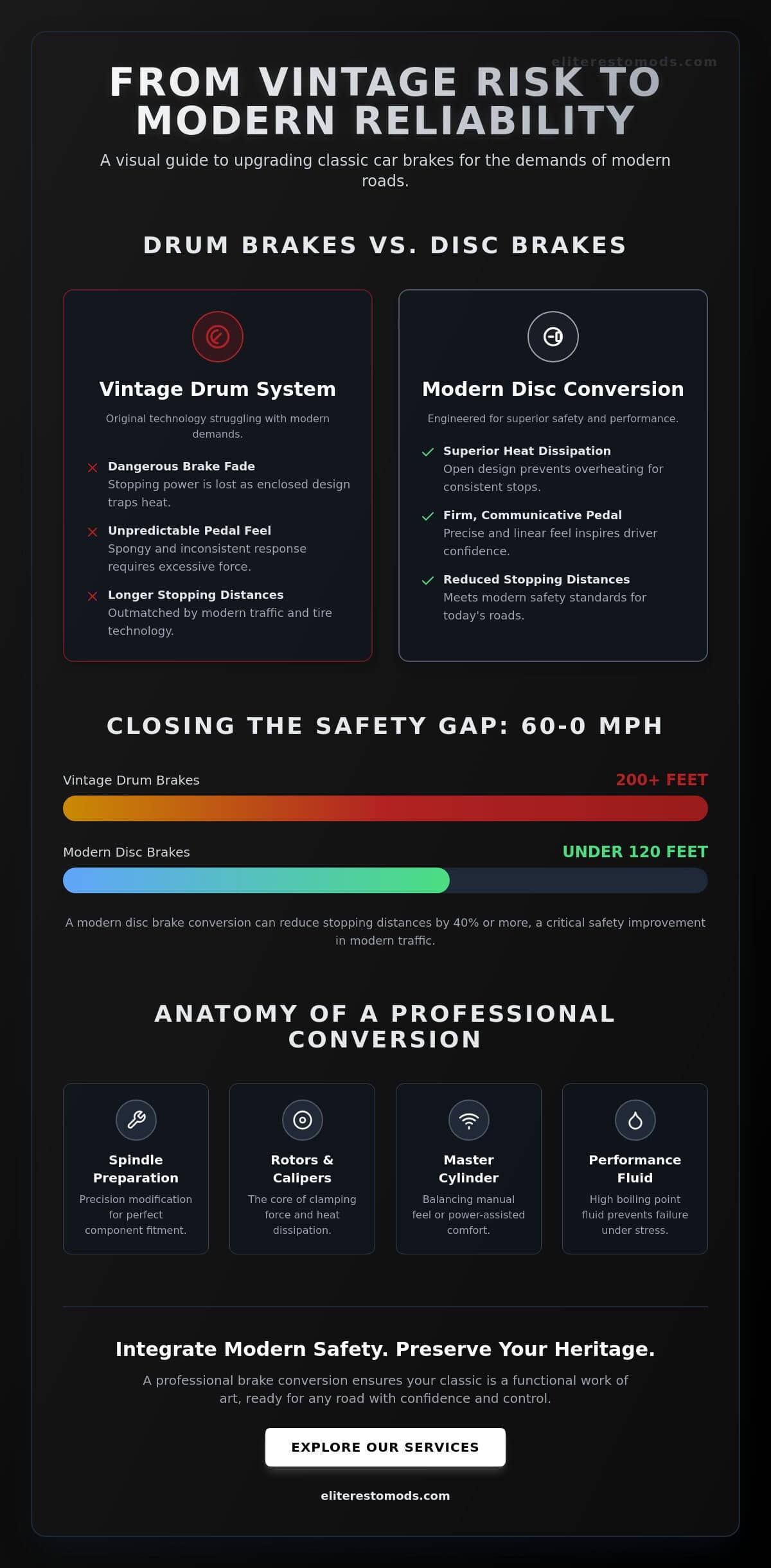
Drum brakes are essentially thermal insulators. As you apply pressure, the shoes press against the inner surface of a rotating drum. This creates immense friction, but because the components are enclosed, the heat has nowhere to go. After a few hard stops in heavy traffic, the system reaches a critical temperature where the friction material loses its effectiveness. This is brake fade. It’s a visceral, terrifying sensation where the pedal may feel firm, yet the car refuses to slow down. In 2026, where highway speeds are higher and stops are more frequent, this compounding heat creates a catastrophic safety risk for collectors who drive their cars as they were meant to be used.
The Evolution of Road Safety Standards
The world has changed since your classic was new. In the mid-20th century, stopping distances of over 200 feet from 60 mph were considered acceptable. Today, most modern sports cars achieve that in under 120 feet. When you’re behind the wheel of a vintage asset, you are sharing the road with drivers who expect immediate, linear deceleration. Upgrading classic car brakes to disc aligns your vehicle with these modern expectations. It’s a necessary evolution for any bespoke build intended to be driven and enjoyed. This modification ensures your car is a functional piece of art that can navigate the complexities of modern infrastructure with absolute confidence.
Mechanical Superiority How Disc Brakes Transform the Driving Experience
The transition from vintage drum systems to modern disc setups is more than a simple safety upgrade. It is a fundamental shift in the vehicle’s personality. While drums often provide a spongy, unpredictable feedback that requires significant physical effort, upgrading classic car brakes to disc introduces a firm and communicative pedal feel. This transformation replaces mechanical uncertainty with surgical precision. It turns a stressful driving chore into a refined, high-performance experience that matches the soul of a vintage asset with the confidence of modern engineering.
The Physics of Clamping Force
At the heart of this evolution lies the physics of clamping force. In a drum system, the shoes must expand outward against a rotating cylinder, a design that is prone to mechanical flex and heat-induced inefficiency. Conversely, hydraulic calipers apply direct, symmetrical pressure to a rotor. This process of a brake conversion maximizes the swept area, which is the total surface area contacted by the pads during a revolution. Hydraulic calipers provide a superior mechanical advantage over mechanical linkages by utilizing incompressible fluid to transmit force directly and instantaneously to the friction surface.
Consistency and All-Weather Performance
Reliability is the hallmark of a master build. Disc brakes are inherently self-cleaning. Centrifugal force naturally flings water, dust, and debris away from the rotor surface, ensuring consistent friction even in torrential rain. This all-weather capability is critical for enthusiasts who participate in national tours or long-distance rallies where conditions can change in an instant. You no longer have to worry about the pulling sensation common with wet drums or the erratic behavior caused by high humidity. Driver confidence is built on this foundation of technical predictability, allowing you to focus on the road ahead rather than the limitations of your hardware.
Beyond the visceral performance, there is the matter of maintenance and artisanal finish. Disc systems are self-adjusting by design, which eliminates the tedious ritual of manual star-wheel adjustments required by legacy systems. They are engineered for longevity and ease of service, treating the owner’s time with as much respect as the car itself. For many, the visual impact is the final touch of luxury. A set of high-performance calipers, perhaps finished in a subtle ceramic coating or a bold performance color, provides a striking contrast behind classic five-spoke or wire wheels. It signals that this machine is not a mere museum piece; it is a functional piece of art capable of modern feats. If you are ready to see how these mechanical refinements come together in a complete vehicle, explore our current inventory of elite certified restomods.
Navigating the Options Manual vs Power Assisted Systems
Choosing the right architecture for your braking system is a pivotal moment in any restoration. It defines the tactile relationship between driver and machine. While the act of upgrading classic car brakes to disc provides the foundation for safety, the choice between manual and power-assisted systems dictates the daily experience of the build. Manual systems offer a direct, unadulterated connection to the road, appealing to those who desire a vintage racing feel. However, they require a specific master cylinder bore size to achieve the necessary leverage. A smaller bore increases hydraulic pressure but also increases pedal travel; a larger bore provides a firm, short stroke that demands significant leg strength. Balancing these factors is an art form that requires professional insight.
For those seeking the luxury of modern drivability, a power-assisted system is the gold standard. This is often detailed in any comprehensive guide to disc brake conversions as the preferred path for grand touring. Beyond standard kits, high-performance big brake systems offer oversized rotors and multi-piston calipers. These aren’t just for show. They provide the thermal mass required for repeated high-speed stops, ensuring your vehicle remains composed under pressure. The transition from legacy hardware to these modern components is a transformative journey for both the car and the driver.
The Role of the Proportioning Valve
Precision tuning is what separates a generic kit from an Elite Certified Restomod build. Rear-wheel lockup is a primary danger in poorly configured disc conversions. Because disc brakes are significantly more efficient than drums, the rear wheels can easily receive too much hydraulic pressure, causing them to skid before the front wheels can stop the car. An adjustable proportioning valve is the solution. It allows a master builder to fine-tune the braking bias based on your vehicle’s unique weight distribution. High-quality valves offer granular control and consistent performance, unlike generic components that can leak or provide inconsistent pressure curves.
Vacuum Boosters and Hydroboost Systems
Traditional vacuum boosters rely on engine vacuum to multiply the force of your foot. This works perfectly for most stock engines. However, cars equipped with high-lift camshafts often lack the vacuum necessary to operate a standard booster effectively. In these high-performance scenarios, we utilize Hydroboost. This system uses pressure from the power steering pump to provide assist, offering a rock-solid pedal feel regardless of engine vacuum levels. These power-assist systems are essential for reducing driver fatigue during extended driving sessions, allowing you to focus on the exhilarating rhythm of the drive rather than the physical effort of stopping.
Precision Engineering The Anatomy of a Professional Brake Overhaul
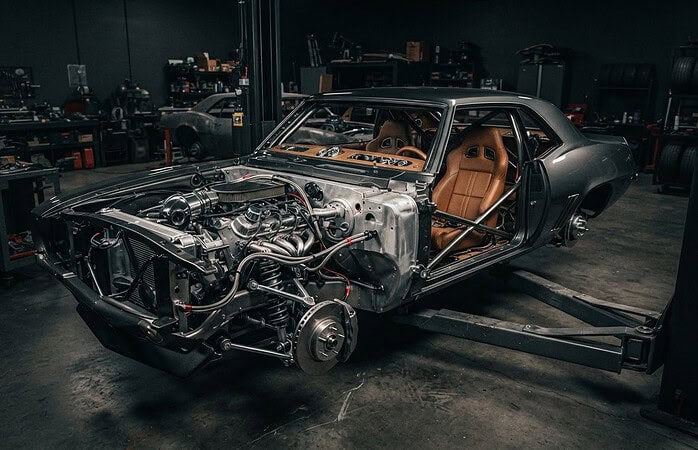
A professional overhaul is a meticulous transformation. It’s far more than a simple parts swap. Upgrading classic car brakes to disc requires a systematic disassembly of decades-old hardware that has often been fused by time and heat. We begin by stripping away the legacy drums, backing plates, and antiquated wheel cylinders. This reveals the foundational spindles, which must be scoured of grease and debris to allow for a comprehensive structural analysis. It’s a process that treats the vehicle not as a project, but as a masterpiece requiring a surgical level of attention.
Spindle Preparation and Hub Assembly
Every spindle undergoes a rigorous inspection for stress fractures or excessive wear that could compromise the integrity of the new system. We utilize high-quality bearings and seals within the new hub assembly to ensure rotational friction is minimized and reliability is absolute. Spindle geometry must be preserved during a swap to ensure that the vehicle’s original suspension and steering dynamics remain unaffected. This precision ensures that the car’s soul remains intact even as its capabilities are brought into 2026 standards.
Hard Line and Flex Hose Integration
Legacy rubber lines are a liability in a high-performance build. They swell under pressure, diluting the communicative feel of the new calipers. We replace them with stainless braided or high-pressure reinforced hoses that resist expansion under load. Routing is a precise task. Lines must be strategically positioned to avoid interference with suspension travel or exhaust heat to prevent catastrophic failure. We use only high-end fittings to ensure a permanent seal against hydraulic leaks, prioritizing longevity over convenience.
Integrating modern power boosters with a vintage firewall requires more than a simple bracket. It demands a reinforced mounting surface to prevent firewall flex, which can lead to a spongy and inconsistent pedal. We often fabricate custom reinforcement plates to ensure the booster remains rigid under the most demanding braking scenarios. The pedal rod geometry must also be perfectly aligned to maintain a linear stroke, a technical nuance often overlooked in basic retail kits. This attention to detail is a hallmark of our custom build services.
Achieving zero air intrusion is the final mechanical hurdle. We use a multi-stage pressure bleeding process to ensure the hydraulic circuit is pure and responsive. Once the system is closed, the bedding-in process begins. This involves a series of controlled stops to transfer a layer of friction material from the pads to the rotors, seating them for optimal performance and preventing future glazing. This systematic approach ensures your classic legend is ready to dominate the road with absolute precision.
The Elite Standard Integrating Performance and Heritage
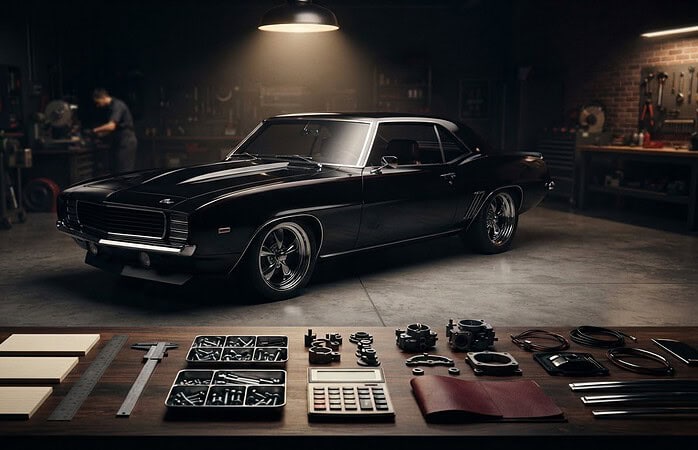
The final realization of a masterpiece requires a delicate balance between invisible technology and visible heritage. At Elite Restomods, we treat the braking system as a vital organ within a holistic vehicle build. A high-output engine is only as potent as the hardware that can harness its energy. Upgrading classic car brakes to disc is a cornerstone of this philosophy. We ensure that modern stopping power doesn’t disrupt the vehicle’s historical silhouette. By utilizing low-profile calipers and rotors that fit behind period-correct wheels, we maintain the aesthetic integrity of the era while delivering 2026 safety standards. It is the marriage of brute force and refined comfort.
Bespoke Braking Solutions for Custom Builds
Every custom project presents a unique set of variables. Our Elite Restomods process involves a systematic evaluation of weight distribution, horsepower, and intended use. For cars destined for long-distance touring, we prioritize pedal modularity and heat dissipation. For track-oriented builds, we focus on aggressive clamping force and multi-piston precision. We frequently integrate electronic parking brakes to achieve a cleaner, more artisanal interior finish. This removes the bulky mechanical levers of the past, replacing them with a discreet switch that offers superior reliability. It’s a sophisticated solution for the modern curator who demands perfection in every detail.
Enhancing Resale Value Through Safety Upgrades
The global market for classic car restoration is estimated to reach $7.9 billion in 2026. In this competitive landscape, buyers prioritize drivability and safety over strict originality for investment-grade assets. Professional documentation of your brake conversion adds significant weight to the vehicle’s provenance. It signals to future owners that the car has been meticulously sorted by experts who value reliability as much as speed. By upgrading classic car brakes to disc, you aren’t just improving the drive; you are protecting your financial asset. We suggest readers explore our inventory of fully sorted vehicles to see how these modern standards are integrated into the world’s finest restomods.
Peace of mind is the ultimate luxury. Every Elite Certified vehicle undergoes a rigorous quality assurance check that leaves no bolt unturned. We pride ourselves on being the bridge between your long-held dream and a tangible, high-performance reality. Your vehicle is more than a machine; it’s a piece of functional art designed to be utilized and enjoyed, not just displayed. Whether you are reliving a classic era or forging a new legacy, our perfectionism ensures your vehicle is ready for the road ahead with absolute confidence.
Mastering the Modern Road in a Vintage Icon
A professional brake conversion transforms your classic from a museum piece into a high-performance machine ready for the demands of the 2026 landscape. We have explored how the shift from expanding drum shoes to direct hydraulic clamping force provides the communicative pedal feel necessary for navigating today’s traffic density. This technical evolution ensures that your vehicle’s stopping power finally matches the capabilities of its high-output engine and modern tire compounds. Choosing the right path for upgrading classic car brakes to disc is a definitive investment in both your personal safety and the vehicle’s long-term market value.
Our national reputation for investment-grade classic car sales is built on specialized expertise in high-performance restomod engineering. Every vehicle we curate passes through the rigorous Elite Certified quality assurance process to ensure absolute reliability and artisanal finish. We invite you to discover our inventory of Elite Certified Restomods featuring modern performance upgrades. Your dream car shouldn’t just be admired from the sidelines. It deserves to be driven with the absolute confidence that only world-class engineering can provide. The road is waiting for your next great adventure.
Frequently Asked Questions
How much does it cost to upgrade a classic car to disc brakes?
The total investment for a conversion depends on the complexity of your build and the level of performance you demand. Factors such as choosing between a standard kit or a high-performance big brake system, adding a power booster, and the labor required for a professional overhaul will influence the final cost. We focus on delivering a bespoke engineering solution that prioritizes safety and long-term value rather than a simple parts replacement.
Do I need to change my wheels if I switch to disc brakes?
Wheel compatibility is determined by the diameter and backspacing required to clear the new calipers. Many original 14-inch or smaller wheels won’t accommodate modern disc assemblies, often necessitating an upgrade to 15-inch or larger wheels. We meticulously measure your vehicle’s clearances to ensure that the chosen braking hardware fits seamlessly behind your preferred wheel style, preserving the car’s iconic silhouette while enhancing its capability.
Can I keep my original master cylinder with a disc brake conversion?
Original master cylinders designed for drum brakes are generally incompatible with disc systems due to differences in fluid volume requirements and residual pressure valves. Upgrading classic car brakes to disc necessitates a dual-circuit master cylinder to ensure hydraulic balance and safety. This modern component provides the necessary pressure to actuate calipers effectively while offering a failsafe in the event of a line leak, which is a critical standard for any 2026 build.
Is it better to have disc brakes on all four wheels or just the front?
Front disc brakes provide the most significant performance gain because the front wheels handle approximately 70 percent of the braking load. A front-only conversion is a transformative upgrade for most drivers, but a four-wheel system offers the ultimate in balance and thermal management. For high-horsepower builds or vehicles used for performance touring, a complete four-wheel setup ensures consistent stopping power and a more refined, modern pedal feel.
How long does a professional disc brake conversion take to complete?
A professional installation typically requires a full day of dedicated labor, though complex custom builds may take longer. This timeframe includes the systematic removal of legacy components, spindle preparation, and the precise routing of new stainless lines. We prioritize a meticulous calibration and bedding-in process over speed, ensuring that every hydraulic fitting is secure and the system is perfectly bled before the vehicle returns to the road.
Will a disc brake conversion affect the original look of my classic car?
Modern engineering allows for high-performance upgrades that remain visually discreet. By selecting low-profile calipers and rotors that sit tucked behind period-correct wheels, you can enjoy modern safety without sacrificing the vehicle’s aesthetic heritage. We treat every project as a piece of functional art, ensuring that the new hardware complements the car’s design rather than distracting from its timeless, nostalgic appeal.
What is the difference between a manual and a power disc brake kit?
Manual kits rely on a specific pedal ratio to generate hydraulic pressure, offering a raw and visceral connection to the road. Power kits utilize a vacuum booster or Hydroboost system to multiply the force of your foot, providing a lighter, more effortless experience. The choice depends on your driving style; some enthusiasts prefer the feedback of a manual pedal, while others seek the luxury and comfort of modern power-assisted deceleration.
Do disc brakes require more maintenance than drum brakes?
Disc brakes are inherently lower maintenance than legacy drum systems because they are self-adjusting by design. You don’t have to worry about manual star-wheel adjustments or the uneven wear common with expanding shoes. Inspection is also more straightforward, as the pads and rotors are easily visible without disassembling the entire hub. This reliability is a hallmark of the modern engineering we integrate into every Elite Certified project.