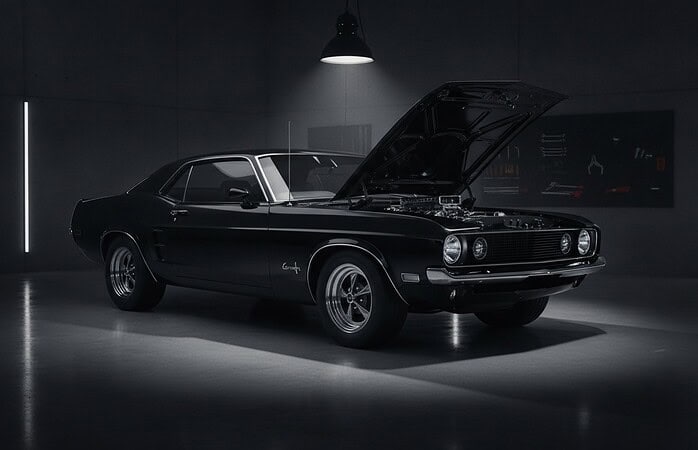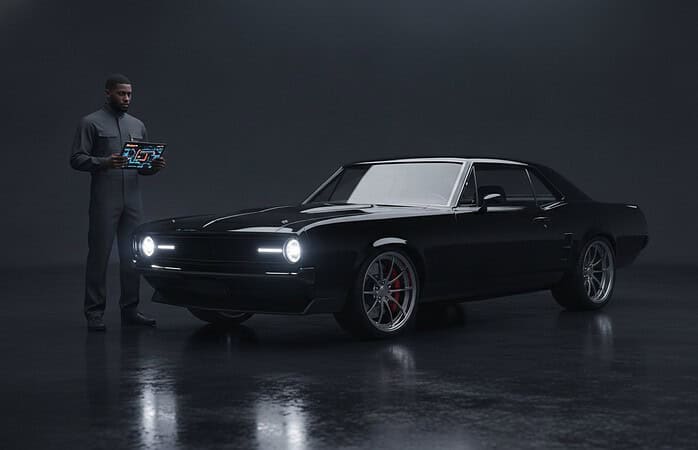

Your numbers-matching 1967 fastback is a masterpiece of design, but its original 200-horsepower heart is a mechanical liability that belongs in a museum, not in the passing lane. It’s a frustrating reality for many collectors who realize that professional classic car engine swaps are the only way to truly enjoy their investment. You crave the visceral roar of a vintage beast but dread the temperamental cold starts and the recurring anxiety of a carburetor failing 50 miles from home. A machine this beautiful is meant to be driven, not just displayed under garage lights while you wait for a tow truck.
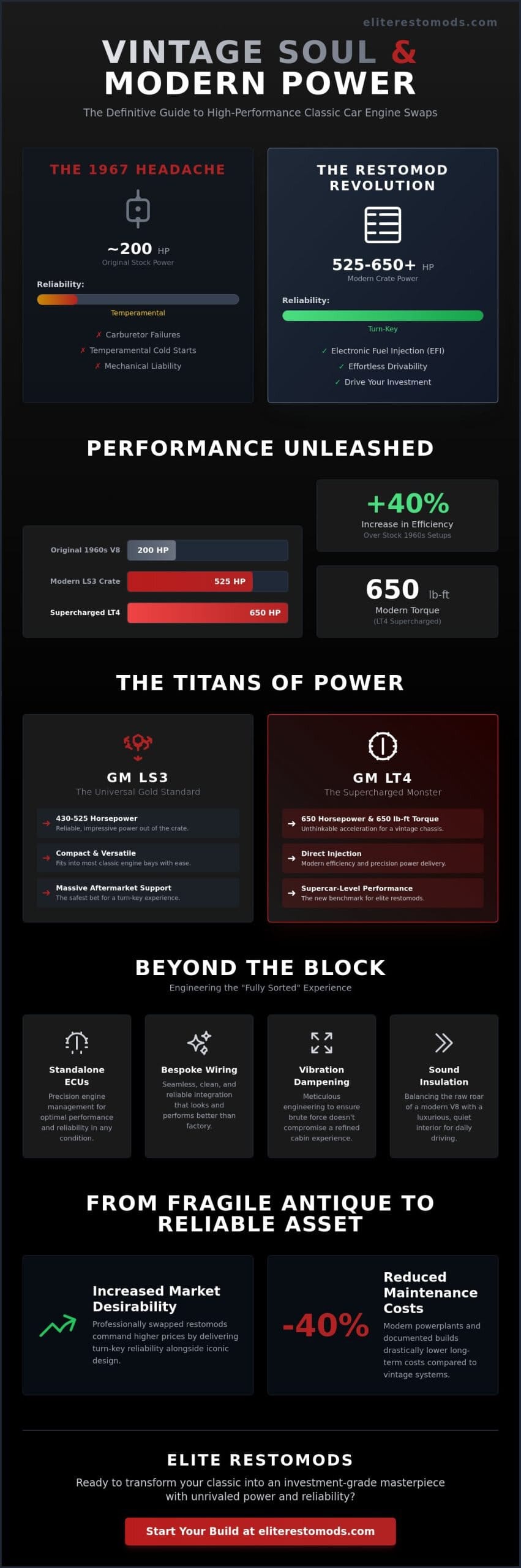
We believe the soul of a vehicle shouldn’t be trapped by outdated technology. This guide reveals how to infuse your vintage machine with 525 horsepower and the turn-key reliability of a modern supercar. We’ll explore the meticulous engineering behind bespoke LS3 crates and Coyote powerplants that offer a 40 percent increase in efficiency over stock 1960s setups. Discover how expert craftsmanship transforms a temperamental relic into an investment-grade, high-performance restomod designed for the modern world. Vintage aesthetics. Unrivaled power.
Key Takeaways
- Understand the shift from “numbers-matching” museum pieces to high-performance restomods that prioritize turn-key reliability and vintage soul.
- Compare the industry’s most iconic powerplants, such as the GM LS and Ford Coyote, to determine which classic car engine swaps best suit your performance goals.
- Learn to define your vehicle’s “mission profile” so you can perfectly calibrate engine choice for either brute torque or high-RPM agility.
- Identify the critical integration components beyond the engine block, including standalone ECUs and bespoke wiring, that ensure a seamless driving experience.
- Discover the essential differences between a standard garage build and a professionally certified restomod that secures your vehicle’s status as an investment-grade masterpiece.
The Philosophy of the Modern Engine Swap: Vintage Aesthetics, Modern Reliability
The engine swap is the undeniable heartbeat of the restomod movement. It represents a fundamental shift in how we value automotive history. For decades, the ‘numbers-matching’ philosophy reigned supreme, forcing collectors to tolerate oil leaks and vapor lock for the sake of originality. That obsession is fading. Modern collectors prioritize driveability. They want the 1967 silhouette without the 1967 headache. By choosing classic car engine swaps, owners preserve the visceral soul of the vehicle while stripping away its mechanical limitations.
The technical transition from temperamental carburetors to precision electronic fuel injection (EFI) changed everything. Cold starts are no longer a gamble. Performance is no longer dictated by atmospheric pressure. For a foundational Engine Swap Overview, history shows this practice has evolved from simple power gains to complex systems integration. It’s the difference between a car that sits in a garage and a machine that conquers the open road. Classic style. Modern power. It’s a bespoke marriage of two different eras.
To see this transformative philosophy in action, watch this sleeper build reveal:
The ‘Fully Sorted’ Difference
A professional engine swap doesn’t just sit in the bay; it belongs there. We focus on the ‘fully sorted’ experience, where every component works in harmony. This involves meticulous vibration dampening and modern sound insulation to ensure the brute force under the hood doesn’t compromise the luxury inside. The goal is to balance the raw roar of a Coyote or LS3 with a refined cabin atmosphere. You can explore how we achieve this through our meticulous build process. It’s about creating a daily driver that feels like a factory-installed unit from a premium manufacturer.
Investment Value of a Swapped Classic
High-quality classic car engine swaps significantly impact market desirability. Industry data from 2023 auction results suggests that high-end restomods often command higher prices than their stock counterparts because they’re ready for immediate use. Documentation is the currency of resale. An elite-level build with a clear paper trail and modern wiring schematics reduces long-term maintenance costs by roughly 40% compared to vintage powerplants. It transforms a fragile antique into a reliable asset. Prospective buyers look for the intersection of iconic design and turn-key reliability, making the modern swap a strategic financial move for any serious collector.
The Titans of Power: Most Popular Engine Swap Families in 2026
Vintage soul meets modern muscle. It’s the ultimate transformation. In 2026, the art of the heart transplant has reached a pinnacle of precision. Selecting the right powerplant is no longer just about horsepower; it’s about character, reliability, and seamless integration. Whether you crave the visceral scream of a high-revving V8 or the silent surge of electric torque, the current market offers unrivaled options for classic car engine swaps.
GM LS & LT: The Universal Language of Performance
The GM LS3 remains the undisputed gold standard for a reason. It’s compact. It’s reliable. It’s powerful. Delivering between 430 and 525 horsepower in its standard crate forms, the LS3 fits into almost any engine bay with minimal surgery. For clients demanding supercar-rivaling performance, the direct-injected LT4 has become the new benchmark. This supercharged monster produces 650 horsepower and 650 lb-ft of torque, providing a level of acceleration that was once unthinkable for a vintage chassis.
The true magic lies in the ecosystem. Every bracket, wiring harness, and cooling component is engineered for these platforms. This massive aftermarket support makes these units the safest bet for a turn-key experience. Utilizing a Beginner’s Guide to Engine Swaps can help builders understand why the LS platform’s simplicity and parts availability continue to dominate the restomod industry in 2026.
The Ford Coyote: Modern Muscle for Mustangs and Broncos
The Ford Coyote 5.0L is a masterpiece of DOHC engineering. Its Twin Independent Variable Cam Timing (Ti-VCT) allows the engine to breathe efficiently across the entire RPM range. It sounds like a mechanical symphony. However, packaging is a hurdle. The Coyote is significantly wider than a traditional small-block Ford, often requiring specialized independent front suspension (IFS) setups to remove factory shock towers. When paired with the 10R80 10-speed transmission, the result is a seamless, relentless flow of power that transforms a 1967 Mustang into a modern precision tool.
Mopar HEMI: The Legend Reborn
Modern HEMI swaps bring a specific brand of aggression. You have choices. The 392 Apache is a natural-breathing beast, perfect for those who want 485 horsepower of pure Mopar heritage. Then there’s the Hellcat. With 707 horsepower and a signature supercharger whine, it’s designed for the bold. We integrate these engines with the modern ZF 8-speed automatic, ensuring the shifts are as crisp as a new luxury sedan. We focus on meticulous exhaust engineering to ensure that iconic Mopar roar remains untouched, even with modern emissions equipment in place.
The emerging frontier isn’t fueled by gasoline. Bespoke EV conversions now offer instant, silent torque that redefines the driving experience. They provide 400 plus pound-feet of torque from a standstill. If you’re ready to define your own legacy, explore our bespoke engine integration services to find the perfect heart for your build.
Matching the Motor to the Machine: Swap Examples by Vehicle Type
Every legendary build begins with a clearly defined mission profile. A successful project isn’t just about bolting in the largest motor available; it’s about harmony. You must choose a powerplant that complements the chassis and the driver’s intent. A heavy K5 Blazer requires massive low-end torque to move its 5,000-pound steel frame, while a C2 Corvette demands high-RPM agility and precise weight distribution. Shaving 200 pounds off the nose by swapping a cast-iron big block for an aluminum LS engine transforms a car from a front-heavy plow into a corner-carving scalpel. Performance is the goal, but subtlety is an art. Many of our clients request the “sleeper” aesthetic, where we hide modern fuel injection and coil packs under a vintage-style 14-inch chrome air cleaner. It looks like a period-correct survivor until you turn the key.
Muscle Car Icons: Chevelles, Chargers, and GTOs
The LS and LT platforms have fundamentally changed the landscape of classic car engine swaps. These modern powerplants offer a 300-pound weight advantage over traditional vintage big blocks, drastically improving braking and turn-in response. We frequently target a 500 to 700 HP range for these builds. This provides visceral acceleration without sacrificing the ability to cruise at low speeds through town. Modern engine management allows for a refined 800 RPM idle and turn-key reliability that vintage carburetors simply cannot match. You can explore these high-performance transformations in our Elite Restomods Inventory to see how we balance raw power with streetability.
Classic SUVs and Trucks: Blazers, Broncos, and C10s
For the vintage SUV enthusiast, the mission is often adventure and reliability. An LS-swapped K5 Blazer or a Coyote-powered Bronco represents the ultimate modern-day explorer. These builds prioritize low-end grunt over top-end speed. To ensure these heavy machines survive 100-degree summer heat or long-distance towing, we integrate high-capacity aluminum radiators and dual electric fans. The result is a truck that retains its rugged 1970s soul but functions with the dependability of a 2024 showroom model. It’s about confidence on the open road.
European Classics with American Hearts
The “Purist vs. Performance” debate is a constant in the European collector space. However, the results of classic car engine swaps in this category are undeniable. Dropping an LS3 into a Jaguar XJ or a Ford small block into a Sunbeam Tiger creates a bespoke driving experience. The challenge lies in the engineering. Doubling the factory horsepower means we must reinforce the chassis and upgrade the suspension to manage the increased torque. We meticulously brace the frame to ensure the car stays planted, marrying delicate European lines with the unapologetic roar of American displacement. It’s a fusion of elegance and brute force.
Beyond the Long Block: The Engineering of a Complete Integration
Dropping a 460-horsepower Coyote or a 650-horsepower LT4 into a vintage frame is just the beginning. In the world of high-end builds, the engine itself represents only 40% of the total project. A successful classic car engine swaps project requires a symphony of supporting systems to ensure the vehicle doesn’t just run, but performs with turn-key reliability. We focus on the “Elite” approach to wiring, utilizing standalone ECUs and tucked harnesses to create engine bays that look like industrial art. There’s no room for “rat’s nest” wiring when you’re aiming for a bespoke finish.
Fuel delivery demands a complete overhaul. Modern EFI systems require consistent high pressure that original mechanical pumps cannot provide. We architect fuel systems using either return-style plumbing for high-heat applications or returnless systems for a cleaner aesthetic. Cooling is equally critical. We sync high-flow aluminum radiators with dual electric fans controlled by the ECU. This ensures your beast stays cool whether you’re idling in traffic or carving through canyon roads. It’s the difference between a project car and a professional restoration.
Drivetrain and Transmission Pairing
Power is useless if you can’t put it to the pavement. We pair modern powerplants with heavy-duty transmissions like the Tremec T-56 6-speed manual for a visceral connection or the 10-speed automatic for seamless, rapid-fire shifts. These setups require custom-balanced driveshafts and the legendary strength of a Ford 9-inch rear differential. We calibrate shift points to match your specific driving style. We can deliver a smooth luxury cruise or aggressive, neck-snapping track performance depending on your preference.
Electronic Integration and Dashboards
Merging 1960s aesthetics with 2024 technology is a delicate balance. We use Dakota Digital systems to make modern engine data communicate with vintage-style gauges. This provides the classic look you love with the precision of a digital readout. Every build includes an OBD-II diagnostic port. This secret to long-term serviceability allows any modern technician to scan the car for issues. We also integrate modern, high-efficiency A/C compressors, guaranteeing ice-cold cabin temperatures even in the peak of summer. Of course, a truly complete restomod experience extends beyond the engine bay — pairing your new powerplant with a custom classic car interior ensures the cabin matches the sophistication of the drivetrain beneath it.
Stopping Power: Brakes and Suspension
You can’t safely manage 500 horsepower on 1960s drum brakes. It’s a recipe for disaster. We integrate Wilwood or Brembo six-piston calipers with modern master cylinders to provide world-class stopping distances. This mechanical evolution must extend to the chassis to handle the increased torque of classic car engine swaps. Achieving the full potential of your new powerplant also demands a chassis that can match it — our guide to pro touring suspension upgrades details how to transform a vintage car’s handling profile and achieve 21st-century grip without sacrificing its classic soul. You can explore our deep-dive into Upgrading Suspension & Brakes to see how we transform a vintage car’s handling profile.
Ready to see the results of meticulous engineering? Browse our current inventory of master-built restomods.
The Elite Path to a Turn-Key Restomod Build
The DIY garage swap often begins with optimism but frequently ends in a tangled web of mismatched wiring and chronic overheating. It’s a common story in the hobby. While a backyard approach might save money upfront, it rarely produces an investment-grade vehicle that holds its value. Professional classic car engine swaps require more than just bolting a modern crate engine into an old bay. They require a total re-engineering of the fuel delivery system, cooling architecture, and suspension geometry to handle the massive increase in torque. Elite Restomods eliminates the guesswork. We treat every build as a bespoke masterpiece. We ensure your vintage pride and joy performs with the reliability of a 2024 luxury vehicle.
Our quality assurance isn’t a quick lap around the block. We subject every vehicle to a rigorous 500-mile shakedown process through varied terrain and temperatures. This ensures every seal, sensor, and fastener meets our exacting standards before the keys ever reach your hand. We document the entire journey with high-resolution photography and detailed build sheets. This creates a transparent history that preserves the car’s status as a functional piece of art. It’s about confidence. You’ll know that the roar of the engine is backed by meticulous craftsmanship and unrivaled attention to detail.
Clients often ask whether they should source the car or the engine first. We always recommend securing the chassis first. A solid, rust-free foundation is essential for a high-horsepower classic car engine swaps project. Once the platform is secured, we help you select the powertrain that matches your driving style. Whether you want a track-day beast or a cross-country cruiser, the foundation dictates the limits of the build.
Our Bespoke Build Process
Every project starts with a deep-dive consultation. We map your performance goals to the right engine family, whether it’s the raw punch of an LS3 or the high-revving sophistication of a Gen 3 Coyote. Our “Fully Sorted” guarantee means your car doesn’t just look the part; it behaves perfectly in stop-and-go traffic and on the open highway. A complete build also demands that the interior environment rise to the same standard as the powertrain — our approach to bespoke luxury custom classic car interior design ensures every surface you touch reflects the same level of craftsmanship found under the hood. You can learn more about the steps involved in our guide to planning a restomod build. We handle the technical intricacies so you can focus on the drive.
Commissioning Your Dream Machine
Elite Restomods simplifies the transition from vintage relic to modern icon. We manage the entire lifecycle, including professional consignment and climate-controlled storage for your swapped classics. We don’t just build cars; we curate legacies. Your dream machine is waiting for its second act. Classic style. Modern power. The transformation begins with a single conversation. Contact Elite Restomods to start your build and experience the pinnacle of automotive excellence today.
Reclaim the Open Road with Modernized Performance
The evolution of the restomod movement has moved beyond simple garage projects into a realm of high-end engineering. Today’s classic car engine swaps aren’t just about raw power; they’re about the seamless marriage of a 1960s silhouette with the turn-key reliability of a 2026 performance powerhouse. Whether you’re craving the 430-horsepower roar of an LS3 or the high-revving precision of a Gen 3 Coyote, the transformation requires more than just a motor. It demands a holistic approach where cooling systems, wiring harnesses, and drivetrain geometry work in perfect harmony. You deserve a machine that starts every time and handles like a modern thoroughbred.
Elite Restomods bridges the gap between vintage soul and contemporary capability. Every vehicle in our collection undergoes an Elite Certified 100-point inspection to ensure mechanical perfection. We provide investment-grade documentation for every build, protecting your asset while you enjoy the drive. With national enclosed transport available, your next masterpiece can arrive at your door without seeing a single mile of road grime. Stop dreaming about the perfect drive and start living it.
Explore Our Fully Sorted Inventory of Swapped Classics
Frequently Asked Questions
Will an engine swap ruin the resale value of my classic car?
A high-quality engine swap typically increases the resale value of a classic car, provided the work meets professional standards. Data from 2024 Bring a Trailer auctions shows that well-executed restomods often command a 40 percent premium over stock survivors. Collectors now prioritize turn-key reliability and modern performance. While purists may prefer matching numbers, the broader market values the seamless integration of modern power into a vintage silhouette.
What is the most reliable engine for a classic car swap?
The GM LS3 crate engine is the most reliable choice for classic car engine swaps due to its simple overhead valve design and massive aftermarket support. It offers a proven track record of 100,000 miles of trouble-free operation in various performance applications. Ford’s 5.0L Coyote V8 follows closely, though its larger physical dimensions require more engine bay modification. These modern powerplants eliminate the cold-start struggles of 1960s carburetors.
How much does a professional engine swap cost in 2026?
Professional engine swap costs fluctuate based on component selection; the 2024 SEMA Market Report indicates that high-end performance upgrades typically range from $15,000 to $45,000 for parts and labor. This investment covers the engine, wiring harness, and cooling system integration. Bespoke builds involving custom fabrication or forced induction can exceed these figures. Every project requires a detailed line-item assessment to ensure the mechanical soul matches the owner’s vision.
Can I keep my original manual transmission with a modern LS or Coyote swap?
You can retain your original manual transmission by using specialized adapter plates and custom flywheels from manufacturers like McLeod Racing. However, vintage gearboxes like the Muncie M21 often struggle to handle the 430 pound-feet of torque produced by a modern V8. Upgrading to a Tremec TKX five-speed is a more robust solution. This modern gearbox fits most classic tunnels while providing an overdrive gear for comfortable 70 mph cruising.
Do I need to upgrade my brakes and suspension if I swap the engine?
Upgrading your brakes and suspension is mandatory when doubling or tripling the factory horsepower. A 1967 Mustang originally equipped with four-wheel drum brakes cannot safely dissipate the heat generated by a 460-horsepower Coyote engine. Installing a Wilwood six-piston disc brake conversion and a modern coilover system ensures the chassis can manage the increased velocity. These components transform a floating, vintage ride into a precise, corner-carving machine. For a complete technical roadmap on achieving modern handling from a vintage chassis, our guide to pro touring suspension upgrades for classic icons covers everything from coilover selection to independent rear suspension systems.
Is a modern engine swap street-legal and emissions-compliant?
Modern engine swaps are street-legal if they utilize E-ROD systems or EPA-compliant crate engines that include all necessary emissions equipment. In states like California, the Bureau of Automotive Repair requires the swap to match or exceed the emissions standards of the engine’s original production year. Using a 50-state legal kit ensures your vintage ride passes inspection. This compliance allows you to enjoy world-class performance without legal compromises.
What is the difference between a crate engine and a junkyard swap?
A crate engine is a brand-new powerplant delivered with a manufacturer warranty, whereas a junkyard swap involves refurbishing a used engine from a donor vehicle. Crate options like the LS3 offer 24 months of protection and guaranteed internal integrity. Junkyard pulls can save 60 percent on initial costs but often require an additional $3,000 in refreshing gaskets, sensors, and seals. For a professional build, the reliability of a zero-mile engine is unrivaled.
How long does a professional engine swap typically take?
A professional engine swap typically requires 100 to 250 labor hours depending on the complexity of the fabrication. A straightforward bolt-in kit might take three weeks; a bespoke integration involving custom plumbing and wiring can span three months. This timeline accounts for the meticulous testing required to ensure turn-key reliability. Precision takes time. Rushing the marriage of old and new technology compromises the final driving experience.