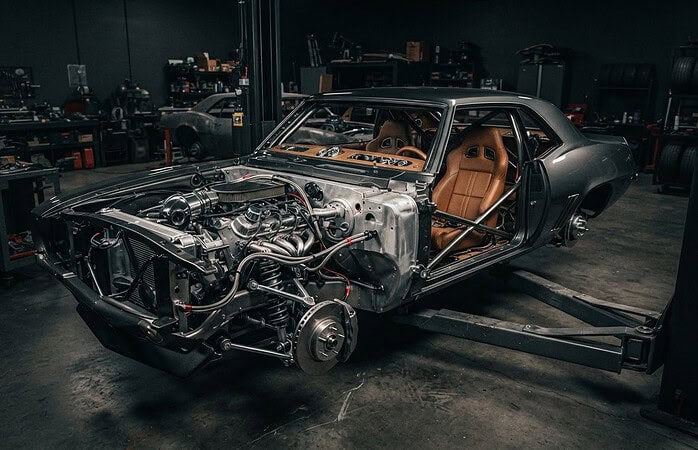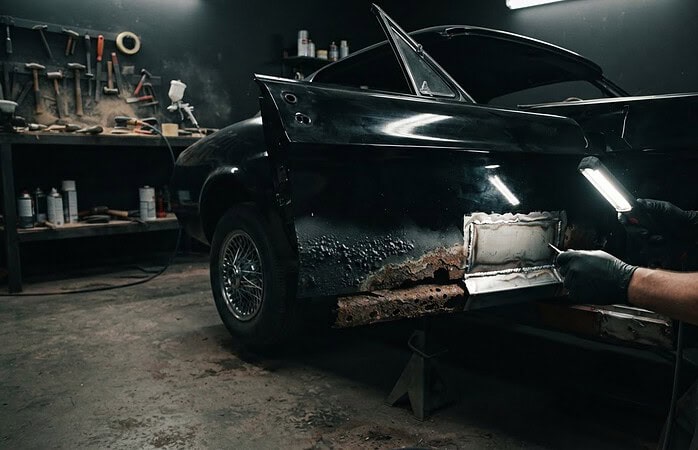

A world class restomod is a masterpiece of functional art, yet its most vulnerable moment isn’t on the track; it’s the transition from the shop to your garage. You’ve spent years obsessing over the depth of the clear coat and the precision of the engineering. The thought of a single pebble kicked up on the interstate or a sudden storm breaching a vintage door seal is enough to keep any serious collector awake at night. It’s a justified anxiety. With the industry handling over 20,000 collectible vehicle shipments annually, the margin for error remains razor thin.
This guide helps you master the technical nuances of enclosed auto transport for classic cars to ensure your investment arrives in show ready condition. We’ll explore why enclosed transport is a technical extension of the restoration process rather than a simple logistics choice. You’ll learn to evaluate hydraulic lift gates for low clearance builds and the sophisticated security protocols that define 2026 standards. We’re moving beyond basic hauling to a systematic, white glove approach that preserves the soul of your vintage asset and the integrity of its modern performance.
Key Takeaways
- Distinguish between hard-side and soft-side trailers to ensure your custom paint and exposed chrome remain shielded from all environmental hazards during transit.
- Master the technical requirements for loading high-performance builds, including the essential role of hydraulic liftgates for protecting low-clearance pro-touring machines.
- Understand how enclosed auto transport for classic cars provides a superior insurance framework that aligns with the true valuation of investment-grade assets.
- Execute a meticulous preparation protocol that covers mechanical health and high-resolution documentation to guarantee a show-ready arrival at your destination.
- Explore how elite logistics partners bridge the gap between secure transport, climate-controlled storage, and professional consignment services for a total ownership solution.
The Vulnerability of Excellence: Why Standard Transport Fails Classic Cars
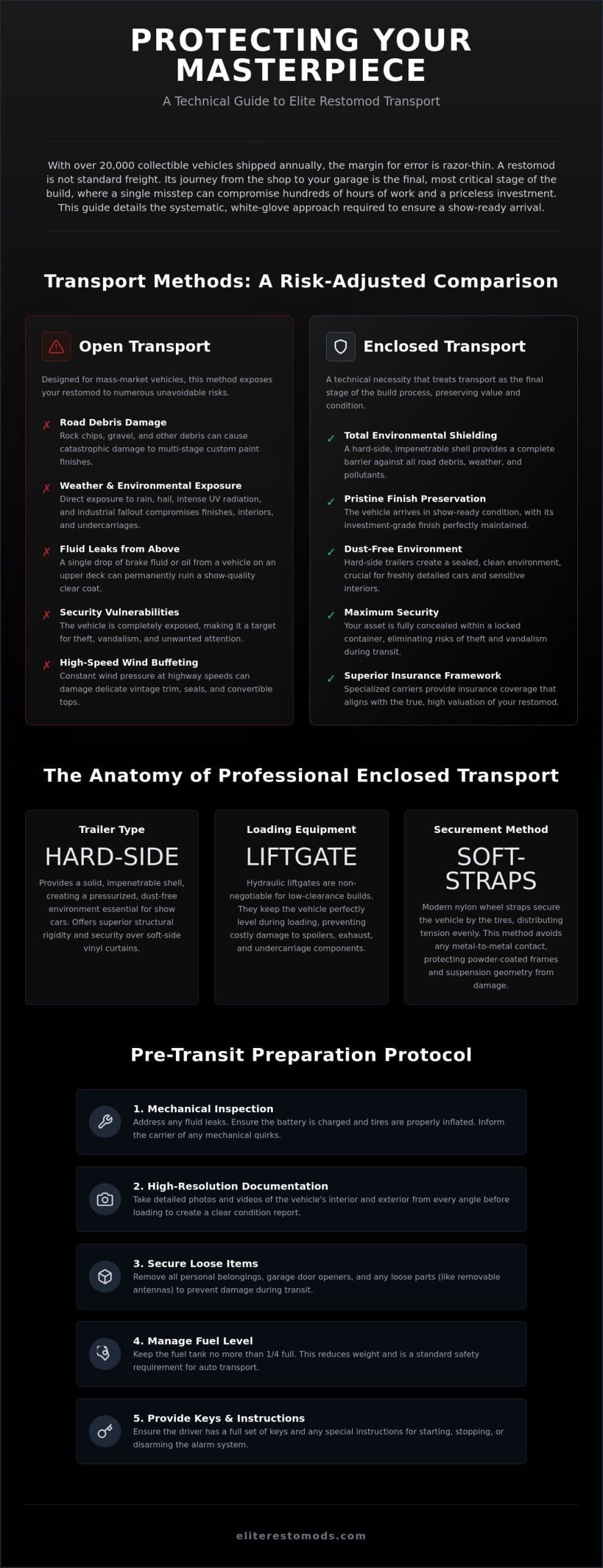
Excellence is fragile. When you’ve invested hundreds of hours into a bespoke build, treating it as ordinary freight is a gamble with the soul of the machine. Most modern logistics rely on the standard car carrier trailer, a workhorse designed for mass market daily drivers. These open frames expose your vehicle to the chaotic environment of the open road. It isn’t just about rain. It’s about the microscopic industrial fallout and the persistent threat of hydraulic fluid leaking from a vehicle on the upper deck. A single drop of old brake fluid from a salvaged sedan can ruin a custom paint job in minutes.
Wind buffeting at highway speeds creates a constant physical assault on vintage trim and weather stripping. While a modern SUV is engineered for these stresses, a classic cabin often lacks the modern sealing required to keep high speed dust and grit out of the interior. Many owners mistakenly believe a tarp provides protection. In reality, a flapping cover acts like sandpaper against a polished finish. This is where specialized enclosed auto transport for classic cars becomes a technical necessity rather than a luxury. Our process emphasizes that transport is the final stage of the build itself, not just a delivery method.
To better understand this concept, watch this helpful video:
The restomod-specific risk profile
A restomod isn’t just a vintage shell; it’s a complex ecosystem of high performance mechanicals and sensitive modern electronics. Open transport exposes bespoke leather interiors to intense UV radiation and extreme heat cycles that can cause premature cracking or adhesive failure. Beyond the aesthetics, road salt and chemical de-icers can penetrate the undercarriage. This compromises polished suspension components and high performance LS swapped engines before the car even reaches your driveway. We treat these vehicles as functional art. Protecting that fully sorted status requires a barrier against the elements. Every vehicle in our inventory is handled with this specific understanding of modern vulnerability.
Protecting the investment-grade finish
There is a vast gulf between a factory spray and a multi stage custom show finish. A rock chip on a standard production car is a minor nuisance. On a restomod with deep pearls or intricate clear coats, it’s a catastrophe that often requires painting entire panels to ensure a perfect match. Maintaining the vehicle’s provenance means avoiding any unnecessary transit wear. Utilizing enclosed auto transport for classic cars ensures that the first time your tires touch the pavement, it’s under your control, not at the mercy of a highway debris field. This preservation of the finish is vital for maintaining the long term value of your automotive investment.
The Anatomy of Professional Enclosed Auto Transport
Professional transport is a mechanical extension of the build process. It is not merely a box on wheels. When selecting enclosed auto transport for classic cars, the hardware defines the safety of the asset. The industry standard has shifted toward 2026 fleet capabilities, incorporating aerospace grade materials and sophisticated logistics software. Precision matters. Every component of the trailer must be as refined as the vehicle it carries.
The choice between soft-side and hard-side trailers is the first critical decision. Soft-side trailers use heavy duty vinyl curtains. They offer basic protection from rain, but they lack structural rigidity and can allow fine dust to permeate the cabin. Hard-side trailers provide a solid, impenetrable shell. This creates a pressurized, dust-free environment essential for freshly detailed show cars. Within this shell, the method of securement is equally vital. Metal chains are a relic of the past. They can mar powder-coated frames or tug on sensitive suspension geometry. Modern carriers utilize soft nylon wheel straps. These distribute tension across the tire surface without metal-to-metal contact, preserving the integrity of the chassis and the alignment settings of a high-performance build.
Real-time visibility is no longer a luxury. High-end carriers now offer integrated GPS tracking. This allows collectors to monitor their investment through every mile of the journey with pinpoint accuracy. If you are considering professional transport services, ensure your provider utilizes these modern standards. It’s about peace of mind as much as it’s about physical protection.
Hard-side trailers and structural security
Rigid walls are the only way to ensure total environmental isolation. In a hard-side trailer, your vehicle is shielded from high-velocity wind buffeting and road debris. This setup also provides a higher level of security during overnight stops. The opaque, locked environment prevents prying eyes from identifying the high-value cargo within. It is the gold standard for transporting a classic car across long distances, ensuring the vehicle remains a secret until its grand reveal.
Liftgates vs ramps: a clearance critical discussion
For a pro-touring build with aggressive suspension geometry, the loading process is the most dangerous moment. Traditional ramps create a steep angle of approach. This is the primary cause of front spoiler and undercarriage damage. Hydraulic liftgates solve this through simple physics. The liftgate remains perfectly level as it rises from the pavement to the trailer deck. This maintains a flat plane, ensuring that even vehicles with only two inches of ground clearance can be loaded without risk. Precision loading is a non-negotiable requirement for any investment-grade machine.
Enclosed vs Open: A Risk-Adjusted Comparison
Asset management requires a cold, analytical look at risk. Comparing open and enclosed carriers based solely on a line item quote is a fundamental error in judgment. For a standard commuter car, open transport is a logical utility. For an investment-grade machine, it’s an unacceptable gamble. The surface level savings of an open trailer vanish the moment a single rock chip requires a multi stage paint correction. When you choose enclosed auto transport for classic cars, you aren’t just buying space in a trailer. You are investing in a controlled environment that eliminates the variables of the open road.
Insurance coverage marks the most significant technical divide between these two methods. Standard carriers often carry cargo insurance capped at $100,000, which barely scratches the surface of a high performance custom build. Specialist providers vetted as top classic car shipping companies offer significantly higher limits, often reaching $250,000 or even $500,000 per vehicle. This financial safety net is essential for preserving the provenance of your machine. Beyond the numbers, dedicated enclosed routes are often more efficient. These carriers prioritize direct paths between major hubs, reducing the time your vehicle spends in transit and the number of times it’s handled by terminal staff.
Calculating the ROI of enclosed shipping
Amortizing the cost of premium transport against the total valuation of a six figure restomod reveals a negligible expense. It’s a small premium for maintaining show ready status. A vehicle arriving in pristine condition commands immediate respect at auction or on the showroom floor. Transit related wear is a silent killer of resale value. Professional vehicle sourcing services insist on enclosed logistics because they understand that the fully sorted status of a car is its most valuable attribute. Protecting that status from shop to garage is the only way to safeguard your return on investment.
White-glove service standards
The human element is the final layer of security. A standard driver treats a car as freight. A specialist treats it as functional art. Specialist handlers understand the nuances of high torque LS engines and the delicate nature of artisanal interiors. This expertise manifests in meticulous pre load and post load inspections. Our process for quality assurance relies on these rigorous standards to ensure every vehicle maintains its investment grade quality. It’s a comprehensive framework designed to bridge the gap between a client’s dream and a tangible, high performance reality.
Preparing Your Restomod for National Transit
Preparation is the bridge between the master builder’s shop and your private gallery. For a high-performance restomod, this protocol extends far beyond a simple wash. It’s a technical audit designed to stabilize the machine’s complex systems against the rhythmic vibrations of the road. Utilizing professional enclosed auto transport for classic cars requires a vehicle that’s mechanically sound and ready for the journey. Fuel levels must be managed carefully; maintaining approximately a quarter tank provides the ideal balance of safety and fuel pump protection. Battery health is equally critical. Modern builds often feature sophisticated engine management systems that create a parasitic draw, making a full charge essential before the trailer doors close.
Securing the cabin is an artisanal task. Detachable components like high-end steering wheels or custom shift levers should be properly stowed to prevent them from becoming projectiles within the cockpit. Disabling modern GPS trackers and motion-sensitive alarms is a non-negotiable step. These systems are designed to detect movement, and the constant motion of transit will trigger them, exhausting the battery and potentially engaging unwanted kill switches. Every detail matters when preserving the integrity of a bespoke interior. It’s about maintaining that pristine, show-ready condition from the moment of pick-up to the final delivery.
The mechanical checklist
A meticulous mechanical review prevents transit delays and protects the carrier’s environment. Inspect for fluid leaks with extreme prejudice. A small drip from a high-pressure power steering line or an LS-swapped oil pan can jeopardize the trailer deck or other high-value cargo. Tire pressure should be set to the build’s optimal specifications to ensure that nylon wheel straps can maintain a firm, non-slip grip on the rubber. If your vehicle utilizes air-ride or adjustable coilovers, lock the suspension at a height that provides ample clearance for the tracks and ramps used in enclosed auto transport for classic cars.
Documentation and hand-off
The hand-off is a professional exchange of responsibility. High-resolution photography is your most powerful tool; capture every artisanal detail and mechanical component under clear lighting. This documentation serves as a definitive record of the vehicle’s state. When the driver arrives, review the bill of lading with clinical precision. Ensure the carrier’s insurance certificate is current and specifically rated for high-value assets. Clear communication regarding starting procedures for custom fuel injection or unique ignition sequences ensures the driver can handle the machine with the respect it deserves. To guarantee your vehicle receives this level of care, consult our enclosed vehicle transport experts today.
The Elite Logistics Framework: Beyond the Handshake
Automotive ownership is a lifecycle, not a series of isolated events. The journey of an investment-grade asset doesn’t end when the trailer doors close; it merely enters a new phase of professional management. Elite Restomods treats the logistics chain as an ecosystem where every technical handshake is overseen with clinical precision. We don’t just facilitate movement. We manage a comprehensive framework that preserves the mechanical integrity and aesthetic perfection of your machine. By controlling this entire narrative, we ensure the “fully sorted” status of your build remains intact from the initial sourcing to the final delivery in your private gallery.
This managed approach eliminates the variables that often plague traditional shipping. When you utilize enclosed auto transport for classic cars through a specialized provider, you are engaging a partner who understands the visceral connection between a collector and their car. We treat every vehicle as functional art. This means coordinating with carriers who share our commitment to excellence and possess the specialized equipment necessary for high-performance builds. It is a turnkey experience designed to provide the modern collector with absolute confidence and zero logistical friction.
Seamless integration with storage and sales
The transition from the road to a static environment is a critical moment for any vintage machine. We strongly recommend climate controlled car storage immediately following any long-distance transit. This allows the vehicle’s artisanal materials and sensitive electronics to stabilize in a regulated atmosphere. For those utilizing our classic car consignment services, this integration is even more vital. We manage the logistics for national and international buyers, ensuring that the vehicle’s provenance is protected while it awaits its next curator. Having a single point of contact across build, transport, and storage provides a level of accountability that standard logistics companies simply cannot match.
The final step in the ownership journey
The transition from browsing classic car restomods for sale to receiving the keys in your own driveway should be a moment of pure, unadulterated excitement. We view the delivery as the final act of the restoration journey. Our white-glove transport partners are trained to maintain the Elite Certified standard through the very last mile. They understand the nuances of custom ignition sequences and the delicate nature of bespoke paint finishes. This professional hand-off ensures that your first experience behind the wheel is exactly as the builder intended. We invite you to explore our inventory to see the level of quality and craftsmanship we are dedicated to protecting through our elite logistics framework.
Securing the Future of Your Automotive Legacy
Every mile between the showroom and your private collection is a critical chapter in a vehicle’s history. Choosing enclosed auto transport for classic cars is the definitive step in ensuring that chapter is written with absolute precision. By prioritizing specialized low-clearance liftgate equipment and a white-glove national delivery network, you protect the visceral thrill of the first drive. You’ve moved beyond simple logistics. You are now utilizing a technical extension of the restoration process itself.
Maintaining the Elite Certified Restomod protection standard requires a partner who treats your investment as functional art. From the structural security of hard-side trailers to the seamless transition into climate-controlled environments, every detail serves the machine’s soul. This is the bridge between a long-held dream and a tangible, high-performance reality. We invite you to learn more about our enclosed transport and concierge services to safeguard your next acquisition. Your masterpiece deserves a delivery as refined as its engineering. The road is calling; ensure your machine is ready to answer in pristine condition.
Frequently Asked Questions
Is enclosed auto transport worth the extra cost for a classic car?
Yes, it is a technical safeguard for investment-grade assets that eliminates exposure to road debris and volatile weather. For a high-value restomod, the cost is a small fraction of the expense required to repair custom multi-stage paint or artisanal chrome. It preserves the vehicle’s pristine condition and long-term resale value. This ensures your machine arrives in the same show-ready state it left the shop.
What is the difference between soft-side and hard-side enclosed trailers?
Hard-side trailers offer superior protection through rigid walls that create a pressurized, dust-free environment for the vehicle. Soft-side trailers use heavy-duty vinyl curtains which provide basic weather protection but lack structural security. These soft barriers can allow fine road grit to permeate the cabin during long hauls. For show-ready vehicles and elite builds, hard-side trailers are the only logical choice for total environmental isolation.
How do I verify the insurance coverage for my high-value restomod during transit?
Request a Certificate of Insurance directly from the carrier and verify the cargo limits before the handshake. Standard carriers often cap coverage at $100,000; however, specialist providers for enclosed auto transport for classic cars offer much higher limits, often reaching $250,000 or more. You must ensure the policy specifically covers high-value collectible assets rather than just standard passenger vehicles to protect your investment fully.
Can enclosed trailers handle cars with very low ground clearance?
Yes, provided the carrier utilizes hydraulic liftgates rather than traditional ramps. These gates remain perfectly level during the loading process, maintaining a flat plane that prevents damage to front spoilers or low-hanging performance exhaust systems. Traditional ramps create steep angles that are dangerous for pro-touring builds with aggressive suspension geometry. Always confirm the carrier has the specific hardware required for low-profile machines.
Should I use a broker or a fleet-owned company for enclosed transport?
Fleet-owned companies offer greater accountability and direct communication with the driver throughout the journey. While brokers have access to a wider network, a fleet-owned carrier ensures that the equipment and training standards are consistent across every mile. This direct relationship is essential for managing the white-glove logistics required for elite restomods. It provides a single point of contact for your peace of mind.
Do I need to empty the gas tank before shipping my classic car?
No, you should maintain approximately a quarter tank of fuel for the duration of the transit. This provides enough fuel for loading and unloading procedures while minimizing weight and safety risks within the trailer. You should avoid a full tank to stay within carrier weight limits and prevent potential fuel expansion or leakage. This balance ensures the fuel pump remains protected without creating an unnecessary hazard.
How long does it typically take to ship a car across the country in an enclosed trailer?
Cross-country transport typically takes between 10 and 14 days depending on the specific route and weather conditions. Regional deliveries are faster, usually arriving within 5 to 10 days. These timelines allow for secure routing and the meticulous handling required for high-value cargo. Professional enclosed auto transport for classic cars prioritizes safety over speed, ensuring the vehicle isn’t rushed through high-traffic terminals or unstable transit paths.
Does enclosed transport include climate control for sensitive vehicles?
Most standard enclosed trailers are not climate-controlled, though they provide significant thermal protection by shielding the car from direct UV rays. The thick walls of a hard-side trailer act as an insulator against extreme temperature spikes during the day. If your vehicle features extremely sensitive artisanal materials, specialized climate-controlled units can be sourced. For most high-performance builds, the protection of a standard hard-side trailer is more than sufficient.