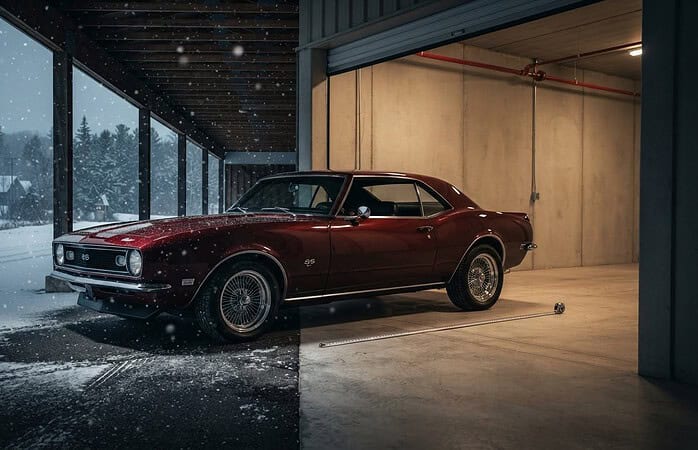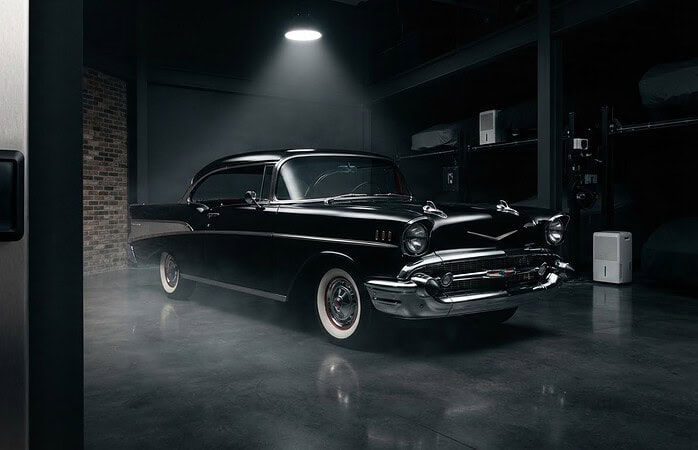

Your standard home garage is a slow-motion crime scene where humidity and heat are the primary suspects. You’ve spent years curating a machine that captures the raw, visceral roar of American muscle. It’s a bespoke piece of functional art, not just a car. You already know that even a 5 percent shift in relative humidity can begin the silent oxidation of your flawless chrome trim or trigger phantom electrical gremlins in a sensitive restomod build. This isn’t just about parking; it’s about meticulous preservation.
Professional climate controlled car storage is the only way to stop this invisible decay and protect your investment’s long-term resale value. You deserve the total peace of mind that comes from knowing your vehicle is shielded from the 30-degree temperature swings that cause gaskets to become brittle and fluids to degrade. We’ll show you the technical necessity of moisture regulation and the concierge-level maintenance that keeps your iconic classic in turn-key condition. This is how you bridge the gap between a childhood dream and a high-performance reality that’s always ready to roar.
Key Takeaways
- Master the science of the “Golden Zone,” where precise atmospheric management prevents the silent degradation of your vehicle’s hydroscopic components and fine finishes.
- Understand the high-stakes difference between standard self-storage and professional climate controlled car storage designed to function as a restricted-access automotive vault.
- Identify the critical pre-storage protocols required to neutralize acidic contaminants and prepare your high-performance investment for a period of flawless preservation.
- Discover how a white-glove storage environment safeguards the delicate balance between vintage aesthetics and turn-key reliability for your bespoke restomod.
Beyond the Garage: Why Professional Climate Controlled Car Storage is Essential
Classic style. Modern power. The restomod philosophy demands excellence in every bolt, weld, and hand-rubbed finish. Owning a high-performance machine is a thrill, yet preserving that investment requires more than a locked door and a concrete floor. Professional climate controlled car storage is a precision-managed environment designed for high-value assets, moving far beyond the concept of simple seasonal parking. It is the difference between a vehicle that merely survives the winter and one that maintains its investment-grade status for decades.
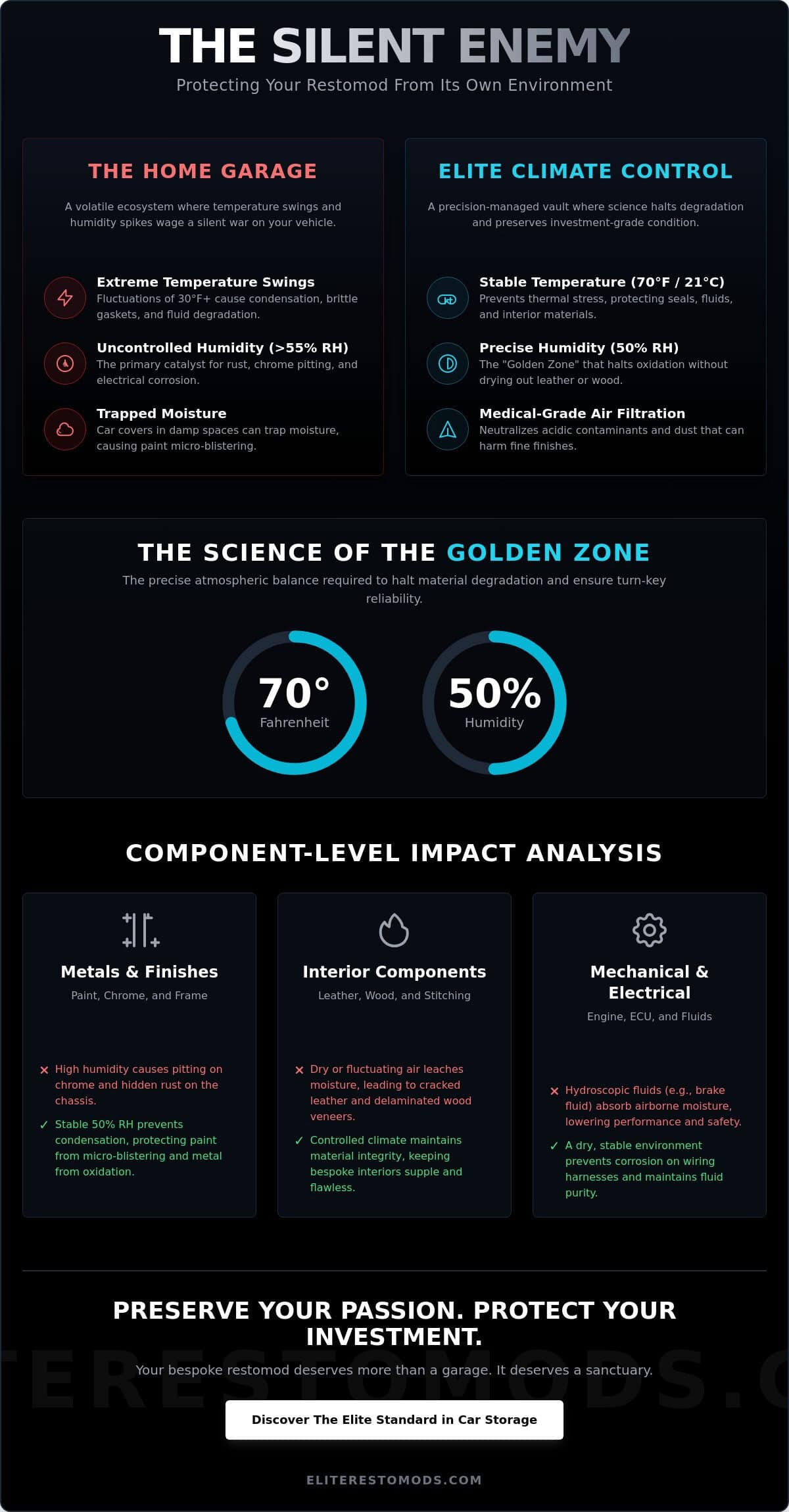
A home garage is a volatile ecosystem. Temperature swings and humidity spikes create a breeding ground for silent killers like oxidation and polymer breakdown. While Standard Self-Storage facilities might offer a roof and a door, they rarely provide the atmospheric stability required for bespoke automotive engineering. True preservation means maintaining a static environment where the dew point is never reached and the air is filtered to medical-grade standards. This level of oversight protects the invisible vulnerabilities: hydroscopic fluids that absorb moisture and rubber seals that dry out in fluctuating heat. Understanding the full scope of collector car storage requirements is the essential first step toward ensuring your vehicle never falls victim to these silent threats.
The Risks of Conventional Storage
Temperature shifts are the primary enemy of vintage steel. When the thermometer drops 15 degrees overnight, moisture condenses inside hidden chassis cavities and frame rails, starting a slow, corrosive burn. High humidity levels, specifically anything above 55% relative humidity, accelerate the pitting of classic chrome and the oxidation of aluminum engine components. Even a premium car cover can become a liability in a non-controlled space, as it traps moisture against the paint, leading to micro-blistering and surface clouding that requires thousands of dollars in paint correction to fix.
Protecting the Soul of the Restomod
Modern restomods are complex beasts. They marry the raw soul of a 1969 Mustang or a classic C10 with the intricate brains of LS3 crates and Coyote engines. These modern electronics are sensitive to the damp. Stable environments prevent the corrosion of wiring harnesses and ensure that digital ECUs remain turn-key ready. Beyond the mechanicals, the interior requires a steady climate to survive. Bespoke leather and hand-stitched details can shrink or crack when exposed to the dry, cycling air of a standard garage. A fully sorted car stays that way because professional curators monitor the atmospheric pressure and humidity every hour of every day, ensuring the “then and now” duality of your vehicle remains flawless. Of course, protecting a finished build starts with working with a qualified custom restomod builder who engineers the vehicle to the highest standards from the outset.
The Science of Preservation: Humidity, Temperature, and Thermodynamics
Seventy degrees Fahrenheit and 50% relative humidity. In the world of high-value automotive curation, this is the Golden Zone. It is the precise intersection where mechanical longevity meets aesthetic perfection. Achieving this balance through climate controlled car storage isn’t just about comfort; it’s a rigorous application of physics designed to halt the natural degradation of diverse materials. When a vehicle transitions from a machine into a bespoke piece of functional art, the environment must stabilize to protect that investment.
Automotive components are often hydroscopic, meaning they actively absorb and release moisture from the air. The Science of Preservation reveals that materials like DOT 4 brake fluid and organic wood veneers are constantly reacting to their surroundings. High humidity levels lower the boiling point of brake fluid through moisture absorption, while excessive dampness causes hand-finished walnut or maple trim to swell and eventually delaminate. Even the most meticulous paint job is at risk. Thermodynamics dictate that if a cold metal chassis is exposed to a sudden influx of warm, moist air, “sweating” occurs. This condensation settles into the deepest recesses of the frame and floor pans, triggering oxidation in areas that are impossible to reach without a total teardown.
Managing Relative Humidity (RH)
Maintaining a 50% RH threshold is the critical line of defense for preventing both rust and leather desiccation. If the air becomes “bone-dry”—typically below 35% humidity—the environment begins to scavenge moisture from the car itself. This leads to the shrinking of vintage gaskets and the cracking of original rubber seals, resulting in the “garage leaks” that plague so many classic collections. Industrial-grade dehumidification systems differ from standard residential HVAC by utilizing desiccant wheels or dedicated cooling coils that maintain a flatline humidity profile regardless of external weather shifts. This level of precision is what separates a standard parking space from a true preservation vault. Meeting the precise collector car storage requirements for temperature and humidity is the defining factor between a vehicle that thrives in long-term seclusion and one that silently deteriorates.
Thermal Stability and Material Integrity
Constant temperature is vital because multi-material builds, such as a steel chassis paired with carbon fiber panels or fiberglass bodies, expand and contract at different rates. These fluctuating thermal cycles put immense stress on bonded seams and paint flex agents. Heat also poses a direct threat to modern engine control units (ECUs) and sensitive wiring harnesses, where sustained temperatures above 85 degrees can accelerate the breakdown of delicate soldering. Thermal equilibrium represents the steady state where mechanical components remain physically stable to ensure long-term health. Beyond temperature, air filtration plays a silent but heavy-duty role. By scrubbing the air of particles as small as 0.3 microns, you prevent dust-based abrasion. On a show-quality finish, even a thin layer of dust acts like fine-grit sandpaper when wiped away, destroying the depth of a flawless clear coat over time.
Protecting the visceral roar and refined elegance of your vehicle requires more than a simple roof. If you are ready to elevate your vehicle’s environment, exploring professional restoration and preservation standards is the first step toward securing its legacy. Proper climate controlled car storage ensures that when you finally turn the key, the experience is exactly as the builders intended.
Concierge Storage vs. Standard Self-Storage: A Critical Comparison
You wouldn’t park a bespoke restomod in a gravel lot. Why house it in a cinderblock box next to a neighbor’s old mattresses? Standard self-storage facilities like U-Haul or CubeSmart offer a passive shell. They provide a roof and a lock. For a high-performance investment, that’s a dangerous gamble. Professional climate controlled car storage facilities operate as active sanctuaries, not passive warehouses. They understand that a vehicle is a living mechanical system, not a stack of moving boxes.
- Management: Standard storage is “hands-off.” You park it, you leave it. Concierge facilities provide “white-glove” service where professionals handle the vehicle.
- Environment: General units often fluctuate in humidity despite basic HVAC. Automotive vaults maintain a strict 50% relative humidity to protect leather and electronics.
- Insurance: Standard contracts often cap liability at $5,000. Specialist facilities align with agreed-value policies required for six-figure builds.
Security and Exclusivity
Shared facilities are a magnet for accidental damage. When non-automotive tenants move large furniture or heavy appliances near your car, the risk of a “mystery dent” skyrockets. Restricted access is the best deterrent for high-value theft. Elite facilities utilize 24/7 monitored, restricted-access vaults where only vetted staff and owners enter. Fire suppression is another critical gap. Standard units use water-based sprinklers that can ruin an interior. Professional automotive hubs often employ specialized systems designed for fuel-bearing assets, adhering to NFPA 88A standards to prevent catastrophic loss without drowning the engine bay.
The Active Maintenance Advantage
A car that sits is a car that dies. It’s a hard truth of the hobby. Seals dry out. Fluids settle and become acidic. In a professional climate controlled car storage environment, maintenance is proactive. Technicians manage battery health using advanced tenders, ensuring modern electrical systems in a Coyote-swapped classic stay primed. They address tire flat-spotting, a common issue where a 3,500-pound vehicle creates permanent deformities in rubber compounds within 30 days of stasis. High-density foam pads or regular tire rotation cycles mitigate this risk, keeping the ride smooth for your next weekend cruise.
The difference is the “build story.” A standard unit treats your car like an object. A concierge facility treats it like a masterpiece. This active stewardship preserves the “turn-key” reliability you expect from a modern restoration, ensuring that when the engine finally roars to life, it does so with perfection. When the time comes to sell, partnering with professional classic car consignment services ensures your meticulously preserved investment reaches a global stage of qualified buyers who understand its true value.
The Pre-Storage Protocol: Preparing Your Vehicle for Seclusion
A sophisticated environment like climate controlled car storage provides the ultimate shield, but it is not a cure-all for neglect. The science of preservation dictates that a vehicle must be chemically and mechanically stable before the door closes. Think of it as a clean room protocol. If you introduce acidic contaminants or degraded fluids into a stable environment, those elements will still corrode your investment from the inside out. True preservation requires a meticulous approach that begins long before the car reaches its bay.
Every storage cycle should begin with a professional detail. This is not about aesthetics; it is about surface chemistry. Bird droppings possess a pH level between 3.0 and 4.5, which can etch through a clear coat in under 48 hours. Road salt and industrial fallout act as catalysts for oxidation. By removing these particulates, you ensure the paint remains in a neutral state. Additionally, the “top-off” rule for fuel systems is non-negotiable. Filling the tank to 95% capacity minimizes the air volume inside, which significantly reduces the risk of tank wall oxidation and condensation. For a comprehensive breakdown of these steps, consult our Ultimate Preservation Checklist.
Fluids and Mechanical Preparation
Fresh oil is mandatory. Used engine oil contains combustion byproducts like sulfuric acid and moisture. When left stagnant, these contaminants attack engine bearings and journals, leading to microscopic pitting. Modern ethanol-blended fuels, specifically E10 and E15, are hygroscopic. They actively pull moisture from the atmosphere. A high-quality fuel stabilizer is essential to prevent phase separation. You must also monitor coolant pH levels. A healthy cooling system should maintain a pH between 8.5 and 10.5. If the levels drop, the fluid becomes acidic, triggering internal engine electrolysis that eats away at aluminum components and gaskets.
Interior and Exterior Protection
Bespoke interiors require specific care to survive long-term seclusion. Leather is a natural material that can lose its essential oils, leading to cracks and stiffness. Apply a pH-balanced conditioner to keep the hides supple. The exterior follows a “clean-dry-covered” mantra. Even within climate controlled car storage, dust is an abrasive. Use a breathable car cover made from soft, synthetic fibers. Professional facilities reject plastic or non-breathable covers because they trap residual moisture against the paint, creating a micro-greenhouse effect that can cause bubbling or “cloudy” clear coats. The quality of these finishing details is a direct reflection of the standards set by your custom restomod builder during the original construction process.
Protect your automotive legacy with the same precision used to build it. Contact Elite Restomods to discuss your vehicle’s preservation needs today.
The Elite Standard: Secure, Professional Storage for Your Restomod
Preserving a high-performance investment requires more than a simple garage. It demands a sanctuary. At Elite Restomods, we provide the premier national solution for climate controlled car storage. We understand that your vehicle is a bespoke piece of functional art. It represents a bridge between the golden age of American muscle and the precision of 21st-century engineering. Our facility isn’t just a warehouse; it’s a high-tech vault designed to maintain the delicate balance between vintage aesthetics and turn-key reliability. We treat every vehicle as if it were our own flagship build, ensuring the soul of the machine remains intact while the mechanical components stay sharp.
Our Managed Storage Environment
Our climate-controlled vaults are bespoke environments. We don’t just park your car; we curate its condition. Every vehicle under our care falls under the “Elite Certified” promise. This means your car returns in better condition than it arrived. Our expert staff lives and breathes high-performance machinery. They understand the specific requirements of LS3 crates, the cooling needs of Coyote engines, and the maintenance of Wilwood brakes. We monitor humidity levels to prevent seal degradation and oxidation. Your investment stays ready for the road. We provide meticulous attention to detail, from battery tender monitoring to tire pressure cycling, ensuring that modern power is always ready to roar at a moment’s notice.
Seamless Transport and Logistics
Distance is never a barrier to quality. We offer enclosed vehicle transport for secure door-to-door service across the country. This white-glove logistics network allows our national clientele to enjoy a “fly-in, drive-out” experience. You land, your car is prepped and waiting, and the open road belongs to you. If you’re looking to cycle your collection, we integrate our climate controlled car storage with professional Consignment Services. We handle the marketing, the showings, and the sale, ensuring your legacy finds its next worthy steward without you ever having to lift a finger.
Classic style. Modern power. Unrivaled protection. We invite you to experience total automotive peace of mind. Our team is dedicated to the perfectionism required to maintain world-class restomods. We bridge the gap between your childhood dream and a tangible, high-performance reality that stays flawless year-round. Let us safeguard the roar of your American muscle for the next generation.
Preserve the Soul of Your Performance Machine
Maintaining an investment-grade vehicle requires more than a simple roof. It demands a scientific approach to environmental stability. Professional climate controlled car storage prevents the oxidation of vintage steel by maintaining relative humidity levels between 40% and 50%. This precision protects everything from bespoke hand-stitched leather to the intricate wiring of a modern LS3 swap. At Elite Restomods, we don’t employ warehouse staff to watch your car. Our facility is managed by the same restomod experts who build these machines from the chassis up.
Our concierge service includes specialized battery tending and constant tire monitoring to eliminate flat-spotting on high-performance rubber. Your vehicle remains in a state of turn-key readiness within a 24/7 high-security restricted environment. This level of meticulous care ensures that the visceral excitement of your first drive is preserved for every future outing. Trust the curators who understand the duality of vintage aesthetics and modern power.
Secure Your Investment: Inquire About Elite Climate-Controlled Storage
Your masterpiece is safe in our hands. We’ll ensure it’s always ready for the open road.
Frequently Asked Questions
Is climate-controlled car storage really worth the extra cost?
Yes, especially for vehicles with a valuation exceeding $50,000 where environmental degradation can slash resale value by 15 percent. Professional climate controlled car storage prevents the oxidation of delicate chrome and the dry rotting of hand-stitched leather interiors. It’s an investment in long-term preservation. This proactive approach ensures your high-performance machine maintains its “as-built” condition for decades rather than succumbing to the elements.
What is the ideal temperature and humidity for storing a classic car?
The gold standard for automotive preservation is a constant 70 degrees Fahrenheit with relative humidity maintained at 50 percent. This specific balance prevents the condensation that leads to frame rust and stops wood trim or leather from cracking due to excessive dryness. Precision monitoring keeps the metal and organic materials in a state of stasis. Deviating more than 10 percent from these levels can trigger mold growth or seal failure within weeks.
Can I store my car with a full tank of gas?
You should store your vehicle with a tank that’s 95 percent full of ethanol-free premium fuel treated with a high-quality stabilizer. This minimizes the air gap where moisture can condense and contaminate the fuel system. Ethanol attracts water; it can corrode internal carburetor components or fuel injectors in as little as 30 days. Filling the tank protects the fuel pump and prevents the internal lining from drying out and flaking.
How often should a stored car be started?
You shouldn’t start a car during storage unless you plan to drive it for at least 20 minutes to reach full operating temperatures. Short idling sessions are detrimental because they create moisture in the exhaust and oil that never evaporates. This leads to acid buildup in the crankcase. If the car must sit for an extended period, leave it off and maintain the battery with a dedicated 1.5-ampere tender.
Do I need special insurance for a car in professional storage?
You need a specialized “agreed value” policy that explicitly covers the vehicle while it stays in a third-party facility. Standard garage policies often only cover the building, not the bespoke machinery inside. Industry data shows that 90 percent of standard policies won’t cover the full restoration cost of a restomod. Ensure your policy includes “off-site storage” riders to protect your investment from unforeseen structural failures or external liabilities. Before committing to storage costs, it’s also worth exploring your classic car financing options to ensure your overall budget accounts for both acquisition and long-term preservation expenses.
What is the difference between heated storage and climate-controlled storage?
Heated storage only manages minimum temperature, while climate controlled car storage actively regulates both temperature and humidity levels year-round. Heat alone can actually accelerate damage by drying out gaskets and rubber seals if the air becomes too arid. A true climate-controlled environment uses industrial dehumidifiers to pull moisture from the air. This meticulous atmospheric control is the only way to prevent the “sweating” that occurs during rapid outdoor temperature shifts.
Will my tires get flat spots if the car sits for six months?
Modern radial tires can develop flat spots in as little as 30 days of inactivity, though most recover after a few miles of driving. For six-month intervals, increasing tire pressure by 10 to 15 PSI over the manufacturer recommendation helps maintain the carcass shape. Professional collectors often use contoured tire cradles or jack stands to remove the load entirely. This preserves the structural integrity of high-performance rubber and prevents permanent vibration issues.
Can rodents get into professional car storage facilities?
Rodents can enter any space with an opening larger than 0.25 inches, making professional sealing and pest management protocols essential. Elite facilities utilize ultrasonic deterrents and perimeter bait stations to achieve a 99 percent exclusion rate. A single mouse can cause $2,000 in wiring damage in a single night. Professional storage mitigates this risk through concrete construction and rigorous multi-point inspections that you won’t find in a standard home garage. If you are still in the process of acquiring your vehicle, working with a professional classic car sourcing service ensures the icon you store has been meticulously vetted for hidden mechanical failures before it ever reaches the vault. When the time comes to move your newly acquired or stored vehicle, choosing enclosed vehicle transport for investment-grade cars ensures it arrives at its destination with the same flawless condition it left in.