
What if the most significant threat to your vintage investment isn’t the open road, but the silent, stationary months of the off-season? It’s a sobering thought for any collector. You’ve spent years curating a vehicle that captures the soul of a bygone era, so learning how to prepare a classic car for winter storage is a critical act of stewardship. The fear of ethanol-tainted fuel corroding fuel lines or pests invading a bespoke leather interior is a valid anxiety that many enthusiasts share. You want a machine that remains as flawless as the day it was built; a piece of functional art that doesn’t lose its edge while sitting still.
This 2026 preservation guide reveals the professional-grade protocol used by world-class curators to safeguard high-value machinery from the elements. We promise to provide you with the exact technical steps needed to ensure your car starts immediately in the spring with its paint and mechanical integrity perfectly intact. We will explore the nuances of fuel stabilization, tire preservation, and the gold standard of climate-controlled environments to keep your automotive art in peak condition. It’s time to bridge the gap between heritage design and modern operational reliability, ensuring your investment is protected during its winter slumber.
Key Takeaways
- View seasonal storage as a proactive preservation strategy that protects your vintage investment from the unique mechanical challenges of static rest.
- Discover how to prepare a classic car for winter storage using professional-grade fuel stabilizers and fluid management to prevent internal corrosion.
- Protect your vehicle’s aesthetic soul with a deep decontamination wash and high-grade sealants that shield the paint and interior from the elements.
- Learn why climate-controlled environments are essential for managing humidity and temperature swings that can damage high-performance components.
- Follow a systematic inspection protocol for 2026 to ensure your vehicle transitions from its winter slumber to the open road with zero mechanical degradation.
The Philosophy of Seasonal Preservation for Investment Vehicles
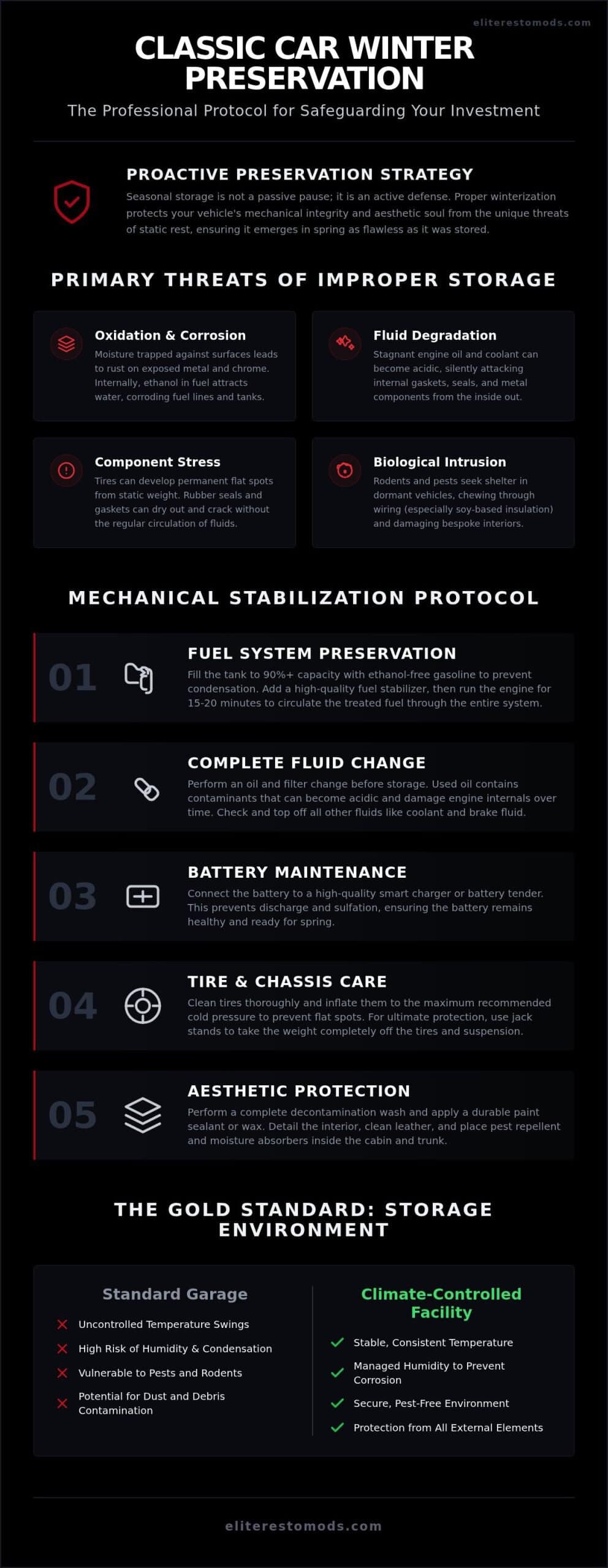
Winter is not merely a pause in the driving season. It is a period of active preservation. For the owner of a high-value automotive asset, understanding how to prepare a classic car for winter storage is the difference between a seamless spring awakening and a costly mechanical recovery. This process serves as a proactive shield. It guards the delicate intersection of historical aesthetics and modern performance against the slow erosion of time and temperature.
Static storage presents a unique set of challenges. Vintage cork gaskets and rubber seals rely on the movement of lubricants to remain pliable. When a vehicle sits, these components can dry out, leading to brittle failures once the engine finally turns over. While a survivor classic requires protection of its original, often fragile, materials, a high-performance restomod demands a different level of care. These builds feature modern fuel injection and tight tolerances that require consistent fluid integrity. In 2026, professional stewardship means treating every vehicle as a masterwork that deserves an environment of total stability.
Why Classic Cars Require Specific Winterization Protocols
Standard storage often overlooks the chemical volatility of modern life. Vintage materials are notoriously sensitive to thermal expansion; fluctuating temperatures can cause microscopic stress fractures in aged finishes. Beyond these physical concerns, the presence of ethanol in modern fuel blends is a constant threat. Ethanol is hygroscopic, meaning it pulls moisture from the air directly into your fuel system. This leads to internal tank corrosion and gummed injectors. Stagnation is also the enemy of hydraulic systems. Brake and clutch fluids can absorb water over time, leading to internal pitting in master cylinders that only becomes apparent when you need stopping power most.
The Risks of Improper Long-Term Stasis
Neglect during the off-season invites three primary antagonists: oxidation, moisture, and biological intrusion. Without proper intervention, moisture trapped against surfaces leads to surface rust and the degradation of artisanal leather. Chemical breakdown is equally insidious. Engine oil and coolant can become acidic as they sit, attacking the very metals they are meant to protect. Consider these primary risks:
- Oxidation of exposed metal components and chrome trim
- Fluid acidification and additive dropout in the crankcase
- Rodent damage to soy-based wiring insulation in modern looms
- Flat-spotting of expensive high-performance tires due to static weight
Securing your vehicle in a dedicated environment, such as professional Climate-Controlled Storage, provides the psychological benefit of knowing your dream is safe. It ensures that the soul of the machine remains vibrant until the first warm day of the new year. True excellence in car ownership requires a commitment to these details, treating the off-season as a transformative phase of the vehicle’s lifecycle.
Mechanical Stabilization: A Numbered Guide to Fluids and Fuel
Precision matters. A single neglected fluid can compromise a masterpiece. When you begin the process of how to prepare a classic car for winter storage, the powertrain requires a total chemical stabilization to survive the months of stasis. The goal is to eliminate any internal environment where corrosion or degradation can take root. This begins with the fuel system, the most volatile component of your automotive investment.
A full tank is your primary defense against condensation. Air space in a half-empty tank allows moisture to accumulate, leading to internal rust and water-contaminated fuel. For the final fill-up of 2026, prioritize ethanol-free gasoline. Ethanol is notoriously hygroscopic and will pull moisture from the atmosphere, which is particularly destructive to vintage carburetors and modern high-pressure injectors alike. Once filled, adding a high-quality stabilizer is essential to preserve octane levels and prevent the fuel from turning into a varnish-like gum. Run the engine for at least twenty minutes after adding the stabilizer to ensure the treated fuel reaches every corner of the system, from the pump to the combustion chamber.
Fuel System Preservation and Modern Additives
Modern restomods equipped with LS or LT engine swaps demand even higher standards. These high-performance powerplants utilize sensitive electronic fuel injection systems that do not tolerate the particulate matter created by fuel breakdown. If your vehicle features a modern powertrain, our Elite Certified quality assurance process ensures every fluid meets the highest standards before hibernation. Specialized additives designed for modern fuel systems provide a protective coating for injector internals, preventing the “sticking” common after long periods of inactivity. This is a critical step in learning how to prepare a classic car for winter storage when that car bridges the gap between 1960s style and 2026 technology.
Lubrication and Battery Management Systems
Before the car is tucked away, a fresh oil change is mandatory. Used oil contains acidic combustion byproducts and moisture that can etch bearings and cylinder walls if left to sit. While NHTSA winter vehicle preparation advice is excellent for modern commuters, a bespoke restomod requires a more intensive electrical strategy. Modern ECUs and security systems create a parasitic draw that will kill a battery in weeks. A smart battery tender is the only solution, maintaining a steady float voltage without overcharging. For traditional vintage engines, consider fogging the cylinders with a specialized oil to prevent surface oxidation on the cylinder walls. Finally, check your coolant pH levels. Acidic coolant can lead to electrolysis, which eats away at aluminum radiator cores and cylinder heads from the inside out.
Protecting the Aesthetic: Exterior and Interior Detailing Standards
The visual soul of a vintage machine is fragile. While mechanical stability ensures the heart beats, aesthetic preservation ensures the legend lives on. When considering how to prepare a classic car for winter storage, the exterior finish and interior sanctuary require a level of attention that exceeds a standard Saturday wash. Grime, road salts, and industrial fallout are not just unsightly; they are chemically active agents that will continue to corrode surfaces during the long months of stasis. True preservation begins with a clinical level of cleanliness.
Paint Decontamination and Protective Sealants
A standard wash is insufficient for six months of slumber. You must perform a deep decontamination to remove embedded iron particles and industrial fallout that a sponge simply cannot reach. These microscopic metallic shards can oxidize under a car cover, leading to permanent pitting in the paint. While traditional carnauba wax offers a warm glow, it lacks the longevity required for an entire season. In 2026, the standard for professional stewardship is a high-grade ceramic coating or a specialized synthetic sealant. These modern barriers provide a hydrophobic shield that resists moisture and dust far more effectively than organic waxes. Do not overlook the undercarriage. A thorough pressure wash of the chassis is vital to remove hidden road salts that act as a catalyst for rust in the dark, damp corners of the frame.
Interior Conditioning and Pest Prevention
Bespoke cabins are ecosystems that require balance. Artisanal leather is prone to desiccation, especially in low-humidity environments. Using a pH-balanced conditioner keeps hides supple, preventing the heartbreaking cracks that can ruin a custom interior. To manage the cabin atmosphere, place desiccant bags in the footwells. These help maintain humidity between 40% and 50%, which is the ideal range for preventing both leather shrinkage and mold growth. Pest prevention is the final, critical layer of defense. Modern wiring looms often utilize soy-based insulation, which acts as a beacon for rodents. Avoid toxic traps that can leak or cause odors. Instead, utilize high-frequency ultrasonic deterrents or essential oil-based repellents. These non-invasive methods ensure your upholstery remains a pristine sanctuary rather than a nesting ground. For those seeking the ultimate peace of mind, our Climate-Controlled Storage offers a managed environment where these variables are professionally monitored year-round.
Storage Environments: Climate Control vs. Standard Garages
The environment you choose is the ultimate variable in the preservation equation. While a standard home garage offers shelter from snow, it lacks the sophisticated atmospheric management required for an investment-grade asset. When researching how to prepare a classic car for winter storage, many owners overlook the impact of thermal expansion. Temperature swings in unheated spaces cause metal components to sweat. This condensation occurs when warm, moist air hits a cold metal surface, creating a microscopic layer of water that acts as a catalyst for surface oxidation on chrome and exposed suspension parts. It is a silent attacker. By contrast, professional storage environments maintain a stable thermal baseline. This eliminates the expansion and contraction cycles that stress vintage gaskets and modern seals alike, ensuring every mechanical interface remains seated and secure.
Mastering how to prepare a classic car for winter storage involves more than just a cover; it requires a total atmospheric strategy. A dust-free, secure environment prevents the abrasive accumulation of particulates that can mar a fresh ceramic coating. Beyond the physical protection, there is the matter of security. High-value vehicles deserve a facility designed specifically for their needs, away from the daily traffic and potential hazards of a shared residential garage.
The Science of Humidity and Temperature Stability
The ideal relative humidity for collector vehicle storage is between 40% and 50%. This specific range prevents the oxidation of metal while ensuring that artisanal leather and wood trim do not lose their essential moisture. In unmanaged spaces, humidity can spike or drop wildly. Excessive moisture invites mold and corrosion, while overly dry air leads to the desiccation of rubber seals and the eventual failure of plastic interior trim. Maintaining this narrow window requires professional-grade dehumidification systems that standard residential HVAC units cannot replicate.
Tire Care and Flat-Spot Prevention Techniques
Flat-spotting is a common frustration for owners of high-performance machinery. While increasing tire pressure by 10 to 15 PSI above standard operating levels is a common recommendation, tire cradles offer a more refined solution for 2026. These cradles distribute the vehicle’s weight over a larger surface area, preserving the carcass of expensive high-performance rubber. Using jack stands is often discouraged for vehicles with modern independent suspensions. Leaving components fully extended for months can stress bushings and shock seals that were designed to remain under load. In unheated spaces, the chemical compounds in modern tires can also undergo glass transition, becoming brittle and prone to cracking. A managed environment ensures the rubber remains pliable and ready for the first spring corner.
Secure your vehicle’s future with our professional Climate-Controlled Storage subscription.
The Elite Spring Awakening: Returning to the Road in 2026
The first warm breeze of 2026 signifies more than just a change in season. It is the call of the open road. However, a masterwork of automotive engineering cannot simply be awoken with the turn of a key. The transition from stasis to motion must be as deliberate as the initial process of how to prepare a classic car for winter storage. A systematic inspection is the final safeguard, ensuring that the months of preservation have yielded a vehicle ready for high-performance demands. This is the moment where meticulous preparation pays its dividends, manifesting in an engine that fires with immediate, visceral confidence.
The First Start and Fluid Circulation
Before the engine fires, the oil system must be primed. After months of sitting, gravity has pulled the lifeblood of the engine into the pan, leaving the upper valvetrain and cylinder walls vulnerable. By disabling the ignition and cranking the engine, you allow the oil pump to circulate fresh lubricant to critical surfaces without the heat and pressure of combustion. During this time, a clinical visual inspection is mandatory. Look for the telltale signs of fluid migration: a weep from a cooling hose or a slight dampness around a brake fitting. Once the engine is started, a gradual warm-up is essential. This allows for even thermal expansion of different metals, from the aluminum heads to the cast iron block, preventing the stress that leads to gasket failure. It’s a slow, rhythmic return to life that respects the machine’s complexity.
Integrating Storage into Your Maintenance Schedule
Exceptional stewardship views the off-season not as lost time, but as a window for transformation. The months spent in a managed environment are the perfect opportunity to execute planned upgrades or refine performance characteristics through our Custom Build Services. Whether it’s a suspension recalibration or an interior refinement, performing this work during the winter ensures your vehicle is ready for the first concours of the year. This approach transforms storage into a documented chapter of the vehicle’s provenance, proving the machine has been maintained to the highest standard. It turns the hibernation period into a period of evolution, where the vehicle’s modern capabilities are further sharpened while the body remains in pristine stasis.
Returning a vehicle to the road requires a professional eye. A spring tune-up for a restomod involves more than just an oil change; it includes a diagnostic sweep of the modern ECU and a verification of all high-performance parameters. By partnering with experts who understand both the soul of the vintage body and the complexity of the modern heart, you ensure your investment remains a reliable joy. At Elite Restomods, we provide the Elite Certified level of care that bridges the gap between your long-held dream and a tangible, high-performance reality. Your car is not just a machine. It is a piece of functional art, and every spring start is its latest unveiling.
Securing the Legacy of Your Automotive Masterpiece
Your vehicle is more than a collection of parts; it’s a repository of history and a triumph of modern engineering. Mastering how to prepare a classic car for winter storage ensures that this legacy remains untarnished by the elements. By prioritizing climate-controlled environments and following a clinical protocol for fluid stabilization and aesthetic protection, you bridge the gap between seasonal stasis and peak performance. The off-season shouldn’t be a period of anxiety. It’s a time of quiet, professional preservation.
True excellence requires a partner who understands the soul of a vintage asset and the precision of modern mechanicals. Our Elite Certified maintenance standards provide the perfectionism your investment deserves. Protect your investment with Elite Restomods professional storage services and rest easy knowing your car is in a secure, managed environment. We treat every project as functional art, ensuring it’s ready to dominate the pavement the moment the frost thaws. The road is waiting. Make sure your machine is prepared to answer the call with confidence.
Frequently Asked Questions
Is it better to start my classic car occasionally during winter storage?
No, you shouldn’t start the engine for short intervals. Idling in a cold garage fails to bring the oil and exhaust system to full operating temperature, which leads to internal condensation. This moisture can cause internal corrosion and dilute the oil. It’s much better to leave the vehicle in its stabilized state until the spring awakening. This is a key part of how to prepare a classic car for winter storage correctly.
How much air pressure should I put in my tires for winter storage?
You should increase your tire pressure by 10 to 15 PSI above the standard operating level. This extra pressure provides structural support to the tire carcass, reducing the risk of flat-spotting during months of stasis. You’ve likely heard that over-inflation is a reliable baseline, but professional-grade tire cradles offer superior protection for high-performance rubber. These tools distribute the vehicle’s weight more evenly, ensuring your tires remain perfectly round and ready for the road.
What is the best way to prevent mice from entering my classic car?
Prevention requires a multi-layered strategy focused on deterrents rather than poisons. Utilize high-frequency ultrasonic devices and essential oil-based repellents like peppermint to make the environment uninviting. Rodents are often attracted to the soy-based insulation found in modern wiring looms, so a sealed, professional environment is the ultimate defense. You shouldn’t use traditional traps inside the cabin, as they can cause odors or leaks that damage bespoke artisanal interiors.
Should I change the oil before or after winter storage?
It’s mandatory to change your oil immediately before the vehicle enters its winter slumber. Used oil contains acidic combustion byproducts and moisture that can etch bearings and cylinder walls if left to sit for months. Fresh oil provides a clean, alkaline environment that protects internal engine components from chemical degradation. This simple maintenance step is a foundational element of how to prepare a classic car for winter storage for long-term mechanical health.
Do I need a special cover for a car kept in climate-controlled storage?
Yes, a high-quality breathable cover is essential even in a climate-controlled facility. While the environment is managed, a cover provides a final barrier against settling dust and accidental contact. It’s vital to choose a material that allows moisture to escape rather than trapping it against the paint. A soft, indoor-specific cover ensures your ceramic coating or custom finish remains pristine while the vehicle is tucked away in its secure, managed bay.
Can I store my restomod with a modern fuel injection system the same way as a vintage car?
Restomods require a more sophisticated electrical and fuel strategy than traditional vintage cars. Modern ECUs and security systems create a constant parasitic draw, making a smart battery tender absolutely essential to prevent a dead cell. Additionally, high-pressure fuel injectors in LS or LT swaps are sensitive to the particulate matter created by fuel breakdown. You must use specialized stabilizers that are compatible with modern fuel injection components to ensure a flawless spring start.
What are the benefits of professional climate-controlled storage over a home garage?
Professional facilities offer a level of environmental stability that a residential garage simply cannot replicate. It’s the primary benefit of precise humidity control, maintained between 40% and 50% to prevent both rust and leather desiccation. Thermal stability is equally critical, as it eliminates the expansion and contraction cycles that stress vintage seals. Beyond the atmosphere, you gain the peace of mind that comes with high-level security and expert monitoring of your investment.