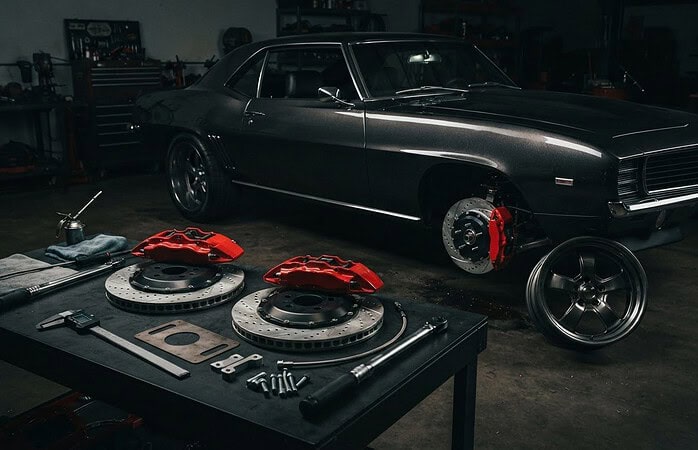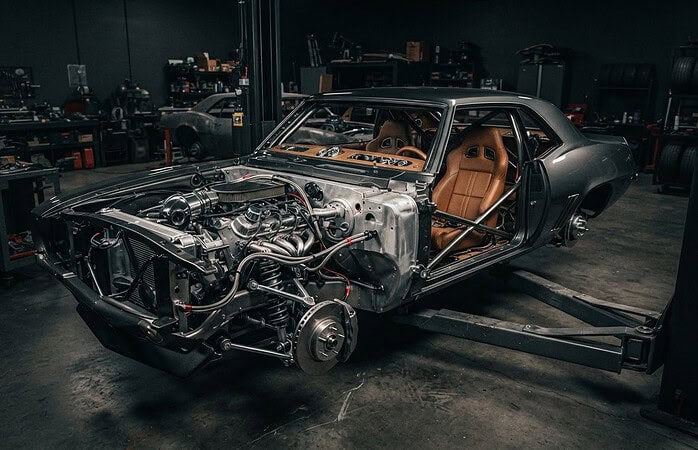

What if the best answer to who builds the most reliable restomods isn’t a famous name, but clear evidence of what was inspected and how the car is supported? A classic silhouette can stir the soul, but polished photos alone can’t show how its brakes, electrical systems, or suspension perform on the road.
Before making a major purchase, look beyond reputation. Reliability depends on the quality of the modernization, the care taken to inspect the finished car, and the ownership support available after the sale. This guide gives you a practical way to compare those factors and judge whether a specific restomod suits the way you plan to use it.
You’ll learn what to look for in inspection coverage, vehicle details, and ownership support, then see how Elite Restomods approaches these priorities. Its AIM Quality Assurance Methodology covers eight areas, and every Restomod includes a one-year extended service contract through Classic Vehicle Protection. The goal is to understand what’s behind the craftsmanship before you turn the key.
Key Takeaways
- Assess reliability through inspection coverage, vehicle condition, drivability, and ownership support, not reputation alone.
- Compare businesses by their build focus, quality-assurance approach, available vehicles, and support after purchase.
- To judge who builds the most reliable restomods, look for evidence tied to the specific vehicle, not broad claims or polished photos.
- Match the car to your intended use, then review its specifications, inspection scope, and support terms before buying.
What Makes a Restomod Builder Reliable? Start with Evidence, Not Reputation
A restomod can look immaculate beneath showroom lights, but paint, polish, and a celebrated builder’s name don’t establish how the vehicle performs. To assess reliability, look for information about the car’s condition, systems, drivability, and support after purchase. The evidence should relate to the vehicle you’re considering, not just the business’s general reputation.
A practical standard is documented inspection, sound vehicle systems, demonstrated drivability, and clear ownership support. That’s a way to assess a purchase, not a promise that a car will never need maintenance or repairs. Automotive engineering depends on how components work together, so consider the vehicle as a whole rather than judging it by one impressive part. Automotive Engineering Principles offer useful context for understanding why a vehicle’s systems should be considered together.
Awards, reputation, and a distinctive build style can help explain a builder’s identity, but they don’t prove the condition of every car. The question of who builds the most reliable restomods is best answered with vehicle-specific information: what was inspected, which areas the process covered, and whether the finished car fits your intended use.
Which signs matter more than a builder’s reputation?
Look for a named inspection method and a defined scope. A clear process gives you something concrete to evaluate. Broad assurances about craftsmanship don’t show what was reviewed on a particular vehicle. Elite Restomods uses its AIM Quality Assurance Methodology, and its build process explains how the company approaches its work.
- Review information that identifies the inspection scope for the vehicle.
- Separate stated checks from general claims about quality.
- Consider evidence of drivability alongside the car’s appearance.
- Understand which ownership support is included and the terms that apply.
Why does intended use change the reliability question?
A car driven regularly faces different demands from one intended mainly for display or occasional outings. If you plan to use it often, give particular attention to drivability and the condition of its key systems. A show-focused project may put greater emphasis on presentation and craftsmanship. Neither purpose is inherently better. What matters is whether the vehicle’s preparation aligns with your plans.
Think about how the car will fit into your life: weekend drives, longer trips, or occasional appearances at events. Then assess the available vehicle information and ownership support against that plan. A thorough inspection can inform your decision, but it can’t eliminate future maintenance or repair needs.
Keep your assessment grounded in observable details. A beautifully finished classic deserves to be appreciated, and a carefully sorted driver deserves to be driven. The strongest case for reliability combines clear, vehicle-specific information with ownership terms that suit the experience you want.
How a Restomod Quality-Assurance Process Tests the Whole Vehicle
A restomod is an integrated machine, not a collection of attractive upgrades. Mechanical systems, electrical components, chassis behavior, exterior finish, and interior condition all contribute to the ownership experience. An engine may sound strong, for example, but that alone says little about the brakes, suspension, or other systems. A useful quality-assurance process makes its scope clear across the complete car.
For a practical review, look for coverage of drivability, suspension, brakes, fuel, electrical systems, exhaust, exterior, and interior condition. This scope helps show whether the process looks beyond the most visible features. It describes the areas reviewed, not a guarantee that future maintenance or repairs won’t be needed.
What should a thorough restomod inspection cover?
Look for distinct attention to each area, rather than one broad claim that the vehicle was “checked.” Drivability, suspension, and brakes each affect the experience behind the wheel. Fuel, electrical systems, and exhaust are also important to vehicle operation. Exterior and interior condition complete the picture, connecting mechanical readiness with the finish and comfort buyers see and experience.
- Drivability, suspension, and brakes
- Fuel, electrical systems, and exhaust
- Exterior and interior condition
Consider these categories together. A refined cabin and carefully finished bodywork matter, but they don’t replace a stated review of operational systems. Likewise, a mechanical focus alone doesn’t describe the full condition of a bespoke classic. Use the inspection scope to understand what the process addresses, then consider it alongside the vehicle’s listed specifications and intended use.
How does Elite’s AIM Quality Assurance Methodology fit?
Elite Restomods’ AIM Quality Assurance Methodology is its structured inspection process. It covers drivability, suspension, brakes, fuel, electrical systems, exhaust, exterior, and interior. This defined scope gives buyers a clearer account of the areas reviewed than a general assertion of craftsmanship. AIM is Elite’s own quality-assurance methodology, not an independent certification, and its inspection scope isn’t a promise of fault-free ownership.
A named method makes a reliability claim more concrete by showing which areas are included, while recognizing the realities of owning a classic vehicle. It also gives prospective buyers a consistent framework for understanding how a restomod has been assessed. For more context on the company’s approach, explore Elite Restomods’ build process.
As you compare options, look beyond a striking finish and consider what the quality review covers. The question of who builds the most reliable restomods becomes more useful when it’s grounded in a stated inspection scope and a clear understanding of what that scope can establish.
How to Compare Restomod Builders Without Treating Reputation as Proof
A useful comparison looks beyond the badge on the shop wall. Businesses may focus on bespoke commissions, particular vehicle platforms, or completed cars offered from inventory. Each approach can suit a different buyer. Compare what each business explains about its build focus, quality-assurance process, vehicle availability, and ownership support, rather than treating style or reputation as proof of reliability.
Apply the same criteria to each option. A transparent description of the process gives you a stronger basis for comparison than an unsupported ranking. The table below outlines different business models without assuming one approach is automatically superior.
| Builder or sales approach | Build focus | Stated quality-assurance process | Vehicle availability | Post-sale support |
|---|---|---|---|---|
| Bespoke build service | A vehicle developed around a buyer’s project and preferences | Compare the described inspection scope and how it relates to the completed build | Typically centered on a commissioned project, rather than selecting a finished car from current inventory | Review what support is described for the completed build |
| Platform-focused builder | Specialization in a particular vehicle type or platform | Look for an explained process that applies to the vehicle being considered | Depends on the builder’s current offerings | Compare the stated ownership support and its terms |
| Inventory-led seller | Completed vehicles prepared for prospective buyers | Look for vehicle-specific information about the review process | May offer a choice among completed vehicles, subject to current inventory | Check what support accompanies the purchase |
| Elite Restomods | Investment-grade, fully sorted restomods intended to be confidently driven | Uses its AIM Quality Assurance Methodology | Offers an inventory-led option for buyers considering a completed vehicle | Every Restomod includes a one-year extended service contract through Classic Vehicle Protection |
Which comparison criteria help buyers assess reliability?
Compare the stated inspection scope, not just a car’s finish or a business’s reputation. Then review the ownership support described for the vehicle and distinguish a custom-build service from the purchase of completed inventory. Those differences matter. A buyer who wants to shape a project may value a bespoke process, while someone seeking a finished car may prioritize available inventory and vehicle-specific information.
Can one builder be named the most reliable for every buyer?
Not responsibly from reputation alone. Public descriptions can help you compare methods and support, but they don’t establish an industry-wide winner or show comparative failure rates. Apply the same criteria to each business. Treat gaps in published detail as limits on comparison, not proof for or against a builder. The question of who builds the most reliable restomods is best answered in relation to a specific car and your priorities.
Elite’s inventory-led approach suits buyers who want to consider a completed, fully sorted vehicle rather than commission a build. Compare the available vehicle information and stated support with your intended use, then explore Elite Restomods’ current inventory.
A Buyer’s Checklist for Verifying a Restomod’s Condition and Support
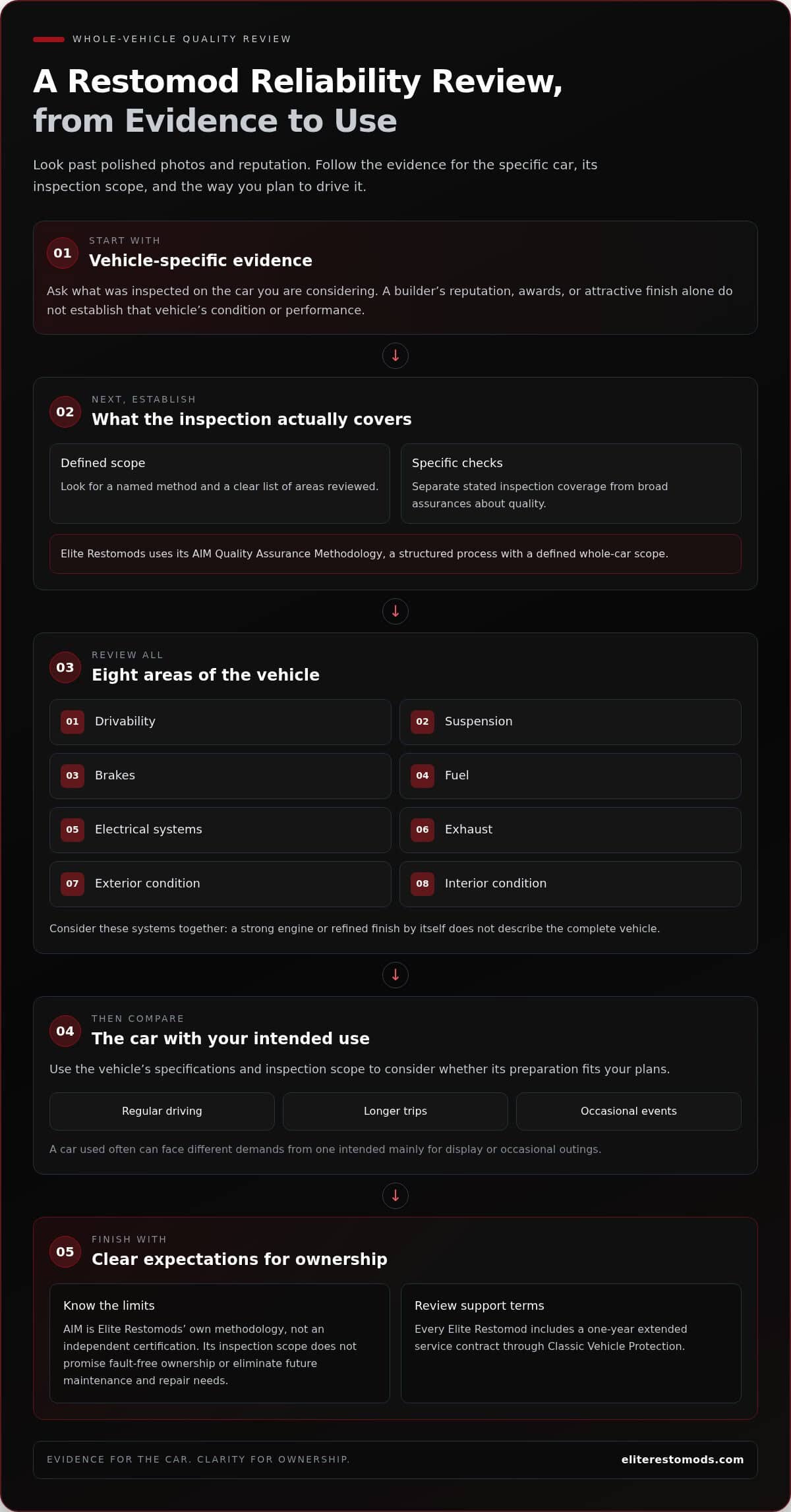
A finished restomod should suit more than your eye. Before deciding, work through the evidence in order, from how you’ll use the car to the terms that support ownership. This keeps the decision grounded in the specific vehicle rather than assumptions based on its appearance or the builder’s reputation.
- Define how you plan to drive it. Consider whether the car is intended for occasional outings, regular weekend use, or longer drives. Your plans shape which aspects of its condition and drivability deserve the closest attention.
- Match listed specifications to the vehicle. Review the stated equipment and features against the vehicle-specific information. Don’t assume an upgrade or component is present because it’s common in restomods or appears in photographs.
- Review the quality-assurance scope. Identify the systems and areas covered by the stated inspection method. Elite Restomods’ AIM methodology includes a defined review of vehicle operation, mechanical systems, and finish. A clear scope helps you understand the process without treating it as proof that every possible issue has been ruled out.
- Separate inspection from repair coverage. A quality-assurance process describes areas reviewed; a service contract describes an ownership-support benefit under its terms. They serve different purposes, so don’t treat one as a substitute for the other.
- Read the service-contract terms. Every Elite Restomod includes a one-year extended service contract provided through Classic Vehicle Protection. Review the contract’s terms to understand the support it provides. It’s an ownership benefit, not a promise that the car will never need maintenance or repairs.
Keeping these steps distinct makes the decision clearer. Inspection scope helps you understand what was reviewed, while vehicle-specific information helps you assess what’s fitted to the car. The contract addresses a separate part of ownership. Together, these details offer a more useful basis for comparison than polished presentation alone.
Elite Restomods’ stated build process provides context for how the company approaches its work. As you consider who builds the most reliable restomods, use the same checklist for each vehicle: intended use, stated specifications, inspection coverage, and defined ownership support. That framework can help you make an informed choice, though it can’t predict every future repair.
If a completed, drive-ready car is your priority, explore Elite Restomods’ available vehicles and compare each one with the evidence that matters to you.
How Elite Restomods Builds Confidence in a Fully Sorted Vehicle
A classic should do more than command attention at a standstill. Elite Restomods offers investment-grade, fully sorted restomods intended to be confidently driven. Its approach brings classic character together with a focus on modern driving expectations, while making inspection and ownership support part of the buying decision.
What does “fully sorted” mean in Elite’s approach?
For Elite, “fully sorted” reflects a focus on preparing restomods for confident use, supported by a defined quality-assurance process. Its AIM Quality Assurance Methodology reviews eight areas: drivability, suspension, brakes, fuel, electrical systems, exhaust, exterior, and interior. This is Elite’s own inspection methodology, not an independent certification or a guarantee that maintenance or repairs won’t arise during ownership.
That scope connects the driving experience with the details that shape a car’s operation and finish. It gives prospective buyers a clearer picture of what Elite’s process addresses, while vehicle-specific information remains essential to understanding the features and specifications of each car. Buyers who prefer a completed vehicle over commissioning a project can explore the current restomod inventory and consider which car fits their preferences and intended use.
What support accompanies an Elite Restomod?
Ownership confidence also depends on what follows the purchase. Every Elite Restomod includes a one-year extended service contract through Classic Vehicle Protection. The contract has defined terms and isn’t a promise of trouble-free operation. Keeping that distinction clear helps buyers understand how inspection and post-purchase support serve different roles.
Elite also operates the Elite Performance Center, an in-house service facility partnered with All Speed Customs. Classic car financing and climate-controlled storage are also available through Elite. These options can form part of the ownership plan, alongside the need to evaluate the individual vehicle and its documentation.
So, who builds the most reliable restomods? A confident answer starts with a visible process and clear ownership support, then considers how well the specific car suits its next owner. Elite’s approach brings those elements together around fully sorted vehicles intended to be driven, not simply admired.
Explore the inventory and consider how a particular car fits your plans. A classic silhouette. A considered path to the open road.
Make Your Next Move With Confidence
The right classic isn’t simply the one that looks best under the lights. It’s the one that fits the way you want to drive, the character you want to experience, and the confidence you need to enjoy it. Use those priorities to narrow your choices, then take time to appreciate the details that make a particular car feel unmistakably right.
That’s a more personal way to answer who builds the most reliable restomods. Rather than chasing a universal winner, focus on finding a vehicle and ownership experience that align with your expectations. A well-chosen restomod can bring the sound and silhouette of another era into the rhythm of your life today.
Take the next step: explore Elite Restomods’ fully sorted inventory and find a classic that fits the way you want to drive.
Frequently Asked Questions
Who builds the most reliable restomods?
No single builder can be named the most reliable for every buyer; dependability depends on the individual car, its intended use, and the available evidence. For buyers considering Elite Restomods, useful points of reference include its stated quality-assurance process and focus on fully sorted vehicles intended to be confidently driven. Compare those details with the information for the specific car and your priorities, rather than treating an industry-wide ranking as proof.
What makes a restomod reliable enough to drive regularly?
A restomod suited to regular driving needs preparation that matches how often and where you plan to use it. Review the vehicle’s information, listed specifications, inspection scope, and ownership support together. For example, a car intended for frequent trips deserves close consideration of its stated drivability and core systems, compared with a vehicle purchased mainly for display. No single feature or claim establishes suitability on its own.
Can you daily-drive a restomod?
Some restomods are intended for regular use, but daily-driving suitability depends on the individual vehicle and your expectations. Consider your typical routes, driving frequency, and willingness to maintain a classic vehicle, then compare those needs with the car’s stated specifications and condition. Elite Restomods describes its vehicles as intended to be confidently driven. That purpose is useful context, but each vehicle should be assessed on its own merits.
How can you tell whether a restomod builder has a thorough quality-control process?
Look for a named process with a clear description of the areas it covers, then compare that scope with the information for the vehicle you’re considering. Elite’s AIM methodology reviews drivability, suspension, brakes, fuel, electrical systems, exhaust, exterior, and interior. A defined scope is more informative than a general quality claim, though it doesn’t establish that every possible issue has been found.
Does a restomod inspection guarantee the car will not need repairs?
No. An inspection describes the areas reviewed at that point in time; it can’t promise that a vehicle won’t need maintenance or repairs later. Treat inspection information and service-contract terms as separate evidence. Inspection information helps you understand the assessment process, while the contract describes its stated ownership support. Review the terms and consider how the car’s documented condition fits the way you intend to use it.
What support does Elite Restomods include with its vehicles?
Every Elite Restomod includes a one-year extended service contract through Classic Vehicle Protection. Elite also operates the Elite Performance Center, an in-house service facility partnered with All Speed Customs. These are distinct forms of ownership support: the service contract has its own terms, while the Performance Center is a service facility. Elite also offers classic car financing and climate-controlled storage for applicable ownership needs.