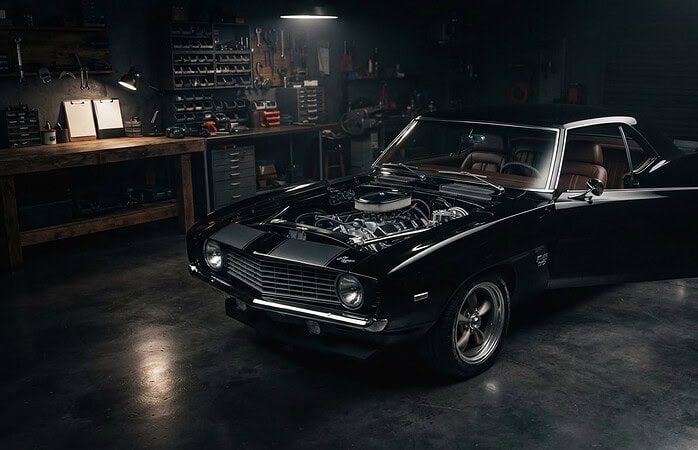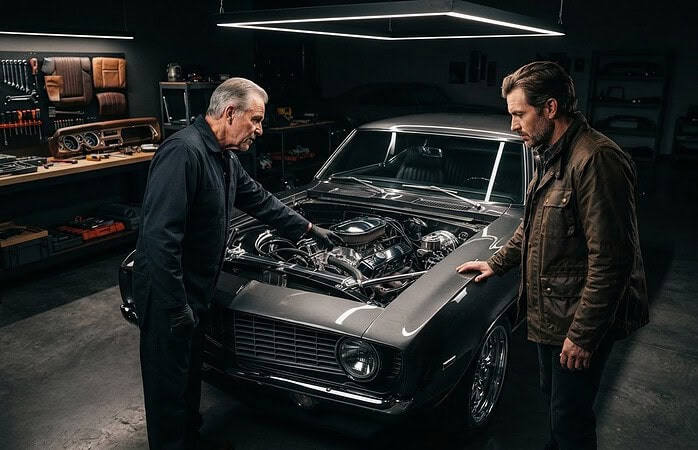

Your neighborhood service center is perfectly capable of maintaining a modern commuter, but a vintage icon is a different breed of machine altogether. It’s a bespoke piece of functional art. Many collectors feel a genuine knot of anxiety when handing over their keys, fearing a technician might be learning on their rare block or complex suspension. You deserve the confidence that your vehicle will start every time and handle with absolute precision. This tension defines the choice between a restomod shop vs general mechanic, where the decision ultimately dictates whether your car remains a temperamental relic or becomes a high-performance masterpiece.
We understand that your classic is an investment meant to be driven, felt, and pushed to its limits. You’ve likely experienced the frustration of poor reliability or felt confused by the premium costs associated with specialty builders. This article reveals the critical differences between standard repairs and professional re-engineering to ensure your vintage vehicle reaches investment-grade performance. We will explore the technical intricacies of custom fabrication, the necessity of modern component integration, and why specialized craftsmanship is the only bridge between historical soul and 2026 engineering standards.
Key Takeaways
- Distinguish between the routine maintenance of a daily driver and the complex re-engineering required to transform a vintage icon into a modern performer.
- Understand why integrating modern systems like electronic fuel injection requires specialized expertise and tooling that goes far beyond standard factory specifications.
- Evaluate the long-term financial impact of choosing a restomod shop vs general mechanic to ensure your vehicle remains an investment-grade asset.
- Learn how rigorous testing protocols and fully sorted standards eliminate the temperamental quirks often found in traditional classic car restorations.
- Discover the path to creating a bespoke vehicle that balances raw, visceral power with the refined comfort and reliability of a 2026 luxury build.
Restomod Shop vs General Mechanic: Defining the Fundamental Divide
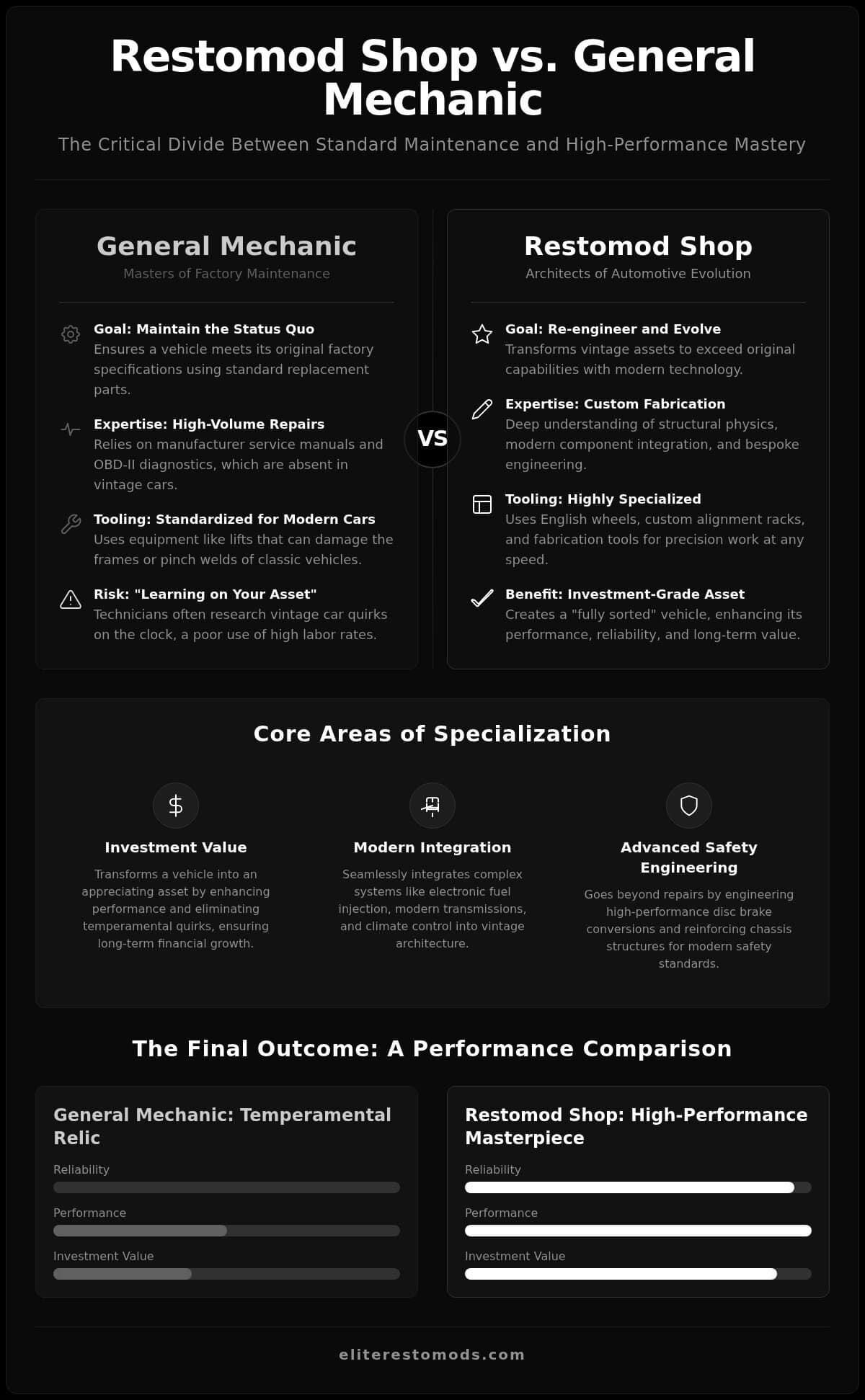
The distinction between a restomod shop vs general mechanic isn’t just a matter of labor rates or shop size. It’s a divide between maintenance and mastery. A general mechanic is a curator of the status quo, ensuring a vehicle meets its original factory specifications. In contrast, a restomod shop acts as an architectural firm for the road, re-engineering vintage assets to exceed their original capabilities. This is where the visceral excitement of a classic design meets the confidence of modern engineering.
Wikipedia defines a restomod as a vehicle that combines classic aesthetics with modern technology, setting the stage for a performance-oriented evolution. While a traditional mechanic might spend hours sourcing a period-correct bolt for a stock restoration, a restomod builder is busy fabricating a custom subframe to handle the torque of a modern crate engine. This represents a fundamental shift in philosophy. We’ve moved beyond simply fixing what is broken to improving what was originally flawed.
The General Mechanic: Masters of Factory Maintenance
The choice between a restomod shop vs general mechanic often comes down to the intended use of the vehicle. Standard repair shops thrive on high-volume turnover and strict adherence to original manufacturer service manuals. Their expertise lies in modern platforms where OBD-II diagnostics provide a clear roadmap for repair. Because vintage cars lack these digital interfaces, a general mechanic often finds themselves learning on your expensive asset. They source standard replacement parts designed for a factory-spec life. With general mechanic labor rates in 2026 often exceeding 150 dollars per hour in many regions, paying for a technician to research your car’s unique quirks is a poor investment. This approach is ideal for a daily driver, but it falls short when you demand modern reliability from a sixty-year-old machine.
The Restomod Shop: Architects of Automotive Evolution
True restomodding requires a specialized lexicon of engineering and fabrication. These shops don’t just swap parts; they perform a comprehensive transformation journey that bridges decades of technology. A master builder understands how modern suspension geometry interacts with a classic frame. They ensure the car handles like a 2026 sports car rather than a heavy boat. This is a bespoke process where every component is selected to increase the vehicle’s investment value.
The process involves a meticulous breakdown of the technical work:
- Custom fabrication to accommodate larger, high-performance mechanical components like modern six-speed transmissions.
- Integration of precision electronic fuel injection and modern climate control systems into vintage dashboards.
- Rigorous engineering of safety systems, including high-performance disc brake conversions and reinforced chassis structures.
This is the marriage of brute force and refined comfort. It’s a pursuit of excellence where no detail is too small to be overlooked. You aren’t just paying for a repair; you are investing in a piece of functional art that is meant to be utilized and enjoyed, not just displayed.
Technical Mastery: Why Specialized Tooling and Expertise Matter
A modern service bay is built for volume. It relies on digital diagnostics and standardized parts. But when you compare a restomod shop vs general mechanic, the technical gap is a canyon. General shops use lifts designed for modern unibody structures. These can easily crush the frame rails or pinch welds of a vintage icon. Their diagnostic scanners are useless against a classic small block. A master builder instead relies on an English wheel for shaping bespoke metal panels. They use specialized alignment racks designed for lowered, high-performance geometry. This equipment ensures that a classic car doesn’t just look the part; it tracks straight at triple-digit speeds.
This level of craft demands a high-end specialized lexicon and a deep understanding of structural physics. It’s why institutions like McPherson College offer the nation’s only automotive restoration degree program, producing experts who understand both the soul of a vintage machine and the precision of modern engineering. They treat every project not merely as a machine, but as a bespoke piece of functional art.
Modern System Integration Challenges
Merging a 1960s chassis with 2026 electronics is a delicate surgery. Integrating electronic fuel injection (EFI) into a carbureted-era engine isn’t just about the hardware. It’s about the wiring harness. It’s about the ECU tuning. General mechanics often struggle with LS or Coyote swaps because they lack the experience to marry vintage dashboards with modern sensors. Even upgrading to Wilwood or Baer brakes requires more than a simple pad swap. It demands a recalibration of the entire hydraulic system to ensure consistent stopping power. You can explore these complexities further in our guide to choosing a custom restomod builder in 2026.
The Art of Custom Fabrication
Brute force requires structural integrity. To safely handle 500+ horsepower, a chassis often needs extensive modification or a full replacement. General shops avoid this level of liability. A restomod shop thrives here. They create bespoke cooling systems that fit within the narrow confines of a vintage engine bay. This involves custom-fabricated radiators and precision-shrouded fans. They also focus on the aesthetic finishes. Artisanal interiors aren’t just about new leather. They’re about heritage aesthetics paired with modern seat bolsters and advanced sound deadening. This is the marriage of brute force and refined comfort. When deciding between a restomod shop vs general mechanic, remember that only one has the tools to fabricate your dream. If you’re ready to begin your journey, our custom build services can bring your vision to life.
The Financial Stakes: Investment Value and Liability
The financial reality of owning a classic icon in 2026 is defined by the quality of its craftsmanship. Choosing between a restomod shop vs general mechanic isn’t just about labor rates. It’s about the delta between a depreciating repair and an appreciating asset. A general mechanic focuses on utility. They source parts that fit, often prioritizing availability over performance or historical synergy. This approach can lead to a fragmented build where non-period-correct components or low-quality hardware erode the vehicle’s market value. Investment-grade restomods require a narrative of perfection, treating every bolt as a contribution to the car’s provenance.
Preserving Investment-Grade Status
A documented build from a world-class curator carries immense weight at high-end auctions. Buyers look for a systematic, logical breakdown of the technical work. Mistakes made by a general mechanic who is out of their depth often remain hidden until a critical failure occurs. Fixing these errors later costs significantly more than doing the work correctly the first time. For those exploring the financial side of these builds, our latest insights on the classic car market outline the path to securing an investment-grade asset. A professional shop ensures the vehicle is fully sorted, a benchmark that protects your capital and ensures the car is ready for the road, not just the showroom floor.
Insurance and Agreed-Value Policies
Insurance adjusters don’t see a classic car through the eyes of an enthusiast. They see it through data and documentation. Agreed-value policies are essential for vehicles with six-figure modifications. A standard liability policy might only cover the book value of a 1960s shell, completely ignoring the bespoke engineering beneath the skin. Professional restomod shops provide the exhaustive build sheets and appraisals required to prove that value to an underwriter.
Liability is the other side of the financial coin. Safety-critical upgrades like rack-and-pinion steering or modern independent rear suspension carry massive responsibility. When a non-specialist performs these tasks, you risk both your physical safety and your insurance coverage. If a component fails because it was improperly integrated into a vintage frame, an insurance company may deny the claim based on improper modification. This is why the choice of a restomod shop vs general mechanic is ultimately a choice about risk management. You aren’t just paying for a builder; you’re paying for the peace of mind that comes with professional engineering and a legacy of reliability.
Beyond Running: Reaching the Fully Sorted Benchmark
The fundamental difference between a restomod shop vs general mechanic is found in the final ten percent of the project. Most repair shops operate with a fix and flip mentality, focusing on resolving the immediate symptom to get the car off the lift. A specialist builder operates on a build and refine philosophy. They understand that a vehicle that merely runs is not the same as one that is truly sorted. A fully sorted classic is a machine that has been systematically vetted to perform with the reliability of a 2026 luxury sedan while retaining its visceral, historical soul.
Reaching this benchmark requires a level of patience and technical scrutiny that high-volume shops cannot afford. While a general mechanic might be satisfied with a car that simply idles, a specialist builder refuses to stop until every vintage quirk has been engineered out of the experience. This transformation journey turns a temperamental weekend toy into a dependable piece of functional art that is meant to be utilized, not just displayed in a climate-controlled garage.
The Quality Assurance Protocol
Reliability in a high-performance build is never an accident; it is the result of a rigorous quality assurance process. This begins with heat-cycling engines and stress-testing modern cooling systems under real-world conditions to ensure they can handle modern traffic without complaint. Builders spend weeks dialing in suspension settings, seeking the perfect balance between track-ready performance and refined cabin comfort. They hunt down the rattles, leaks, and electrical gremlins that often plague vintage steel, replacing aging components with industry-standard hardware. This meticulous attention to detail ensures that the marriage of heritage and modern capability is seamless and enduring.
Reliability as a Core Feature
True luxury is the confidence that your vehicle will start every time, regardless of the weather or how long it has been in storage. By integrating precision-engineered components and modern wiring architectures, restomod specialists eliminate the uncertainty associated with classic car ownership. You gain the peace of mind that comes from a vehicle that has been systematically vetted for performance and safety. This systematic approach preserves the vehicle’s investment value and ensures that every drive is an experience of pure, uninterrupted excitement. Browse our current Elite Certified Restomods to see what a fully sorted icon looks like in person.
The Elite Restomods Advantage: Where Brute Force Meets Refinement
Elite Restomods stands as the premier national destination for collectors who refuse to settle for the status quo. We represent the definitive resolution to the restomod shop vs general mechanic dilemma. Our facility is a sanctuary where brute force meets refinement. It’s a place where the raw, visceral excitement of a classic muscle car is tempered by the sophisticated confidence of 2026 engineering. We don’t just repair cars. We curate legacies. Every project is treated as a bespoke piece of functional art, meticulously engineered to provide a modern driving experience within a classic silhouette.
The personality of our brand is that of a world-class curator. We understand the soul of a vintage asset but possess the vision to bring it into the modern era. This duality reinforces our core concept: the marriage of high-performance power and refined comfort. When you choose a specialist over a generalist, you’re investing in a vehicle meant to be utilized and enjoyed, not just displayed in a garage.
The Elite Certified Restomod Process
Every vehicle that earns the Elite Certified badge has been through a transformation journey that leaves no bolt unturned. Our master builders obsess over the mechanical intricacies, ensuring that high-performance components like modern crate engines and precision suspension systems work in perfect harmony with vintage steel. This meticulous nature is what defines our rigorous quality assurance process. For those seeking the ultimate in collectible assets, our 2026 guide to investment-grade performance outlines exactly how we bridge the gap between heritage and modern capability. We ensure the synergy between modern fuel injection and vintage aesthetics is flawless, resulting in a vehicle that is fully sorted and ready for the road.
A Partnership in Performance
Our relationship with clients is a partnership built on trust and a shared passion for automotive excellence. We offer a comprehensive suite of services designed for the elite collector, including custom build services, professional consignment, and climate-controlled storage. We understand that your time is valuable. That’s why we provide national enclosed vehicle transport and specialized sourcing to find the exact model you’ve always dreamed of owning. This ensures the distance between your home and our facility never limits your access to world-class engineering.
This is not a simple transaction; it’s a transformative experience. You’re invited to witness the evolution of your vehicle as it becomes a piece of functional art. Whether you’re looking to build a bespoke masterpiece or purchase a fully sorted icon, we are the bridge to your high-performance reality. Explore our current inventory of investment-grade restomods and discover the ultimate expression of automotive excellence.
Securing Your High-Performance Future
The choice between a restomod shop vs general mechanic ultimately determines whether your classic remains a temperamental relic or becomes a reliable masterpiece. You’ve seen how specialized engineering and meticulous documentation protect both your safety and your capital. It’s about moving beyond basic maintenance to embrace a performance-oriented evolution. A master builder doesn’t just fix what’s broken; they refine every detail to meet the standards of a 2026 luxury asset.
Every Elite Certified Restomod represents this commitment to perfection. Our rigorous quality assurance process ensures that every vehicle in our collection is fully sorted and ready for daily enjoyment. We provide the bespoke craftsmanship that marries brute force with refined comfort, supported by national service coverage for sales and secure storage. You deserve a vehicle that starts every time and handles with absolute precision. Trust in the vision of a curator who understands the heritage of your investment.
Discover your dream investment-grade vehicle in our curated inventory and experience the pinnacle of automotive excellence.
Frequently Asked Questions
Can a general mechanic work on my restomod for routine maintenance?
Standard repair centers can handle basic fluid changes, but they often lack the specialized technical lexicon required for bespoke engineering. A general technician might not understand the intricate wiring of a custom EFI system or the unique geometry of an aftermarket suspension. When weighing a restomod shop vs general mechanic, remember that a specialist ensures your vehicle remains fully sorted. This expertise prevents the common anxiety of a technician learning on your expensive vintage icon.
Why are restomod shop hourly rates typically higher than general repair shops?
These rates reflect the premium expertise and specialized equipment needed for complex fabrication and engineering. Unlike a general mechanic who relies on standard factory manuals, a restomod builder must possess the vision to re-engineer vintage steel. You’re paying for meticulous craftsmanship, artisanal finishes, and the specialized knowledge required to integrate sophisticated 2026 electronics into a sixty-year-old chassis safely. It’s an investment in the marriage of heritage and modern capability.
Will taking my classic car to a general mechanic void my specialty insurance?
Specialty insurance policies aren’t automatically voided by using a general mechanic, but the practice can complicate agreed-value claims. Insurers often require detailed documentation and professional build sheets to justify a vehicle’s high valuation. If a non-specialist performs safety-critical work that leads to an incident, the insurer may question the quality of the repair. Professional documentation from a dedicated shop provides the necessary proof of investment-grade performance and reliability.
How do I know if a shop is truly a restomod specialist or just a restoration shop?
True restomod specialists focus on performance-oriented evolution rather than the period-correct preservation found in traditional restoration shops. A true specialist in the restomod shop vs general mechanic divide will emphasize custom fabrication, modern engine swaps, and sophisticated suspension integration. They treat every project as a piece of functional art, ensuring the vehicle provides a modern driving experience while maintaining the visceral soul of its original classic design.
What are the most common mistakes general mechanics make with restomod builds?
The most frequent errors involve improper integration of modern electronics and the use of standard shop lifts that damage vintage frames. General technicians often fail to account for the specific cooling and electrical demands of high-performance crate engines. They might also use standard replacement parts that don’t align with the high-end hardware of a bespoke build. These mistakes can compromise safety and erode the investment value of your high-performance machine.
Is it worth shipping my car nationally to a specialist restomod builder?
Shipping your car to a national specialist is a vital investment in the vehicle’s long-term reliability and market value. Many collectors utilize enclosed vehicle transport to reach master builders who offer a rigorous quality assurance process. A local shop might be convenient, but a national specialist ensures the car is fully sorted. This systematic approach eliminates the temperamental quirks that often plague classic cars maintained by generalists or non-specialists.
How does a professional restomod shop build affect the resale value compared to a local build?
A professional restomod shop build significantly increases resale value by providing the rigorous documentation and engineering pedigree that collectors demand. Builds from reputable, national specialists carry more weight at elite auctions. A local build by a general mechanic often lacks the detailed build sheets and specialized engineering that justify a premium price. Professional craftsmanship ensures the vehicle remains an investment-grade asset that appreciates over time.
What should I look for in a restomod shop’s portfolio before commissioning a build?
Look for a history of successfully marrying vintage aesthetics with modern performance components like EFI and high-performance disc brakes. A strong portfolio should showcase a consistent narrative of excellence with detailed images of custom fabrication and artisanal interiors. Ensure the shop offers a comprehensive service suite, including climate-controlled storage and specialized financing options. Most importantly, verify that their finished projects are meant to be utilized and enjoyed on the road.