
The right builder for a classic car project is one with relevant experience on vintage models, visible evidence of craftsmanship, a clear work plan, and an estimate that accounts for parts, labor, and insurance. To understand how to vet a classic car builder, look beyond polished photos: assess how the team approaches your specific model, explains each stage, and plans around your intended use and local requirements.
A classic should feel true to its era, yet perform with the confidence you expect from a carefully executed build. That balance starts with asking practical questions and understanding what the answers reveal. This guide shows you how to assess vintage-model experience, workmanship, project stages, estimates, and fit for a local build, so you can move forward with a clearer sense of the work and the partnership it requires.
Key Takeaways
- Match a builder’s hands-on experience to your vehicle’s era and model, not just the general category of classic cars.
- Look for craftsmanship that respects original design while integrating modern engineering with care.
- Understand the build stages and how specialized skills contribute to a cohesive finished car.
- Assess estimates by how clearly they account for parts, labor, insurance, and possible changes during the project.
- Consider how location, communication, and your intended use shape the right working relationship for your build.
1. Assessing a builder’s experience with vintage models
A builder’s familiarity with your exact marque and model matters. A 1967 Corvette presents different historical details from a later-generation car, even when both share the Corvette name. Fewer than 23,000 1967 Corvette models were produced. The second-generation Corvette body was used on models made from 1963 through 1967, while the third-generation body was used from 1968 through 1982. Those distinctions can affect how a builder approaches bodywork, trim, and period-correct details.
Use production history as a practical conversation starter. Production differences between model years can make production history a useful conversation starter. Ask which model years the team has completed and what differences shaped each build. A builder should be able to discuss the particular car’s structure, original components, prior modifications, and intended finish, rather than relying on broad claims about classic-car experience. That model-specific knowledge helps you learn how to vet a classic car builder against the demands of your project.
To assess a builder’s experience, request examples involving the same make, model, or generation, then ask owners about the finished car and their experience during the build. Compare progress photos with completed work, looking for consistent fit, finish, and attention to detail across the body, cabin, and mechanical systems. Ask which tasks the builder performed directly and which involved specialists. Specific answers help you judge whether the portfolio reflects the work your car needs.
Check business history with the builder’s legal business name and available state or local business records. Ask for current insurance documentation and review the named insured, coverage types, and policy dates; direct questions about the document to the insurer. Licensing requirements depend on the work and location, so identify the relevant local authority and verify any license that applies to the planned work. Keep these checks tied to your project’s location and scope.
Warranty coverage depends on the written terms. Ask to review them before work begins, and distinguish parts coverage from workmanship coverage. Check what each covers, how long it lasts, which exclusions apply, and how to report a concern. Clear terms give you a practical basis for comparing proposals and understanding responsibility for components and labor.
If the car will stay at the shop between stages, ask how it will be stored and protected. For a car kept in storage, remove the battery and keep it charged with a trickle charger. A floor with drainage can make it easier to wash the car indoors and remove corrosive road salt after winter driving. In a garage attached to a home, a linking door with a premium fire-safety rating is an important safety feature. These details help you assess whether the workspace suits the car and the work.
2. Build stages and specialized skills
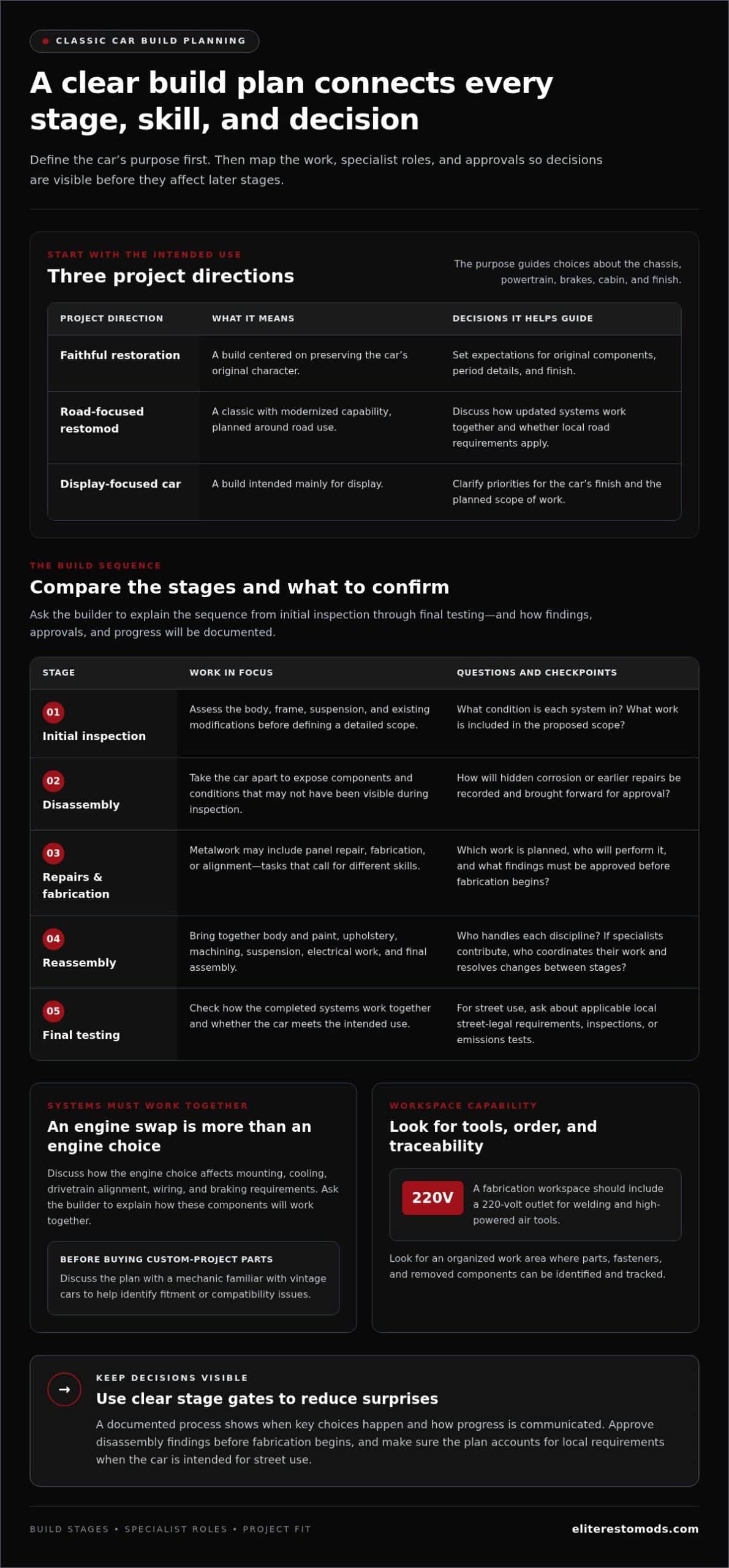
A well-planned build moves through defined stages, with decisions made before they affect later work. Start by establishing the project’s purpose: a faithful restoration, a road-focused restomod, or a car intended mainly for display. That choice guides decisions about the chassis, powertrain, brakes, cabin, and finish. Ask the builder to explain the sequence from initial inspection through disassembly, repairs, reassembly, and final testing. A documented build process helps you understand when key choices happen and how progress is communicated.
During the initial inspection, the team should assess the body, frame, suspension, and existing modifications before defining a detailed scope. Disassembly may reveal hidden corrosion or earlier repairs, so ask how new findings will be recorded and approved. Metalwork may involve panel repair, fabrication, or alignment, each requiring different skills from engine installation or modern electrical work. A useful plan identifies these tasks separately rather than treating the build as one undefined job.
Specialized skills matter where systems interact. An engine swap, for example, affects mounting, cooling, drivetrain alignment, wiring, and braking requirements. The builder should explain how these components will work together, not present the engine choice in isolation. Before buying parts for a custom project, discuss the plan with a mechanic familiar with vintage cars. This can help identify fitment or compatibility issues before parts choices shape the rest of the build.
Ask who handles each discipline: body and paint, upholstery, machining, suspension, electrical work, and final assembly. If specialists contribute, clarify how the builder coordinates their work and resolves changes between stages. Shop capability can also matter. A classic-car workspace designed for fabrication should include a 220-volt outlet for welding and high-powered air tools. Look for an organized work area where parts, fasteners, and removed components can be identified and tracked.
Connect the work plan to how you’ll use the finished car. For street use, determine whether it must meet local street-legal requirements or pass applicable inspections or emissions tests. Requirements vary by location. Ask the builder how they affect the proposed equipment and project sequence. Clear stage gates, such as approving disassembly findings before fabrication begins, keep decisions visible and help prevent surprises as the car gains modern capability.
3. Restomod craftsmanship
A convincing restomod respects the original silhouette and makes each modernized system feel intentional. In completed examples, inspect panel alignment, door gaps, paint transitions, and trim fit. Look closely at the cabin: seat seams, switch placement, and wiring should appear considered, not improvised. Ask how each proposed change supports your goals. A contemporary engine, for example, should suit the car’s intended use and integrate with surrounding systems. Craftsmanship shows in individual details and in how the whole car works together.
Assess the shop with your specific car in mind. Ask to see a current project at a stage that reveals workmanship, such as exposed metal, unfinished paint preparation, or an accessible chassis. Check whether tools and components have organized places and removed parts are identified and protected. A built-in workbench can support careful assembly, while a separate wash bay keeps detailing away from mechanical grime. These features alone don’t prove quality, but they help show whether the workspace supports precise, controlled work.
Ask how the team records quality checks at each handoff. For a painted body, clarify how panel fit is checked before final finishing. For modified electrical work, ask how connections are inspected and tested before trim conceals them. Request progress photos of hidden work, not just polished exterior shots. Then ask who reviews the car before completion. Specific answers show whether the builder treats fit, finish, and system integration as connected responsibilities.
In the United States, registration and street-use requirements vary by location. Modifications may affect whether a car must meet street-legal requirements or pass applicable inspections or emissions tests, so account for local rules when defining the build.
Look for a shop environment that suits the work being performed. Fabrication calls for appropriate power, including a 220-volt outlet for welding and high-powered air tools. A hydraulic lift can provide access to the underbody, while suitable ventilation matters during painting or other fume-producing work. Consider whether the shop has appropriate safety measures for the work being performed. Consider whether the shop’s equipment and layout match your project, rather than judging it by showroom polish.
Match craftsmanship to the car’s intended use. If you expect regular drives, ask how the builder evaluates completed systems under operating conditions. If you want a refined interior, inspect how upholstery, controls, and cabin materials meet at edges and transitions. Request a written punch list of remaining adjustments before handover. A thorough final review covers visual finish and function, preserving the character you value while making the car cohesive and usable.
4. Restoration estimates and upfront bidding
A useful estimate explains the work, not just the final figure. Compare proposals by scope, materials, labor, and insurance, then identify what each excludes. For example, “repair bodywork” leaves important questions open; a stronger description identifies the affected panels, repair approach, and finish expectations. Ask how discoveries after disassembly are documented, priced, and approved before work continues. That process makes an initial estimate easier to understand as the project develops.
Build your budget around the full project, including parts, labor, and insurance. Set a realistic limit and plan for unforeseen expenses, since a closer inspection can reveal hidden corrosion, prior repairs, or incompatible modifications. Ask the builder to separate known work from items that depend on inspection findings. Clarify which parts are included, who sources them, and how substitutions are handled. For a custom car project, discuss parts choices with a vintage-car mechanic before purchase.
A restoration contract should define the vehicle, agreed scope, materials, work stages, payment terms, change-approval process, and responsibilities for parts, insurance, and storage. It should also record the expected completion criteria, warranty terms, and how either party handles delays or disputes. Read the estimate and contract together so exclusions and allowances don’t conflict.
Look for estimate details that connect proposed work to the finished car. A paint allowance, for example, should explain the preparation and finish included; a mechanical line should identify the system being serviced. Ask whether labor is fixed or billed as work proceeds, and how additions are reported. Written approval before extra work begins keeps scope and budget decisions clear.
Common hiring risks include vague scopes, unclear payment expectations, undocumented changes, and payment requests that don’t match completed work. Compare each invoice with the contract, keep written records of approvals, and confirm who owns purchased parts. If asked to make an undocumented payment or accept a major scope change without a record, pause and clarify the terms.
Before signing, read every estimate line and ask the builder to explain unfamiliar terms in plain language. Confirm how progress updates, parts delays, and newly discovered repairs will be communicated. A realistic budget allows for surprises without treating every possible repair as approved work. Clear paperwork and documented decisions help keep workmanship, scope, and spending aligned from teardown through final assembly.
Allow for unexpected costs, but make sure the allowance supports a clear plan rather than open-ended spending. Agree on how additional work will be described, priced, and approved, and ask for revised totals when discoveries change the scope. Record the reason for each adjustment and the decision made before work proceeds. This helps you compare changing costs with your limit and decide whether to defer, revise, or decline optional work. Revisit the budget as new information arrives, while preserving funds for essential repairs. For a custom build, set a realistic budget, plan for unforeseen expenses, and confirm every change before it affects the agreed work.
5. Working with a local builder
Proximity can make a complex build easier to follow, but distance alone doesn’t determine whether a builder is a good fit. Consider how often you want to see the car, review progress, or discuss finishes in person. A nearby shop may let you inspect bodywork before paint; a distant shop may rely more on photos and scheduled calls. Choose an arrangement that suits your comfort with remote decisions and the project’s milestones.
Agree on a communication routine before work begins. Decide who provides updates, which decisions require your approval, and how changes are recorded. A useful update might show the current stage, summarize completed work, and identify the next decision, such as choosing upholstery material. Keep approvals in writing, even after an in-person conversation. A written record makes it easier to track settled details and outstanding decisions.
Use a shop visit to understand how the project is managed day to day. Ask to see a vehicle at a relevant stage, such as disassembly or final assembly, and compare the work with photos you reviewed earlier. Notice whether removed trim and hardware are labeled, project records are accessible, and the work area suits the task. For example, a clean finishing space should be separate from grinding or fabrication activity.
Local knowledge can matter when the finished car will be registered and driven in your area. Street-legal requirements, inspections, and emissions tests vary by location. Define where you’ll use the car and which modifications you’re considering, then identify local requirements that could affect the build. Those rules can shape choices involving the engine, exhaust, lighting, or other systems. Discuss the constraints before selecting parts or beginning fabrication.
Clarify logistics between your home, the shop, and any specialist involved. Establish who coordinates vehicle movement, where the car will be kept between work stages, and how access is arranged for inspections. If the build needs a specialist for machining or upholstery, determine how those handoffs affect communication and approvals. A local address won’t remove coordination needs, but a clear plan makes responsibilities easier to follow.
Finally, compare the practical working relationship alongside technical skill. Consider whether you can reach the person responsible for decisions, whether updates answer your questions, and whether the proposed process fits your schedule. For a tailored project, review the available build services as you consider scope and communication needs. Choose an arrangement that gives you a clear view of progress, protects important decisions, and keeps the car’s character central to the finished result.
Elite Restomods: Elite Certified Restomods
Elite Restomods offers Elite Certified Restomods for drivers seeking a completed classic with modern capability, and Custom Build Services for projects shaped around a personal vision. These options suit different starting points: choose a completed restomod if you want to assess a finished vehicle, or explore a custom build if you want to guide the transformation of a specific car. The right next step depends on your priorities, from preserving a model’s character to adapting it for how you plan to drive.
If you’re ready to move from research to a conversation, contact Elite Restomods to discuss your goals.
Turn Your Vision Into the Next Step
Turn your vision into a clear brief. Decide what should remain true to the car’s heritage, where modern performance matters most, and how you want to use the finished vehicle. Clear priorities make conversations more purposeful and help you assess whether a proposed direction fits your ambitions. Vetting a classic car builder means finding a partner whose craft and process respect both the machine and your intentions.
If your plans include selling a classic rather than building one, Elite Restomods also offers a Consignment Program. For a conversation about your automotive goals, Contact Elite Restomods today. Your next chapter with a classic can begin with a clear vision and a considered first step.
Frequently Asked Questions
What qualifications and experience should a classic car builder have?
Look for hands-on experience, technical skill, and a record of work on vehicles similar to yours. Formal credentials can help, but demonstrated ability matters most for specialized tasks such as metal fabrication, drivetrain integration, or period-correct upholstery. Ask who will perform each task and how the team handles unfamiliar problems. A builder who explains trade-offs clearly can help you make informed choices while preserving the car’s character.
What questions should I ask a classic car restoration shop before hiring?
Ask who will be your main contact, how you’ll approve design choices, and what happens if a specialist’s work changes the original plan. Clarify how the shop protects your car and organizes its keys, documents, and removed components. If you want to preserve original gauges while updating the electrical system, for example, ask how the team will retain those parts and record changes. These answers reveal how the shop manages details beyond the visible finish.
How do I compare classic car builders’ estimates, labor rates, and timelines?
Compare proposals against the same written scope, separating labor assumptions from parts, outside services, and tasks that depend on inspection. Ask how labor is billed and what could trigger a schedule update, such as delayed components or additional machine work. A projected handover date means little without those dependencies. For a fair comparison, check that each estimate describes the same finish standard, testing, and final adjustments.
What warranties do classic car builders offer on parts and workmanship?
Warranty coverage depends on the builder’s written terms. Ask to review them before work begins, then check what parts and workmanship coverage includes, how long it lasts, which exclusions apply, and how to report a concern.