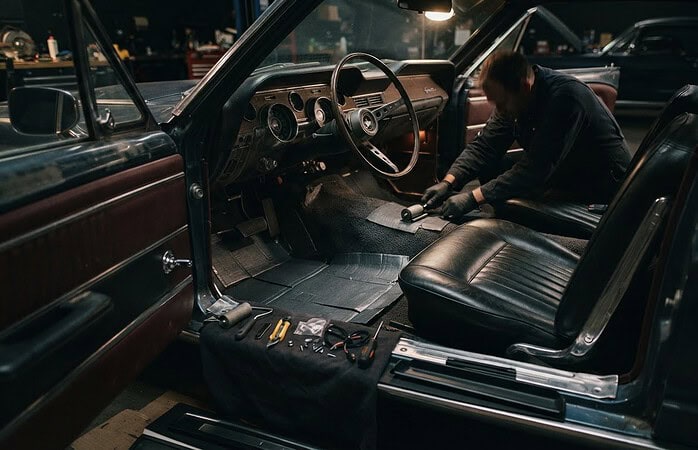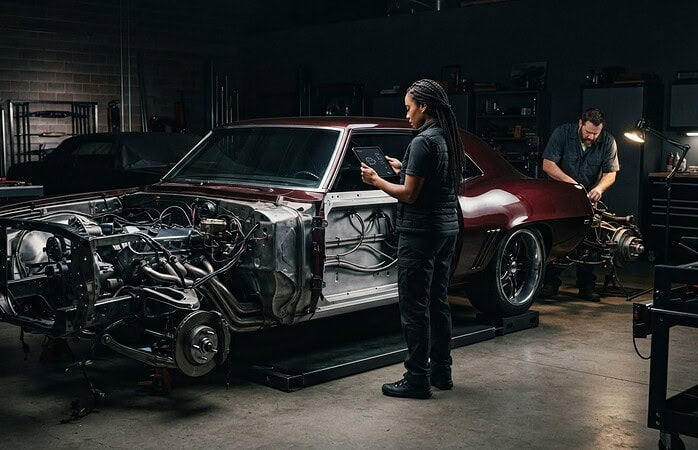

Custom car build milestones help you protect your vision by showing when to pause, review the work, and approve what happens next. They turn a complex transformation into a series of clear decisions, connecting a classic car’s character with the capabilities you want from it today.
A build can involve design choices, mechanical upgrades, bodywork, paint, and interior details. A change in one area may affect other parts of the project, so it helps to know what each checkpoint confirms and which decisions are yours to make. With a clear process, you can ask focused questions and consider trade-offs before work moves ahead.
This guide covers the major stages, from defining your vision and approving the plan to build work, final review, and handoff. You’ll learn what to check at each approval point, which choices are useful to settle early, and how to stay involved as the car takes shape. The aim is a considered, collaborative build that stays aligned with the machine you imagined.
Key Takeaways
- Use custom car build milestones as approval gates that connect your priorities to the agreed scope, not as calendar dates alone.
- Expect the sequence to vary by vehicle and project. Clarify what each checkpoint confirms before work moves forward.
- When considering a change, ask how it affects the approved scope and projected schedule, then agree on the impact before proceeding.
- Prepare for reviews by separating essential priorities from optional refinements. This makes trade-offs easier to discuss with your builder.
- Evaluate a build partner’s communication, scope documentation, and approval practices to understand how you’ll work together.
What Are Custom Car Build Milestones, and Why Do They Matter?
A custom car build brings a vision to life through connected decisions about a vehicle’s character, appearance, and capabilities. The term custom car describes a broad tradition of modifying vehicles to suit personal preferences. Milestones help owners understand the work and take part in decisions as the project develops.
A custom build differs from routine maintenance. Maintenance usually addresses specific service needs, while a commissioned build may involve coordinated choices across mechanical upgrades, bodywork, paint, and interior customization. Each choice can influence what follows. Milestones give the owner and builder regular opportunities to check that the work still reflects the agreed priorities, whether that means preserving classic character, adding modern capability, or balancing both.
A custom car build milestone is a meaningful checkpoint where the owner and builder review progress, confirm what has been agreed, and decide what should happen next. It makes a complex project more visible and gives both sides a shared point of reference.
How milestones make a complex build easier to follow
Rather than trying to assess the entire project at once, you can focus on the decisions relevant to the current stage. A checkpoint might involve reviewing the vehicle’s condition, confirming the planned scope, or choosing paint or interior finishes. The right checkpoints depend on the vehicle and agreed work.
Written approvals can record selected options, included work, and questions that remain open. This gives you and the builder a shared record and helps prevent different assumptions from taking hold. Milestones improve visibility, but they don’t guarantee a particular completion date or result. Timing and outcomes can depend on the scope, the vehicle, and decisions made along the way.
Who makes decisions at each checkpoint?
The owner sets priorities, reviews proposed choices, and approves work according to the arrangements made with the builder. It helps to identify what matters most early, such as the car’s original character, a particular driving experience, or a considered blend of old and new.
The builder brings technical knowledge to the discussion by explaining options, trade-offs, and how a decision may affect the approved scope. For example, an aesthetic preference may need to be considered alongside related bodywork or interior work. You don’t need to make every technical judgment, but you should understand the choices that require your approval.
Approval steps and responsibilities vary by builder and project. Before work begins, ask how decisions will be documented, who can authorize a change, and how questions will be handled between checkpoints. Clear expectations help keep the build aligned with your vision without mistaking a milestone plan for a guarantee.
The Main Custom Car Build Milestones, from Vision to Handoff
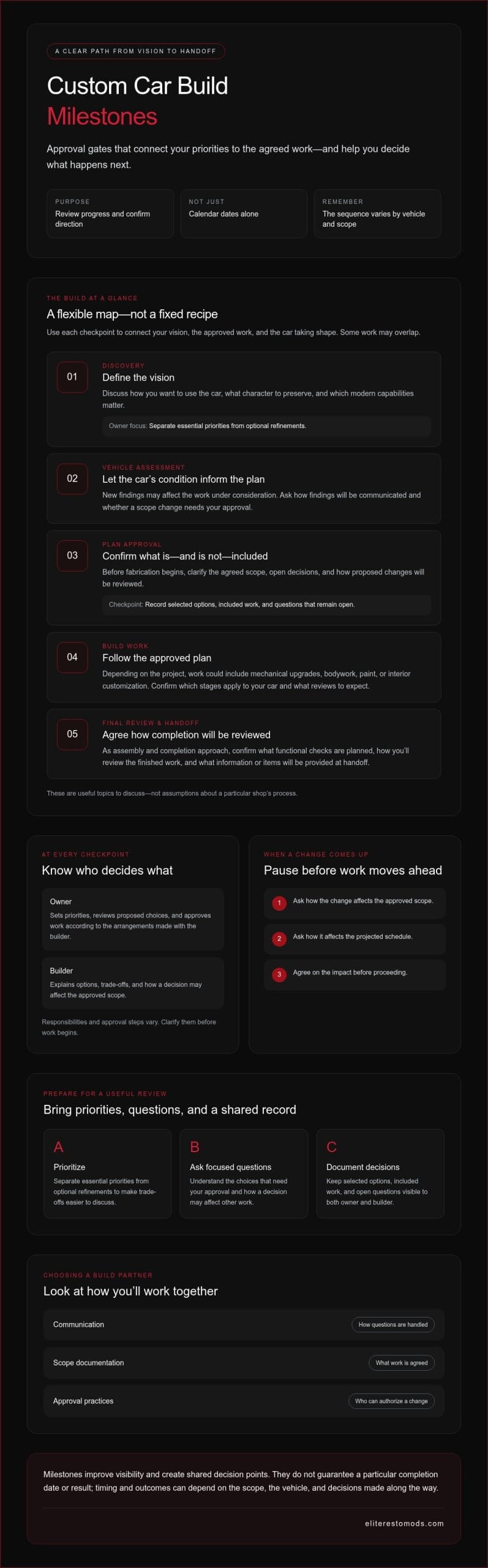
A useful build sequence gives you clear opportunities to discuss the project, confirm its direction, and review what happens next. The exact stages depend on the vehicle and agreed scope. A build focused on mechanical upgrades may differ from one that also includes bodywork, paint, or interior customization. Some work may overlap.
Think of custom car build milestones as a flexible map, not a fixed recipe. Each checkpoint should make it easier to connect your vision, the approved work, and the finished car.
From initial vision to an approved build plan
The process begins with discovery. Discuss how you want to use the car, which parts of its character you want to preserve, and which modern capabilities matter to you. Your design direction, priorities, and choices that need your input all help shape the project. Before fabrication begins, clarify what work is included, what remains undecided, and how proposed changes will be reviewed. You can explore the custom build process for company-specific information.
Next, the vehicle is assessed so its condition can inform the plan. New findings may affect the work under consideration. Ask how the builder will communicate those findings and whether you’ll be asked to approve any change to the agreed scope.
From build work to final review
Build work follows the approved plan. Depending on the project, this could include mechanical upgrades, bodywork, paint, or interior work. These are not automatic parts of every custom build, so ask which stages apply to your car and what reviews or decisions to expect as work progresses.
As assembly and completion approach, confirm what functional checks are planned, how you’ll review the finished work, and what information or items will be provided at handoff. These are useful topics to discuss, not assumptions to make about a particular shop’s process.
- Discovery: Establish intended use, design direction, and priorities.
- Scope approval: Clarify included work, open decisions, and how changes are handled.
- Vehicle assessment: Discuss how the car’s condition may affect the plan.
- Build work: Follow the stages that apply to the approved scope.
- Validation and handoff: Agree on final review, functional checks, and handoff details with the builder.
This sequence is a guide, not a promise of identical stages or timing. Ask your builder to explain how each checkpoint applies to your vehicle and which decisions need your approval. That conversation turns the build plan into a practical reference for keeping the finished car aligned with your vision.
How to Handle Build Approvals, Timeline Changes, and Scope
Milestones make progress easier to see, but they can’t guarantee a fixed completion date. A custom project may need to adapt as the vehicle is assessed, technical choices are clarified, or you revisit a preference. At each checkpoint, ask more than “Are we on schedule?” Find out what’s confirmed, what has changed, and what needs your decision.
Before approving a milestone, ask what work is complete, what remains, and which choices need your input next. Confirm how the builder will share the update, whether through photos, a review meeting, or another form of progress report. If a technical recommendation could change the agreed vision or intended use, ask the builder to explain the options and trade-offs clearly.
Compare a proposed change with the approved scope
Imagine an owner who approves a particular interior direction, then asks to substitute a different material after work is underway. The example below shows how to structure the discussion. The actual implications depend on the vehicle and project.
| Decision | Impact to clarify | Approval |
|---|---|---|
| Keep the originally approved interior choice | Work continues according to the current scope and planned sequence. | Confirm the original approval still stands. |
| Request a different interior material | Ask whether the substitution affects included work, parts selection, related tasks, or the projected schedule. | Review the revised scope and approve the change before the builder proceeds. |
Keep decisions and changes clear
A change may be a worthwhile refinement, but an informal conversation can leave room for different interpretations. Written change approvals help the owner and builder share an understanding of what work is included and what happens next. The record could be an email, a revised document, or another format the builder uses.
Ask how a proposed change affects the approved work, parts selection, sequencing, and any projected schedule. Then request an updated written scope describing the addition, substitution, or removal before you approve it. If an impact is uncertain, record it as an open question instead of treating an assumption as settled. Keep decisions, unresolved items, and agreed changes together in the format you and the builder prefer.
These habits make custom car build milestones more useful: each approval becomes a shared reference point, not just a sign-off. For an overview of Elite Restomods’ custom build services, review the services information alongside your project-specific discussions.
How to Prepare for Each Custom Car Build Milestone
A focused progress review helps you stay involved without having to solve every detail at once. Before a meeting or update, revisit your priorities, gather the latest decisions, and note what you need clarified. This turns custom car build milestones into practical conversations about the car taking shape, not a test of your technical knowledge.
Questions to bring to a milestone review
Start by asking what has changed since the previous checkpoint. Find out what work is complete, what remains, and which decisions are coming next. Then connect progress back to your original direction: does the work support the car’s intended use and the balance of classic character and modern capability you want?
Use this checklist to prepare:
- Review the latest approved scope and note any decisions made since the last update.
- Ask which details remain undecided and who needs to approve them.
- Clarify technical choices that could affect your intended driving experience or design priorities.
- Bring open questions and reference materials relevant to the current stage.
Keep a simple record in the format you and the builder prefer. Separate confirmed decisions from unresolved questions so a discussion doesn’t accidentally become an approval. If the update includes photos or a meeting, use them to ask about visible progress and the next decision point.
Keep the build aligned with your priorities
When trade-offs arise, return to how you plan to enjoy the car. Performance, comfort, and visual choices may pull in different directions, so identify which qualities are essential and which are optional refinements. For example, decide whether a particular finish is central to the design or whether you’re open to alternatives if the builder identifies a practical concern.
Reference images can help you describe a paint finish, interior feel, or overall visual direction. Treat them as a communication tool, not a guarantee that a detail will suit the vehicle or fit the approved scope. Ask the builder to discuss feasibility and related choices before you sign off.
For each review, organize your notes under three headings: approved, still open, and next decision. This creates a useful thread from one checkpoint to the next, especially if the project’s scope evolves. If you’re assessing whether a builder’s services fit your priorities, explore custom build services and use your questions to guide a project-specific conversation.
Choosing a Build Partner and Moving from Milestones to the Finished Car
A suitable build partner should make a complex project easier to discuss, not ask you to approve work you don’t understand. Clear custom car build milestones can help you follow progress, but transparency alone doesn’t prove craftsmanship or guarantee a particular result. Consider it one part of your evaluation.
What to look for in a custom build partner
Ask how the builder would organize the stages for your vehicle and which decisions they expect you to make. The answers should help you understand how the proposed work connects to your intended use and design direction. Review completed work relevant to your project, and confirm which services the builder can provide.
- Communication: Ask how progress updates are shared and how you can raise questions.
- Scope: Find out how agreed work is documented and how proposed changes are presented.
- Approvals: Clarify which decisions need your approval and how those approvals are recorded.
- Relevant work: Review examples that reflect the type of vehicle and work you’re considering.
These are practical questions, not a quality score. Compare the answers with your priorities, and make sure you understand the proposed scope before moving forward. For another perspective on planning and process, review the custom build process.
Turn your vision into a clear first conversation
Bring details that give a builder a useful starting point: information about the vehicle, how you want to use it, design references, and the outcomes that matter most. Separate essential priorities from preferences you’re willing to reconsider. A clear hierarchy helps keep discussions focused if a technical recommendation calls for a trade-off.
Then ask which milestones make sense for that vehicle and scope, what you’ll be asked to approve, and how progress or change requests will be communicated. Don’t assume every project follows the same sequence. Mechanical upgrades, paint, bodywork, and interior customization may be relevant, but the agreed work should define what’s included.
Elite Restomods offers custom build services that cover mechanical upgrades, paint, bodywork, and interior customization. The right fit depends on your project, so use the first conversation to clarify priorities and ask how the proposed scope would be handled.
Explore the custom build services and prepare to discuss your vehicle, vision, and priorities.
Bring Your Build Vision into Focus
A memorable custom car project begins with a clear vision and takes shape through thoughtful decisions. Custom car build milestones help you track what’s been agreed, understand which choices need your input, and keep conversations about changes grounded in the project’s scope. They offer useful checkpoints, not promises of a fixed schedule or result.
As you move forward, keep your essential priorities visible, ask questions when trade-offs arise, and record decisions and approved changes. Steady collaboration helps connect the classic character you value with the capabilities you want from the finished car.
Elite Restomods’ custom build services cover mechanical upgrades, paint, bodywork, and interior customization. Start a conversation about your custom build to share your priorities and discuss how a project might be approached.
Frequently Asked Questions
What are the main milestones in a custom car build?
Common milestones include discovery, scope approval, vehicle assessment, build work, validation, and handoff. At each checkpoint, you and the builder can review progress, clarify decisions, and confirm what happens next. The stages depend on the vehicle and agreed work. Mechanical upgrades, paint, bodywork, or interior customization may be included as needed, rather than forming a required package for every project.
How long does a custom car build take?
There’s no single timeline for every custom car build. Duration can depend on the vehicle’s condition, agreed scope, parts selection, work sequencing, and decisions made during the project. Ask the builder for a projected schedule and the assumptions behind it. Milestones can make progress easier to follow, but they don’t guarantee a fixed completion date. New findings or approved changes may affect the plan.
What happens at a custom car build design approval?
Design approval is an opportunity to check that the proposed direction reflects your priorities before related work proceeds. Discuss intended use, visual references, finishes, and choices that need your sign-off. Ask which details are included in the agreed scope and which remain open. If a design choice has technical implications or may affect other work, request an explanation and record the approved decision in the builder’s preferred format.
Can I change the scope after a custom car build has started?
You can ask about changing the scope, but the process depends on the project agreement and the builder’s approach. Before approving a change, ask how it could affect agreed work, parts selection, sequencing, and the projected schedule. Request an updated written scope describing the proposed addition, substitution, or removal. Confirm your approval before work proceeds, and record remaining questions rather than relying on assumptions.
How often should I expect updates during a custom car build?
Update frequency varies by builder and project, so agree on expectations before work begins. Ask whether progress will be shared at specific milestones, on a regular schedule, or through another agreed approach. Clarify what an update may include, such as completed work, upcoming decisions, or questions needing your input. Knowing how and when you’ll receive information helps you stay involved without assuming every shop follows the same routine.
What should I ask a builder before approving the next milestone?
Ask what work is complete, what remains, and which decisions need your approval next. Find out how the completed work supports the car’s intended use and design direction, and request a clear explanation of technical trade-offs. Confirm what the milestone approval covers, whether any questions remain open, and how proposed changes will be recorded. This helps you understand what you’re confirming before the project moves forward.
Does every custom car build follow the same sequence?
No. The sequence can vary with the vehicle, its condition, and the agreed scope. Some stages may overlap, while a project focused on mechanical upgrades may differ from one that also includes paint, bodywork, or interior customization. Ask the builder to map the relevant checkpoints for your car and explain where your decisions are needed. Treat the sequence as a project-specific guide, not a universal formula or promise of timing.