
A dusty corner in a disorganized garage isn’t a sign of a busy craftsman. It’s often the first symptom of a project destined for restoration jail. You’ve likely spent years envisioning the moment your vintage asset returns with modern reliability and a flawless finish. However, the anxiety of hidden fees and the threat of subpar craftsmanship hidden beneath fresh paint are real hurdles for any collector. Recognizing the red flags when hiring a restoration shop is the only way to protect your investment from becoming a cautionary tale.
We understand that you aren’t just looking for a mechanic; you’re seeking a world-class curator who treats every bolt with perfectionism. You deserve a build process that mirrors the sophistication of the vehicle itself. This article provides a definitive framework to vet custom builders so you can move forward with confidence. We’ll explore the difference between hobbyist shops and master builders, outline the necessity of transparent documentation, and show you how to ensure your project stays on schedule. By the end, you’ll have the tools to secure a high-performance reality instead of a long-term headache.
Key Takeaways
- Identify why massive upfront deposits and the absence of milestone-based billing are critical red flags when hiring a restoration shop.
- Recognize the operational warnings of a disorganized facility, such as a refusal to provide digital build documentation or restricted access to the shop floor.
- Implement a rigorous vetting framework that includes verifying comprehensive garage keepers insurance and validating a builder’s portfolio through direct client references.
- Distinguish between the professional soul of a master builder and the pitfalls of hobbyist garages to keep your project out of restoration jail.
- Evaluate the benefits of turnkey Elite Certified Restomods as a sophisticated way to acquire an investment-grade vehicle without the uncertainty of a custom build.
The High Stakes of Classic Car Restoration and Shop Selection
The roar of a perfectly tuned V8. The scent of hand-stitched leather. Commissioning a custom build is a visceral experience that represents a massive financial and emotional commitment. For most collectors, a vintage vehicle is a piece of functional art, not just a machine. However, the path from a rusted frame to an elite restomod is paved with potential disasters. One of the biggest red flags when hiring a restoration shop is a lack of operational transparency, which often leads to the dreaded phenomenon known as restoration jail.
This happens when a car sits untouched for months or years while the shop owner juggles projects. A beautiful showroom with polished floors can easily mask severe financial deficiencies behind the scenes. Without a clear restoration process, your dream car becomes a liability. Understanding the structural warning signs early saves thousands of dollars and years of frustration.
Why Classic Car Projects Stall
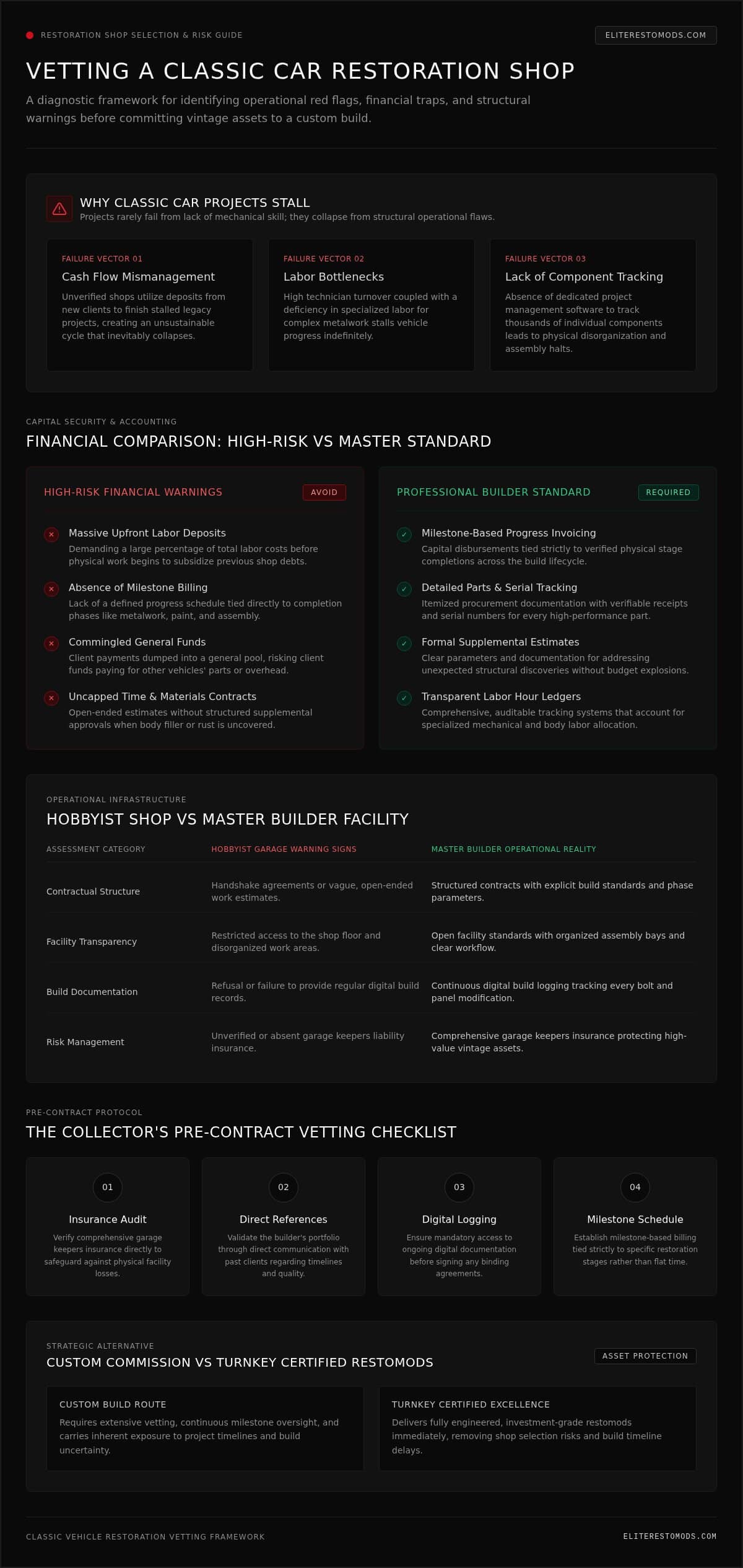
Projects rarely stall because a mechanic forgets how to use a wrench. They fail because of poor cash flow management. In many unverified shops, new deposits from unsuspecting clients are used to fund the completion of old projects. This cycle of utilizing fresh capital to cover past debts eventually collapses. Additionally, high technician turnover or a lack of specialized labor for complex metalwork creates bottlenecks that a hobbyist garage cannot overcome. Without robust project management software to track thousands of individual components, the build naturally grinds to a halt.
The Difference Between Hobby Shops and Professional Facilities
The divide between a master builder and a hobbyist is defined by business infrastructure. Hobbyist operations often rely on vague estimates and handshake agreements that fall apart when the scope of work inevitably expands. Professional builders provide clarity through structured contracts, explicit quality standards, and milestone-based billing. A deep understanding of the technical philosophies behind automotive restoration is essential for anyone entering this space. Elite craftsmanship requires modern business infrastructure to succeed.
Detecting red flags when hiring a restoration shop requires looking past the paint and into the ledger. If a shop cannot explain how they track labor hours or manage parts procurement, they aren’t prepared to handle an investment-grade build. Reliability isn’t just about the engine; it’s about the company standing behind the machine.
Financial Red Flags When Hiring a Restoration Shop
Money is the lifeblood of any automotive project. When the flow of capital becomes opaque, the build inevitably suffers. Financial transparency is the bedrock of an elite restoration, yet many owners overlook glaring red flags when hiring a restoration shop in the excitement of starting a new project. A demand for a massive upfront deposit before physical work begins is the first warning sign. While paying for parts in advance is standard, a builder who requires a large percentage of total labor costs just to secure a spot is often using new money to solve old debts.
Professionalism requires a structured approach to billing. You should never settle for a complete lack of milestone-based payments. If a shop cannot provide a schedule of progress payments tied to specific phases like metalwork, paint, or final assembly, they lack the business infrastructure to manage your investment. It’s essential to understand your consumer rights in auto repair to ensure you aren’t being exploited by vague, open-ended estimates that lack clear parameters for unexpected discoveries like structural rot.
The Danger of Opaque Billing Practices
Commingled funds lead to project stagnation and, eventually, shop insolvency. When your capital is tossed into a general operating pool, it may end up paying for another client’s engine rather than your custom suspension. A reputable builder tracks parts procurement with meticulous detail, providing receipts and serial numbers for every high-performance component. This level of accounting ensures your asset remains fully sorted and financially protected throughout the transformation.
Vague Estimates vs Exploding Budgets
The risk of a time and materials contract without defined phases is a budget that explodes beyond the vehicle’s eventual value. While every vintage chassis hides secrets, a professional shop addresses hidden body filler or rust through clear supplemental estimates. Choosing a custom restomod builder who operates with defined caps and transparent accounting is the only way to safeguard your dream. If you are ready to experience a build process defined by clarity and elite craftsmanship, our team at eliterestomods.com is here to help you bypass these common industry pitfalls.
Operational and Communication Red Flags in the Build Process
A master builder treats a vintage chassis like a bespoke piece of functional art. Sadly, behind closed garage doors, raw passion can quickly devolve into operational chaos. When evaluating a facility, you must look beyond the polished sheet metal of completed builds. Some of the most critical red flags when hiring a restoration shop manifest in how the management team communicates and handles their active floor space. A shop that refuses to let owners visit the facility during normal working hours is a major concern. Similarly, receiving evasive answers regarding the specific technicians assigned to your intricate metalwork or wiring indicates a severe lack of professional accountability.
The Ghosting Phenomenon
Unreturned phone calls and delayed emails are classic signs of operational distress. When a shop goes dark, it’s usually a sign that your project has stalled in favor of newer, incoming cash flow. Professional builders avoid this by establishing a formal communication cadence with regular digital updates as part of a transparent restoration process. Conversely, a complete absence of digital photo or video documentation during critical build phases is a massive warning sign. Without these visual milestones, severe structural shortcuts can easily be concealed beneath fresh filler and pristine paint. If a builder leaves you completely in the dark, you might eventually be forced to learn how to file a complaint about your car to recover your asset.
Facility Organization and Asset Care
Walk the assembly floor before signing any contract. What a clean, well-managed custom automotive shop reveals about its internal culture is profound. Messy work bays, scattered tools, and components from multiple vehicles commingled carelessly invite disaster. A comprehensive, frame-off build requires tracking thousands of individual pieces of hardware and trim. Without strict organization, rare factory components and bespoke high-performance hardware inevitably vanish into the clutter. Meticulous parts cataloging and secure, labeled storage prevent devastating build delays.
The Ultimate Vetting Checklist Before Signing a Contract
Success in a custom build isn’t accidental. It’s the result of rigorous due diligence performed before a single wrench touches the chassis. While identifying red flags when hiring a restoration shop is the first step, you must follow a systematic vetting process to ensure your vintage asset is in capable hands. A handshake might’ve worked decades ago, but modern elite builds require professional legal and operational safeguards. You’re commissioning a piece of functional art, and the business side of the project should be as precise as the engine tolerances.
- Verify the shop carries comprehensive garage keepers insurance. This specific coverage protects your vehicle from fire, theft, or accidental damage while under the builder’s care.
- Request a list of completed projects from the last 24 months. Contact these past clients directly to verify if the shop met its stated goals.
- Review the contract for explicit terms regarding parts ownership. You should own every component as soon as it’s billed and paid for.
- Inspect the facility in person to evaluate the current workflow. Look for a balance of active progress and clean, organized assembly bays.
- Confirm the shop possesses specialized equipment. Professional results require dedicated media blasting booths and precision alignment systems.
Legal and Insurance Verifications
Standard commercial general liability is insufficient for high-value classic vehicles. It often fails to cover the actual cash value of a rare collector car during the restoration process. You must confirm that the shop’s policy specifically names garage keepers legal liability. Additionally, ensure the contract states that the title and all newly purchased components remain in your name throughout the build. This prevents your parts from being seized if the shop faces financial trouble. For a deeper dive into these protections, consult our guide on choosing a custom restomod builder to understand the modern standards of the 2026 market.
Checking References and Past Work
A freshly painted car can hide a multitude of mechanical sins. To differentiate between a shiny exterior and a truly sorted build, you must speak with former clients about their long-term experience. Ask if the vehicle remained reliable six months after delivery. Inquire about budget consistency and how the shop handled the discovery of hidden issues. A professional builder will proudly share a portfolio of long-term projects that have stood the test of time. If you want to bypass the uncertainty of vetting and move straight to an elite driving experience, explore our custom build services at eliterestomods.com to see how we maintain these elite standards for every client.
The Modern Alternative: Choosing Certified Turnkey Excellence
For many collectors, the visceral thrill of a vintage silhouette is often dampened by the grueling reality of a multi-year commission. While identifying red flags when hiring a restoration shop is essential for those committed to a custom build, a modern alternative exists for the discerning enthusiast. Bypassing the traditional restoration path allows you to secure an investment-grade asset without the emotional toll of project stagnation. Choosing a completed, premium vehicle means the rigorous quality assurance process has already been finalized by master builders. By recognizing the red flags when hiring a restoration shop, you can clearly see the value in a professional alternative that offers immediate enjoyment.
The Turnkey Advantage for Collectors
The most significant benefit of a turnkey purchase is the total elimination of financial and structural anxiety. Unpredictable build budgets and the discovery of hidden rot are risks of the past. When you browse our classic car restomods for sale, you are viewing vehicles that have already undergone meticulous mechanical and aesthetic scrutiny. These vehicles provide immediate reliability for daily driving or long-distance touring; they offer a level of confidence that a project in pieces simply cannot match. You trade the uncertainty of a multi-year timeline for the immediate visceral excitement of a world-class build.
Partnering with an Elite Curator
Managing a vintage asset requires more than just a garage. It demands a partnership with a world-class curator. Professional service centers and custom build services simplify the classic car ownership experience by handling the complexities of maintenance and logistics. Through a professional consignment program, you can inspect finished craftsmanship immediately, ensuring every stitch and weld meets your elite standards. Beyond the vehicle itself, leveraging specialized classic car financing and enclosed vehicle transport ensures a seamless, white-glove transaction from the showroom to your private collection.
The journey to owning a legend shouldn’t be defined by frustration. While custom builds offer a transformative experience, the turnkey path provides a reliable bridge to a high-performance reality. If you are ready to bypass the risks of restoration jail and step directly into the driver’s seat, we invite you to explore our current inventory. Experience the marriage of brute force and refined comfort without the wait.
Secure Your Automotive Legacy
Guarding your vintage asset against financial opacity and operational chaos prevents years of devastating heartbreak. Carefully identifying the red flags when hiring a restoration shop empowers you to demand the professional transparency your vehicle deserves. True automotive art requires a flawless alignment of elite craftsmanship and modern business infrastructure. You don’t have to compromise on mechanical reliability, build timelines, or operational communication to realize your dream.
We work to eliminate the traditional risks of the build process completely. Every vehicle in our showroom undergoes a rigorous quality assurance process focused on modern reliability and breathtaking performance. We masterfully complement this elite craftsmanship with specialized classic car financing and national enclosed vehicle transport for a truly seamless experience. Explore our curated selection of fully sorted, investment-grade classic cars and claim the keys to your high-performance reality today.
Frequently Asked Questions
What is restoration jail and how do classic cars get stuck there?
Restoration jail refers to a situation where a classic vehicle sits completely untouched at a facility for months or years while no progress is made. Cars get stuck in this cycle primarily due to poor shop cash flow management or high technician turnover. Unverified hobbyist operations often use new client deposits to finish old projects rather than buying parts for your vehicle. This operational collapse leaves your vintage asset stranded in a disassembled state.
How much money should a reputable restoration shop ask for upfront?
A reputable builder should only ask for a reasonable initial deposit to secure a production slot and cover the cost of the first phase of parts. Requiring massive upfront payments for labor before any teardown begins is one of the major financial red flags when hiring a restoration shop. Instead, professional master builders utilize a structured, milestone-based billing system where progress payments are tied directly to completed phases like metalwork or paint.
Can I visit a custom automotive shop unannounced to check on my vehicle?
Reputable builders welcome client visits, though most prefer scheduled appointments to ensure the project manager is available to walk the floor with you. A complete refusal to let owners visit the facility during normal working hours is a significant warning sign. While dropping by unannounced can disrupt active welding or painting, an elite facility maintains a clean, organized shop floor that is always ready for client inspection.
What type of insurance should a classic car restoration shop carry?
A professional custom builder must carry comprehensive garage keepers legal liability insurance to protect your vehicle from fire, theft, or vandalism. Standard commercial general liability insurance is completely insufficient for high-value vintage assets. Before signing a contract, request proof of coverage to verify that the policy covers the actual cash value of your vehicle while it remains under their physical care.
What happens if a restoration shop goes out of business with my car inside?
If a facility faces financial insolvency, your vehicle could become entangled in complex bankruptcy proceedings or seized by creditors. To prevent this nightmare, your contract must explicitly state that you maintain legal title to the vehicle and all newly purchased components throughout the build. Verifying these operational protections early helps you avoid the common red flags when hiring a restoration shop.
How do I protect my ownership of parts bought for my custom build?
You protect your components by requiring itemized invoices that list the specific serial numbers and receipts for every high-performance part purchased. The build contract should clearly state that ownership of these materials transfers to you immediately upon payment. Professional master builders provide transparent accounting and store your labeled components in secure, dedicated areas to prevent parts from being commingled or lost.
Is it safer to buy a completed restomod or commission a fresh build?
Purchasing a completed premium vehicle is significantly safer because it eliminates the financial anxiety, hidden structural surprises, and multi-year delays of a custom commission. Choosing an investment-grade asset that has already undergone a rigorous quality assurance process allows you to enjoy elite craftsmanship immediately. This turnkey approach provides modern engineering reliability and performance without the operational risks of traditional automotive shops.