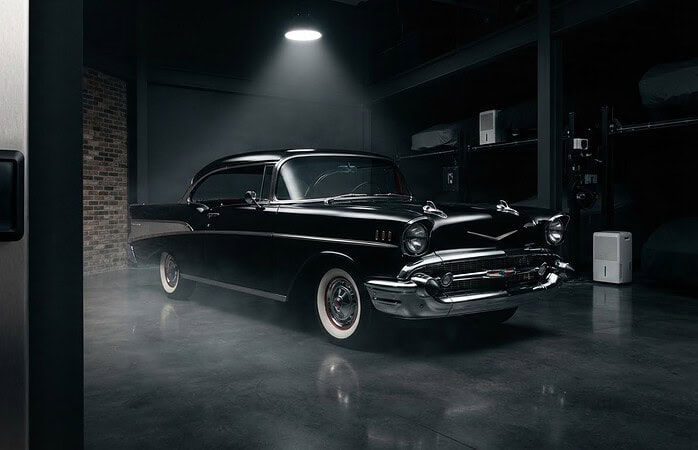

What if the biggest risk to your classic car isn’t the drive to storage, but what happens while it sits there? A locked door matters, but it’s only part of the picture. If you’re weighing what to look for in a classic car storage facility, consider how the environment, security, and care services will protect your car between visits.
It’s natural to want confidence that a prized car is safe, and that “storage” means more than a place to park. The right fit depends on the vehicle’s condition and how long it’ll be stored. Climate control, basic maintenance checks, and battery tending may support its care, but facilities vary, so confirm exactly what’s included and how each service is performed.
This guide explains how to assess environmental conditions and security, compare services and access, and review contract terms before signing. You’ll find practical questions to ask, details to inspect, and responsibilities to get in writing. A little due diligence now can make the time between drives feel far less uncertain.
Key Takeaways
- Assess more than the parking space: consider the environment, security, vehicle handling, and oversight.
- Use the checklist for what to look for in a classic car storage facility to compare access control, monitoring, cleanliness, and environmental management.
- Evaluate climate control separately from battery tending, vehicle checks, access, and communication. Ask what each service includes.
- Tour and compare facilities, record the answers, and review the written terms before committing.
- Choose storage that fits your car and ownership plans, then confirm included services and responsibilities in writing.
Why a Classic Car Storage Facility Needs to Protect More Than the Parking Spot
A classic car is more than a vehicle tucked away between drives. It’s a piece of engineering and history, one you may want to enjoy on the open road and protect for the years ahead. Choosing where it stays means considering more than whether it fits behind a locked door. The building, vehicle handling, oversight, and clear service expectations all shape the storage experience.
A residential garage offers a useful point of comparison: an enclosed space can shelter a vehicle, but a managed storage arrangement may also define who can access or move it and what checks, if any, are included. A classic-car storage facility is defined not just by where a car is parked, but by the protections, oversight, and services it provides.
For a visual sense of how a dedicated facility may be arranged, watch this MotorWeek feature:
What makes classic car storage different from ordinary parking?
Ordinary parking generally answers one question: where can the vehicle stand? A managed storage arrangement should answer more. Ask how the facility keeps the storage areas clean, how it manages moisture, and who may enter or move vehicles. Dust, damp conditions, and unplanned handling can affect a car’s finish and components over time, so look for clear procedures rather than relying on a general promise of care.
Needs vary. A regularly driven car, a recently restored vehicle, and one being stored for an extended period may call for different arrangements. Explain your car’s condition and intended storage period, then ask how the facility’s procedures suit those needs. Don’t assume every classic requires identical care.
Match the facility to your car and storage plans
Start with your own requirements. Consider the vehicle’s current condition, whether you intend to drive it during storage, and how long you expect it to remain there. Then consider access: how often might you want to visit or retrieve the car, and what arrangements does the facility offer?
Before contacting facilities, make a short list of must-haves and preferences. Include the environmental conditions you’re seeking, security measures you want clarified, access expectations, and any vehicle checks or battery tending you’d like to discuss. This makes it easier to compare each facility against your actual plans, not just its presentation.
How to Assess a Classic Car Storage Facility’s Security and Environment
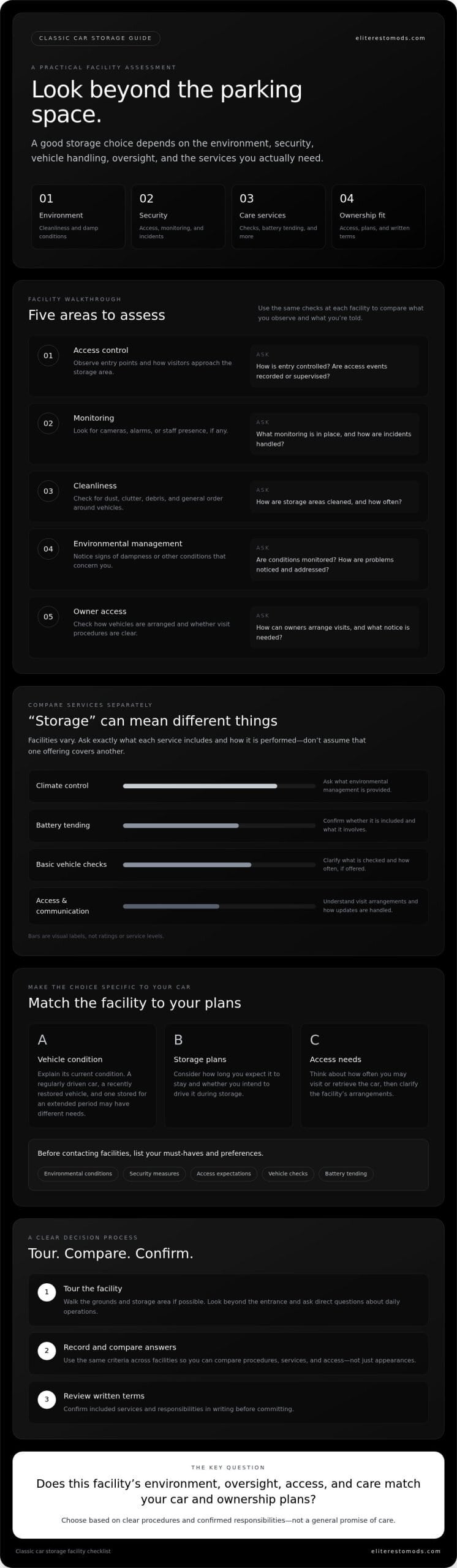
A polished entrance can make a strong first impression, but it doesn’t confirm how a facility operates day to day. Walk the grounds, look into the storage area if possible, and ask direct questions about access, monitoring, and environmental management. Use the same criteria at each facility so you can compare the answers, not just the appearances.
| Area | What to observe | What to ask |
|---|---|---|
| Access control | Entry points and how visitors approach the storage area | How is entry controlled, and are access events recorded or supervised? |
| Monitoring | Visible cameras, alarms, or staff presence, if any | What monitoring is in place, and how are incidents handled? |
| Cleanliness | Dust, clutter, debris, and general order around vehicles | How are storage areas cleaned, and how often? |
| Environmental management | Signs of dampness or conditions that concern you | Are conditions monitored, and how are problems noticed and addressed? |
| Owner access | How vehicles are arranged and whether the visit process is clear | How can owners arrange visits, and what notice is needed? |
Which security questions should you ask?
Ask who may enter the facility and whether access is recorded or supervised. If cameras, alarms, or staff are mentioned, clarify what each measure covers instead of assuming it provides complete protection. Find out how staff identify and authorize anyone handling a vehicle, who may move it, and what steps follow an incident. Confirm how after-hours access and owner visits are managed. Don’t assume either is available.
Visible security measures show what you can see. Confirmed procedures explain who is responsible and what happens next.
What should you inspect inside the storage space?
Look for orderly surroundings and ask how the facility manages moisture and other environmental conditions. Find out whether conditions are monitored, who checks them, and how an issue is reported and addressed. Progressive’s Classic Car Storage 101 offers further preparation guidance, including topics such as climate control and moisture prevention.
Confirm that the specific space suits your vehicle and planned storage period. Ask whether the car can remain in its assigned position without unnecessary movement, and clarify the process if staff need to reposition it. Record each facility’s answers alongside your observations to make comparisons easier. Elite Restomods lists secure, climate-controlled storage, basic maintenance checks, and battery tending among its confirmed features. Review its vehicle storage services and confirm current availability and exact scope directly.
Is Climate Control Enough? Compare Classic Car Storage Services
Climate control matters, but the label alone doesn’t tell you everything about how a facility will care for your car. It doesn’t automatically confirm which environmental conditions are managed, whether anyone checks the vehicle, how the battery is tended, or how you’ll hear about concerns. Treat each as a separate part of the service and ask what the facility actually does.
What does climate-controlled storage tell you, and what doesn’t it?
Ask how the indoor environment is managed and whether conditions are monitored. Find out whether the facility keeps records, who reviews them, and what happens if conditions move outside its operating range. A clear explanation is more useful than a label alone. Your car’s materials, condition, and storage duration can affect what you need, so avoid assuming one set of conditions suits every vehicle.
Preservation involves considered care, not just a controlled room. The Revs Institute focuses on historically significant automobiles and their preservation, a useful reminder that long-term stewardship involves more than a parking space. For a closer look at the principles behind climate-controlled car storage science, explore the related storage information and bring questions about your vehicle’s needs to the facility.
Which vehicle-care services are included?
Separate environmental management from services performed on the car. “Basic checks” can mean different things, so ask which items are checked, how often, and how findings are shared. Battery tending is a distinct service: confirm how it’s performed, who is responsible, and whether the facility needs your approval before taking any action.
Don’t read more into a storage package than the facility has confirmed. Basic checks and battery tending don’t automatically include repairs, detailing, driving, or other work. Ask for a written list of included tasks, frequency, exclusions, and approval requirements. This can prevent different expectations later.
- Environmental management: What conditions are managed, monitored, or recorded?
- Battery tending: What does the process involve, and who performs it?
- Basic checks: What gets checked, how often, and how are findings reported?
- Access and communication: How do you arrange a visit, and how will the facility contact you about an issue?
These distinctions are central to what to look for in a classic car storage facility. Elite Restomods offers climate-controlled storage with basic maintenance checks and battery tending. Confirm current availability and the exact scope of those services before deciding. Whatever facility you consider, get its commitments in writing so “climate-controlled” and “vehicle checks” have clear, shared meanings.
How to Inspect and Compare a Classic Car Storage Facility Before Committing
A facility tour can reveal how the space is run, while careful questions help uncover what a brochure may leave unclear. Use the same process at each facility and keep a written record of the answers. That makes it easier to compare what matters to your car, rather than relying on a polished first impression.
- Define your needs. Note the vehicle’s condition, how long you expect to store it, how often you may need access, and which services matter to you. Separate must-haves from preferences.
- Tour the facility. Check the cleanliness and order of the grounds and storage space. Review the entry process, proposed parking area, and how vehicles are moved. Ask who handles cars and how you’ll be notified if staff notice a concern.
- Ask consistent questions. Clarify who may access or move your vehicle, how visits are arranged, and whether access has limits. Ask what environmental management and vehicle checks include, and how the facility communicates updates or concerns.
- Review the written terms. Look for service inclusions and exclusions, access arrangements, each party’s responsibilities, and cancellation conditions. Check how damage concerns are reported, how maintenance is approved, and who contacts you if an issue arises.
- Compare and decide. Record each facility’s answers in the same format, then compare them against your priorities. Follow up on vague or verbal assurances before signing.
What to check during a facility visit
Look beyond the space assigned to your car. Observe how entry works, whether the storage area appears orderly, and whether staff can clearly explain vehicle movement procedures. Ask who is authorized to handle vehicles and how they’ll contact you about a concern. Confirm the owner-visit process, including any limits or arrangements you’ll need to plan around.
Which details belong in the storage agreement?
Make sure the written agreement reflects the conversations you’ve had. It should clarify what’s included, what isn’t, access terms, responsibilities, cancellation conditions, and the process for maintenance approvals and damage concerns. Don’t rely on assumptions about insurance: ask the facility what it expects, then confirm directly with your insurer what your policy covers while the car is in storage.
A consistent checklist turns “what to look for in a classic car storage facility” into a practical decision grounded in clear answers and documented expectations. Elite Restomods’ storage services include climate-controlled storage, basic maintenance checks, and battery tending. Confirm current availability and the exact scope before making arrangements.
Choose a Classic Car Storage Facility That Fits Your Ownership Plans
The right facility is the one whose confirmed arrangements suit your car and how you plan to use it. Consider the environment, security, service details, owner access, and written terms together. A strong fit gives you clarity about what happens while the car is stored, without asking you to pay for or rely on services you don’t need.
When professional classic-car storage may be the right fit
A managed storage arrangement may appeal if you want a defined place for your vehicle and clarity about who oversees it. It can also be worth exploring if your current storage setup doesn’t meet your preferences for environmental management, security, access, or basic vehicle checks. Professional storage isn’t necessary for every owner. Compare your priorities with the facility’s specific capabilities, and make sure its terms work for your intended storage period.
As you weigh what to look for in a classic car storage facility, focus on fit rather than a long list of amenities. Consider whether the space suits your vehicle, whether you understand how access and security are handled, and whether any included services are clearly described. If an important detail remains vague, ask for clarification before committing.
What to do before choosing a storage provider
Prepare a short vehicle and storage brief before speaking with a provider. Include:
- Your car’s make, model, condition, and any relevant storage considerations.
- Your preferred storage duration and how often you expect to access the vehicle.
- The services you want to discuss, such as environmental management, basic checks, or battery tending.
- Questions about responsibilities, approvals, communication, written terms, and insurance.
Elite Restomods offers secure, climate-controlled storage that includes basic maintenance checks and battery tending. These confirmed features don’t imply that repairs, detailing, transport, or other services are included. Review the storage services information and confirm current availability, the exact checks provided, how battery tending is handled, and any other details that matter to your vehicle.
Have questions about whether the offering fits your car and plans? Contact Elite Restomods to discuss your storage needs and confirm the current service scope before making a commitment. Clear expectations help protect both the car and the pleasure of returning to it.
Choose Storage With Confidence
The right facility should fit your classic car, storage plans, and expectations. Look beyond a parking space: assess the environment and security, clarify what services are included, confirm how owner access works, and review the agreement before you commit. Asking what to look for in a classic car storage facility helps turn a difficult comparison into a practical decision grounded in clear answers.
Elite Restomods offers secure, climate-controlled vehicle storage with basic maintenance checks and battery tending. Confirm current availability and the exact scope of those services, including what the checks and battery tending involve, before making arrangements.
Explore Elite Restomods’ classic car storage services and discuss whether the offering aligns with your vehicle and ownership plans. With the right questions answered and expectations documented, you can look forward to your next drive with greater peace of mind.
Frequently Asked Questions
What should I look for in a classic car storage facility?
Compare security, environmental management, cleanliness, vehicle handling, access, included services, and written terms. Ask how the facility controls entry, monitors conditions, and responds to concerns. Find out who may move your car and what maintenance is actually included. During a tour, observe the space and ask for clear explanations rather than relying on broad claims. Assess each option against your vehicle’s condition and planned storage period.
Is climate-controlled storage necessary for a classic car?
Climate-controlled storage can be an important consideration, but whether it suits your car depends on its condition and how long it will be stored. Ask how the facility manages and monitors its indoor environment, whether it keeps records, and what happens if conditions need attention. Don’t rely on the label alone. Compare environmental management with cleanliness, security, vehicle handling, access, and the specific care services included.
How secure is a professional classic car storage facility?
Security varies by facility, so ask how entry is controlled, visitors are authorized, and access is monitored or recorded. During a visit, observe the premises and ask who may handle or move vehicles. Don’t assume cameras, alarms, or staff monitoring are included unless the facility confirms them. Clarify how incidents or concerns are communicated, then check that responsibilities and insurance arrangements are described clearly in the written agreement.
What services should classic car storage include?
There’s no universal service package, so confirm each task with the provider. Ask whether storage includes basic vehicle checks or battery tending, what those tasks involve, how often they occur, and who performs them. Find out whether any additional work requires your approval. Request a written list of included services, exclusions, and responsibilities. That way, you’ll know what the facility handles and what remains your responsibility.
How much does classic car storage cost?
Storage fees vary by provider, vehicle, service scope, and agreement, so request a current written quote from each facility you’re considering. Compare what the quoted fee includes, such as environmental management, access, basic checks, or battery tending, and ask whether any separate charges apply. Check that you’re comparing similar services, not just headline rates. Confirm the full terms in writing before deciding, including any conditions that affect the final cost.
Should I visit a classic car storage facility before choosing it?
Yes, a visit can help you assess cleanliness, entry procedures, the proposed storage space, and how staff explain vehicle handling. Prepare questions about environmental monitoring, included services, owner access, and communication if a concern arises. If an in-person visit isn’t practical, ask for a detailed walkthrough and written answers. Either way, review the agreement and confirm insurance responsibilities with the facility and your insurer before committing.
Does classic car storage include battery maintenance?
Battery care depends on the provider and the written service arrangement. Ask whether battery tending is included, what the process involves, who is responsible, and whether there are conditions your vehicle must meet. Clarify how the facility records or communicates checks, and get the details in writing. Elite Restomods lists battery tending with its storage offering, but confirm current availability and the exact scope directly before arranging storage.