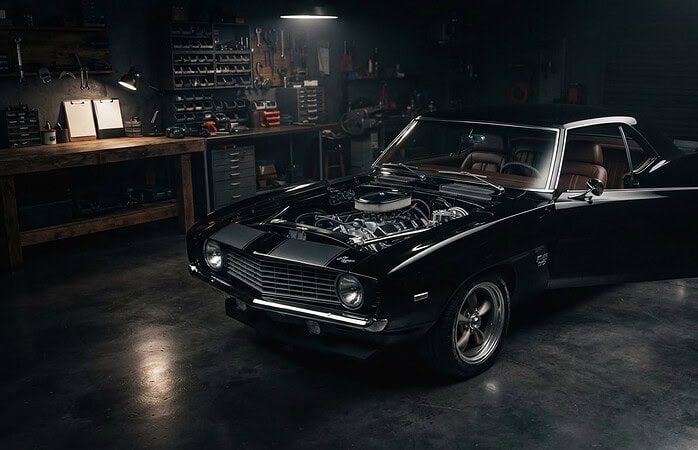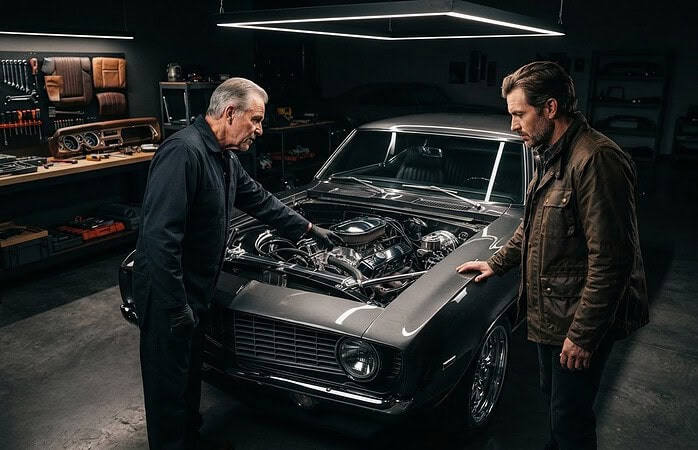

What matters most in a turnkey restomod build service may not be the engine, paint, or polished reveal. It may be the process behind each decision. Photos and component lists can help you picture the result, but they rarely explain how a builder defines the scope, coordinates specialists, or handles changes. Before committing a classic car to a complex project, it’s reasonable to ask how the work will be managed.
A well-managed build connects your vision to a finished, usable car through clear responsibilities, communication, approvals, and quality checks. This guide gives you a practical way to evaluate those elements, with questions to help clarify what’s included and how decisions will be handled. Elite Restomods offers custom build services. Discuss the process and responsibilities for your specific project directly with the team.
Look beyond showcase images to the working relationship behind them: how priorities are defined, tasks are coordinated, scope changes are reviewed, and craftsmanship is checked. The goal is to find a builder whose confirmed process supports the modern capability you want while respecting the character of the car.
Key Takeaways
- Confirm what a turnkey restomod build service includes. Project coordination is not the same as performing mechanical, body, paint, or interior work.
- Evaluate the process in order: clarify your brief, define scope and responsibilities, then ask how updates, approvals, and handover are handled.
- Compare providers using the same criteria. Mark each item confirmed, unclear, or not included instead of relying on photos or component lists alone.
- Record the car’s intended use, your design priorities, and non-negotiable requirements in your brief. Ask to approve major decisions before related work proceeds.
- Request relevant build examples and quality evidence, then compare proposals by clarity and confirmed responsibilities rather than unsupported promises.
What a turnkey restomod build service should actually manage
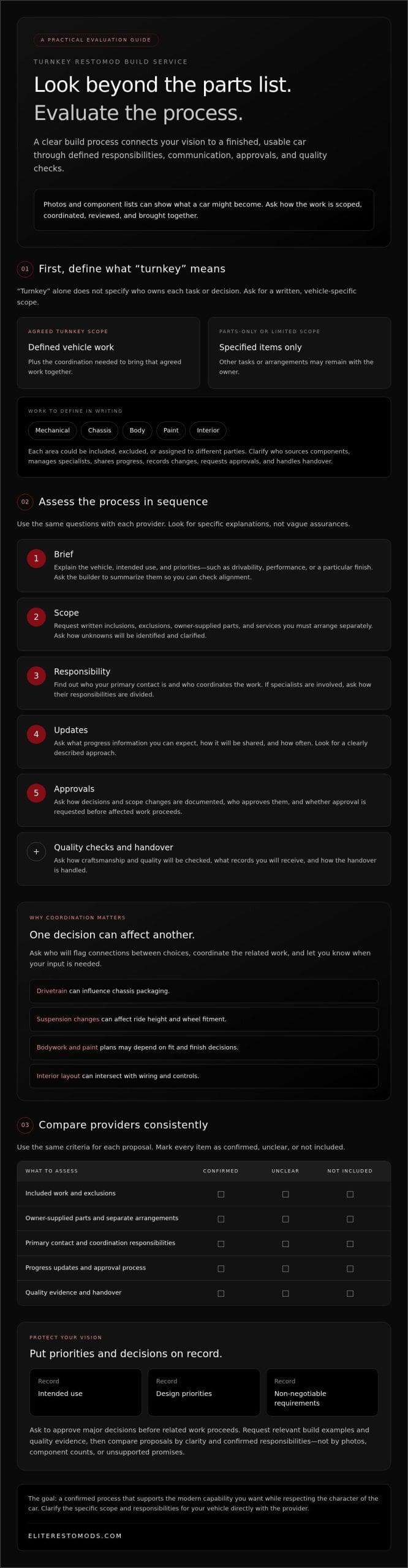
A classic can keep its unmistakable silhouette while gaining modern performance and comfort. But “turnkey” alone doesn’t tell you who is responsible for each decision, which tasks are included, or how the work fits together. Treat it as a service model to define in writing, not as a complete scope.
A turnkey restomod build is a project in which the provider’s agreed scope covers defined vehicle work and the coordination needed to bring that work together. A parts-only or limited-scope job covers specified items, leaving other tasks or arrangements to the owner. The precise boundary should be documented for your vehicle and project.
For a broader foundation on vehicle restoration and restomodification, see Conservation and restoration of road vehicles. To explore the difference between commissioning a build and buying one, watch:
What does turnkey mean in a custom restomod project?
Ask for a written, vehicle-specific scope that separates the work itself from project coordination. Mechanical, chassis, body, paint, and interior work could be included, excluded, or assigned to different parties. Clarify who sources and supplies components, selects or manages subcontractors, shares progress, requests your approvals, records changes, and handles handover. If you’re expected to arrange any task yourself, make sure that responsibility is stated plainly.
A long upgrade list is not proof of project management. It might name an engine, suspension, brakes, paint, and upholstery without saying who connects those choices, resolves conflicts, or keeps you informed. Evaluate a turnkey restomod build service by the responsibilities it confirms, not by the number of components in a presentation.
Why project management matters as much as the build specification
One choice can affect another. A drivetrain decision may influence chassis packaging; suspension changes can affect ride height and wheel fitment; bodywork and paint plans may depend on fit and finish decisions; and interior layout can intersect with wiring and controls. Clear ownership helps you and the builder understand who should flag these connections and when your input is needed.
Before work begins, ask how questions, proposed changes, and quality checks will be handled, and what records you’ll receive. Confirm the answers directly and in writing rather than assuming a particular process or result. Elite Restomods offers custom build services, but the project-management stages for your build should be discussed with the team.
How to assess a restomod builder’s process before you commit
Before commissioning a classic, look for evidence of a working process, not just a striking finished car. A clear sequence helps you judge whether a builder can turn your vision into defined responsibilities, decisions, and a considered handover. Use these steps to guide conversations with any turnkey restomod build service provider.
- 1. Brief: Explain the vehicle, how you intend to use it, and your priorities, such as drivability, performance, or a particular finish. Ask the builder to summarize those priorities so you can check that you’re aligned.
- 2. Scope: Request a written description of included work, exclusions, owner-supplied parts, and services you must arrange separately. Ask how unknowns will be identified and clarified.
- 3. Responsibility: Find out who your primary contact will be and who is accountable for coordinating the work. If multiple specialists are involved, ask how their responsibilities are divided.
- 4. Updates: Ask what progress information you can expect, how it will be shared, and how often. Look for a clear description of the proposed approach, not a vague assurance that you’ll be kept informed.
- 5. Approvals: Ask how decisions and scope changes are documented, who must approve them, and whether approval is requested before affected work proceeds.
- 6. Handover: Confirm what information or documentation you’ll receive when the work is complete and how the provider will describe completed work or outstanding items.
Which questions reveal how a build will be coordinated?
Ask direct questions and listen for specific, consistent answers: “Who is my main contact?” “How are my decisions and approvals recorded?” “What happens if a proposed change affects the agreed scope?” “What progress updates should I expect?” These questions can reveal gaps before work begins. For more perspective on setting expectations and maintaining communication, read Auto Appraisal Group, Inc.’s Keeping Your Classic Car Restoration On Track.
How to evaluate experience without relying on broad claims
Request examples of completed builds that resemble your vehicle and intended use. Ask which parts of each project the provider performed and what the examples can show about the work. A polished photograph may show paint and stance, but it won’t establish how the car drives, how its systems work together, or what the builder coordinated. Compare examples with your own priorities for road use, performance, and finish. If an example looks impressive but leaves questions unanswered, ask for context rather than treating appearance as proof.
For a starting point when discussing how a project gets underway, review Elite Restomods’ build process information. Ask the team about scope, communication, approvals, and verification for your particular project. Elite Restomods offers custom build services; confirm the stages and responsibilities rather than assuming they’re included.
Compare turnkey restomod services by scope, communication, and quality
A polished build can make a powerful first impression. To compare providers fairly, look beyond finished-car photos. Assess what each provider has agreed to manage, how you’ll receive updates, and what evidence supports its quality claims. The SEMA industry trends coverage offers broader context on restomodding, but your decision should be based on the specific scope and responsibilities proposed for your car.
Use the same checklist for every provider. Mark each item “confirmed,” “unclear,” or “not included,” based on what the provider has actually stated. The prompts are for comparison, not ratings.
| Comparison point | Provider A | Provider B |
|---|---|---|
| Written work scope and exclusions | Confirmed / Unclear / Not included | Confirmed / Unclear / Not included |
| Named project contact and coordination responsibility | Confirmed / Unclear / Not included | Confirmed / Unclear / Not included |
| Customer approvals and scope-change process | Confirmed / Unclear / Not included | Confirmed / Unclear / Not included |
| Progress update method and frequency | Confirmed / Unclear / Not included | Confirmed / Unclear / Not included |
| Work records and quality-check documentation | Confirmed / Unclear / Not included | Confirmed / Unclear / Not included |
| Handover details and unresolved-item communication | Confirmed / Unclear / Not included | Confirmed / Unclear / Not included |
What should be written into the project scope?
Ask the provider to identify which mechanical, chassis, body, paint, interior, and electrical tasks are included. The scope should also identify customer-supplied items, excluded work, and how additional work will be proposed and approved. Request a clear description of the deliverables for your vehicle. Don’t assume every provider uses the same package or defines “complete” in the same way.
Elite Restomods offers custom build services. Its custom build services information can help you prepare questions. Confirm the exact scope and responsibilities for your project directly with the team.
How can you assess quality control and final handover?
A quality assurance claim is more useful when the provider explains what is inspected, who performs the checks, and what findings or records you’ll receive. Ask how unfinished items or issues discovered during the work will be documented, communicated, and addressed. Don’t assume a particular inspection standard applies unless the provider confirms it. A specific written answer gives you something meaningful to compare; a broad promise does not.
Protect your vision with clear approvals and realistic expectations
A classic’s character lives in the details: its stance, cabin, sound, and response on the road. A clear brief turns preferences into decisions a builder can act on. It also gives both sides a reference point if new information or trade-offs arise during the project.
How to prepare a useful restomod project brief
Describe how you expect to drive, store, and enjoy the car. A vehicle intended for regular road use may have different priorities from one built mainly for occasional outings. Rank what matters most across appearance, comfort, performance, and reliability. Be specific about non-negotiables, and identify where you’re open to alternatives.
Reference images can help, but explain what each one represents. Is it the paint finish, seat shape, wheel fitment, or overall period feel? Note the details you want to preserve as well as the changes you’re seeking. For a turnkey restomod build service, this context gives the provider a clearer basis for discussing scope, decisions, and trade-offs.
How to handle revisions, discoveries, and trade-offs
Ask how unexpected findings will be documented and presented for your decision. Before work begins, clarify who can authorize a change, how its effect on the agreed scope, schedule, and budget will be explained, and whether your approval is needed before affected work proceeds. Don’t rely on an informal conversation as the only record. Written confirmation gives everyone a shared reference.
Schedule and budget discussions should cover assumptions, dependencies, and how proposed adjustments will be communicated. Ask what could affect the current plan and how you’ll be informed if circumstances change. Don’t treat an early estimate or target as a promise unless the provider has explicitly confirmed its terms in writing. If priorities need to shift, discuss which requirements must remain intact and where alternatives may be acceptable.
A useful approval process protects more than the original vision. It allows for informed choices as the build develops without treating every discovery as automatic authorization to expand the work. Before committing, make sure you understand which decisions are yours, how they’ll be recorded, and what information you’ll receive to make them.
If you’re considering a bespoke project, discuss your custom build with Elite Restomods. Bring your intended use and priorities, and ask how the team would define scope, approvals, and communication for your vehicle.
Choose a build partner and take the next step with confidence
The right partner should understand both the car you want to preserve and how you expect to use it. Before commissioning a turnkey restomod build service, compare proposals for clarity, confirmed responsibilities, and supporting evidence, not just confidence or attractive promises.
What to confirm before commissioning a turnkey restomod
Use this checklist to assess whether the working relationship is as considered as the build vision:
- Fit: Does the provider understand your vehicle, intended use, priorities, and non-negotiable requirements?
- Written scope: Are included tasks, exclusions, customer responsibilities, and deliverables clearly described?
- Communication: Do you know your main contact and how progress, discoveries, and proposed changes will be shared?
- Approvals: Is it clear who can authorize changes, how decisions are recorded, and when your approval is needed?
- Quality evidence: Has the provider explained what checks are performed and what records or handover information you’ll receive?
Verify specific deliverables, schedule expectations, or quality commitments directly with the provider, and have agreed terms documented. If a proposal leaves a responsibility vague, ask for clarification before comparing it with another. A simpler proposal can be easier to assess when it clearly states what the provider will do and what remains your responsibility.
How to move from an idea to a build conversation
Prepare the vehicle’s details, your intended use, ranked design and performance priorities, and questions about scope and coordination. This gives the provider a useful starting point without assuming a standard package or process. Review Elite Restomods’ process information, then confirm directly which stages and responsibilities apply to a custom build.
Elite Restomods offers custom build services, but specific project-management procedures and deliverables should be discussed rather than assumed. When considering other providers, compare their relevant work, written scope, communication approach, and quality evidence against the same checklist. The strongest fit is the one whose confirmed process aligns with your priorities and makes the next steps clear.
Have a classic in mind? Discuss your custom build project with Elite Restomods and bring your vehicle details, intended use, and questions about project fit.
Bring your classic-car vision into focus
The right turnkey restomod build service should make the path from concept to finished car easier to understand, not leave key responsibilities open to interpretation. Before choosing a builder, look for a clear written scope, a defined contact and approval process, useful progress updates, and specific evidence of quality. Compare what each provider confirms, not just the promise or polish of its presentation.
Your brief matters, too. Explain how you’ll use the car, which design details you want to preserve, and where you’re open to trade-offs. Those priorities give the build conversation a stronger starting point and help keep decisions connected to the experience you want behind the wheel.
Elite Restomods offers custom build services alongside other classic-car services. Its Elite Certified Restomods inventory is described as fully sorted and quality-assured; that description applies to the inventory, not automatically to custom builds. Discuss the scope, communication, approvals, and quality verification for your project directly with the team.
Discuss your custom restomod build with Elite Restomods. Bring a clear vision and practical questions to help determine whether the proposed process fits your priorities.
Frequently Asked Questions
What does a turnkey restomod build service include?
A turnkey restomod build service includes the work and coordination the provider has specifically agreed to manage, so the exact scope can vary. Ask for a written description covering which mechanical, chassis, body, paint, interior, and electrical tasks are included, along with exclusions, customer responsibilities, and deliverables. Clarify who coordinates any specialists and how changes are approved. Don’t assume that “turnkey” means every aspect of a project is covered.
How do I choose a restomod project management service?
Choose a provider whose process makes responsibilities and decisions clear. Confirm who your main contact is, how progress updates are shared, how approvals and scope changes are recorded, and what quality checks or handover information are included. Ask for completed-build examples relevant to your vehicle and intended use, and clarify which work the provider performed. Compare the evidence and written commitments, not just attractive photographs or broad claims.
What questions should I ask a restomod builder before starting?
Ask what work is included and excluded, who coordinates the project, and whether you or the provider will arrange specific parts or services. Find out how often you can expect updates, how decisions and changes are documented, and when your approval is required. Also ask what checks are performed and what information you’ll receive at handover. Clarify any schedule, deliverable, or quality commitment before proceeding.
Can I stay involved in decisions during a turnkey build?
Yes, your level of involvement should be discussed and agreed with the builder before work begins. Establish which decisions need your approval, how options will be presented, and how responses will be recorded. For example, you might specify that a major design choice or proposed change requires written approval before related work proceeds. Ask how unexpected findings are communicated so you can make informed trade-offs rather than relying on assumptions.
How can I compare restomod build proposals fairly?
Compare proposals against the same criteria: written scope, exclusions, customer responsibilities, project contact, updates, approvals, documentation, quality checks, and handover. Mark each item confirmed, unclear, or not included, and ask providers to resolve gaps. A detailed component list may describe what will be fitted without showing who coordinates the work or verifies completion. Favor clear, confirmed responsibilities over unsupported promises, and compare schedule expectations only as each provider states them.
Does Elite Restomods offer custom restomod build services?
Yes. Elite Restomods offers custom build services alongside its other classic-car services. Specific custom-build stages, timelines, approval procedures, progress updates, and quality checks should be discussed directly with the team. Ask what work could fit your vehicle and intended use, what the proposed scope would cover, and how project decisions and verification would be handled before commissioning a build.
What should happen during a restomod build handover?
Agree on handover details with the provider before work begins, since no single package applies to every build. Ask what completion information, work records, or quality-check results you’ll receive, and whether unfinished items or issues discovered during the work will be documented and explained. Clarify how those items will be addressed and who to contact with questions. A clearly described handover helps you understand what was completed and what remains.