
The tougher finish can be the harder one to repair. In powder coating vs painting a car chassis, powder coating generally resists chipping, abrasion, road chemicals, and many solvents better than typical enamel, while paint is easier to touch up if a race car’s frame gets damaged. That trade-off matters when the chassis sees hard use.
Powder coating is known for its durable, even finish, but a chip can let moisture creep beneath the coating and hide corrosion. Paint, by contrast, can be easier to repair. Powder coating also requires a fully stripped frame and oven curing, while paint offers more flexibility in application, finish, and maintenance. This comparison covers the cost factors, color options, durability, chemical resistance, and race-car suitability of each method. You’ll see where powder coating has the edge, where paint may make more sense, and how to choose a finish that suits the build and the way you plan to drive it.
Key Takeaways
- Compare how each finish is applied and what chassis preparation it requires before choosing a coating method.
- Weigh frame size, preparation needs, and color preferences when assessing coating costs and finish options.
- Look beyond surface toughness: coating damage, edges, and hidden sections can affect long-term rust protection.
- For a race-car chassis, balance heat exposure, repairability, and how the car will be used to choose a practical finish.
Powder Or Paint, Which Is Better?
Powder coating forms a hard, heat-cured film, while paint allows more flexibility in application and repair. In the US, shop requirements vary by location, materials, and equipment. Plans should account for worker exposure, ventilation, fire controls, and emissions under applicable workplace and environmental requirements.
Powder and Paint Application Processes
Both finishes require a clean chassis. Strip the frame to bare metal, then remove rust and oil before applying either coating. Powder coating uses dry material that is applied and oven-cured into a film. Paint is applied wet, typically by spraying, and cures without a powder-coating oven. That difference affects preparation and equipment: powder coating requires a fully stripped frame, while paint can be applied with some parts still in place.
Electrostatic Powder Application
In electrostatic application, a spray gun charges dry powder as it leaves the nozzle. The charged particles are attracted to the grounded metal chassis, helping distribute the coating across exposed surfaces. The frame then goes into an oven, where heat melts and cures the powder into a continuous film. Unlike wet paint, powder coating uses no liquid carrier during application. The process requires suitable equipment and a chassis that can be fully stripped and oven-cured.
| Option | Preparation | Application | Curing | Frame access |
|---|---|---|---|---|
| Powder coating | Bare, clean metal; fully stripped | Electrostatically applied dry powder | Oven-baked | Requires full disassembly |
| Paint | Bare, clean metal | Wet coating, commonly sprayed | Air or product-specific curing | Can be applied with parts in place |
Choose powder coating when the stripped chassis can be oven-cured. Choose paint when access to the frame in place or easier future repairs matter more.
Powder-coating costs and color options
That range is a planning benchmark, not a fixed quote. Frame size, surface condition, and preparation work all affect the final cost. A larger frame uses more coating material and may require more handling, while rust removal or extensive blasting adds preparation. A compact chassis and a heavily prepared frame are not equivalent jobs.
What drives frame coating costs
Oven capacity can also affect the cost. Large truck frames may cost more because they need a larger oven. Compare the scope, not just the coating method: stripping, cleaning, masking, and finish work can shape the budget as much as the material.
Choosing a color and finish
Powder coating comes in a wide range of colors, gloss levels, and visual effects. Paint gives the finisher flexibility for custom color matching, layered finishes, and blending during a later repair. Either method can create a restrained factory-style look or a vivid custom finish. For a period-correct restoration, many factory frames used semi-gloss or satin black, sometimes with visible overspray, drip marks, and inspection daubs. A flawless modern finish may look less authentic on that build.
Decide on the color before coating begins, then match the finish to the car’s purpose. A show-focused restoration may prioritize factory appearance, while a custom build may call for a distinctive color. Changing a chassis color can involve additional preparation, particularly when working over an existing coating. Paint can be easier to adjust or blend later. Consider future repairs alongside chassis dimensions, preparation, and oven access.
Powder-coating durability and chemical resistance
Durability depends on more than the coating material. Coverage and maintenance matter too. When comparing powder coating vs painting a car chassis, consider exposure, impact risk, and how you’ll handle repairs.
Durability and Abrasion Resistance
Powder coating generally resists chipping and abrasion better than typical brushed or sprayed enamel. That can suit chassis surfaces exposed to road debris, but it doesn’t make the finish immune to damage. Powder can build up on flat surfaces and welds while remaining thin on sharp edges, where a chip may expose metal.
Pay attention to damage: moisture can creep beneath a broken powder film and allow rust to spread unseen. The coating also won’t reach inside boxed frame sections without additional protection. Inspect vulnerable edges, joints, and enclosed areas, not just the broad, visible rails.
Chemical Resistance
Powder coating generally resists road chemicals and many solvents better than typical enamel. On a chassis exposed to road grime, that can help preserve the finish across broad surfaces. The benefit depends on an intact film, however. A cut or chip lets moisture get beneath the coating, where corrosion may remain hidden from a surface-level inspection.
Paint may be more serviceable when localized repairs are a priority. An epoxy primer with a two-part chassis paint can be spot-repaired, while damaged powder coating must be removed before paint can be applied properly. Plan for repairs when choosing a finish, especially for a frequently driven vehicle.
For scratches in painted chassiswork, clean the affected area and apply a compatible touch-up system. For chipped powder coating, remove the damaged coating completely before repainting. When deciding between powder coating and painting a car chassis, weigh resistance to damage against how easily you can restore protection afterward.
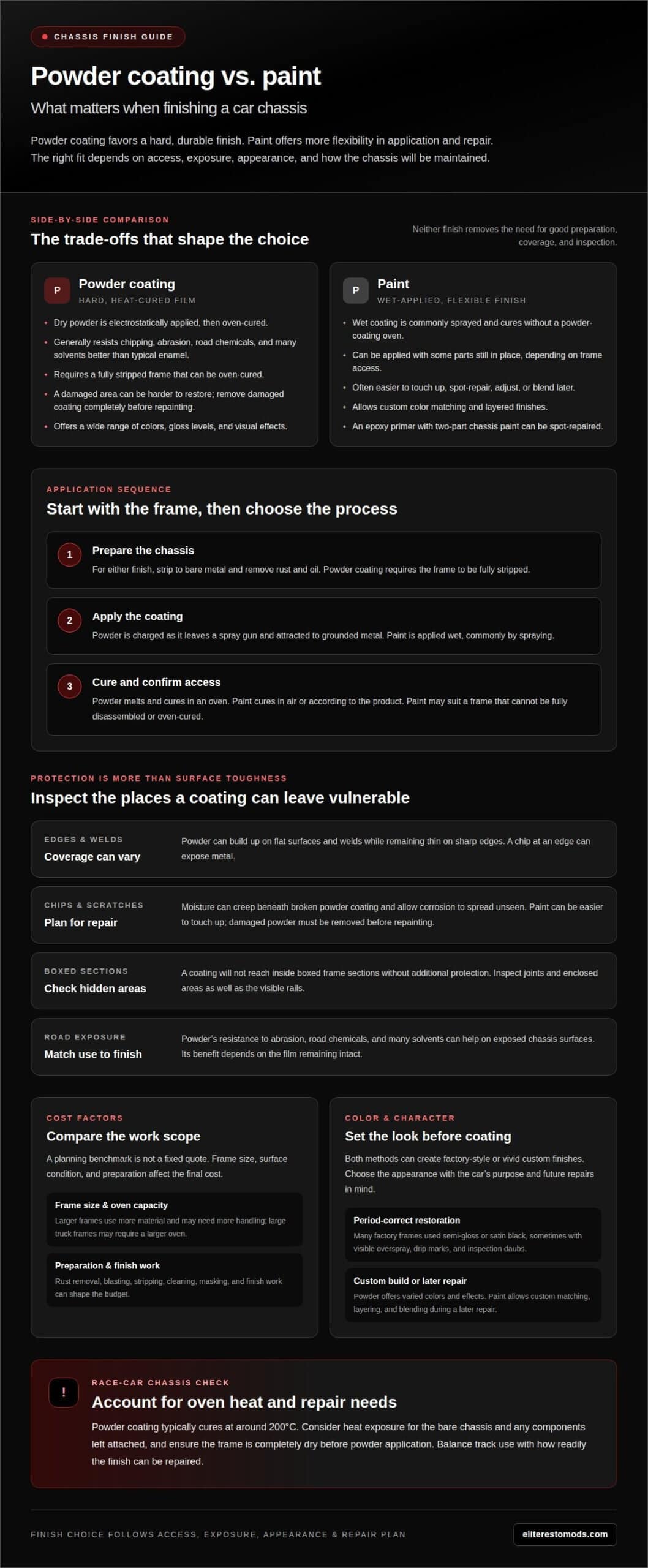
Powder coating versus paint for a race-car chassis
A race-car finish must suit both track use and repair needs. Powder coating typically cures in an oven at around 200 degrees Celsius, so heat exposure is a key consideration for the bare chassis and any components left attached. The frame must be completely dry before powder application.
When choosing a shop, look for a clear preparation and coating process. Chassis work should include stripping to bare metal and removing rust and oil; powder coating also requires the frame to be fully stripped. Blasting cleanliness matters because reused media can transfer contaminants. The process should include thorough surface preparation, complete drying, and inspection of edges and tight crevices.
Powder coating resists abrasion and road chemicals better than typical enamel, which can suit a race car exposed to debris and demanding conditions. But a chip can let moisture creep beneath the coating, allowing rust to spread out of sight. Hidden damage can complicate chassis inspection and repair. Paint is easier to touch up, making it a practical choice for a car that may need localized repairs between seasons.
Curing time also affects the build schedule. Automotive paint can take up to a couple of days to cure before it’s ready to touch. Powder coating requires oven access and a fully stripped frame, while paint can be applied with parts still in place. That difference can influence how the chassis fits into a larger race-car build.
Choose powder when abrasion resistance and a durable finish take priority, and the bare frame can be oven-cured. Choose paint when repair access, localized touch-ups, or avoiding oven heat are more important. For a race car that sees frequent use, prioritize a finish the team can inspect and repair after damage. Explore the custom build process to see how finish decisions fit into a broader vehicle project.
Elite Restomods
Elite Restomods can help you consider a chassis finish as part of a classic-car build. Through its Custom Build Services, the choice between powder coating and paint can be planned around the vehicle’s intended use, restoration goals, and overall design. That broader perspective is useful when the chassis finish is one part of a complete restomod, not an isolated coating decision.
If you’re weighing durability against repairability, choose a finish that suits how the car will be driven and maintained. Elite Restomods also offers Elite Certified Restomods for buyers considering a completed vehicle rather than a custom build. Contact Elite Restomods to discuss your project or vehicle plans.
Shape the Build Around the Drive
Choose a finish that supports the life you imagine for the car, not simply one that completes the chassis. Treat powder coating versus painting as part of the build’s wider direction: the character you want to preserve, how you plan to use the vehicle, and the experience you want behind the wheel. That turns a technical choice into a deliberate expression of the finished machine.
Elite Restomods supports different stages of that journey through Custom Build Services, Elite Certified Restomods, and its Consignment Program. Whether you’re developing a bespoke project, considering a completed restomod, or preparing to sell a vehicle, keep the larger goal in view as you plan your next move.
Start the conversation when you’re ready to explore what comes next. Contact Elite Restomods today, and take the next step toward a classic that feels distinctly yours.
Frequently Asked Questions
Are there any disadvantages?
Yes. Powder coating requires a chassis that fits the oven and is stripped completely, which can add disassembly work to a restoration. Damage can also be difficult to blend, and corrosion may develop unseen beneath a chip. Paint is easier to repair locally, but its finish can be more vulnerable to abrasion. For a driven car, consider where damage is likely and how repairs fit into the maintenance plan.
What are the pros and cons of powder coating vs painting a car chassis?
Powder coating offers strong resistance to abrasion and many road chemicals, along with a consistent cured finish. Its trade-offs include oven requirements, full disassembly, and more involved repairs after chips. Paint allows flexible application and easier spot repairs, which can suit a chassis that needs ongoing maintenance. The right balance depends on whether finish toughness, repair access, or restoration authenticity matters most for the build.
How durable is powder coating compared with chassis paint against rust, chips, and road salt?
Powder coating generally resists chips and abrasion better than typical enamel, but neither finish prevents rust if moisture reaches exposed metal. Road salt can collect around seams, brackets, and damaged areas, so inspect these spots after winter driving. Paint’s advantage is repairability: a small damaged area can be addressed without stripping the full coating. Damage to powder coating may require complete removal before repainting.
How much does it cost to powder coat or paint a car chassis in the US?
Large truck frames may cost more because they need a larger oven. Preparation, frame size, and finish requirements all affect the total.
How long does chassis powder coating or painting take, including preparation and curing?
Total turnaround depends on disassembly, rust removal, blasting, drying, coating, and shop scheduling. Powder coating requires oven curing, with the process typically using heat around 200 degrees Celsius. Automotive paint can take up to a couple of days to cure before it’s ready to touch. Preparation and curing are separate stages, so plan the chassis finish around the wider build schedule.
What preparation is required before powder coating or painting a car chassis?
Start with a bare frame and remove rust and oil before applying either finish. Powder coating requires the chassis to be fully stripped, while paint can be applied with some parts still in place. After blasting, handle the surface carefully to avoid contamination before coating. Also plan protection for boxed sections, since an exterior finish alone won’t protect the inside of a frame.