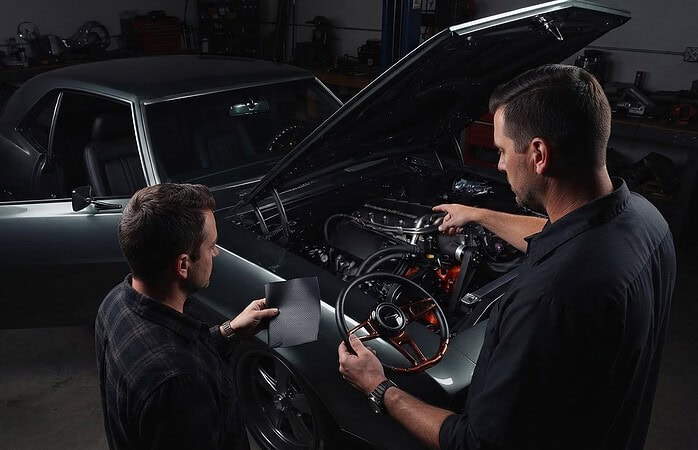

The silhouette is only part of the story. Building a restomod with a reproduction body brings classic fastback styling together with modern performance and comfort, but every component must work as part of a coherent build. The goal is a car that feels unmistakably vintage and drives with contemporary capability.
The appeal is clear: preserve the lines and character of a classic fastback without being limited to period hardware. Achieving that balance takes careful planning, from choosing an engine and transmission to integrating brakes, suspension, wiring, and climate control with the body and chassis.
This guide explains how the build comes together, what each major system contributes, and how component choices shape the finished car. You’ll also see what matters when planning a professional custom build, so you can move from an idea rooted in automotive history to a cohesive machine made to be driven and enjoyed.
Key Takeaways
- Plan brakes, suspension, wiring, and climate control as connected systems so the finished car delivers both confident performance and everyday comfort.
- Choose an engine and transmission that suit the car’s intended character, then account for how the drivetrain works with the rest of the build.
- Use the build consultation to align styling priorities, component choices, and project scope before the work progresses.
- Preserve the fastback’s defining lines while assessing performance upgrades as part of a cohesive design, not as isolated additions.
Brakes, suspension, wiring, and climate control
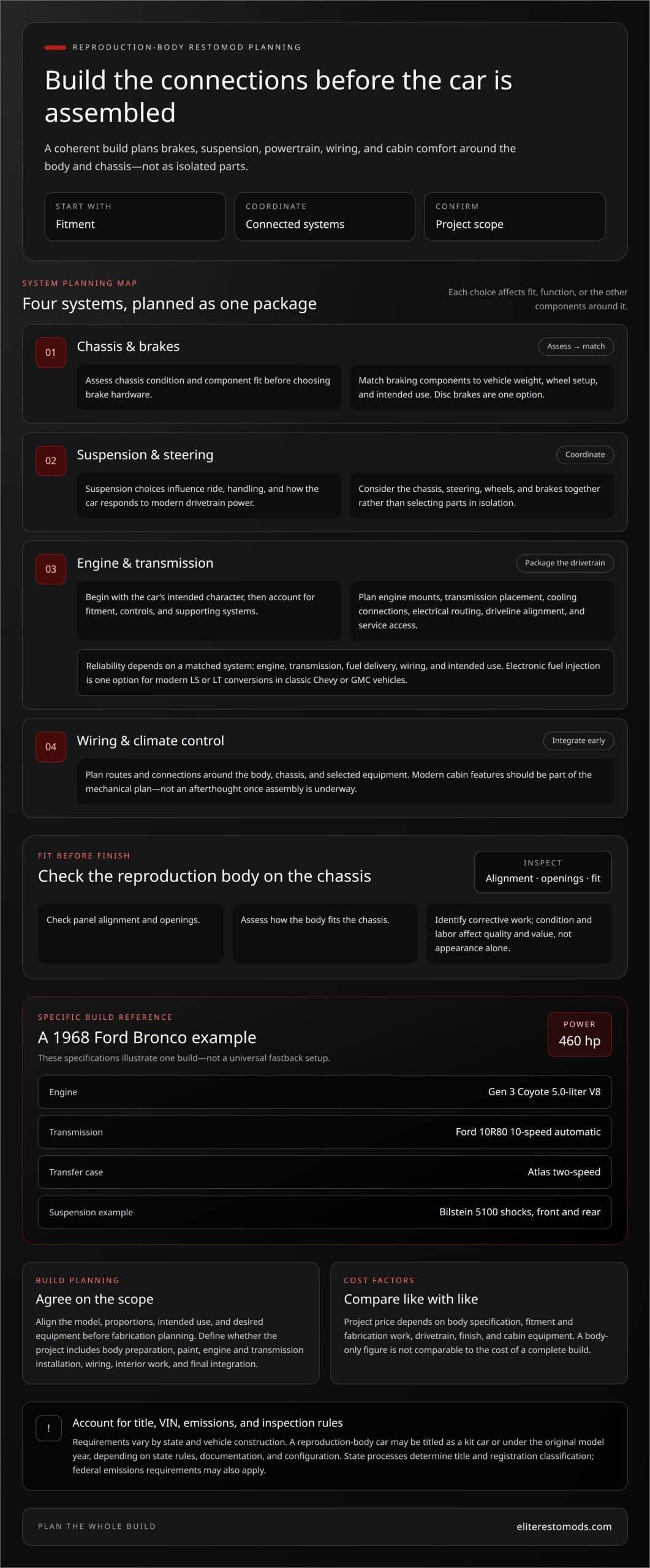
These systems need to work with the reproduction body and chassis as a coordinated package. A professional build plans handling, electrical routing, and cabin comfort together.
Chassis and Brake Upgrades
Before selecting brake hardware, the builder assesses the chassis, its condition, and how the components will fit. Disc brakes are one option for Mustang Fastback restomods, but braking performance depends on matching the components to the vehicle’s weight, wheel setup, and intended use. The same planning accounts for steering and the space needed for wiring and climate-control components.
Suspension Integration
Suspension choices influence ride, handling, and how the car responds to modern drivetrain power. The builder considers the chassis, steering, wheels, and brakes as a connected system rather than choosing parts in isolation. As one example, a 1968 Ford Bronco restomod uses Bilstein 5100 shocks at the front and rear. That specification illustrates a component choice, not a universal setup for fastbacks.
To assess a reproduction body against an original, the builder checks panel alignment, openings, and fit on the chassis, then identifies any corrective work. Quality and value depend on the body’s condition and the labor needed to achieve consistent fit, not appearance alone.
Requirements for titling, VINs, emissions, and inspections vary by state and vehicle construction. State processes determine title and registration classification, while federal emissions requirements may also apply. Account for both in the build plan.
A reproduction-body car may be titled as a kit car or under the original model year, depending on the state’s rules and the vehicle’s documentation and configuration. The builder can account for those factors during the project process, outlined in the build process.
Wiring and climate control also need careful integration. The builder plans routes and connections around the body, chassis, and selected equipment, rather than treating modern cabin features as an afterthought once the mechanical package is assembled.
Modern engines and transmissions
Powertrain planning starts with the car’s intended character, then considers fitment, controls, and supporting systems. Building a restomod with a reproduction body means integrating those choices with the body and chassis, not selecting an engine in isolation. A Mustang restomod might use a high-performance aftermarket Coyote V8 with 302 cubic inches, while a Boss 429 Coupe build may use a Coyote crate motor. These are distinct directions, not automatic choices for every build.
During disassembly, the builder documents the existing chassis and drivetrain, then decides which components can remain and which need re-engineering. That assessment guides engine mounts, transmission placement, cooling connections, and electrical routing. A replacement powertrain changes more than what sits under the hood: its interfaces need to be planned before final assembly. Service access and the intended driving experience also shape the package.
Reliability depends on a matched system, not an engine name alone. The builder considers the engine, transmission, fuel delivery, wiring, and intended use together. Electronic fuel injection is one option for modern engine conversions, including LS or LT swaps in classic Chevy or GMC vehicles. When building a restomod with a reproduction body, choose an engine that suits the body’s fitment and the complete supporting package.
A 1968 Ford Bronco restomod provides a specific Coyote conversion example: it uses a Gen 3 Coyote 5.0-liter V8 rated at 460 horsepower. Its Ford 10R80 10-speed automatic transmission and Atlas two-speed transfer case show how engine choice connects to the rest of the drivetrain. Those specifications describe that Bronco build, not a universal fastback recipe.
For a Mustang, a Coyote conversion pairs a recognizable Ford performance engine with a modern transmission. The builder evaluates engine dimensions and control requirements alongside transmission fit, driveline alignment, and chassis packaging. These decisions guide fabrication and integration before the finished body conceals the work. The sequence matters: establish the powertrain package, engineer its interfaces, then complete installation and system checks.
Build consultation and project process
A defined project scope connects the reproduction body, design decisions, and modern systems. The build process turns those choices into a coordinated plan.
Build Consultation and Design
A reproduction-body restomod pairs a body shaped to replicate a classic model with updated mechanical systems and construction. Specialist manufacturers produce bodies for selected models, so the right maker depends on the vehicle and body design. In consultation, align the model, proportions, intended use, and desired equipment before planning fabrication. Agree on the project scope before reserving a build, so design priorities and planning stay connected.
Costs and Included Items
The price depends on the project and is provided after a quote request. Cost factors include the reproduction body’s specification, fitment and fabrication work, drivetrain, finish, and cabin equipment. Define whether the scope includes body preparation, paint, engine and transmission installation, wiring, interior work, and final integration. These inclusions matter: a body-only figure is not comparable to the cost of a complete build.
Supplier and Builder Selection
Assess a supplier by model fit, body construction details, and the documentation provided with the component. Assess the builder by how they check fit, plan modifications, and coordinate bodywork with mechanical installation. A clear written scope should assign responsibility for the body, fabrication, finish, and systems integration. Organized records, including body provenance, VIN and title documents, and installed components, also support insurance and resale planning. Warranty coverage depends on the written terms for the body and completed work.
The process moves from design approval to body inspection, fitment planning, fabrication, and assembly. Each stage shapes the next: body alignment affects panel finishing, while powertrain and cabin choices affect packaging. These decisions also influence how the completed car performs on the road. Keep the agreed scope and build records together to help explain the finished car to an insurer or future buyer.
Classic fastback styling and performance upgrades
First-generation Mustang styling spans the 1965, 1966, 1967, 1968, and 1969 model years. A reproduction body lets a build draw on that fastback silhouette while tailoring its finish and performance to modern driving. The key is balancing recognizable proportions with upgrades that suit the car’s intended use.
Start with the design’s defining lines: the roof profile, side surfaces, and relationship between body width and stance. The builder assesses how the reproduction body sits on its chassis, then plans panel fit and finish around that shape. These decisions establish the car’s appearance before paint brings every contour into focus. Custom details work best when they complement the original design rather than compete with it.
Wider bodywork may improve a Mustang’s stability and handling, particularly at high speeds. Any benefit depends on integrating the added width with the chassis, suspension, and wheel fitment. Treat these elements as a coordinated package, not as a styling change alone. The aim is a coherent stance and performance choices suited to the complete vehicle.
Performance upgrades should preserve the fastback’s character while serving a clear driving purpose. For example, a Mustang restomod can pair its classic exterior with modern brakes and suspension. The builder plans those systems around the body and chassis, then considers how engine and transmission choices affect the complete package. Each decision influences the next, from wheel clearance to road manners.
For a cohesive result, define the visual direction before finalizing parts. Identify which model-year cues matter most, then coordinate body width, finish, wheels, and mechanical upgrades around those priorities. A 1965-inspired profile and a 1969-inspired profile carry different design references, so the selected details should feel intentional. A custom fastback build plan can bring those styling and performance priorities into one project scope.
Elite Restomods: Custom Build Services
Elite Restomods offers Custom Build Services for owners planning a distinctive restomod that pairs classic styling with modern engineering. Once you’ve defined the direction of your build, the team can shape the project around your priorities.
Project planning brings together the reproduction body, drivetrain, braking and suspension, wiring, climate control, and finish. A clear scope aligns these elements into one cohesive car rather than a collection of separate upgrades. If you’re considering a completed vehicle, explore Elite Certified Restomods. Owners preparing to sell a classic can use the Consignment Program, while Climate-Controlled Storage provides a protected place for a car between build stages or after completion.
To discuss your restomod plans, contact Elite Restomods.
Shape the next chapter of your classic
Building a restomod with a reproduction body lets you create a car that reflects how you want to drive, not only the silhouette you admire. Before moving forward, decide what matters most: the immediacy of modern performance, the comfort to enjoy longer drives, or a particular take on classic fastback design. Those priorities give the project a clear point of view.
Consider the finished car as a whole. Its presence on the road, the experience behind the wheel, and the character of its details should feel connected. A professional build develops your vision into a considered project, balancing heritage with contemporary capability. You don’t need every detail resolved at the outset. A clear sense of what you want the car to represent and how you plan to use it is a strong place to begin.
Contact Elite Restomods about your build and take the next step toward a classic with a character distinctly your own.
Frequently Asked Questions
How does a builder determine which chassis, suspension, and drivetrain options fit popular reproduction bodies?
The builder starts with the body’s intended chassis fit and the car’s planned use, then checks how the major systems work together. The assessment covers mounting points, steering and brake clearance, wheel position, and space for the selected engine and transmission. For a road-focused fastback, for example, drivability is weighed alongside performance goals. This helps narrow choices before fabrication makes changes more involved.
What steps does a professional builder follow to build a restomod using a reproduction body?
A professional builder first defines the vehicle concept and project scope, then plans the body, chassis, and component package together. Next, the builder inspects and test-fits the reproduction body, addresses fitment, and coordinates fabrication with mechanical and electrical installation. Finishing follows once the assemblies align. Before delivery, integration checks confirm that the body, controls, and selected systems function as one vehicle.
What insurance, warranty, and resale challenges come with a reproduction-body restomod?
Organized build records, including body provenance, VIN and title documents, and installed components, support insurance and resale planning. Warranty coverage depends on the written terms for the body and completed work.
How can I find reputable reproduction-body suppliers and builders near me?
Assess suppliers by model fit, body construction details, and the documentation they provide. Assess builders by how they check fit, plan modifications, and coordinate bodywork with mechanical installation. Get a clear written scope that sets out responsibilities.