
The highest asking price does not always lead to the strongest sale. When selling a car collection, the right route depends on each vehicle’s condition, documentation, market appeal, and how you want the sale handled. A well-documented classic may suit a different approach from a driver with incomplete records or a group of cars sold together.
It is natural to want a fair price and a sale process that respects each car’s history. A professional can assess the vehicles, price them in light of their documented condition, and explain which sale options may fit your collection.
This guide explains what information can help shape an offer, how auctions, consignment, and direct sales compare, and what to consider before choosing a route. The aim is to connect each car’s details and records with a sale approach that fits the vehicle, not just its asking price.
Key Takeaways
- For an estate vehicle, clarify who can authorize the sale and how state-specific title or probate requirements affect the process.
- Complete records help a professional distinguish documented originality, restoration work, and modifications when assessing value.
- Private classifieds can offer direct control, but weigh that against handling inquiries, inspections, payment, and pickup arrangements.
- A well-prepared offer starts with clear vehicle identifiers, ownership documents, condition details, and the records available for each car.
Does an estate need a formal appraisal before a professional sells a classic car?
A formal appraisal and a sale estimate serve different purposes. A professional can determine whether an estate needs a formal valuation, then recommend selling vehicles individually, as a group, or at auction based on condition, documentation, and likely buyer appeal.
- Separate estate valuation from sale strategy. A professional reviews the estate’s purpose, each car’s records, and comparable market activity before recommending an appraisal or pricing approach. Oregon’s estate tax exemption is as low as $1 million, according to the Oregon Department of Revenue, so state-specific estate considerations can matter.
- Match the sale channel to the cars. Selling a rare classic individually can put it in front of buyers focused on that model, while selling a group may simplify a broader collection sale. A dealer offers a direct route; consignment puts a professional in charge of the sale process. The strongest option depends on the collection’s condition, records, and your priorities.
- Prepare auction submissions as a complete presentation. The professional organizes vehicle details, photographs, title information, restoration records, and known modifications for review. A clear listing gives serious bidders a better basis for assessing the car. Online auctions may charge sellers nothing or only a nominal listing fee; traditional live-auction seller commissions commonly run 6% to 10%.
- Account for taxes separately from sale proceeds. For inherited cars sold above stepped-up basis, the federal maximum tax rate on gains is 28% under collectibles rules; the net investment income tax may add 3.8% for higher earners, according to the Internal Revenue Service. The estate’s tax position and each car’s basis affect the calculation.
- Plan for transaction risks and timing. Private sales require care with payment, pickup, and title transfer. Confirm that payment has cleared before releasing keys or paperwork. Auction schedules depend on preparation and buyer demand. Major U.S. collector-car auctions often cluster in January in Arizona and Florida, and in August around Monterey. Dealer, auction, and private-sale timelines vary with documentation and buyer response.
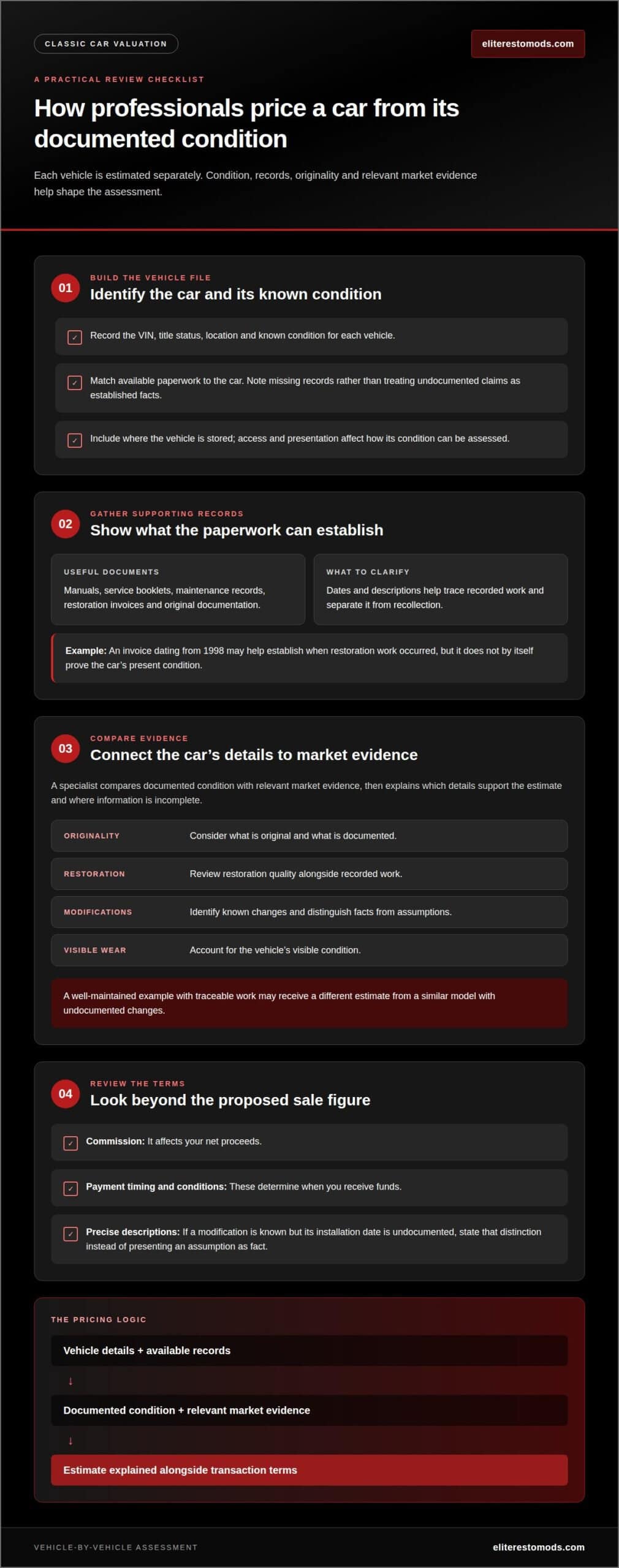
How professionals price a car based on its documented condition
A professional estimates each vehicle separately, considering its condition, records, originality, and relevant market evidence. To assess value, a specialist compares these details with comparable sales, then accounts for documented restoration or modifications.
-
Create a Vehicle and Document Inventory for a Professional Sale
Prepare an inventory for each vehicle that includes its VIN, title status, location, and known condition. A professional can match the available paperwork to each car and note missing records rather than treat undocumented claims as established facts. Include the vehicle’s storage location, since access and presentation affect how its condition can be assessed.
-
Gather Service Records and Provenance for a Professional Sale
Supply manuals, service booklets, maintenance records, restoration invoices, and original documentation. A professional uses dates and descriptions to trace the vehicle’s history and distinguish recorded work from recollection. For example, an invoice dating from 1998 may help establish when restoration work occurred, but it doesn’t by itself prove the car’s present condition.
- Ask a specialist to compare each car’s documented condition with relevant market evidence. The assessment may consider originality, restoration quality, modifications, and visible wear. A well-maintained example with traceable work may warrant a different estimate from a similar model with undocumented changes. The professional should explain which details support the estimate and where evidence is incomplete.
- Review the proposed sale figure alongside the transaction terms. Commission affects your net proceeds, while payment timing and conditions determine when you receive funds. Keep the vehicle description precise: if a modification is known but its installation date is undocumented, identify that distinction rather than presenting an assumption as fact.
To see how detailed presentation helps distinguish individual vehicles, explore the current classic car inventory.
Private classified listings: benefits and drawbacks
Private classified listings give you direct control over a classic car’s presentation and asking price. When selling a car collection, you can weigh that control against the time and effort involved in handling buyer inquiries and arrangements, or use a professional to manage pricing and listings.
-
Set an Asking Price with Professional Guidance
Ask the professional to recommend an asking price for each vehicle using realistic market evidence, not the highest speculative listing. A 1960s sports car with documented originality may appeal to different buyers than a modified example. The specialist can help leave room for negotiation without presenting an ambitious asking figure as a likely sale price.
-
Review Listing Costs and Seller Fees
Compare the classified channel’s listing charge, paid visibility options, and any fees tied to a completed sale. Costs vary by platform and listing terms, so assess likely proceeds after those charges. A low posting cost is not the full expense: time spent responding to inquiries and arranging viewings also affects your return.
- Make each vehicle’s appeal easy to assess. Organize the description around its model, condition, notable equipment, and known changes, and use clear photographs of the exterior and interior. Specific, consistent details help serious prospects decide whether to inquire; vague claims can prompt questions without bringing a buyer closer to a purchase. This is especially important when selling a car collection through individual listings.
- Plan for the work after publication. Screen inquiries, coordinate inspections, and keep discussions of the asking price consistent with the vehicle’s documented details. A private listing may reach an appropriate buyer, but it cannot guarantee an offer or eliminate negotiation. Before accepting an offer, clarify the price, included items, payment arrangements, and pickup responsibilities.
Requesting an offer and submitting vehicle information
A professional can prepare a useful offer when each vehicle’s details, ownership authority, and sale requirements are clear. State rules and the collection’s location also affect paperwork and transport arrangements.
-
Submit Vehicle Information and Photos for a Professional Offer
Provide each vehicle’s VIN, title status, location, condition notes, and available records. Include photos of the exterior, interior, engine bay, odometer, and any visible damage or modifications. For eligible vehicles, include the free CARFAX report with your submission. Clear photos and specific descriptions help a professional assess the collection consistently and prepare an offer based on the information available.
- Confirm who has authority to sell before requesting an estate offer. An executor, trustee, administrator, or attorney-in-fact may act for an estate, trust, or owner. Title and probate rules vary by state, so the relevant documents depend on the vehicle’s location and ownership. U.S. title, registration, tax, and disclosure requirements can also vary by state and sale circumstances.
-
Prepare Transport and Paperwork with Professional Support
Provide the available titles and ownership records so the professional can organize the sale paperwork and identify missing items. Transport can be coordinated according to each vehicle’s location and condition. For cars crossing state lines, clarify the pickup location, delivery destination, transport responsibility, and timing before confirming arrangements.
- Before releasing a vehicle, confirm the agreed price, included items, inspection and pickup terms, payment clearance, and transport responsibility. Keep the keys and title documents until payment has cleared. These steps help reduce the risk of payment disputes, misleading pickup arrangements, and shipping misunderstandings. State-specific requirements still apply.
Explore vehicle support options to organize the next stage of your collection sale.
Elite Restomods
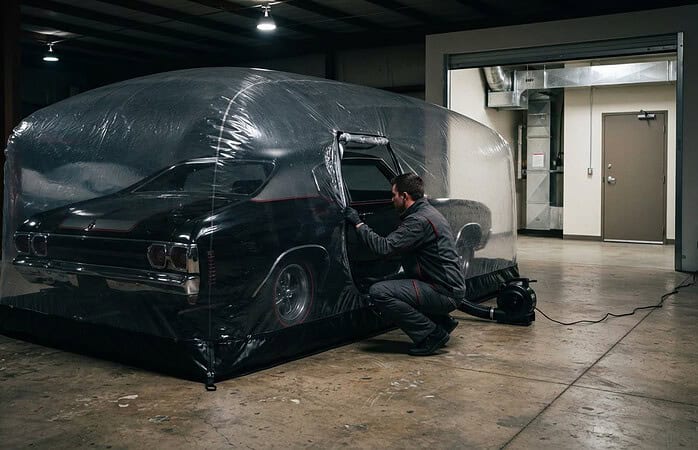
Elite Restomods can help owners weigh a professional sale route against each vehicle’s condition, records, and intended next chapter. Its Consignment Program provides a professional option when you want support presenting classic cars to buyers, while Climate-Controlled Storage can suit vehicles that need protected storage during the process.
If a vehicle in your collection needs further development, Elite Restomods’ Custom Build Services may be relevant. Elite Certified Restomods reflect the company’s focus on carefully prepared classic cars. The right fit depends on your plans for each vehicle, whether you want to sell it, preserve it, or pursue a custom build. Contact Elite Restomods to discuss your collection and next steps.
Choose the Next Chapter for Your Collection
When selling a car collection, start by deciding what a successful outcome means to you. You may value a coordinated transition, a considered sale for a particular vehicle, or the knowledge that the collection is moving toward a new chapter. That priority can guide conversations and keep decisions aligned as the process moves forward.
Think of the collection as more than a set of transactions. Each car has its own character, and your preferences can shape what happens next. A clear sense of what matters most gives a professional useful context for discussing possible next steps.
When you’re ready to talk through your collection and its future, contact Elite Restomods about your collection. A thoughtful conversation can help you move forward with greater clarity and confidence.
Frequently Asked Questions
What’s the best way for a professional to sell a classic car?
The best channel depends on each car and your priorities. A rare, well-documented model may suit an auction that reaches focused collectors, while consignment provides professional sale representation. A direct dealer purchase may suit someone seeking a more straightforward transaction. For a mixed collection, a professional can recommend different routes for different vehicles rather than treating every car alike.
Should an estate have a professional restore or repair the car before selling it?
Not necessarily. Before recommending repairs, a professional should consider the car’s current condition, documented history, likely buyer expectations, and the scope of the proposed work. Correcting a visible issue may improve presentation, while extensive restoration could change the vehicle’s character and add complexity. Keep invoices and descriptions of completed work so prospective buyers can distinguish documented improvements from original condition.
What information and documents should you provide to a professional seller?
Provide the VIN, title status, mileage information, current location, condition details, and available ownership and service records. Add restoration invoices, manuals, modification details, and clear photos of the exterior, cabin, engine bay, and any known damage. If an estate owns the car, include information showing who is authorized to act for it. Keeping a separate file for each vehicle helps prevent records from being mismatched.
What documents should be transferred with the car?
Transfer the title and any sale documents required for the transaction, along with records agreed as part of the purchase. These may include service invoices, manuals, restoration documentation, and information about modifications. Keep copies of the signed sale paperwork and a record of payment. State requirements differ, so the documents needed for a title transfer depend on the vehicle’s location and circumstances.
Who can authorize a professional to sign, accept payment, and transfer an estate vehicle?
The person authorized to act may be an executor, trustee, administrator, or attorney-in-fact. Before proceeding, the estate’s representative should establish their authority and provide relevant ownership paperwork. Title and probate rules vary by state, so authority documents and transfer steps can differ. If several people have roles in the estate, clarify who can approve the sale and receive the proceeds.
Which classic car auction houses and online marketplaces should a professional consider when selling a collection?
Consider auction channels and online marketplaces whose audiences match the collection, from marque specialists to broader collector-car audiences. Compare submission requirements, listing presentation, sale format, fees, reserve options, and how bidders can inspect each car. A rare model may benefit from a focused audience; a varied collection may need several tailored listings. No single venue suits every vehicle or seller.