
A handshake might seal a deal, but it won’t protect the soul of a vintage machine during a multi-year transformation. A professional classic car restoration contract is the essential architecture for a successful investment-grade build, acting as the bridge between your long-held dream and a tangible, high-performance reality. You understand that every curve of hand-shaped sheet metal and every visceral roar of a tuned engine represents a significant financial commitment. It’s only logical to demand a framework that treats your project as a bespoke piece of functional art rather than a simple mechanical repair.
You’ve likely felt the anxiety of project delays or the confusion regarding insurance coverage while your asset sits in the shop. We’ll help you navigate these logistical complexities with a framework designed to protect your investment and ensure elite results. This guide provides a clear roadmap for the build process, highlighting the importance of milestone schedules and digital ledger tracking. You’ll discover how to secure legal protection for your vehicle’s provenance while maintaining a transparent payment structure that matches the quality of the craftsmanship. By the end, you’ll have the confidence to manage a world-class restoration with professional authority.
Key Takeaways
- Understand why modern market values and complex engineering necessitate a formal classic car restoration contract to move beyond the inherent risks of casual handshake agreements.
- Learn how to define a granular scope of work that captures every mechanical refinement and aesthetic detail to ensure the final product matches your vision.
- Navigate the critical differences between fixed-price and time-and-materials billing to maintain financial transparency and manage budget expectations throughout the build.
- Secure your investment by establishing the correct agreed value insurance and liability protections to safeguard the vehicle as its value appreciates during the restoration.
- Implement a rigorous final punch list and performance verification protocol to ensure every component of your bespoke machine operates with modern reliability.
The Architecture of Trust: Why Handshake Deals Fail in Restoration
The 2026 market for vintage assets has reached a level of sophistication where a gentleman’s agreement is no longer a sign of trust, but a liability. In an era where concours-grade builds and high-performance restomods command six-figure valuations, the technical complexity of the work demands a rigorous legal framework. Relying on a verbal promise often leads to fractured relationships when the reality of labor hours meets the limits of a budget. A formal classic car restoration contract serves as the definitive blueprint, ensuring that both the curator and the craftsman remain aligned on the ultimate vision.
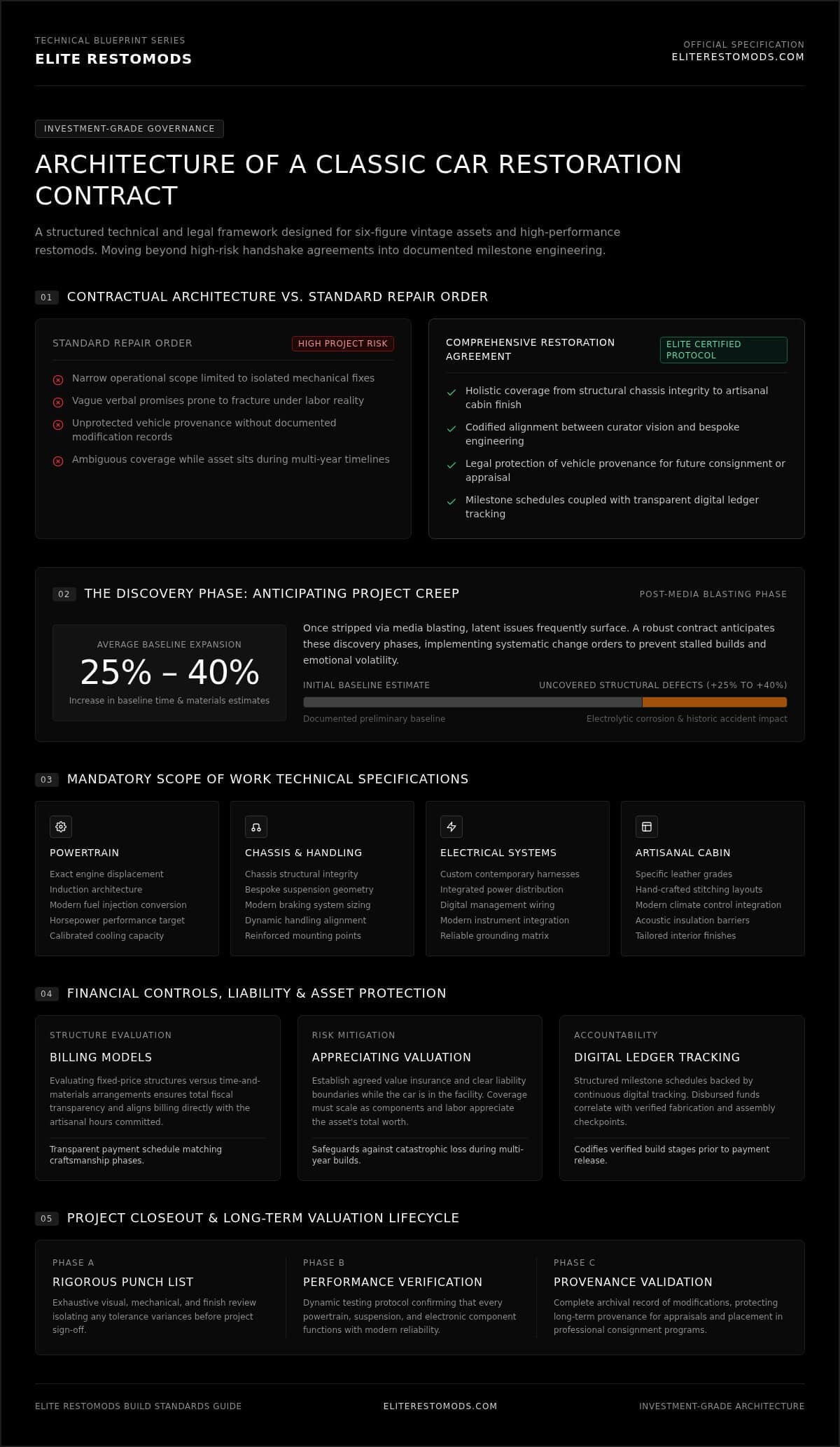
It’s vital to distinguish between a standard repair order and a comprehensive restoration agreement. While a repair order typically covers isolated mechanical fixes with a narrow scope, a restoration agreement governs a transformative journey. It addresses the totality of the vehicle, from the structural integrity of the chassis to the artisanal finish of the interior. This document codifies the standards of the Elite Certified process, providing a level of transparency that simple shop orders cannot match.
To better understand the common pitfalls encountered during these projects, watch this helpful video:
The Reality of Project Creep in Custom Builds
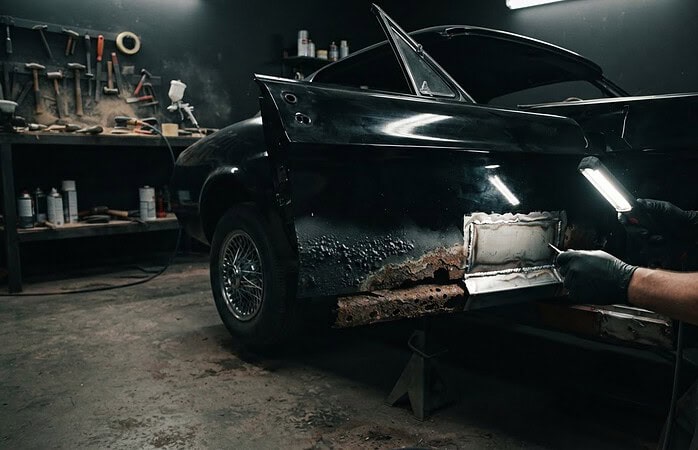
Custom work naturally invites evolution. Once a vehicle undergoes media blasting, hidden electrolytic corrosion or historic accident damage often comes to light, expanding the initial baseline time and materials estimates by an average of 25% to 40%. A robust classic car restoration contract anticipates these discovery phases, providing a systematic way to handle change orders without stalling the project. By setting clear protocols for these moments, the agreement helps manage the emotional highs and lows that define a high-end build. It transforms uncertainty into a structured conversation about value and results.
Protecting the Soul of the Vintage Asset
Every project at this level is a delicate balance between historical heritage and modern capability. You want the visceral thrill of a classic era paired with the confidence of modern engineering. A contract ensures the vehicle remains an investment-grade asset, documenting every modification to preserve its long-term provenance. This documentation is essential for future valuations or potential placement in a professional consignment program. A restomod contract is a meticulously detailed roadmap for the creation of functional art, bridging the gap between a client’s dream and a tangible, high-performance reality.
Core Components of an Investment-Grade Restoration Contract
A classic car restoration contract shouldn’t be viewed as a static legal hurdle. It’s a dynamic project management tool. In the world of high-end builds, ambiguity is the enemy of excellence. A professional agreement provides the granular detail needed to transform a vintage shell into a modern masterpiece. It ensures that every mechanical component and aesthetic finish is documented before the first wrench turns. By treating the contract as a blueprint for functional art, you eliminate the guesswork that often plagues lesser shops.
Defining the Scope of Work
Precision matters. A vague mention of an engine upgrade is insufficient for a build of this caliber. The scope must specify the exact displacement, induction system, and cooling requirements. For instance, a build might detail the transition from a carbureted small-block to a modern fuel-injected powerplant with specific horsepower targets. Suspension geometry, braking systems, and electrical harnesses require similar technical clarity. The interior deserves its own focus, detailing artisanal leather grades, custom stitching, and the integration of contemporary climate control. This level of detail is a hallmark of the custom build services that distinguish master builders from hobbyist shops.
Milestones and Deliverables
Timelines in a bespoke industry are often fluid, yet they must be structured. Milestone-based schedules replace vague completion dates with phase-specific goals. These typically include body and paint, drivetrain integration, and final assembly. Each phase serves as a logical checkpoint. When a shop hits a milestone, it triggers a progress payment. This maintains momentum and ensures the shop isn’t financing your build out of pocket. It also provides you with regular opportunities to review the craftsmanship before the project moves to the next stage, ensuring the quality of the build matches the price tag.
Parts Procurement and Change Orders
Clarity on parts ownership is vital for protecting your investment. The contract should state that all purchased hardware becomes your property upon payment, even before installation. Additionally, it must define what happens to original components. Matching-numbers parts are essential for provenance, and you must decide if they are to be refurbished or returned to you. Finally, a formal change order protocol is non-negotiable. As the build evolves, any deviation from the initial plan should be documented in writing. This prevents budget overruns and ensures the final realization of the product’s modern capabilities matches your expectations without hidden surprises.
Billing Structures: Navigating Fixed Price vs Time and Materials
The financial framework of a high end build is as critical as the chassis itself. While the visceral excitement of a new powerplant draws you in, the cold reality of the ledger keeps the project moving. Choosing the right billing structure within your classic car restoration contract determines how risks and rewards are shared between you and the builder. In the 2026 market, elite shops have largely transitioned away from fixed price agreements for ground up projects. The inherent unpredictability of vintage steel makes a one size fits all quote nearly impossible without compromising quality.
The Pros and Cons of Time and Materials
Time and materials is the gold standard for investment grade restomods. It ensures that the craftsman is paid for every meticulous hour spent shaping a fender or tuning a fuel map. This model prevents the shop from cutting corners when a task proves more difficult than anticipated. However, it requires a high level of trust. To maintain this, professional shops utilize digital labor logs and weekly photographic updates. You can mitigate financial uncertainty by setting not to exceed caps on specific project phases, such as the initial teardown or the final assembly. This approach mirrors the Elite Certified transparency standards, where every billable hour is backed by tangible progress.
Budgeting for the Unknown
Hidden issues are a certainty in the world of vintage assets. Once a vehicle is stripped to bare metal, industry data suggests that unforeseen structural remediation can expand initial estimates by 25% to 40%. A professional classic car restoration contract must account for this reality by mandating a contingency fund. This isn’t a blank check; it’s a strategic reserve for discovery phases. The agreement should also specify how to handle the discovery of non original parts or historic accident damage. By codifying these protocols, you ensure that the transformation from a raw machine to a bespoke piece of functional art remains a steady, purposeful journey rather than a series of financial shocks. This structure protects the vehicle’s long term value and your peace of mind.
Mitigating Risk: Insuring a Car During Restoration and Liability
Handing over the keys to a vintage asset establishes a legal bailment for mutual benefit. It’s a moment of high anticipation, yet it carries significant financial weight. While the builder focuses on the marriage of brute force and refined comfort, your classic car restoration contract must focus on the paper shield that protects your investment. You shouldn’t assume that a shop’s general liability policy covers your vehicle. In fact, standard commercial policies often exclude vehicles in the shop’s care, custody, or control. This gap is where Garage Keepers Liability becomes essential.
A sophisticated contract mandates that the restorer carries direct primary garage keepers insurance. Unlike legal liability coverage, which only pays if the shop is proven negligent, direct primary coverage protects your vehicle against fire, theft, or extreme weather regardless of fault. This is the professional standard for any facility handling high end builds. Without it, you’re left to rely on your own policy, which may not be structured to handle a vehicle that is currently a collection of high performance components rather than a drivable machine.
The Essentials of Insuring a Car During Restoration
Your insurance strategy must evolve alongside the build. An Agreed Value policy is non-negotiable for investment grade vehicles, as standard Actual Cash Value policies will fail to account for the artisanal labor and specialized hardware added during the process. Specialty insurers offer endorsements that can automatically increase the vehicle’s value by 10% each quarter to match ongoing work. Additionally, you must ensure coverage remains active during logistical movements. A vehicle in transit requires a specific insurance rider to ensure the asset is protected from the moment it leaves your driveway until it arrives at the facility. This is particularly critical when utilizing enclosed vehicle transport to move a project between specialized facilities.
Liability and Workmanship Guarantees
A professional classic car restoration contract defines the boundaries of responsibility for custom mechanical work. While the shop warrants its craftsmanship, the agreement should clarify how third party component failures are handled. If a high performance crate engine or a bespoke suspension kit fails, the contract dictates whether the shop or the manufacturer holds the liability. These protections are vital for owners utilizing classic car financing, as lenders require proof that the collateral is fully insured and legally protected throughout its transformation. By codifying these risks, you ensure the journey from vision to reality is shielded by professional authority. If you are ready to begin an investment grade build with full transparency, explore our custom build services today.
The Final Realization: Inspections and Project Closeout
The final realization of a high end build is a moment of profound transformation. The scent of fresh leather meets the raw, mechanical scent of a precision tuned engine. This is where the meticulous planning of your classic car restoration contract reaches its peak. It is the transition from a systematic technical ledger to a bespoke piece of functional art. Before the keys are handed over, a rigorous closeout process ensures that every detail aligns with the initial vision of excellence.
A formal punch list review is the bedrock of this phase. Every mechanical upgrade and aesthetic finish specified in the build plan undergoes a systematic audit. Road testing is equally critical. A professional facility will mandate a shakedown period, often covering 200 to 500 miles, to identify and rectify any electrical gremlins or fluid leaks before final delivery. This ensures the vehicle isn’t just a display piece, but a high performance machine ready to be utilized and enjoyed.
The Acceptance Process
The final walk through is a methodical validation of craftsmanship. You’ll examine panel gaps, paint meter readings, and the seamless integration of modern electronics. Once satisfied, both parties sign a completion certificate. This document is a vital legal shield, confirming that all work meets the professional standards established at the project’s inception. Following sign off, the final payment is processed and the title is released. Many owners then choose to transition their asset into climate controlled storage to preserve the pristine finish until the next driving season.
Maintaining Investment Value Post-Build
A well executed contract is more than a legal agreement; it is a permanent part of the vehicle’s provenance. Every labor log, photo update, and change order contributes to a comprehensive build binder. This documentation is essential for maintaining the vehicle’s status as an investment grade asset. Should you decide to utilize a professional consignment program in the future, this paper trail provides the transparency needed to command top market value. It proves the vehicle’s modern operational reliability while honoring its historical design. If you are seeking a vehicle that has already undergone this rigorous journey, view our inventory of fully sorted restomods.
Securing Your Vision for the Modern Era
Securing your vision requires a commitment to both automotive heritage and modern operational reliability. A professional classic car restoration contract isn’t just a legal necessity; it’s the definitive framework that ensures your asset arrives at its final realization with its soul and value intact. You’ve seen how structured milestones, transparent billing, and robust liability protections transform a daunting project into a purposeful, transformative journey. By codifying these details, you bridge the gap between a long-held dream and a high-performance reality that can be utilized and enjoyed for generations.
Elite Restomods brings this vision to life through a comprehensive suite of custom build and restoration services. Every project benefits from the rigorous Elite Certified quality assurance process, ensuring that no detail is too small to be overlooked in the pursuit of excellence. With specialized classic car financing options tailored to investment-grade builds, the path to ownership is as refined as the vehicles themselves. Your masterpiece deserves the protection of a master builder who understands the marriage of brute force and artisanal comfort.
Commission your dream custom restomod build with Elite Restomods and experience the confidence of a perfectly executed transformation. It’s time to bring your classic era of design into the future.
Frequently Asked Questions
What is the single most important clause in a restoration contract?
The Scope of Work is the most critical clause in any classic car restoration contract because it defines the boundary between a dream and a dispute. This granular list must detail every mechanical upgrade, from the specific induction system to the artisanal interior finishes. Without this technical clarity, project creep becomes inevitable. A well defined scope ensures that both the curator and the builder are aligned on the standards of the Elite Certified process.
Does the shop’s insurance cover my car if there is a fire?
Standard commercial general liability insurance typically excludes vehicles in the shop’s care, custody, or control. To ensure coverage during a fire or theft, the shop must carry direct primary garage keepers insurance. This specific policy pays for physical damage or loss regardless of whether the shop was negligent. You should always verify that your restorer maintains this professional standard and confirm that your own policy includes an endorsement for vehicles under construction to protect your investment.
How do I handle a dispute over the quality of the paint or bodywork?
Disputes are best resolved by referencing the specific quality standards established in the initial agreement. A professional contract should mandate a formal punch list review and an acceptance process before final payment. If the aesthetic finish doesn’t match the agreed upon show quality standards, the builder is responsible for rectification. Utilizing a shop with a rigorous quality assurance process, such as the Elite Certified Restomods standard, significantly reduces the likelihood of these craftsmanship disagreements.
Can I provide my own parts to save money on the build?
While providing your own parts might seem like a cost saving measure, most elite shops discourage this practice due to warranty and liability complexities. If a client provided component fails, the shop cannot warrant the labor or the part, leading to potential disputes. Master builders prefer to source high performance mechanical components from verified vendors to ensure modern operational reliability. This ensures the entire build remains a bespoke piece of functional art with a single point of accountability.
What happens if the restoration takes twice as long as promised?
High end restorations are complex journeys that often reveal hidden issues like structural rot or historic damage. Because of this, reputable shops utilize milestone based timelines rather than fixed completion dates. If a project exceeds the estimated window, the contract should dictate how communication and progress updates are handled. Establishing a transparent roadmap for the build process helps manage expectations when the meticulous nature of the work requires additional labor hours to achieve perfection.
Is a deposit required before the work begins on my classic car?
Yes, a rolling escrow retainer is the industry standard for high end restorations. This initial deposit, often ranging from $5,000 to $15,000 depending on the project phase, ensures the shop can begin procurement and dedicate specialized labor to your build. The contract should specify that the shop bills against this deposit with detailed labor logs. This structure maintains project momentum and provides financial transparency, ensuring your capital is directly supporting the transformation of your vintage asset.
How does a restomod contract differ from a standard restoration agreement?
A restomod contract focuses heavily on the integration of modern engineering with traditional aesthetics. Unlike a standard restoration agreement that prioritizes historical preservation, a restomod agreement details complex engine swaps, modern suspension geometry, and contemporary climate control systems. It requires a more technical lexicon and specific performance verification protocols, such as dyno testing and high speed shakedowns. This ensures the final product delivers the visceral excitement of a classic paired with the reliability of modern hardware.
Should I have a lawyer review my restoration contract before signing?
Engaging a legal professional with experience in high value automotive assets is a prudent step for any six figure build. A lawyer can ensure that the classic car restoration contract properly addresses bailment principles, risk of loss, and ownership of original components. While a master builder provides the technical roadmap, a legal review ensures your financial interest is shielded. This professional authority provides peace of mind as you embark on the transformative journey of creating a bespoke restomod.