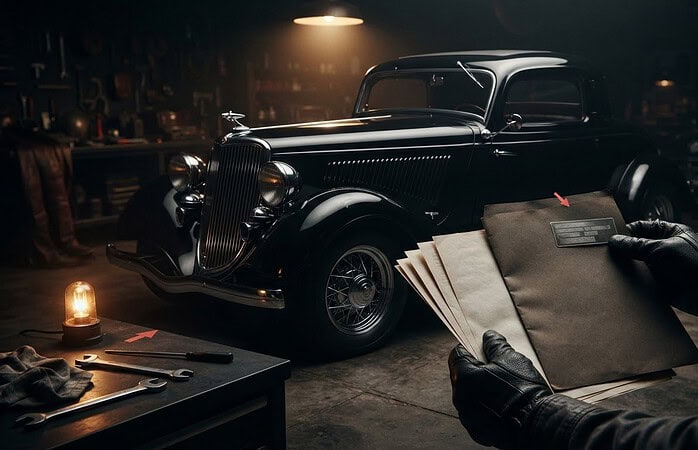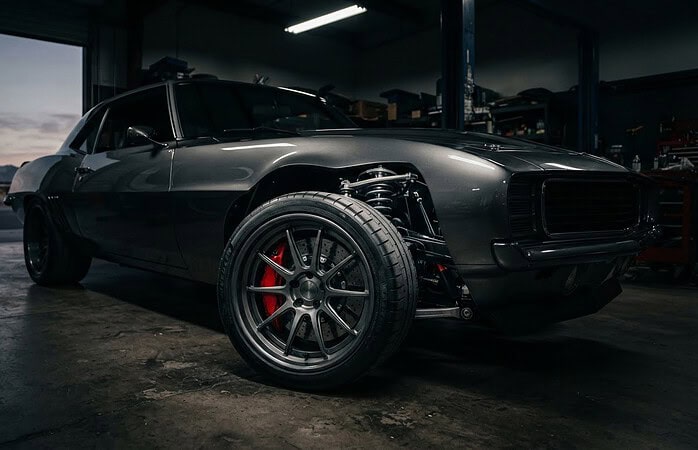

Your build sheet is more than a list of high-performance components; it is the most critical financial instrument in your garage. You recognize that a restomod is a bespoke piece of functional art, a marriage of raw, visceral power and refined modern luxury. It is frustrating when traditional lenders fail to see that value, often refusing to account for the elite craftsmanship and specialized parts that define your vision. They see an old car, while you see a legacy asset.
We understand the unique challenges of financing a restomod build, from managing progress payments over a twenty-four-month timeline to securing rates that reflect the vehicle’s investment-grade status. This guide provides a strategic roadmap to fund your automotive masterpiece without depleting your liquid capital. You will discover how to leverage specialty lenders who treat your car as a high-value asset rather than a depreciated machine. We will break down the essential documentation required to prove value and the specific financial structures that protect your investment from the first weld to the final coat of paint.
Key Takeaways
- Understand why sophisticated collectors treat their custom projects as appreciative assets to maintain liquid capital for other high-value investments.
- Navigate the technical requirements of financing a restomod build by utilizing structured progress payments that align with critical engineering milestones.
- Shift from outdated book values to a bespoke Agreed Value model that recognizes the meticulous craftsmanship and performance components of your vehicle.
- Identify the specific advantages of specialty automotive lenders over traditional banks when funding a masterpiece that requires professional expertise to value.
- Learn how to streamline your acquisition by selecting Elite Certified Restomods that offer established valuations and immediate modern reliability.
The Strategy of Restomod Financing: Why Capital Preservation Matters in 2026
The landscape of automotive collecting has undergone a profound transformation. In 2026, acquiring a custom vehicle is no longer a simple transaction; it’s a calculated move into the world of appreciative assets. High-net-worth individuals are increasingly choosing financing a restomod build as a primary strategy for capital preservation. By leveraging specialty automotive paper, they maintain the liquidity required to seize other market opportunities while their bespoke machine takes shape in the shop. This psychological shift from “expense” to “equity project” defines the modern era of high-end builds.
The technical definition of these projects often falls under the broader umbrella of Conservation and restoration of road vehicles, yet restomodding occupies a unique space where heritage meets modern reliability. This fusion of eras creates a stable collateral base that lenders are finally beginning to respect. It’s about the marriage of brute force and refined comfort, a combination that retains value far better than a standard factory restoration.
To better understand the nuances of this financial approach, watch this helpful video:
The Opportunity Cost of Cash in Custom Builds
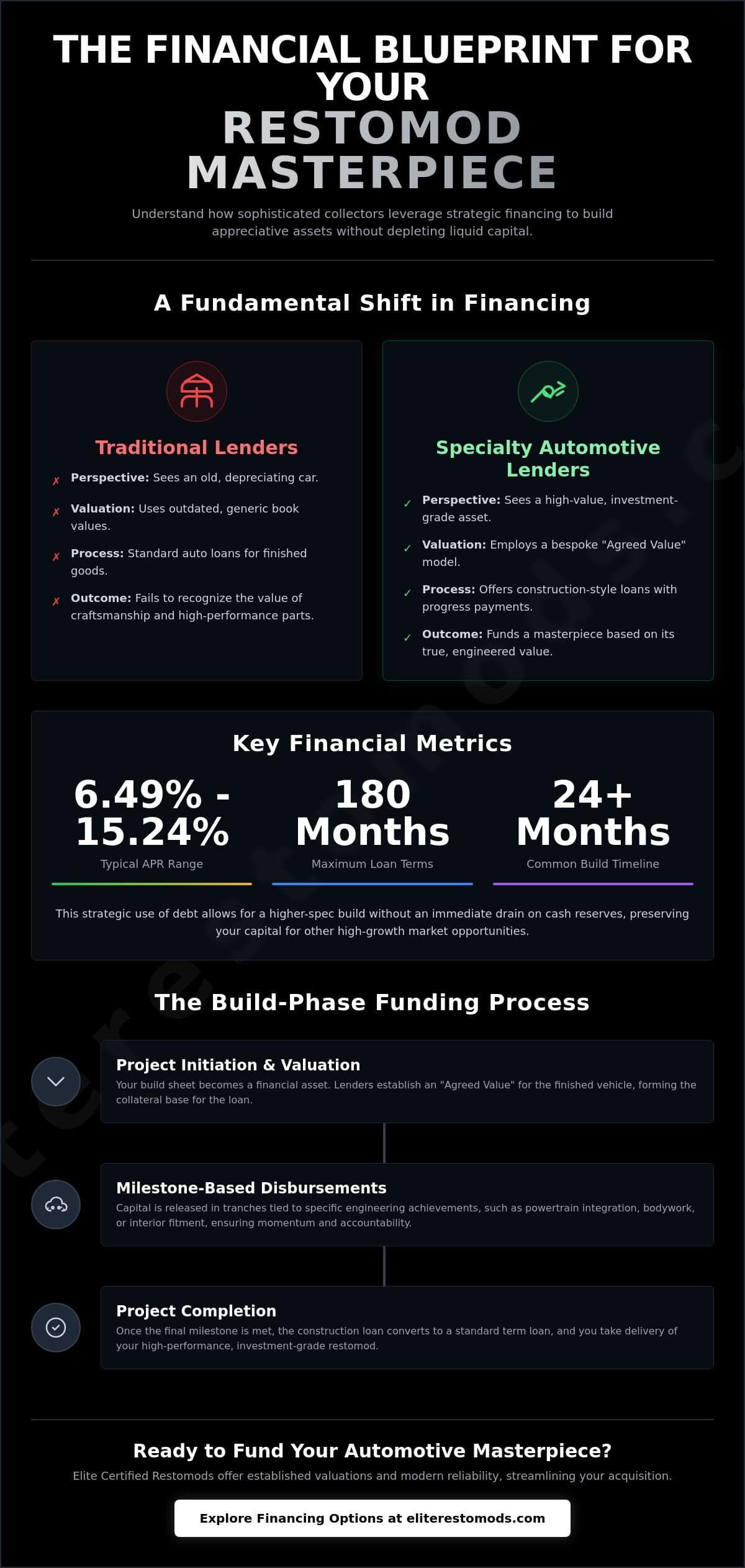
Liquid capital is a tool for growth. When you tie up hundreds of thousands of dollars in a multi-year project, you lose the compounding power of those funds. Even with current specialty loan rates ranging from 6.49% to 15.24% APR, the spread between the cost of debt and the expected return on a diversified investment portfolio often favors the lender. Many collectors utilize terms of up to 180 months to keep monthly outflows manageable. This approach allows for a higher-spec build without an immediate drain on cash reserves. Wealth managers often view this as a strategic use of debt, especially when the finished vehicle carries an investment-grade appraisal that reflects the meticulous nature of our custom build services.
Restomods as Functional Art and Investment-Grade Assets
Modern lenders have evolved. They no longer view a restomod as a modified car with uncertain value. Instead, they see a bespoke piece of functional art. The resilience of the restomod market has outpaced many traditional luxury vehicle segments because these cars are meant to be driven and enjoyed. Reliability is the key. A vehicle equipped with a modern powertrain and industry-standard hardware is a more stable asset for a bank than a fragile, numbers-matching original that requires a trailer for every journey. 2026 lenders are increasingly comfortable with bespoke engineering because the market data supports the long-term value of high-quality craftsmanship. They aren’t just funding a machine; they’re funding a transformative journey from a vintage dream to a high-performance reality.
Build-Phase Funding: Navigating the Mechanics of Construction Loans
The gap between a vintage shell and a finished masterpiece is bridged by capital. Financing a restomod build during the construction phase requires a fundamental shift in how you view automotive debt. Standard auto loans are designed for finished goods; they assume immediate collateral value. A construction-style funding agreement, however, is a dynamic partnership. It releases funds in tranches to maintain builder momentum while ensuring your investment is backed by tangible progress. This structure provides transparency, allowing you to see exactly where your capital is being deployed as the car transforms from a skeletal frame into a high-performance icon.
The Milestone-Based Disbursement Process
Precision is paramount. Lenders specializing in these projects typically utilize a milestone-based disbursement schedule. This ensures that progress payments are tied to specific engineering achievements, such as the completion of the powertrain integration or the final fitment of the bespoke interior. To facilitate this, your builder must provide meticulous documentation. Photographic evidence, chassis verification, and technical inspections are standard requirements. These records do more than satisfy a lender; they help Value Your Classic Car by creating a comprehensive paper trail for future appraisal. During this phase, managing the title and lienholder status is critical to protect all parties involved. Once the build is complete, this construction loan typically transitions into a permanent classic car loan with fixed terms.
Managing Overruns and Contingency Funds
Excellence takes time. It also occasionally requires more resources than initially projected. In the 2026 market, specialty lenders recommend incorporating a 10% to 15% contingency buffer into your initial financing. Custom engineering often reveals hidden challenges once the teardown begins. A rusted structural point or a delay in the delivery of high-performance mechanical components can stall a project if the funding is too rigid. Having a pre-approved buffer allows the builder to solve these issues without a work stoppage. It preserves the rhythm of the shop and ensures the craftsmanship never suffers due to budget constraints. Our meticulous build process is designed to minimize these surprises, but a strategic financial buffer remains a hallmark of a sophisticated collector. By planning for the unexpected, you ensure that the journey from vision to reality remains as smooth as the car’s final power delivery.
Valuation Science: How Build Sheets Become Financial Assets
Traditional valuation guides like Kelley Blue Book or the CPI Price Guide are built for the masses. They fail the restomod owner because they prioritize factory originality over elite performance. For a lender, a vintage Mustang might be worth $30,000 based on standard charts. However, when financing a restomod build, that same chassis might represent a $250,000 investment once it’s equipped with a supercharged Coyote engine and a bespoke leather interior. This discrepancy is why the Agreed Value model is essential. It protects your investment from day one by acknowledging that the value lies in the fusion of heritage and modern engineering.
Quantifying the Value of Modern Engineering
Lenders in 2026 are increasingly sophisticated, but they still require hard data to justify high loan-to-value (LTV) ratios. You must assign financial weight to specific mechanical upgrades. An LS3 engine swap, an independent rear suspension, or high-performance Wilwood brakes aren’t just parts; they are equity. Elite Certified Restomods often carry higher LTV ratios because they come with a pedigree of documented excellence. Professional appraisals during the build phase bridge the gap between money spent and market value, ensuring the lender views the car as a high-performance asset rather than a project.
The resilience of the market supports this approach. While standard luxury vehicles depreciate the moment they leave the lot, a meticulously engineered restomod often appreciates as it nears completion. This is because the modern operational reliability adds a layer of utility that pure vintage cars lack. Lenders recognize this stability, provided the engineering is performed by a master builder with a verifiable track record.
The Build Sheet as a Legal and Financial Document
Your build sheet is the primary technical appraisal used by underwriters. It must speak their language. A vague list of new parts won’t suffice. Instead, a professional document should detail the powertrain, chassis modifications, and safety enhancements in technical depth. It serves as a blueprint for the car’s ultimate valuation. Following the Elite Restomods process ensures your documentation meets these rigorous standards. Every component, from the artisanal stitching on the dash to the specific hardware in the suspension, becomes part of the legal record.
Lenders specifically look for high-performance mechanical components and industry-standard hardware. They want to see a systematic, logical breakdown of the technical work. This transparency builds trust, transforming a mechanical list into a powerful financial asset that secures your capital. When your build sheet is detailed enough to act as a technical manual, it removes the uncertainty that often stalls traditional financing approvals.
Selecting a Specialty Lender: Criteria for High-Performance Projects
Traditional banks are designed for the predictable. They operate on the logic of mass production, where every asset fits into a neat, depreciating box. When you approach a standard lender for financing a restomod build, they often struggle to reconcile the vintage VIN with the six figure investment in modern engineering. They see an old car; they don’t see the custom chassis or the artisanal interior. This fundamental misunderstanding of value makes traditional institutions a poor fit for bespoke projects. Specialty boutique automotive lenders operate on a different frequency. They recognize the soul of a vintage machine and the tangible equity created by modern performance upgrades.
In the 2026 market, your choice often comes down to specialty lenders versus credit unions. While some credit unions offer competitive rates for classic cars, they frequently lack the specialized underwriting required for in-progress custom builds. A specialty lender understands the “Agreed Value” model and is comfortable with loan terms extending up to 180 months. When evaluating your options, prioritize lenders who offer “No Mileage Restriction” clauses. You are building a masterpiece meant for the open road, not a museum piece. A restrictive loan that punishes you for enjoying the visceral excitement of your car is a poor strategic choice.
What Lenders Look for in a Restomod Builder
The reputation of your builder is a form of collateral. Lenders are more likely to approve high loan-to-value ratios when the work is performed by an established shop with a verifiable track record of excellence. Working with a dealer that offers a curated experience can simplify this process. Builder certification programs and established dealer referrals streamline the underwriting journey, as the lender already trusts the quality of the craftsmanship. They know the vehicle will be finished to an investment-grade standard, which reduces their risk and often results in more favorable interest rates. If you are ready to begin your journey, our Classic Car Financing program connects you with lenders who specialize in high-performance assets.
Preparing Your Financial Portfolio for Approval
Securing elite rates requires a sophisticated financial profile. In 2026, lenders typically look for credit scores of 700 or higher and a manageable debt-to-income ratio. They also value a history of car collecting, as it demonstrates an understanding of the niche market. Beyond your score, having liquid assets to cover a 10% to 20% down payment is standard for most specialty automotive paper. Some lenders may have minimum loan amounts as high as $100,000 for elite projects, reflecting the high-tier nature of the restomod market. By presenting a clear picture of your financial health and a detailed build sheet, you position yourself as a low-risk client for an investment-grade loan.
Explore our comprehensive Classic Car Financing options to see how we bridge the gap between your dream and a high-performance reality.
The Elite Restomods Experience: Seamless Integration of Craft and Capital
The pursuit of automotive perfection shouldn’t be stalled by financial friction. At Elite Restomods, we’ve refined the process of financing a restomod build into a streamlined, professional experience that mirrors the quality of our engineering. We act as the bridge between your high-performance ambitions and the rigorous requirements of specialty lenders. By integrating our technical expertise with established financial networks, we ensure that your capital is deployed efficiently and your investment is secured from the moment of sourcing to the final delivery. It’s a calculated approach to car collecting that prioritizes your liquidity without compromising on the build’s specifications.
Our turn-key solution encompasses every phase of the journey. We handle vehicle sourcing, bespoke engineering, and even enclosed vehicle transport, providing a single point of accountability for both you and your lender. This holistic approach is why specialty lenders who understand our standards are often more willing to provide favorable terms. They recognize that an Elite build isn’t just a car; it’s a meticulously documented asset with a clear, investment-grade valuation. We provide the transparency they require, ensuring that every dollar of your construction loan is backed by world-class craftsmanship.
The Advantage of Elite Certified Restomods
Purchasing a completed vehicle offers a distinct financial advantage for those who prefer immediate gratification. These fully sorted machines come with established market valuations, removing the uncertainty often associated with the build-in-progress phase discussed earlier. Our Elite Certified Restomods undergo a rigorous quality assurance process that provides lenders with the confidence to approve higher loan amounts. It’s a marriage of brute force and refined comfort that has already been realized and tested. You don’t have to wait twenty-four months to experience the visceral thrill of a modern powertrain in a vintage body. Your investment is protected by modern operational reliability, ensuring the car is meant to be utilized on the open road, not just stored. Explore our current inventory to find a masterpiece that is ready for immediate delivery.
Commissioning Your Masterpiece
If your vision requires a completely bespoke approach, our custom build services offer a systematic path to realization. We translate your aesthetic and mechanical desires into a technical build sheet that speaks the language of financial underwriters. This documentation is the key to successfully financing a restomod build that pushes the boundaries of modern performance. We manage the progress payments and milestone verifications, allowing you to participate in the transformative journey without the administrative burden. Our team understands the soul of these vintage assets and possesses the vision to bring them into the modern era with perfectionism. Don’t let your dream remain a concept. Commission your dream build today and let us transform your nostalgia into a high-performance reality.
Realizing Your High-Performance Legacy
The transformation of a vintage icon into a modern masterpiece is a strategic journey that demands both engineering precision and financial vision. You’ve decoded the shift from simple restoration to the acquisition of appreciative assets. You’ve seen how a meticulous build sheet acts as financial leverage to protect your equity. Financing a restomod build with a partner who understands the soul of a pro-touring build or a high-performance LS-swapped icon ensures that every detail is valued as investment-grade. It is a calculated move that balances raw, visceral power with sophisticated wealth management.
Our partnerships with premier specialty lenders offer flexible terms up to 240 months, allowing you to secure a bespoke piece of functional art while preserving your liquid capital. Every vehicle in our stable undergoes a rigorous QA certification to guarantee the modern operational reliability you demand. It is time to bridge the gap between your nostalgia and the visceral thrill of the open road. Explore our Elite Certified Restomod inventory and financing options to find the perfect fusion of heritage and power. Your automotive masterpiece is ready for its first mile.
Frequently Asked Questions
Can I finance the entire cost of a restomod build including labor?
Yes, specialty boutique lenders often provide funding that covers both high-performance mechanical components and the meticulous labor required for elite craftsmanship. This is typically managed through a construction-style loan where funds are released as specific build milestones are achieved. By including labor in your financing a restomod build strategy, you preserve your liquid capital while ensuring the master builder has the resources to maintain momentum throughout the multi-year process.
What is the typical down payment required for a restomod build loan?
Most specialty automotive lenders require a down payment ranging from 10% to 20% of the total project value. This initial equity demonstrates your commitment to the project and secures your position with the lender. While some high-net-worth collectors may negotiate different terms based on their overall financial portfolio, having at least 10% in liquid capital ready for the initial tranche is the standard benchmark for 2026 investment-grade builds.
How do lenders value a car that is not yet completed?
Lenders value an incomplete vehicle by utilizing a detailed build sheet as a technical appraisal document. They look at the intrinsic value of the donor chassis combined with the documented cost of modern upgrades like independent rear suspensions or supercharged powertrains. Professional appraisals are often required at various stages to verify that the work performed matches the financial disbursements, treating the car as a growing asset rather than a static machine.
Are there mileage restrictions on classic car financing for restomods?
Many specialty boutique lenders offer “No Mileage Restriction” clauses because they understand restomods are built for modern operational reliability. Unlike traditional classic car loans that might limit you to 2,500 miles per year, these high-performance loans encourage you to utilize and enjoy your investment. It is essential to verify this in your specific agreement, as some credit unions or standard classic car insurers may still impose traditional hobbyist limitations.
Can I use a personal loan instead of a specialty classic car loan?
You can use a personal loan for financing a restomod build, but these products often lack the extended terms and lower interest rates found in specialty automotive paper. Personal loans are typically unsecured, meaning they carry higher rates and shorter repayment periods, usually under 84 months. Specialty lenders allow for terms up to 180 or 240 months, which significantly reduces monthly outflows and acknowledges the vehicle itself as investment-grade collateral.
What happens if the build cost exceeds the original estimate?
If your build costs exceed the original estimate, you typically rely on a pre-approved contingency buffer or negotiate a loan modification with your lender. Sophisticated collectors often include a 10% to 15% margin in their initial financing to handle unexpected engineering challenges or parts availability shifts. If costs rise beyond that, the lender may require a new appraisal to justify the increased loan-to-value ratio before releasing additional funds for the project.
Is financing available for restomods intended for daily driving?
Financing is available for restomods intended for frequent use, provided the lender specializes in modern performance upgrades rather than pure preservation. Because restomods feature modern safety components and industry-standard hardware, they are viewed as more reliable than original vintage cars. Lenders are increasingly comfortable with daily-use scenarios when the build is performed by a certified shop, as the vehicle’s drivability actually supports its long-term market value and stability as an asset.
How does an “agreed value” insurance policy work with a financed build?
An “agreed value” policy ensures that your insurance coverage matches the full, appraised value of the vehicle rather than a depreciated book value. For a financed build, the lender is listed as the loss payee, ensuring their interest is protected if the car is damaged. This type of policy is critical because it accounts for the elite craftsmanship and specialized parts that define a restomod, providing peace of mind from the first weld to the final delivery.