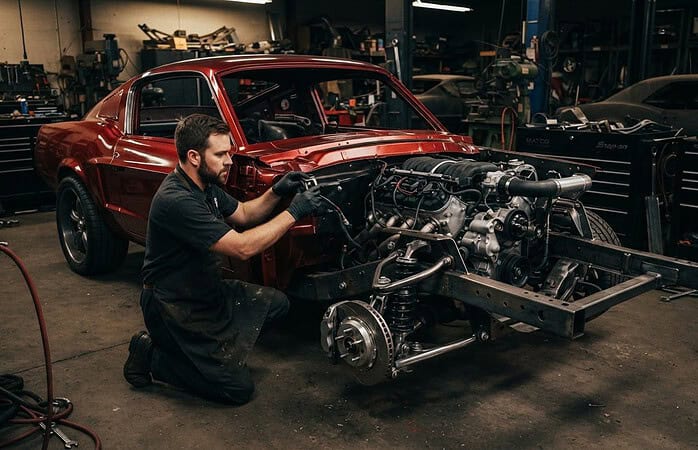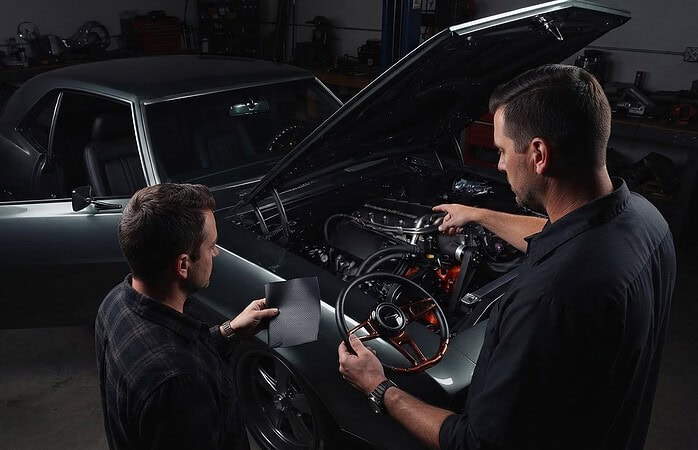

A SEMA-quality build has no single price tag. How much a SEMA-quality build costs depends on the vehicle, the planned transformation, and the parts, fabrication, and finish needed to complete it. Start with a defined scope, not a headline figure.
It’s natural to want a number before committing to a custom build. But a classic car’s condition and the balance between preserving its character and upgrading its performance can change the work substantially. A carefully managed plan makes those decisions clear before they become costly surprises.
This guide explains how to scope and manage a build budget, which choices have the greatest effect on cost, and how a custom build compares with a rental-to-custom approach. You’ll also learn when a bespoke build makes sense for a vehicle you want to own and drive, and how Elite Restomods’ Custom Build Services can fit into that decision.
Key Takeaways
- Build a budget around a clearly defined scope, then track how design choices and project changes affect it.
- Assess quality by how well craftsmanship, mechanical upgrades, and the vehicle’s original character come together.
- Understand how vehicle condition, surface preparation, and finish expectations shape paint and bodywork planning.
- Compare custom fabrication, chassis, and suspension needs to decide which upgrades best support the way you want to drive.
Budget planning and cost control
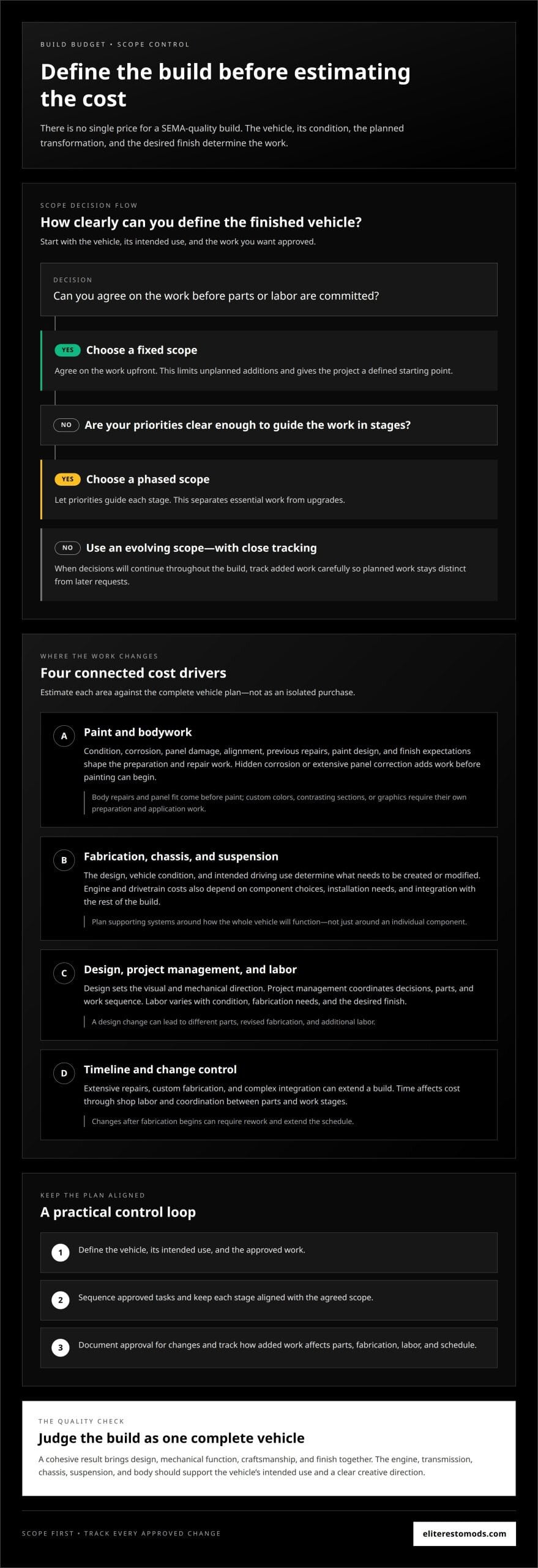
Control costs by defining the vehicle, its intended use, and the approved work before committing to parts or labor.
| Planning option | Scope control | Budget effect |
|---|---|---|
| Fixed scope | Work is agreed upfront | Limits unplanned additions |
| Phased scope | Priorities guide each stage | Separates essential work from upgrades |
| Evolving scope | Changes are considered throughout | Requires close tracking of added work |
Choose an approach that matches how clearly you can define the finished vehicle before work begins.
Paint and Bodywork
SEMA-level paint and bodywork depend on the car’s condition, repairs, panel alignment, and desired finish, so there’s no single typical cost. Hidden corrosion or extensive panel correction adds work before painting can begin. Custom interiors, wheels, and audio systems bring separate costs based on materials, fitment, and complexity. Keep those choices within the approved scope to limit changes.
Fabrication, Chassis, and Suspension
Fabrication creates or modifies components to suit the vehicle and its upgrades. Chassis and suspension work depend on the design, the car’s condition, and how it will be driven. Engine and drivetrain costs also vary with component selection, installation needs, and integration with the rest of the build. Estimate these areas against the complete vehicle plan, rather than treating each part as an isolated purchase.
Design, Project Management, and Shop Labor
Design sets the build’s visual and mechanical direction, while project management coordinates decisions, parts, and the sequence of work. Labor varies with the vehicle’s condition, fabrication needs, and desired finish. These elements are connected: a design change can require different parts, revised fabrication, and additional labor. A written scope and documented approval of changes help distinguish planned work from later requests.
Build Timeline and Cost Effects
A SEMA-quality build can take longer when it involves extensive repairs, custom fabrication, or complex integration. Time affects cost through shop labor and coordination between parts and work stages. Changes after fabrication begins can also require rework and extend the schedule. Manage this risk by sequencing approved tasks, tracking changes, and keeping each stage aligned with the agreed scope.
What defines a SEMA-quality custom vehicle build?
A SEMA-quality custom build brings design, mechanical function, and finish together in a coherent vehicle. The goal isn’t simply to install impressive components. The engine, transmission, chassis, suspension, and body must work together, while the finished car follows a clear creative direction.
Start with the vehicle’s purpose. A classic intended for regular road use has different priorities from one built mainly for display or performance. That choice guides component selection, packaging, ride characteristics, interior details, and how much original character to retain. For example, a powerful drivetrain needs supporting systems and chassis choices suited to the car’s intended use, not just a striking engine bay.
Craftsmanship shows in visible details and unseen engineering. Panel fit, paint preparation, wiring, plumbing, fastener placement, and interior finishing all contribute to the result. Quality should be consistent throughout: polished exterior surfaces can’t compensate for poorly integrated mechanical components, and performance hardware alone can’t create a refined build.
- Design: A defined visual direction connects paint, wheels, trim, and interior materials.
- Integration: Engine, drivetrain, chassis, and suspension choices support the same intended use.
- Execution: Fabrication, fitment, wiring, and finishing are handled with consistent attention.
- Validation: The completed vehicle is assessed as a functioning whole, not merely as separate installed parts.
These criteria help distinguish a cohesive custom build from a collection of upgrades. They also clarify why the answer to how much a SEMA-quality build costs depends on the chosen vehicle, scope, and level of finish, rather than one universal specification. A documented build process can connect design decisions with the work required to deliver them, keeping the vision grounded in mechanical execution.
What are typical costs for SEMA-level paint and bodywork?
Paint and bodywork costs depend on the vehicle’s condition and the finish in the approved scope. Project pricing depends on the car and planned work, with a quote provided after a request. Key cost drivers include corrosion, panel damage, previous repairs, paint selection, and the degree of surface correction. A straight, well-prepared body needs different work from a classic requiring metal repairs across several panels.
Preparation often determines how refined the final finish looks. The build team assesses the body, identifies damaged or poorly aligned panels, and plans repairs before painting. For example, an uneven door may need adjustment alongside the adjacent bodywork, rather than simply receiving fresh paint. Skipping corrections can leave visible flaws beneath an otherwise glossy finish.
Paint scope also depends on the design. A single-color exterior has different preparation and application needs from a two-tone treatment, contrasting roof, or detailed graphics. Each transition requires careful masking and consistent alignment across panels. Custom colors may also need to work with the trim, wheels, and interior palette, so settle design decisions before painting begins.
- Body condition: Rust, dents, old filler, and uneven gaps affect repair and preparation.
- Finish design: Color changes, graphics, and contrasting sections add distinct work stages.
- Surface standard: Show-focused refinement calls for more correction than a simpler finish.
- Build sequence: Panel fit and body repairs should be completed before final paint application.
For better budget control, separate repairs, preparation, paint application, and final finishing in the project scope. This breakdown makes changes easier to identify. For instance, discovering corrosion after disassembly changes the repair plan before painting can continue. A useful estimate ties each stage to the car’s actual condition and chosen finish, rather than treating “paint” as one line item.
How much do custom fabrication, chassis, and suspension work cost?
There’s no universal price for these upgrades. Pricing depends on the vehicle and scope, with a quote provided after a request. Cost factors include the car’s condition, design complexity, component selection, fabrication requirements, and system integration. A straightforward replacement differs from reshaping the chassis or creating custom mounts for a new drivetrain.
Custom fabrication covers one-off parts and modifications needed to make a design fit a specific vehicle. First define the desired result, then assess access, clearances, mounting points, and nearby components. For example, a new exhaust route may require custom bends and hangers, while a revised engine installation can involve custom mounts and clearance work. More bespoke solutions require more design and shop labor.
Chassis work varies with the structure’s condition and the planned changes. Repairing existing damage differs from modifying the frame for a new configuration. Suspension work also depends on intended use, selected components, and the fitment required. Consider a performance-oriented setup alongside wheel and tire clearance, steering, and ride behavior, rather than as a parts-only decision.
- Fabrication: Custom brackets, mounts, and component placement affect design and labor.
- Chassis: Existing condition and structural modifications shape the work plan.
- Suspension: Component choice and fitment requirements determine installation scope.
- Integration: Changes in one area can affect adjacent systems and require additional work.
For a controlled estimate, separate parts, fabrication, installation, and integration in the scope. Record changes to the original plan too, such as a damaged mounting point discovered during disassembly. This clarifies why extra work is needed and helps keep performance goals, finished appearance, and budget aligned. Discuss a custom build shaped around your chassis and suspension goals.
Elite Restomods: Custom Build Services
Elite Restomods’ Custom Build Services suit owners who want a classic vehicle transformed around a specific vision. Bring a clear idea of how you want the car to look, feel, and perform, and the build can be shaped around those priorities. Whether you want modern capability beneath timeless lines or a more extensive transformation, connect design choices to the vehicle’s intended use.
A custom build is the right next step when you’re ready to discuss a bespoke vehicle rather than choose from existing inventory. Elite Restomods also offers Elite Certified Restomods for buyers considering a completed vehicle, while its Consignment Program helps owners prepare to sell a classic. Each option serves a different need.
Contact Elite Restomods to discuss your custom build vision.
Shape the Build Around the Drive Ahead
Knowing how much a SEMA-quality build costs is most useful when it helps define your vision for the finished car. Look beyond the reveal: consider where you’ll drive it, how often you’ll use it, and which qualities should remain true to its heritage. Those priorities turn a broad ambition into a purposeful brief for a custom project.
Next, decide what matters most and bring those priorities into a conversation about the vehicle and its direction. A classic can retain its familiar character while gaining a personal expression of modern capability. The goal is a build that feels right on the road, not only under show lights.
Contact Elite Restomods to discuss the direction you envision. Your next chapter with a classic can start with a clear idea and a considered plan.
Frequently Asked Questions
What does a SEMA-quality car build typically cost?
There’s no typical price for a SEMA-quality vehicle build. How much a SEMA-quality build costs depends on the starting vehicle, its condition, and the planned transformation. A project that retains most of its original configuration differs from one requiring extensive mechanical and cosmetic changes. A quote request should define the vehicle, priorities, and intended use before estimating the project cost.
What does a basic, midrange, and high-end SEMA-style build cost?
These labels describe scope, not fixed price bands. A basic build may focus on selected upgrades and a refined finish while retaining much of the existing vehicle. A midrange project may combine several major systems and visual changes. A high-end transformation may involve extensive custom work across the car. Actual costs depend on the vehicle and specified work, and require a quote request.
How can build scope and parts choices reduce costs without sacrificing quality?
Prioritize the features that define the vehicle’s purpose, and avoid upgrades that don’t support it. For example, a road-focused classic may benefit more from carefully chosen drivability improvements than display features you won’t use. Group compatible parts and design choices in the original plan, since late substitutions can add fitting or integration work. Protect craftsmanship by narrowing the scope, not compromising essential execution.