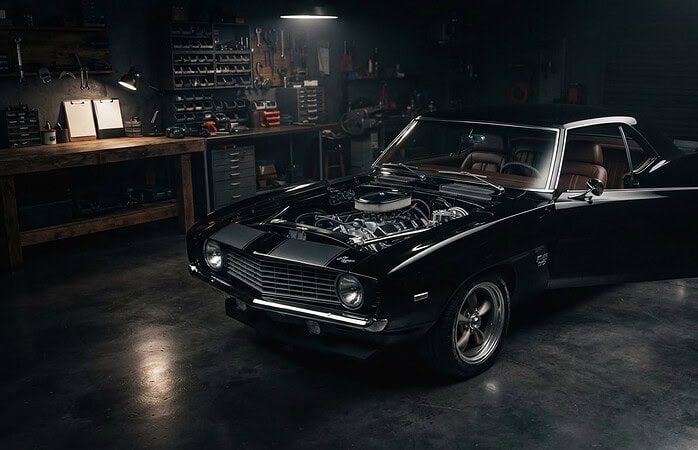

The $100,000 price tag you imagine for your vintage beauty rarely matches the actual check that clears after selling a classic car privately. It is a common belief that cutting out the professional curator saves money, but in May 2026, that DIY logic is costing owners more than ever before. You have likely spent years perfecting the rumble of a Coyote engine or the flawless finish of a bespoke paint job, so it is natural to feel protective of your investment. You want the highest return with the least amount of friction, yet the reality of the current market often delivers the opposite.
This article reveals why the traditional classified approach is failing in a climate where global collector prices dropped 6% in the first quarter of 2026. You will discover how professional consignment maximizes your net profit while shielding you from the anxiety of strangers at your door or the frustration of endless tire-kickers. We will examine the hidden costs of modern selling, from the new 8% luxury tax in Washington state to the rising price of professional appraisals, to show you a more secure and lucrative path to your next automotive chapter.
Key Takeaways
- Learn why the perceived savings of selling a classic car privately often vanish when compared to the higher closing prices achieved through professional market positioning.
- Identify the specific hidden expenses and massive time commitments that turn a DIY sale into a secondary full-time job.
- Understand the modern security risks and insurance liabilities involved in hosting independent viewings and test drives at your private residence.
- Discover how professional representation bridges the gap between complex mechanical upgrades and the high expectations of today’s investment-grade buyers.
- Explore how a curated consignment program eliminates logistical friction while ensuring your vehicle meets the elite standards required for a premium sale.
The Myth of the Profitable Private Sale
The allure of the commission-free sale is a powerful siren song for many owners. It suggests that by cutting out the professional curator, you keep every cent for yourself. In reality, selling a classic car privately in the 2026 market is a complex mechanical and psychological puzzle. Buyers are no longer satisfied with a simple “wash and wax” presentation. They seek investment-grade quality and absolute mechanical transparency. While the Classic Car Club of America provides the framework for what makes a vehicle a true classic, the modern buyer prioritizes how that vehicle performs on the open road. Vintage aesthetics are the hook, but turn-key reliability is the closer. With global collector car prices down 6% in the first three months of 2026, the margin for error has disappeared.
To better understand the complexities of this transition, watch this helpful video:
The Illusion of Total Control
Managing your own listing feels like the ultimate exercise in autonomy. You dictate the terms. You curate the photos. You tell the story. However, this control is often an illusion that leads straight to decision fatigue. In 2026, digital platforms are crowded with noise, and your private ad is constantly fighting against algorithms designed to favor high-volume dealers. This leads to a frustrating cycle of constant inquiries from tire-kickers who lack the capital or the intent to purchase high-performance machinery. Emotional attachment further complicates the process. It is nearly impossible to remain an objective negotiator when a stranger dismisses the meticulous work put into an LS3 crate engine swap or a custom-fabricated chassis. You aren’t just selling a machine; you are defending your legacy, and that is a difficult position from which to negotiate.
Net Profit vs. Gross Sales Price
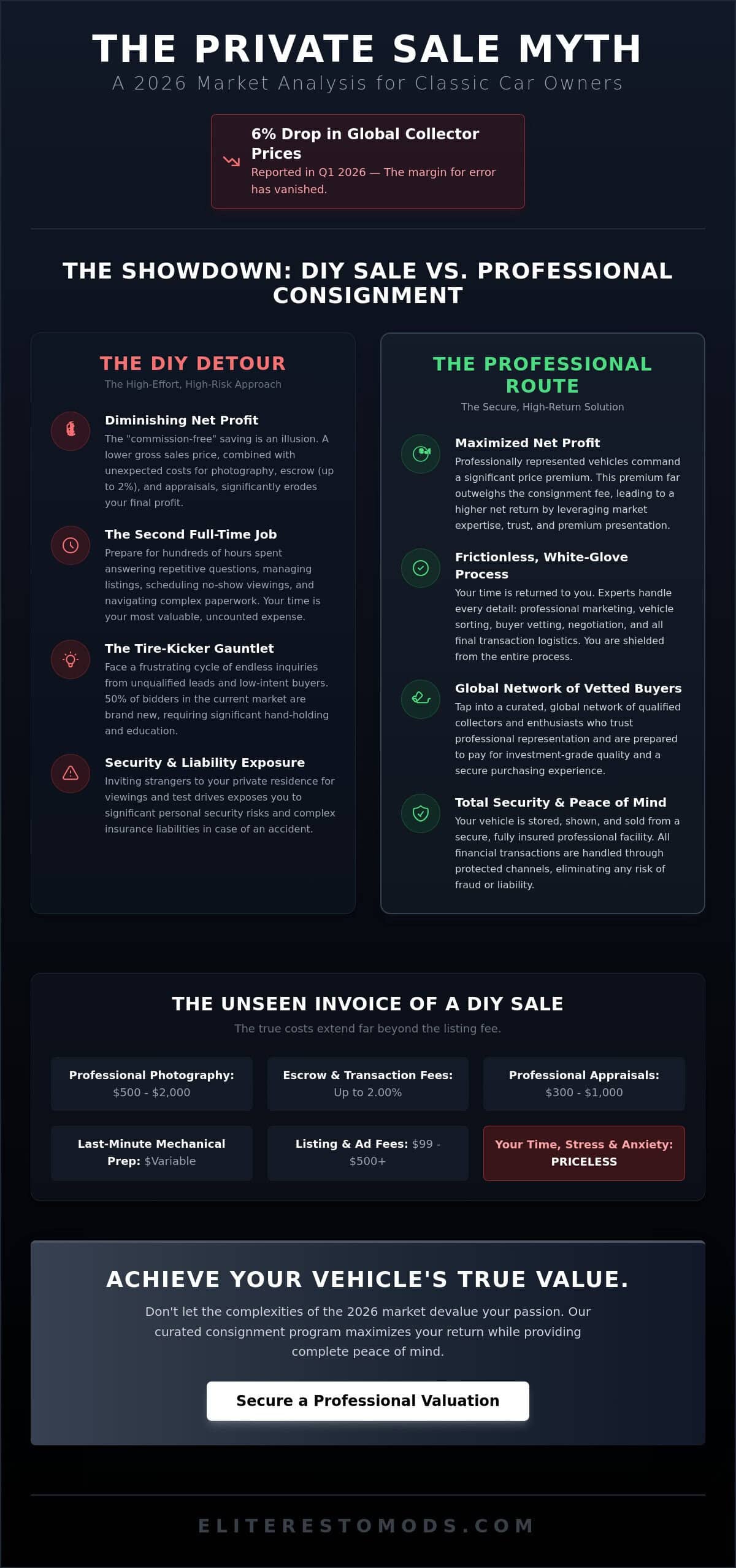
The number written on the bill of sale is rarely the amount that actually improves your bank balance. Net profit in a classic car transaction is the total revenue remaining after accounting for professional photography, escrow fees, mechanical sorting, and the significant value of your personal time. Competitors like collectingcars.com claim that private listings help you “keep more,” but they ignore the gross price gap that exists between a private driveway and a professional showroom. A professionally represented vehicle often commands a significant premium because of the trust and services provided to the buyer. By utilizing a consignment program, you tap into a global network of qualified buyers who are willing to pay for the security of a vetted, elite-level machine. Escrow services alone can cost up to 2.00% of the sale price, and when you add the time spent managing 50% of bidders who are brand new to the market, the DIY approach quickly becomes a false economy. The goal isn’t just to sell; it’s to maximize the return on your automotive passion.
The Hidden Costs of the DIY Approach
The sticker price of a digital listing is deceptive. While platforms like Bring a Trailer or Hemmings might only charge $99 for a basic entry, the true cost of selling a classic car privately involves a heavy tax on your time and resources. In early 2026, the Hagerty market rating reached a 15-year low. This cooling market means buyers are more discerning and less likely to overlook minor flaws. A simple wash and wax no longer suffices for an investment-grade restomod. To compete, you must present a vehicle that is fully sorted, which requires meticulous documentation of everything from the Wilwood brakes to the wiring harness of a Coyote engine. Without the backing of a professional shop, the burden of proof falls entirely on your shoulders.
Time: The Uncounted Expense
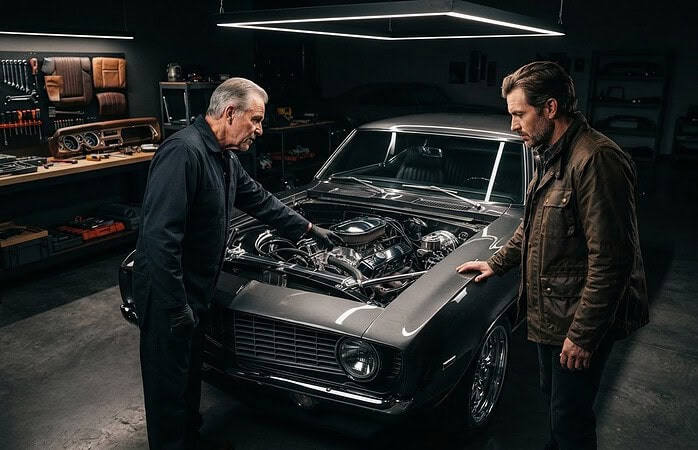
Time is your most valuable asset. Every hour spent answering repetitive questions from unqualified leads is an hour stolen from your actual life. Private buyers are notoriously unreliable, often failing to show up for scheduled viewings after you have spent a full afternoon detailing the engine bay. This logistical friction is compounded by the “days on market” stigma. If a high-performance machine sits for several months without a sale, savvy collectors begin to wonder what is wrong with the build. Managing out-of-state inquiries and title transfers adds another layer of complexity that can quickly turn a hobby into a frustrating second job. Sellers should take specific steps to protect themselves and their time by vetting every inquiry before providing a home address.
Marketing and Presentation Gaps
Smartphone photos cannot capture the raw, visceral soul of a master-built restomod. Professional automotive cinematography is now the industry standard for high-value transactions. A one-hour photoshoot typically costs between $300 and $600, while comprehensive packages that include video can approach $1,000. Additionally, a professional appraisal is essential to justify a premium price, with costs ranging from $350 to $550 for a detailed inspection. These are not optional luxuries; they are requirements to maximize classic car value in a crowded digital landscape. When you add escrow fees of 0.75% to 2.00% and the potential for a 5% Facebook Marketplace shipping fee, the perceived savings of a DIY sale evaporate. Professional representation ensures your vehicle is positioned as a bespoke piece of art rather than just another used machine. If you find the logistics of marketing overwhelming, exploring a professional consignment program can often yield a higher net return by attracting serious, high-net-worth collectors.
Security Risks and the Tire-Kicker Phenomenon
Inviting a stranger into your private sanctuary is a calculated gamble. When you are selling a classic car privately, your home address becomes public data for anyone with a smartphone and a curiosity. This exposure creates a significant security vulnerability for your collection and your family. In the first quarter of 2026, top-end auction houses reported that nearly 50% of registered bidders were new to the market. While fresh interest is good for the industry, it also means your inbox is likely flooded with enthusiasts who lack the financial depth to finalize a six-figure transaction. These tire-kickers consume your weekends with endless questions, only to vanish when it is time to verify funds.
The tire-kicker profile has evolved into a digital-age nuisance. In 2026, they are often armed with half-truths from social media forums, acting as self-appointed inspectors. They arrive with no intention of buying, seeking only to experience the roar of a performance machine they cannot afford. This phenomenon wastes your time and adds unnecessary mileage and wear to a vehicle that should be kept in pristine, showroom condition. Identifying these individuals requires a level of vetting that most private sellers simply don’t have the tools to perform effectively.
Financial and Personal Safety
Verifying a six-figure payment is a technical minefield. Scams in 2026 have become incredibly sophisticated, utilizing fraudulent wire transfers and counterfeit digital signatures that can fool even experienced sellers. Escrow services offer a layer of protection, but they are often more cumbersome than owners anticipate. For a $100,000 car, escrow fees typically range from $750 to $2,000. These costs, combined with the stress of navigating a high-value transaction with a stranger, make a neutral, professional third-party location essential for safety. Handing over the keys to a high-horsepower restomod is an act of immense trust. A machine powered by a Coyote engine or an LS3 crate demands skilled input; it is not a standard commuter vehicle. If a stranger crashes your bespoke functional art during a test drive, the insurance complications are staggering. Most standard policies don’t adequately cover high-value assets during a private sale demonstration, leaving your equity unprotected.
The Burden of Proof
Aggressive negotiations are the new norm in a cooling market. With the Hagerty market rating at a 15-year low in early 2026, buyers feel empowered to pick apart every meticulous detail. They will exploit a minor paint chip or a slightly aged weather seal to demand thousands in discounts. Defending the integrity of your build against these internet experts is emotionally draining and often counterproductive. A professional consignment program acts as a vital buffer between you and the buyer. It removes the personal friction from the deal, ensuring that negotiations remain focused on the vehicle’s unrivaled value rather than the buyer’s desire for a bargain. This professional distance is what ultimately preserves your profit and your peace of mind.
Why Investment-Grade Cars Require Professional Representation
Investment-grade vehicles occupy a distinct tier of the market where mechanical excellence and provenance intersect. While selling a classic car privately might seem feasible for a standard driver, it often fails when the asset in question is a high-performance restomod. Today’s buyers are increasingly sophisticated. They demand the fully sorted standard. This means every component, from the fuel injection mapping to the suspension geometry, must function with modern precision. In a market where 50% of bidders are new to the space as of early 2026, these buyers lack the technical background to evaluate a custom build on their own. They require a professional seal of approval to bridge the trust gap that inherently exists in private transactions.
Restomod vs. Restoration: A Technical Sales Challenge
There is a profound difference between a numbers-matching restoration and a high-performance build. Selling a modified classic is significantly harder because you must justify the engineering choices made during the transformation. A private buyer might question why a vintage chassis was paired with a Coyote engine or whether the Wilwood brakes are properly balanced for the vehicle’s weight. Professional representation provides the technical authority to explain these bespoke details. It transforms a list of parts into a cohesive narrative of performance. To understand why this distinction matters for your bottom line, explore our 2026 guide to selling investment-grade vehicles, which breaks down the technical nuances of the restomod market.
Access to the Right Audience
Public marketplaces are flooded with enthusiasts, but they are rarely populated by qualified buyers. Serious investors avoid the chaos of social media groups and generic listing sites. They prefer curated inventories where the quality is pre-vetted and the transaction is secure. A professional brand acts as a filter, ensuring that only the most meticulous builds reach their eyes. This exclusivity is a powerful tool. It allows for a steady and purposeful sales process rather than a desperate race to the bottom on price. Professional sellers also offer specialized classic car financing, a critical component that private sellers cannot provide. This access to capital often makes the difference between a stalled inquiry and a closed deal. By positioning your vehicle within a world-class collection, you elevate its status from a mere machine to a piece of functional art.
If you are ready to move beyond the limitations of the private market, our consignment program offers the professional representation your investment-grade vehicle deserves.
Navigating the Transition to Professional Consignment
The decision to move away from selling a classic car privately marks the beginning of a more refined, secure chapter for your vehicle. It is a transition from being a target for internet experts to becoming a protected client within an elite ecosystem. Professional consignment removes the heavy logistical weight that often crushes the joy of automotive ownership. You no longer have to worry about the 50% of new market bidders who lack the financial focus to close a deal. Instead, your machine is placed in a world-class showroom where its value is recognized and defended. This shift allows you to reclaim your time while ensuring your investment receives the attention it deserves.
Transparency is the foundation of any successful agreement. A high-performance restomod is a significant asset, and the terms of its sale should reflect that reality. Performance-based marketing ensures that your vehicle doesn’t just sit; it moves through a global network of collectors who understand the soul of American muscle. We look for vehicles that represent the pinnacle of craftsmanship, ensuring that our inventory remains a destination for serious buyers. Only the most meticulous builds make it into our collection, which maintains a level of exclusivity that benefits every seller in the program.
The Elite Consignment Process
Our methodology is systematic and purposeful. It begins with a comprehensive inspection to ensure the vehicle meets our unrivaled standards for quality and reliability. Once accepted, your car undergoes professional detailing to highlight every flawless finish and hand-stitched interior. We then deploy global marketing campaigns that leverage professional automotive cinematography to tell your vehicle’s unique build story. Our team handles every inquiry, vetting potential buyers before they ever see the car. This level of service ensures a steady flow toward a final sale without the friction of unverified leads. You can view the full breakdown of our proven process to see how we transform a stressful sale into a seamless experience.
Securing Your Vehicle’s Legacy
A bespoke piece of functional art deserves a buyer who respects the craftsmanship behind it. We don’t just find a buyer; we find a curator who understands the marriage of brute force and refined comfort. This ensures your vehicle’s legacy is preserved in a garage that values its technical intricacies. The peace of mind that comes with a secure financial transaction cannot be overstated. In a market where 2026 digital scams are increasingly complex, having a professional third party manage the funds protects your equity. The transition is complete when you hand over the keys, knowing the deal is finalized and the funds are secure. Explore our premier consignment services to see how we simplify the sales journey and maximize your return in the 2026 market.
Secure the Future of Your Automotive Legacy
The landscape of 2026 demands a strategic shift. With global collector car prices down 6% in the first quarter and the Hagerty market rating hitting a 15-year low, the margin for error when selling a classic car privately has evaporated. You’ve spent years perfecting the visceral roar of your machine. Entrusting that legacy to a generic digital marketplace often leads to diminished returns and unnecessary personal risk. The DIY approach simply cannot replicate the authority of a world-class curator or the security of a vetted transaction.
Our Elite Certified quality assurance process ensures your vehicle meets the highest standards before reaching our national network of qualified, high-net-worth buyers. We possess the technical expertise in high-performance restomod engineering required to defend the value of your bespoke build. Let Elite Restomods handle the sale of your investment-grade vehicle. Experience the refined elegance of a secure, professional transaction that respects the soul of your car. Your masterpiece deserves a global stage and a buyer who appreciates every meticulous detail.
Frequently Asked Questions
Is selling a classic car privately safe in 2026?
Safety when selling a classic car privately depends on your level of vetting and the security of the transaction platform. Private sales carry inherent risks; sellers should take steps to protect themselves by using escrow services and meeting in neutral locations. With nearly 50% of bidders being new to the market in 2026, the risk of sophisticated wire fraud or physical theft during a viewing is higher than in previous years.
How do I avoid tire-kickers when selling my car myself?
Require proof of funds or a pre-approval letter from a lender before scheduling any in-person viewings. This filter immediately separates serious investors from enthusiasts who simply want to experience the roar of a performance machine. Vetting inquiries through a detailed phone interview helps identify those who understand the technical intricacies of a high-end build versus those who are merely browsing for a weekend thrill.
What are the most common scams when selling a classic car privately?
Fraudulent wire transfers and counterfeit cashier’s checks are the primary threats targeting high-value transactions. Scammers often use overpayment schemes or fake escrow sites to siphon funds or steal vehicle titles. In May 2026, sophisticated digital signature forgery has also become a concern for owners selling a classic car privately without a professional intermediary to verify the transaction’s legitimacy and ensure the funds have truly cleared.
Do I need to provide a warranty when selling a classic car privately?
No, most private sales are conducted on an as-is basis unless a specific written agreement states otherwise. While you aren’t legally required to provide a warranty, modern buyers often demand a level of turn-key reliability that is difficult to guarantee without a professional shop’s backing. Providing a comprehensive folder of mechanical documentation for upgrades like LS3 crates or Wilwood brakes helps build the necessary trust to close the deal.
How much more can a professional dealer get for my classic car?
Professional representation typically nets a higher gross price by attracting high-net-worth buyers who avoid public marketplaces. While a private seller might struggle with market softening in early 2026, a curated showroom uses global reach and specialized financing to maintain premium pricing. This professional premium often offsets consignment fees while also shielding the seller from the logistical nightmare of navigating complex out-of-state registrations and verification processes.
What paperwork is required for a private classic car sale in the US?
A valid vehicle title, a comprehensive bill of sale, and an odometer disclosure statement are the fundamental requirements. Depending on your state, you may also need a release of liability or a smog certificate if the vehicle is not exempt due to its age. For investment-grade machinery, including a detailed build book and professional appraisal documents adds significant value and transparency to the transaction, making the process smoother for both parties.
Can I sell a classic car privately if it still has a lien or is financed?
Yes, but you must coordinate with your lender to ensure the lien is satisfied before the title is released to the new owner. This process adds significant logistical friction to a private sale, as many buyers are hesitant to hand over funds without receiving the title immediately. Professional services often handle these payoffs as part of the transaction, providing a secure bridge between the seller’s bank and the buyer’s capital.
What is the best way to handle test drives for a high-performance restomod?
Conduct test drives only after a price has been agreed upon and a significant, non-refundable deposit has been secured. High-horsepower machines featuring Coyote engines or custom chassis demand respect; they are not standard vehicles for casual drivers. Having a professional handle the demonstration ensures the vehicle is operated safely while protecting your equity from the staggering insurance liabilities that can arise from a private accident during a showing.