
A stunning 1969 Camaro with a six figure price tag can still hide the structural sins of a fifty year old donor car beneath its deep ceramic coating. You recognize the timeless allure of American muscle, yet you refuse to accept the mechanical temperaments of the past. It’s a valid concern; industry data from the 2024 collector car market indicates that nearly 15 percent of high value custom builds face title delays or VIN verification issues during the transfer of ownership. Understanding how to buy a restomod is no longer just about aesthetic preference. It’s about technical due diligence.
Classic soul. Modern precision. You deserve a vehicle that offers the visceral roar of a Coyote engine paired with the absolute reliability of a modern daily driver. Our expert led, 20 point restomod inspection and buying framework allows you to master the complexities of these bespoke machines with confidence. We’ll walk you through the essential mechanical evaluations, from Wilwood braking systems to custom chassis geometry, ensuring your next acquisition is an investment grade masterpiece. This guide provides the exact roadmap you need for a seamless, turn key experience from the first inspection to the final transport.
Key Takeaways
- Define your “Drive-First” philosophy to ensure your acquisition perfectly matches your intended use, from daily cruising to high-stakes investment.
- Audit the mechanical integrity of the build by verifying the seamless integration of modern crate engines and advanced independent suspension geometry.
- Master how to buy a restomod by identifying the “Elite Certified” engineering standards that separate world-class builds from home-garage projects.
- Protect your investment through a rigorous documentation audit, ensuring VIN authenticity and a comprehensive Build Book to maximize future resale value.
- Navigate the complexities of specialized collector financing and professional third-party inspections to secure your high-performance classic with absolute confidence.
Establishing Your Restomod Acquisition Strategy
Buying a restomod is a declaration of intent. It is the refusal to choose between the soul of a 1969 Charger and the reliability of a 2026 supercar. When you’re learning how to buy a restomod, you must first adopt the “Drive-First” philosophy. Unlike a survivor car, which is a fragile piece of history preserved in amber, a restomod is a bespoke machine designed for the pavement. You aren’t buying a trailer queen; you’re buying a high-performance experience that starts with a turn of the key, every single time.
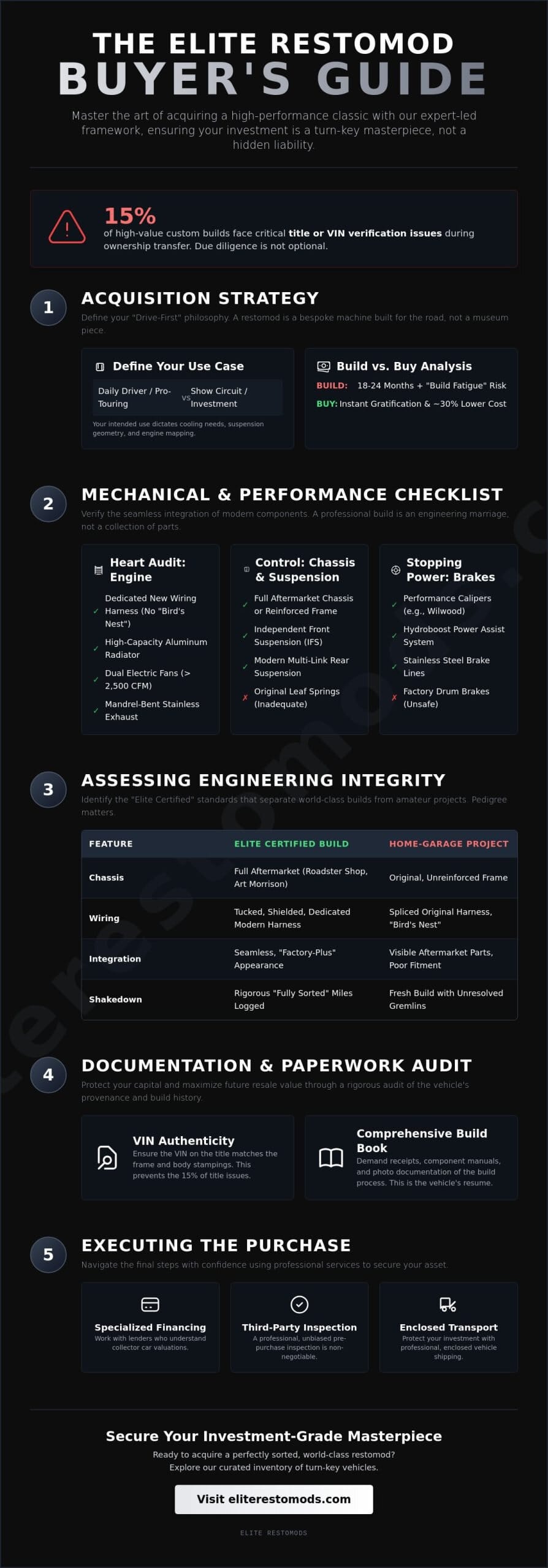
Your strategy begins with a clear use case. A daily driver requires different cooling and fuel injection maps than a show-stopping investment meant for the fairway at Amelia Island. Most collectors find that purchasing a finished, fully sorted vehicle is the most efficient path. Building from scratch often consumes 18 to 24 months of time and carries the risk of “build fatigue.” Buying a completed car offers immediate gratification and often costs 30 percent less than the total sum of parts and labor required for a fresh build. To protect your capital, focus on the best cars to restomod, such as the first-generation Mustang or the C2 Corvette, which consistently retain value.
Before diving into the mechanicals, it’s vital to understand the industry definitions. Citing a foundational What is a Restomod? resource helps distinguish these builds from traditional restorations. While a restoration seeks to replicate the past, a restomod seeks to improve upon it using 21st-century engineering. For collectors weighing their options, a detailed look at the restomod vs restoration decision can clarify the investment value, engineering differences, and driving experiences of both paths.
The Investment Perspective
In the 2026 market, “fully sorted” is the phrase that commands a premium. This means the vehicle has undergone rigorous shakedown miles to eliminate the gremlins common in fresh builds. High-quality American muscle restomods now see a consistent price floor, with top-tier builds frequently outperforming traditional numbers-matching restorations at major auctions. Collectors are increasingly prioritizing “turn-key” reliability over factory-correct chalk marks.
Setting a Realistic Performance Baseline
Modern performance in a 50-year-old chassis is a feat of engineering. You must decide if you want a “Pro-Touring” build, which utilizes aggressive suspension geometry for the track, or a standard “Restomod” focused on street comfort. Understanding the key distinctions between pro touring vs restomod philosophies will help you determine which build style best matches your driving ambitions. For most drivers, 500 horsepower is the sweet spot. It provides a visceral roar and effortless passing power without sacrificing drivability or requiring constant maintenance. Balance is everything. Pair an LS3 or Coyote crate engine with Wilwood brakes and a hydroboost system for a truly unrivaled experience.
The Mechanical & Performance Checklist
A restomod is more than a vintage shell. It’s a high-performance machine. When you’re researching how to buy a restomod, the mechanical audit is your most critical step. You aren’t just buying a car; you’re buying an engineering marriage between mid-century style and 2026 reliability. Start with the integration. A professional build shouldn’t look like a collection of parts. It should look like a factory-ordered masterpiece that never existed.
The “Heart” Audit: Crate Engine Integration
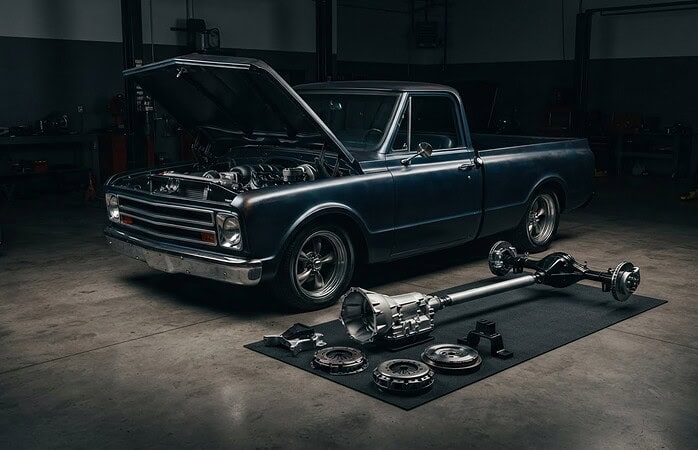
Modern power requires modern management. When you inspect an LS3 or Gen 3 Coyote swap, verify the wiring harness is a dedicated, new component. Professional-grade wire tucking is a sign of a meticulous builder. If you see a “bird’s nest” of loose colored strands, walk away. Listen for the exhaust note. A high-end build features mandrel-bent stainless steel pipes that deliver a crisp, resonant roar. The cooling system must be a high-capacity aluminum setup with dual electric fans. These fans should pull at least 2,500 CFM to keep a 500-horsepower beast cool in 90-degree traffic. For inspiration on the standard of finish to expect, you can study examples of quality restomods featured at recent industry showcases.
Chassis and Stopping Power
Raw power is dangerous without control. The original 1960s frames weren’t built for 600 lb-ft of torque. Look for frame reinforcement or a full aftermarket chassis from names like Roadster Shop or Art Morrison. A premium restomod utilizes independent front suspension (IFS) and a multi-link rear to replace antiquated leaf springs. Inspect the brake lines for stainless steel construction and high-quality fittings. These components ensure the Wilwood or Brembo calipers provide consistent pressure. Understanding these mechanical nuances is the secret to how to buy a restomod that performs as well as it looks.
Tires tell a story. Check the DOT date code on the sidewall. If the rubber is older than five years, it’s a safety hazard regardless of tread depth. Look for rubbing marks inside the wheel wells. A 335mm rear tire looks incredible, but it’s useless if it slices into the fender during a hard corner. Every fitting, hose, and bolt should reflect a commitment to excellence. This level of detail is what separates a weekend project from an investment-grade vehicle. You can explore a curated selection of precision-engineered vehicles to see these standards in action.
Assessing Engineering Integrity and Builder Pedigree
Buying a restomod isn’t just about the aesthetics. It’s about the math beneath the metal. A professional shop build carries an “Elite Certified” weight that home-garage projects simply can’t match. When you’re learning how to buy a restomod, you have to look past the shiny exterior to find the engineering truth. A professional build features a wiring harness that looks like a work of art, not a bird’s nest. Choosing a custom restomod builder with a national reputation ensures your investment holds its value. These shops follow a rigorous 150-point inspection process that hobbyists often ignore. It’s the difference between a car that looks fast and a machine that is engineered to perform reliably at highway speeds for hours on end.
The 10-Foot vs. 1-Foot Rule
High-end builds look great from across the street. The real test happens when you’re 12 inches away. Inspect the paint for orange peel or “fisheyes” in the clear coat. A world-class finish should be mirror-smooth. Look at the panel gaps. They should be uniform, typically measuring between 3mm and 4mm across the entire vehicle. Open the doors and shut them. A quality build produces a solid, mechanical thud rather than a hollow rattle. Don’t forget the undercarriage. On a premium build, the floor pans are as clean as the hood. They are often painted or powder-coated to match the theme, showing that no detail was too small to overlook during the transformation.
Modern Comforts in a Classic Shell
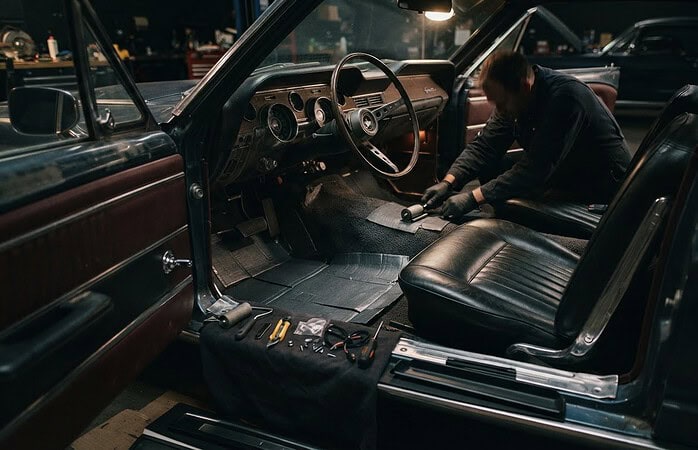
The magic of a restomod lies in the marriage of 1960s soul and 2026 reliability. Test the HVAC system immediately. A Vintage Air Gen V unit should drop the cabin temperature by at least 20 degrees within five minutes. Listen for the silence. High-quality sound deadening, such as Dynamat or Hushmat, should isolate road noise, making the cabin feel like a modern luxury sedan. Check the gauges. Digital-to-analog conversions must be instantaneous. If the tachometer needle bounces or the Bluetooth lags, the integration is flawed. Everything should feel seamless. You want the visceral roar of a Coyote or LS3 engine paired with the refined comfort of a bespoke, hand-stitched interior. It’s about having the best of both worlds without compromise.
National reputation matters because of the “builder premium.” A car built by a recognized name carries a documented history that appraisers and collectors trust. This pedigree acts as an insurance policy for your resale value. When you understand how to buy a restomod with a clear pedigree, you’re protecting your future investment. When the build is backed by a professional shop, you aren’t just buying a car; you’re buying peace of mind and a legacy of performance.
Documentation, Provenance, and the Paperwork Audit
A restomod is more than a collection of high-end parts; it is a narrative of engineering excellence. When you are learning how to buy a restomod, the quality of the paperwork often dictates the long-term value of the investment. You are not just buying a car. You are buying the hours of labor, the precision of the welds, and the legitimacy of the donor chassis. Start with a rigorous VIN verification. The chassis identity must match the title and registration perfectly. Discrepancies here are red flags that can lead to legal nightmares or total losses at the DMV. A “Clean” title is the industry standard for investment-grade vehicles. While “Rebuilt” titles exist, they typically trigger a 30% to 40% reduction in market value, regardless of the build quality.
The Build Book acts as the vehicle’s biography. This comprehensive binder should contain every receipt, component manual, and photograph from the initial teardown to the final ceramic coating. In the elite secondary market, a meticulous build book often adds $10,000 or more to the final hammer price. It provides the transparency required to justify a six-figure price tag. This level of detail is a hallmark of certified classic cars, which have become the new standard for collectors who demand documented perfection and verifiable performance.
The Paper Trail Checklist
Precision requires proof. Verify that the engine serial numbers, whether it is a Gen 3 Coyote or a supercharged LT4, match the builder’s manifest exactly. Request a granular component list. You need to know the specific part numbers for your Wilwood brake pads or your Ridetech coilover settings to ensure seamless future maintenance. Finally, confirm the existence of a valid, transferable warranty. A professional builder who stands behind their work offers peace of mind that a backyard project simply cannot match.
Insurance and Valuation
Protecting your asset requires more than a standard auto policy. You must secure an “Agreed Value” policy rather than “Actual Cash Value.” If a total loss occurs, Actual Cash Value pays out based on the price of a standard 1969 Camaro, not a $250,000 bespoke masterpiece. Secure a professional appraisal from a specialist who understands the restomod market before the wire transfer is initiated. This appraisal serves as the foundation for your insurance coverage and validates the vehicle’s provenance. Provenance transforms a machine into an investment, ensuring its “investment-grade” status remains intact for decades.
Ready to own a vehicle with a documented legacy of excellence? Explore our inventory of world-class builds at Elite Restomods.
Executing the Purchase: Financing, Inspection, and Transport
The hunt concludes. Now the precision work of closing the deal begins. Mastering how to buy a restomod involves more than just a checkbook; it demands a calculated strategy for logistics, protection, and long-term care. You aren’t just buying a car. You’re acquiring a bespoke piece of functional art. This final stage requires the same level of attention as the build itself to ensure your investment is protected from the showroom to your private collection.
Financing the Dream
Securing a six-figure automotive investment requires specialized lenders who understand the intrinsic value of high-performance builds. Traditional banks often struggle to value a 1967 Mustang with a 2026 price tag; however, collector-specific firms like Woodside Credit or Grundy offer terms extending up to 144 months. For those with credit scores above 740, interest rates remain competitive, often falling between 6.5 and 8 percent. Interestingly, classic car restomods for sale are frequently easier to finance than unrestored survivors. Lenders don’t just look at the age of the chassis. They appreciate the turn-key reliability of a modern Coyote engine or an LS3 crate motor. These components represent lower collateral risk than a 60-year-old original drivetrain that may fail after the first mile.
The Final Handover
Executing the final steps of how to buy a restomod requires a focus on documentation and physical verification. If you’re purchasing remotely, insist on a high-definition video walk-around. This shouldn’t be a shaky cell phone clip. Demand a 4K tour that captures the cold start, the idle, and the flawless reflection of the paint under studio lighting. Even if the car is “certified” by a dealer, hire a third-party inspector for a fresh set of eyes. A professional PPI confirms that the meticulous details, from the hand-stitched leather to the suspension geometry, meet your expectations.
Once the deal is inked, prioritize enclosed transport. Open-air trailers expose your investment to road debris and weather. A dedicated enclosed carrier ensures your vehicle arrives in showroom condition. Verify the carrier’s cargo insurance covers at least 100 percent of the purchase price before the wheels leave the pavement. Most premium carriers provide $250,000 to $500,000 in coverage per vehicle as a standard.
The first 50 miles of ownership serve as the true introduction. This is when the “then” of vintage aesthetics meets the “now” of unrivaled performance. Monitor the digital gauges. Feel the immediate response of the Wilwood brakes. Listen for the clean roar of the exhaust. This initial shake-down cruise transitions the car from a curated object to a driven reality. You’ve moved beyond the checklist. Now, you simply drive.
Secure Your Legacy on the Open Road
Mastering how to buy a restomod requires more than just an eye for vintage steel; it demands a rigorous 100-point inspection of every mechanical component. You’ve learned to prioritize engineering integrity and builder pedigree to ensure your investment stands the test of time. A bespoke build isn’t just a car. It’s a fusion of 1960s soul and 2026 performance. We handle the complexities of documentation and the paperwork audit so you don’t have to. Our team provides specialized financing for investment-grade builds and arranges national enclosed transport for every client. This ensures your vehicle arrives in flawless condition, ready for the street. You’re not just buying a machine. You’re acquiring a piece of functional art. The roar of a Coyote engine and the precision of Wilwood brakes are now within your reach. It’s time to turn your childhood dream into a high-performance reality.
Browse Our Curated Inventory of Elite Certified Restomods
Frequently Asked Questions
Is a restomod a good investment compared to an original classic car?
Restomods often provide higher liquidity and stronger resale value than stock originals because they appeal to a broader demographic of modern drivers. According to the 2023 Barrett-Jackson annual report, high-end restomods commanded a 30 percent premium over traditional restorations in several muscle car categories. You’re investing in a bespoke experience that marries timeless aesthetics with 21st-century performance. It’s about owning a machine that’s as reliable as it’s beautiful.
Can I daily drive a restomod, or is it strictly for weekends?
You can absolutely use a high-quality restomod as a daily driver. These builds feature modern fuel injection and climate control systems that make them reliable in 90-degree heat or stop-and-go traffic. While 85 percent of owners reserve their vehicles for weekend excursions, the integration of an LS3 or Coyote crate engine ensures turn-key reliability. It isn’t just a showpiece. It’s a functional masterpiece designed for the open road.
How do I know if a restomod was built by a professional shop or an amateur?
Professional builds are defined by a comprehensive build book containing 100 percent of the receipts, wiring diagrams, and component specs. Amateur projects often show messy wiring under the dash or mismatched paint in door jambs. Look for a shop-backed warranty or a certificate from a recognized builder. When you learn how to buy a restomod, checking for uniform panel gaps and professionally tucked engine bays is your first line of defense.
What is the most important mechanical component to check on a restomod?
The chassis is the most critical component to inspect because it dictates how the car handles 500-plus horsepower. A stock 1969 frame wasn’t designed for modern torque, so look for aftermarket frames from manufacturers like Roadster Shop or Art Morrison. Ensure the braking system uses at least 12-inch rotors and multi-piston calipers to handle the increased speed. A powerful engine is useless if the skeleton can’t support the force.
Does a restomod require special maintenance compared to a modern car?
Restomods require the same maintenance schedule as a modern performance vehicle, typically involving oil changes every 5,000 miles. Since they use late-model drivetrains, you can source filters and spark plugs at any local parts store. You’ll avoid the constant tuning required by vintage carburetors. It’s the perfect marriage of vintage soul and low-maintenance modern tech. You spend less time under the hood and more time on the asphalt.
Why are restomods so much more expensive than standard classic cars?
The price reflects the 1,500 to 2,500 man-hours required to strip a car to bare metal and integrate modern systems. You aren’t just buying a car; you’re paying for bespoke engineering and premium parts like Wilwood brakes or custom leather interiors. Sourcing a donor vehicle and performing a frame-off restoration involves hundreds of specialized tasks. This intensive process ensures the vehicle performs like a 2026 supercar while retaining its 1960s identity.
How does modern engine technology affect the insurance cost of a classic car?
Modern engine swaps usually increase insurance premiums because the total replacement cost is significantly higher than a stock classic. Hagerty and other specialty insurers report that agreed-value policies are essential for protecting your 100,000-dollar-plus investment. These policies ensure you’re covered for the full build cost rather than just the blue book value of the original VIN. It’s a small price for total peace of mind and financial protection.
What should I look for in a restomod title to avoid legal issues?
Verify that the VIN on the title matches the stamped number on the chassis and the door tag to avoid 100 percent of registration headaches. When researching how to buy a restomod, ensure the title is clean and not marked as salvage or rebuilt unless the price reflects it. Check that the engine numbers are documented if your state requires emissions testing for newer powerplants. Legal clarity is the foundation of a confident purchase. For collectors still weighing their options, understanding the full restomod vs restoration comparison can help clarify which path best aligns with your ownership goals and long-term investment strategy.