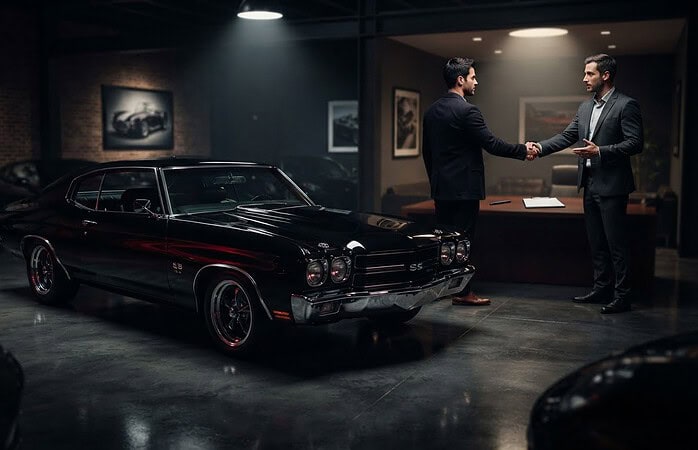

A pristine, numbers-matching garage queen is no longer the undisputed king of the auction block. While originality once commanded every premium, the 2026 market has pivoted toward a new standard of excellence: the high-performance, daily-drivable classic. You’ve likely felt the sting of a vintage engine that refuses to fire or the white-knuckle anxiety of 50-year-old brakes in modern traffic. It’s a common frustration that begs a vital question: is a restomod a good investment long term compared to a static museum piece?
Vintage soul; modern pulse. We believe true luxury isn’t just about the silhouette; it’s about the visceral thrill of a fuel-injected V8 and the confidence of a bespoke, laser-aligned chassis. You’ll discover how elite certified restomods balance nostalgic soul with modern reliability to create functional art that serves as a high-demand, investment-grade asset. We’ll examine the shifting collector landscape, the financial logic of capital preservation through professional craftsmanship, and how our vehicle sourcing and consignment programs ensure your asset appeals to the next generation of enthusiasts.
Key Takeaways
- Understand the critical transition from static museum pieces to high-utility assets that blend iconic heritage with contemporary performance.
- Analyze whether a restomod is a good investment long term by comparing the reduced maintenance of modern drivetrains against the rising costs of vintage engine upkeep.
- Learn why professional documentation and Elite Certified Restomods are essential for mitigating the risks of substandard builds and preserving resale value.
- Identify the 2026 market drivers that have established the daily-driven classic as a globally recognized status symbol and a hedge against obsolescence.
- Discover how to utilize professional vehicle sourcing and consignment programs to ensure your automotive collection remains liquid and highly desirable.
Defining the Restomod as a Long-Term Financial Asset
The automotive investment landscape has undergone a radical transformation. For decades, the gold standard was absolute historical fidelity. Today, the 2026 market tells a different story. Investors now seek the marriage of iconic silhouettes and modern engineering. This evolution is central to understanding Defining a Restomod as a distinct asset class. It’s no longer enough for a car to look beautiful; it must perform with the precision of a contemporary supercar.
Determining whether is a restomod a good investment long term requires looking past the chrome. It involves evaluating the vehicle as a functional tool for the modern world. While a museum piece remains tethered to a trailer, a professionally built restomod offers the liquidity of usage. You can drive it to dinner, take it on a cross-country rally, or navigate city traffic without the constant threat of a vapor-locked carburetor. This utility is what drives long-term value in a market that increasingly rewards experience over static display.
To better understand this concept, watch this helpful video:
The Evolution of the Collector Market
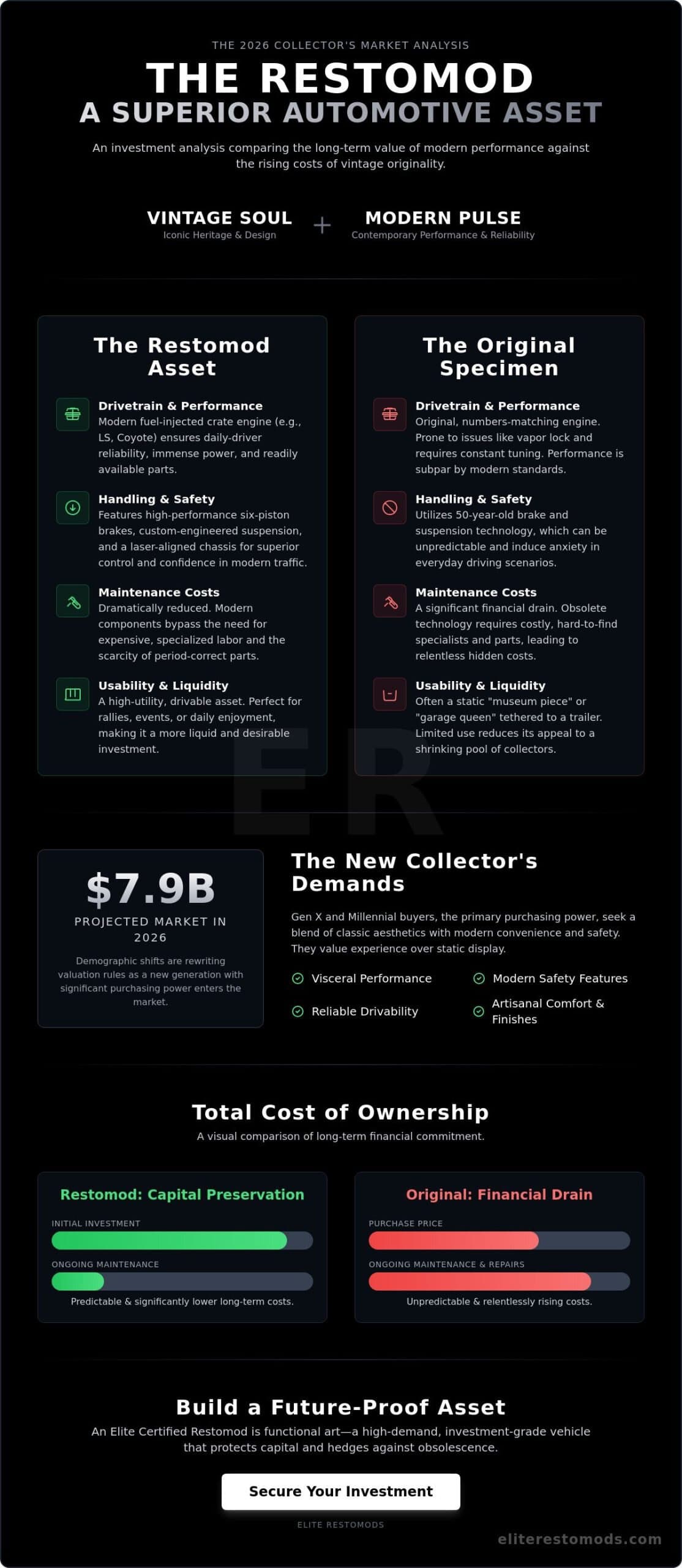
Demographic shifts are rewriting the rules of valuation. Gen X and Millennial collectors now represent the primary purchasing power in the classic car restoration market, which is projected to reach $7.9 billion in 2026. These buyers don’t want to spend their weekends chasing oil leaks or struggling with manual steering. They demand the visceral thrill of a big-block engine paired with the safety of six-piston brakes and the comfort of climate control. The garage queen is fading. In its place stands the pro-touring machine, a vehicle designed to be seen and heard on the open road. Several factors signal an investment-grade build:
- Integration of a name-brand, modern crate engine.
- Custom-engineered suspension systems.
- High-end, artisanal interior finishes.
- Comprehensive digital documentation of the build process.
Restomod vs. Restoration: The Value Divergence
Traditional restorations rely on rarity and historical records. A restomod relies on the quality of its transformation. Identifying the tipping point where modification adds more value than original parts is an art form. A fully sorted vehicle commands a significant premium because it eliminates the uncertainty of vintage technology. Professional builds, such as our meticulous assembly process, ensure that every component is harmonized. When a classic truck or muscle car features a modern LS or Coyote powerplant, it gains a level of reliability that original components simply cannot match. This mechanical integrity is the cornerstone of capital preservation. When you ask if is a restomod a good investment long term, the answer lies in the vehicle’s ability to remain relevant and reliable for the next generation of drivers.
The Financial Mechanics: Maintenance and Total Cost of Ownership
Owning an original vintage vehicle is often like managing a beautiful, leaking bank account. The hidden costs are relentless. Specialized labor for obsolete technology is becoming a rare and expensive luxury. In contrast, the restomod market has become a booming industry because it addresses these fiscal drains. By integrating modern hardware, owners bypass the high-cost barrier of specialized vintage tuning and the scarcity of period-correct components.
Investors frequently ask, is a restomod a good investment long term, when evaluating the total cost of ownership. Beyond the initial purchase, the financial health of the asset depends on its preservation. Modern cooling systems, featuring high-flow aluminum radiators and electric fans, prevent the thermal stress that leads to warped heads and blown gaskets. Robust electrical looms and modern fuse blocks eliminate the fire risks and parasitic draws that plague 50-year-old technology. These upgrades don’t just improve the drive. They protect the structural and aesthetic integrity of the vehicle for decades. This reliability is a key factor in 2026 appraisals. Insurers and lenders increasingly favor vehicles with documented, modern safety and performance standards over original cars that may have hidden structural decay.
Reducing the Maintenance Deficit
Tuning a bank of carburetors is a dying art. It requires hours of expert labor and constant adjustment to account for temperature and altitude. Modern fuel injection systems provide set-it-and-forget-it reliability. Modern synthetic lubricants and advanced gasket materials eliminate the persistent oil weeping common in original blocks. This ease of ownership explains why is a restomod a good investment long term for those who value performance over pure preservation. Because these vehicles are more dependable, they avoid the rot of non-use where seals dry out and fluids stagnate during long periods of inactivity.
Reliability as a Value Protector
A car that refuses to start is a liability. Reliability is the ultimate protector of market value. If a prospective buyer knows the vehicle can handle a 200-mile weekend trip without a support trailer, the pool of interested collectors expands. Catastrophic failures in vintage engines can be financially devastating and difficult to repair due to parts scarcity. Modern components, such as crate engines from major manufacturers, are far more resilient and come with widespread serviceability. To ensure your vehicle remains in peak condition, consider our professional maintenance and storage solutions to provide a stable environment for your high-performance art.
Mitigating Risk: The Importance of Elite Certification
Risk is the silent partner in any high-value acquisition. In the custom automotive world, the “lipstick on a pig” build represents a genuine threat to your capital. A mirror-finish paint job often masks structural decay or a bird’s nest of amateur wiring. Professional documentation serves as the cornerstone of future resale value. It transforms a subjective custom project into a transparent, verifiable asset. Third-party inspections and professional certifications act as a hedge against the unknown. They provide the buyer with a systematic breakdown of every component, from the grade of the bolts to the thickness of the clear coat.
Determining if is a restomod a good investment long term depends heavily on the pedigree of the builder. Elite Certified Restomods undergo a rigorous vetting process that ensures every mechanical and aesthetic detail meets a world-class standard. This level of scrutiny distinguishes a hobbyist project from an investment-grade machine. When a vehicle carries a certified pedigree, it speaks to the next generation of collectors with a voice of reliability and perfectionism. It suggests that no detail was too small to be overlooked in the pursuit of excellence.
The Rigorous Quality Assurance Process
True quality begins where the eye rarely wanders. Modernizing the frame and suspension isn’t just about ride height; it’s about structural geometry. A laser-aligned, reinforced chassis provides the necessary rigidity to handle modern horsepower. An integrated electrical harness is equally vital. We replace brittle, 50-year-old wires with modern, high-capacity looms that support everything from electronic fuel injection to premium sound systems. Artisanal interiors further elevate the asset. Hand-stitched leather and custom-machined accents aren’t merely aesthetic. They represent a level of luxury craftsmanship that justifies a premium market position. Learn about our rigorous build process to see how we harmonize these complex systems.
Sourcing the Right Foundation
The ceiling of your investment is often determined by the floor of your project. A compromised chassis or a body riddled with filler will eventually devalue the asset, regardless of the components installed. This is why professional vehicle sourcing is a critical first step. We identify high-integrity donor cars that provide the perfect canvas for a bespoke transformation. By starting with a verified foundation, you protect your long-term equity. If you are wondering if is a restomod a good investment long term, remember that the most successful portfolios are built on a foundation of excellence, not just a coat of paint.
Market Trends: Who Is Buying Restomods in 2026?
The collector car market is no longer a localized hobby. It’s a sophisticated global asset class. In 2026, the “Daily Driven Classic” has emerged as a definitive status symbol for those who value both heritage and utility. This shift represents a fundamental change in how enthusiasts view their collections. They don’t want vehicles that require a support team just to visit a local show. They want to experience the raw, visceral excitement of 1960s design without the mechanical anxiety of 1960s engineering. This desire for reliability is why many now ask, is a restomod a good investment long term, especially when compared to the volatility of traditional luxury goods.
Global demand for American muscle restomods is surging. While the United States market remains a powerhouse with a 6.7% CAGR, the UAE has become the fastest-growing market at an 8.0% CAGR. This international appetite increases liquidity for high-end builds. Digital auction platforms have streamlined the selling process, allowing investors to reach a global audience in seconds. Regarding future regulations, restomods are uniquely positioned for longevity. Under the Low Volume Vehicle Manufacturers Act, small-scale producers can build up to 325 replica cars per year provided they use engines that meet current model-year emissions standards. By utilizing modern, EPA-compliant powertrains, professional restomods are effectively future-proofed against tightening environmental laws that may one day sideline original, carbureted engines.
Demographic Shifts in Collecting
Younger collectors, specifically those from Gen X and the Millennial generation, are the primary drivers of this market. They prioritize the experience of the drive. For these buyers, air conditioning, Bluetooth connectivity, and modern power steering aren’t just luxuries; they’re requirements. They view their cars as bespoke functional art rather than static historical artifacts. This demographic shift ensures that the demand for restomods will continue to climb as younger enthusiasts gain more purchasing power. They seek the bridge between vintage style and modern comfort, making the professionally built restomod the ideal asset for their portfolios.
Appreciation Potential of Named Builders
The “Singer Effect” has officially crossed over from air-cooled Porsches to the world of American muscle. A documented, professional build from a recognized master builder appreciates at a significantly higher rate than a home-built project or a generic restoration. This is because the market values the engineering pedigree and the assurance of a systematic build process. When you evaluate if is a restomod a good investment long term, consider the reputation of the curator. A vehicle with a certified lineage is a tangible, high-performance reality that holds its value through market cycles. View our current inventory of investment-grade restomods to see the standard of excellence that modern collectors demand.
Ready to secure an asset that combines brute force with refined comfort? Explore our custom build services to begin your journey toward owning a piece of functional art.
Conclusion: Building Your Long-Term Portfolio
The decision to acquire a high-end automotive asset often balances on the razor’s edge between passion and pragmatism. As we’ve explored throughout this guide, the collector market is shifting away from the era of the static museum piece. Modern enthusiasts demand more than just a silhouette; they demand a machine that functions with the precision of a contemporary supercar. This fundamental change in collector behavior provides a definitive answer when asking if is a restomod a good investment long term. By solving the problem of mechanical obsolescence, a professionally engineered build preserves the iconic soul of the classic era while ensuring the vehicle remains a viable, high-performance asset for decades to come.
The final verdict for any serious investor is clear. A restomod provides a unique dual-return. You gain the immediate, visceral experience of a world-class driving machine and the long-term security of an asset that appeals to the next generation of collectors. While originality will always have its niche, the liquidity of a daily-drivable classic ensures your capital isn’t locked in a garage. It’s out on the road, where its value is actively demonstrated and maintained through every mile of reliable performance.
Strategic Acquisition Tips
Building a resilient automotive portfolio requires a strategic approach to vehicle sourcing. While muscle cars represent the leading vehicle type with a 31.4% market share in 2026, choosing the right donor chassis is only the beginning. To maximize future demand, you must balance bespoke features with market-friendly aesthetics. Overly personalized color palettes or eccentric modifications can sometimes limit the resale pool. Instead, focus on timeless designs paired with cutting-edge mechanical components that offer universal appeal. Once acquired, protection is paramount. Utilizing climate-controlled storage is a non-negotiable step for asset protection. It prevents the environmental degradation and moisture-related decay that can quietly erode your investment’s value over time.
Your Partner in Automotive Excellence
Elite Restomods acts as the sophisticated bridge between your long-held dream and a tangible, high-performance reality. We simplify the path to ownership through expert consultation and a systematic build process that prioritizes perfectionism at every stage. Our commitment to your collection doesn’t end at the point of delivery. When the time comes to rotate your assets or realize your gains, our consignment program offers a professional platform to reach a global audience of high-net-worth enthusiasts. We manage the intricacies of the sale, including enclosed vehicle transport, to ensure your asset transitions to its next curator with the same level of care and exclusivity with which it was created. Contact us today to discuss your next investment and discover how we can help you build a legacy of automotive excellence.
Securing Your Automotive Legacy
The transition from static display to active performance defines the 2026 collector market. You’ve seen how modern engineering breathes new life into historical icons, turning them into reliable, daily drivable assets. By prioritizing certified craftsmanship and documented excellence, you eliminate the risks associated with amateur builds. This strategic approach ensures that your vehicle remains relevant as global tastes evolve toward functional luxury.
Ultimately, deciding if is a restomod a good investment long term requires a focus on mechanical integrity and Elite Certified quality. Bespoke artistry meets modern engineering in every project we curate. These aren’t just machines; they’re high-performance realities designed to be enjoyed on the open road. Your journey into the next era of collecting begins with a vehicle that’s fully sorted and ready for the miles ahead.
Explore our inventory of fully sorted, investment-grade restomods and find the perfect cornerstone for your portfolio. The road is calling. It’s time to answer with confidence.
Frequently Asked Questions
Are restomods more expensive to insure than standard classic cars?
Insurance for restomods typically follows an agreed value policy that reflects the actual build cost rather than a generic market average. While standard classic premiums often range from $200 to $600 annually, high value assets can command up to $290 per month. This premium protects the significant capital invested in modern performance hardware and bespoke finishes. It’s a necessary step for securing the full replacement value of a one of one machine.
Do restomods lose value if they are driven regularly?
Regular use rarely diminishes the value of a professional build because these vehicles are engineered specifically for the road. Unlike numbers matching originals that suffer from seals drying out and fluids stagnating during non use, a well maintained restomod remains market ready. Reliability is a core component of its worth. Investors often find that is a restomod a good investment long term because the car remains an active, enjoyable part of their lifestyle rather than a static liability.
Which classic car models make the best restomod investments?
American muscle cars currently lead the market with a 31.4% share of restomod interest. Icons like the Ford Mustang, Chevrolet Camaro, and Chevelle remain the safest bets for long term demand due to their timeless silhouettes. However, vintage SUVs are seeing rapid growth in 2026. Models such as the Ford Bronco and Dodge Ramcharger have become highly sought after canvases for transformations that marry brute force with refined luxury comfort.
How does a restomod affect the car s resale value compared to a stock restoration?
A restomod often commands a higher price among modern collectors who prioritize drivability and safety over historical accuracy. While absolute originality still holds weight at traditional concours events, the 39.5% market share for restomod services indicates a massive shift in buyer preference. A professionally sorted build often sells faster because it appeals to a broader demographic of younger buyers who want to drive their investments without mechanical anxiety.
Can I finance a restomod as an investment vehicle?
Specialized classic car financing makes it possible to acquire these high value assets with structured terms. Traditional banks often struggle to value custom builds, but specialized lenders understand the intrinsic worth of high end components and professional labor. We offer tailored financing solutions that treat your vehicle as a legitimate investment. This allows you to preserve your liquid capital while securing a high performance piece of functional art.
What are the most important upgrades for long-term value retention?
Reliable drivetrains and integrated electronics are the most critical upgrades for retaining market value. Swapping in a modern crate engine ensures the car remains serviceable at any modern performance shop. Beyond the engine, a fully engineered suspension and a modern electrical harness are essential for long term operational integrity. These core mechanical foundations ensure the vehicle remains a tangible, high performance reality for the next generation of drivers.
How do I verify the quality of a restomod before purchasing?
Verifying quality requires a deep dive into the build’s documentation and a professional third party inspection. You should look for a comprehensive history of the components used and the shop’s assembly process. Checking for our Elite Certified status provides immediate peace of mind. It ensures the vehicle has undergone a rigorous vetting process that covers everything from structural chassis alignment to the meticulous application of the final aesthetic finishes.
Is it better to buy a completed restomod or commission a custom build?
Buying a completed vehicle offers immediate gratification and a fixed cost. It’s the fastest way to add a high performance asset to your collection through our vehicle sourcing services. Commissioning a custom build allows for a bespoke experience where you participate in the transformative journey. You select every artisanal finish and mechanical specification to match your personal vision of automotive perfection, ensuring the final product is a true reflection of your passion.