
The most expensive classic car you’ll ever own is the one you bought for a bargain. It’s a seductive trap. You’re drawn to the visceral roar of a vintage V8 and the nostalgic silhouette of a bygone era, yet the fear of a catastrophic mechanical failure often lingers just beneath the surface. You understand that the sticker price is merely the entry fee. Many enthusiasts find themselves paralyzed by the hidden costs of buying a classic car, from the scarcity of period-correct components to the premium commanded by master technicians.
We’re here to replace that anxiety with the confidence of modern engineering. You’ll learn how to navigate the current 2026 market correction, where global prices have dipped 6 percent, and discover why an elite restomod offers a superior return on investment compared to a temperamental original. We will break down the meticulous reality of ownership, covering everything from climate-controlled storage requirements to the restomod advantage. This is your roadmap to transforming a vintage asset into a reliable, high-performance masterpiece that serves as a bespoke piece of functional art.
Key Takeaways
- Calculate the total acquisition cost beyond the auction hammer, factoring in professional enclosed vehicle transport and specialized sourcing to secure an investment-grade asset.
- Identify the hidden costs of buying a classic car within the mechanical debt of vintage systems, where specialized labor and rare components can quickly exceed initial estimates.
- Contrast the maintenance demands of heritage machinery with modern engineering to determine a predictable budget for ongoing operational reliability.
- Explore the necessity of premium infrastructure, such as climate-controlled storage and agreed value insurance, to safeguard your vehicle’s long-term appreciation.
- Learn why choosing a certified restomod redefines the financial equation by front-loading quality to eliminate the frustration of chronic downtime.
The Sticker Price Illusion: Purchase Price vs. Total Acquisition Cost
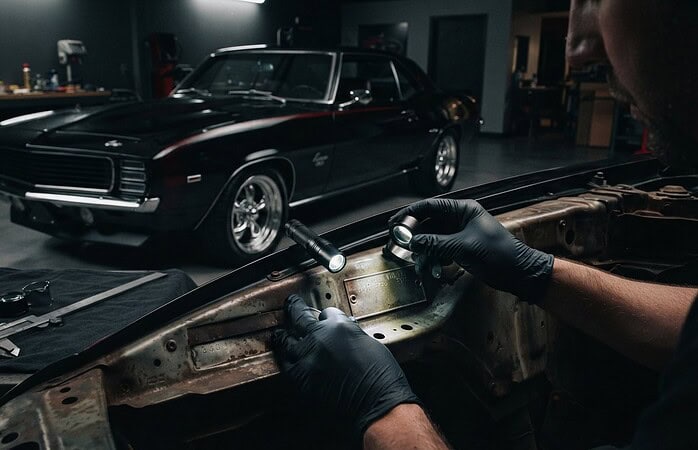
The auction block is pure theater. Adrenaline peaks as the hammer falls, and for a fleeting moment, the winning bid feels like the final number. It isn’t. To truly understand what is a classic car in the context of a modern investment portfolio, you must look past the initial transaction. The hidden costs of buying a classic car begin the moment the gavel hits. You aren’t just acquiring a vintage silhouette; you’re inheriting a history of mechanical debt and logistical requirements that standard automotive purchases simply don’t have. Every new acquisition requires a comprehensive baseline inspection to strip away the seller’s optimism and reveal the mechanical truth beneath the patina.
To visualize how these expenses accumulate, watch this breakdown of the real investment involved:
Logistics and Enclosed Transport Requirements
High-value assets demand high-value protection. Shipping an investment-grade vehicle on an open trailer is a gamble that few seasoned collectors are willing to take. Road debris, inclement weather, and exposure to the elements can cause irreversible damage to sensitive trim or high-end paint finishes. Professional enclosed vehicle transport acts as a mobile sanctuary, shielding your asset from the hazards of the interstate. Beyond the physical shipping, specialized vehicle sourcing often involves administrative fees, title authentication, and cross-state compliance checks. These logistical layers ensure that your acquisition arrives in the exact condition you purchased it, but they represent a necessary addition to the total acquisition cost.
The Sorting Process: Making a Classic Roadworthy
The most significant hurdle after purchase is a phase known as sorting. This is the critical period, typically the first 500 miles, where the vehicle is subjected to real-world stress to reveal latent issues. Even cars described as “turn-key” often arrive with aging tires that look perfect but lack structural integrity, or electrical gremlins that only appear after an hour of driving. Sorting is the bridge between a static display piece and a functional machine. For uncertified cars, it’s common to budget an additional 10 to 15 percent of the purchase price for this initial troubleshooting. You’ll likely face the immediate replacement of degraded seals, the rectification of minor fluid leaks, and the calibration of vintage fuel systems to ensure the car is truly roadworthy.
The Mechanical Debt: Maintenance and Specialized Labor Realities
Modern daily drivers have conditioned us to expect 10,000-mile oil changes and maintenance-free ignition systems. Vintage reality is far more demanding. A classic engine often requires a full service every 1,000 to 3,000 miles, including valve adjustments, point gaps, and chassis lubrication that modern technicians have never even seen. This mechanical debt is one of the most significant hidden costs of buying a classic car. If you ignore these tight intervals, you aren’t just risking a breakdown; you’re accelerating the depreciation of a finite asset.
Finding a professional who understands the nuances of a vintage carburetor or a mechanical fuel injection system is becoming a luxury. Most modern technicians are trained to swap components based on a diagnostic code. They lack the tactile intuition required to tune by ear or feel. This scarcity drives labor rates upward and creates the dangerous “While We Are In There” trap. A simple water pump replacement often spirals into a full cooling system overhaul once the radiator is out and the scale is visible. While a restomod can mitigate these issues by introducing modern EFI and reliable cooling, the initial integration of this tech requires specialized expertise. Understanding these hidden costs of buying a classic car is the fundamental difference between owning a blue-chip investment and a budget-draining liability.
The Premium for Specialized Automotive Craftsmanship
Quality labor is an investment in longevity. Standard repair shops often lack the specialized English wheels, shrinker-stretchers, and artisanal upholstery tools needed for high-end restoration. Choosing a custom restomod builder ensures that the work is performed once, correctly, using methods that respect the vehicle’s heritage while enhancing its performance. These specialists charge a premium because they provide a level of precision that a generalist cannot replicate. If you’re looking for a vehicle that has already cleared these hurdles, you might explore our current inventory of sorted classics.
Parts Scarcity and the OEM vs. Aftermarket Debate
Authenticity comes at a high price. New Old Stock (NOS) parts, which are original factory components that were never used, are becoming increasingly rare. Collectors often pay five to ten times the cost of a reproduction part just to ensure perfect fitment and period-correct aesthetics. Conversely, budget aftermarket parts frequently suffer from poor tolerances and inferior materials. Integrating modern performance hardware, such as Wilwood brakes or Coyote engines, into a vintage chassis requires custom fabrication that further adds to the build’s complexity. It’s the marriage of brute force and refined comfort, but the engineering required to make those two worlds coexist is never cheap.
Infrastructure and Protection: Storage, Insurance, and Value Retention
A standard residential garage is a sanctuary for a daily driver, but for a bespoke automotive asset, it’s often a liability. Vintage vehicles are susceptible to environmental degradation that modern plastics and galvanized steels simply ignore. Humidity is the silent architect of oxidation. It creeps into frame rails and compromises delicate artisanal leather. Beyond the structural risks, the hidden costs of buying a classic car include the specialized maintenance required for dormant vehicles. You’ll need high-quality battery tenders to preserve electrical health and ethanol stabilizers to prevent fuel system gumming. Even detailing requires a higher level of care, utilizing pH-neutral chemicals that won’t strip heritage lacquers or damage sensitive chrome finishes.
The Critical Need for Climate-Controlled Storage
Maintaining a constant atmosphere is non-negotiable for value retention. Fluctuating temperatures cause condensation, leading to mold in interiors and rust in hidden crevices. Professional climate controlled car storage offers more than just a roof; it provides a stable environment where humidity is strictly managed to prevent leather shrinkage and seal dry-rot. Research indicates that climate-controlled units typically add a modest monthly premium to standard storage rates, yet the return on investment is realized in the prevention of thousand-dollar interior remediations. These facilities also provide a level of security and fire suppression that residential settings rarely match. When you consider that a quality restoration can exceed 3,000 labor hours, the cost of professional housing is a minor premium to protect a major investment.
Agreed Value Insurance and Appraisal Fees
Standard auto insurance is designed for depreciating assets. It pays out actual cash value, which is a financial disaster for a high-end build. You need agreed value coverage. This ensures that in the event of a total loss, you receive the full amount established at the policy’s inception without depreciation. For a bespoke project, this requires periodic professional appraisals to account for market shifts and performance upgrades. This is especially critical when navigating classic car financing, as lenders require proof of adequate coverage to protect the asset’s worth. In the 2026 market, where some values have corrected by 6 percent, having a locked-in value provides a necessary layer of financial certainty. Expect to pay for certified appraisals every two to three years to ensure your policy reflects the true craftsmanship of your vehicle.
The Intangible Tax: Time, Frustration, and Opportunity Cost
Time is the silent predator of the vintage automotive experience. While financial ledgers capture the tangible expenses, they rarely account for the months, or even years, a vehicle remains immobilized in a restoration queue. This intangible tax is one of the most draining hidden costs of buying a classic car. Managing a multi-year project requires a level of emotional fortitude that many enthusiasts underestimate. You aren’t just paying for parts and labor; you’re spending your weekends chasing rare components and mediating between specialized vendors. The project car rabbit hole is a well-documented phenomenon where the cumulative investment in a build eventually eclipses its finished market value, leaving the owner with a sunken cost that can never be recovered through a sale.
The Restoration Shop Queue and Project Delays
The reality of the current restoration landscape is defined by significant labor shortages and specialized parts backlogs. High-end shops often have waitlists extending twelve to eighteen months before a project even enters the disassembly phase. A comprehensive restoration can easily consume two to three years, effectively stealing multiple driving seasons from the owner. The opportunity cost of tied-up capital in a non-running vehicle represents potential investment gains sacrificed for a static garage ornament. This period of dormancy doesn’t just stall your enjoyment; it introduces new mechanical risks as seals dry out and fluids settle, potentially adding more work to the final bill.
Turn-Key Reliability vs. The DIY Dream
The allure of the DIY dream often masks the financial reality of amateur mistakes. Inexperience in vintage metalwork or complex wiring frequently results in errors that require professional correction at double the original cost. There is a profound psychological value in a vehicle that is ready for reliable daily driving from the moment of delivery. Achieving this level of excellence requires a systematic approach to quality assurance. Our meticulous restoration process is designed to eliminate the trial-and-error phase, delivering a machine that is as dependable as it is beautiful. By front-loading the engineering work, you bypass the frustration of unreliability and move straight to the visceral joy of the open road.
If you’re ready to skip the restoration queue and invest in a vehicle that’s ready to perform, browse our inventory of elite certified restomods today.
The Elite Solution: Why Certified Restomods Redefine the Math
The traditional path to vintage ownership is often a war of attrition. You buy a bargain, then spend years fighting mechanical debt and sourcing rare components. This is where the financial math shifts. By choosing a vehicle from a fully sorted inventory, you eliminate the hidden costs of buying a classic car before they have a chance to manifest. Front-loading your investment into a certified vehicle isn’t just a purchase; it’s a strategic move to secure a blue-chip asset. You trade the uncertainty of a project for the confidence of a machine that has already been through the fire of a professional build. It’s the marriage of brute force and refined comfort without the vintage headaches.
Eliminating the Money Pit with Elite Certification
A certified build is a transformation that bridges two worlds. We start with the soul of a vintage icon and re-engineer it for the modern era. The inherent flaws of 1960s technology, such as fading drum brakes and temperamental carburetors, are replaced by precision EFI systems and high-performance hardware. When you browse classic car restomods for sale, you’re looking at vehicles that have undergone a rigorous quality assurance process. Every seal, wire, and bolt is scrutinized to ensure operational reliability. This meticulous approach solves the problem of unreliability before you ever turn the key. You gain the peace of mind that comes with an investment-grade vehicle that’s ready to be utilized, not just displayed.
Predictable Ownership and Long-Term Value
The 2026 market is seeing a clear generational shift. Younger collectors, with 38 percent of owners under 45 now opting for restomods, are driving a surge in demand for usability. This trend ensures that a professionally built car retains its value better than a standard restoration that’s too temperamental to drive. Documentation is the currency of the collector world. A vehicle with a documented, professional build history commands a significant resale advantage. When it’s time to upgrade your collection, our professional consignment services provide a streamlined path to liquidity, leveraging the brand’s reputation for excellence. By accounting for the hidden costs of buying a classic car upfront, you ensure your journey is one of exhilaration rather than financial frustration.
Your dream shouldn’t be a project; it should be a tangible, high-performance reality. We invite you to explore our current inventory of ready-to-drive icons and experience the pinnacle of bespoke automotive craftsmanship.
Secure Your Bespoke Automotive Legacy
Owning a piece of history is a transformative journey that demands more than raw passion; it requires a systematic approach to risk management. You’ve discovered how the initial sticker price is often just a prelude to deeper financial commitments. By accounting for the hidden costs of buying a classic car early, you shift the narrative from managing a project to enjoying a masterpiece. True value lies in eliminating mechanical debt through precision engineering and securing your asset with climate-controlled infrastructure.
We provide the bridge between your long-held dream and a tangible, high-performance reality. Our Elite Certified Quality Assurance process ensures every vehicle is fully sorted. We offer national enclosed transport and specialized classic car financing options to streamline your acquisition. You shouldn’t settle for a budget-draining project when you can command a blue-chip investment designed for the open road. Explore our inventory of fully sorted, investment-grade restomods and begin your next chapter with absolute confidence.
Frequently Asked Questions
What is the #1 hidden cost most new classic car owners overlook?
The most overlooked expense is the sorting process, which involves troubleshooting a newly acquired vehicle during its first 500 miles of operation. Even cars marketed as turn-key often require significant calibration to address latent issues like aging seals or electrical gremlins. This phase is one of the primary hidden costs of buying a classic car that can add 10 to 15 percent to your initial acquisition budget.
How much should I budget annually for classic car maintenance?
You should typically budget between 1 and 3 percent of the vehicle’s total value for annual maintenance and preventative care. Heritage engines demand frequent service intervals, often every 1,000 to 3,000 miles, compared to the 10,000-mile windows of modern daily drivers. This budget covers specialized fluids, chassis lubrication, and the periodic tuning of vintage fuel systems required to maintain peak performance and operational reliability.
Is a restomod more or less expensive to maintain than a stock classic?
A restomod is generally less expensive to maintain over the long term because it utilizes modern, reliable components like electronic fuel injection and upgraded cooling systems. While the initial integration of these high-performance parts requires specialized expertise, they eliminate the frequent adjustments required by vintage carburetors and points-style ignitions. This shift from heritage maintenance to modern operational standards significantly reduces the recurring labor costs associated with traditional ownership.
Why is agreed value insurance more expensive than standard car insurance?
Agreed value insurance costs more because it guarantees a specific payout that reflects the true market value of an investment-grade asset rather than a depreciated figure. Standard policies use actual cash value, which fails to account for the meticulous craftsmanship and high-performance hardware found in elite builds. This premium ensures that your bespoke piece of functional art is fully protected against total loss at a price established by professional appraisals.
Can I use a regular mechanic for my vintage restomod?
You should avoid using general repair shops for a vintage restomod because they often lack the specialized tools and tactile intuition required for artisanal builds. Modern technicians are trained for diagnostic code-based component swapping rather than the custom fabrication and tuning required for heritage chassis. Entrusting your vehicle to a master builder ensures that modern performance upgrades are maintained with the precision they demand to preserve long-term value.
What are the storage requirements for a high-value classic car?
A high-value asset requires climate-controlled storage that maintains consistent humidity and temperature levels to prevent oxidation and leather degradation. Standard residential garages expose sensitive trim and artisanal interiors to fluctuating environments that can cause rapid deterioration. Professional facilities also provide advanced security and fire suppression systems, which are essential for protecting the significant labor hours invested in a world-class restoration.
Is buying a project car actually cheaper than buying a finished restomod?
Buying a project car is rarely cheaper than acquiring a finished restomod when you factor in the rising costs of specialized labor and parts scarcity. The project car rabbit hole often leads to expenses that exceed the vehicle’s finished market value, especially when amateur mistakes require professional correction. Choosing a fully sorted, certified vehicle allows you to account for the hidden costs of buying a classic car upfront and bypass the years of frustration.
How do transport costs affect the final price of a classic car?
Transport costs represent a necessary layer of the total acquisition cost, especially when utilizing enclosed vehicle transport to protect high-end finishes from road debris. Shipping an investment-grade asset on an open trailer is a gamble that can result in irreversible damage to sensitive trim and paint. When you factor in professional sourcing and secure delivery, these logistical expenses are a vital investment in preserving the vehicle’s condition from purchase to delivery.