
What if the soul of your vintage icon didn’t have to be temperamental to be authentic? You’ve likely experienced the frustration of a stubborn cold start or the anxiety of a lean spike during a spirited drive. It’s a common tension for those who crave heritage design but demand modern excellence. Optimizing fuel injection on a restomod is the essential evolution that turns a temperamental classic into a reliable, high-performance masterpiece. This isn’t just a mechanical upgrade; it’s the meticulous synchronization of modern sensors and vintage iron to achieve functional art.
You’ll learn to master the technical intricacies of EFI systems to ensure turn-key reliability and smooth power delivery across the entire RPM range. We’ll examine the latest 2026 hardware, including the faster processing of Edelbrock Pro-Flo 4 systems and the refined self-tuning capabilities of the Holley Sniper 2. This guide previews the essential steps to increasing fuel efficiency without sacrificing that visceral performance you love. By the end, you’ll have the confidence to bridge the gap between a nostalgic dream and a modern, high-performance reality. It’s time to build a vehicle that is meant to be utilized and enjoyed, not just displayed.
Key Takeaways
- Move beyond the limitations of the carburetor to embrace the cold-start reliability of modern engineering. Discover how to protect your vintage engine from the inconsistencies of modern ethanol-blended fuels and varying altitudes.
- Unlock the secrets of optimizing fuel injection on a restomod by mastering the relationship between the ECU and precise pulse width modulation. This technical foundation ensures your engine receives the exact fuel delivery it requires for every combustion cycle.
- Balance traditional aesthetics with contemporary performance by choosing the right fuel delivery architecture. Compare the carburetor-like charm of Throttle Body Injection against the individualized cylinder balance provided by Multi-Port systems.
- Learn the essential differences between dyno-focused power maps and the street-tuning required for visceral, smooth power delivery. Achieve a calibration that offers both peak performance and effortless real-world driveability.
- Understand the meticulous standards of the Elite Certified approach, where bespoke fuel solutions are integrated into a comprehensive build process. Elevate your project from a simple machine to a piece of reliable, high-performance functional art.
The Evolution of Performance: Moving Beyond the Carburetor
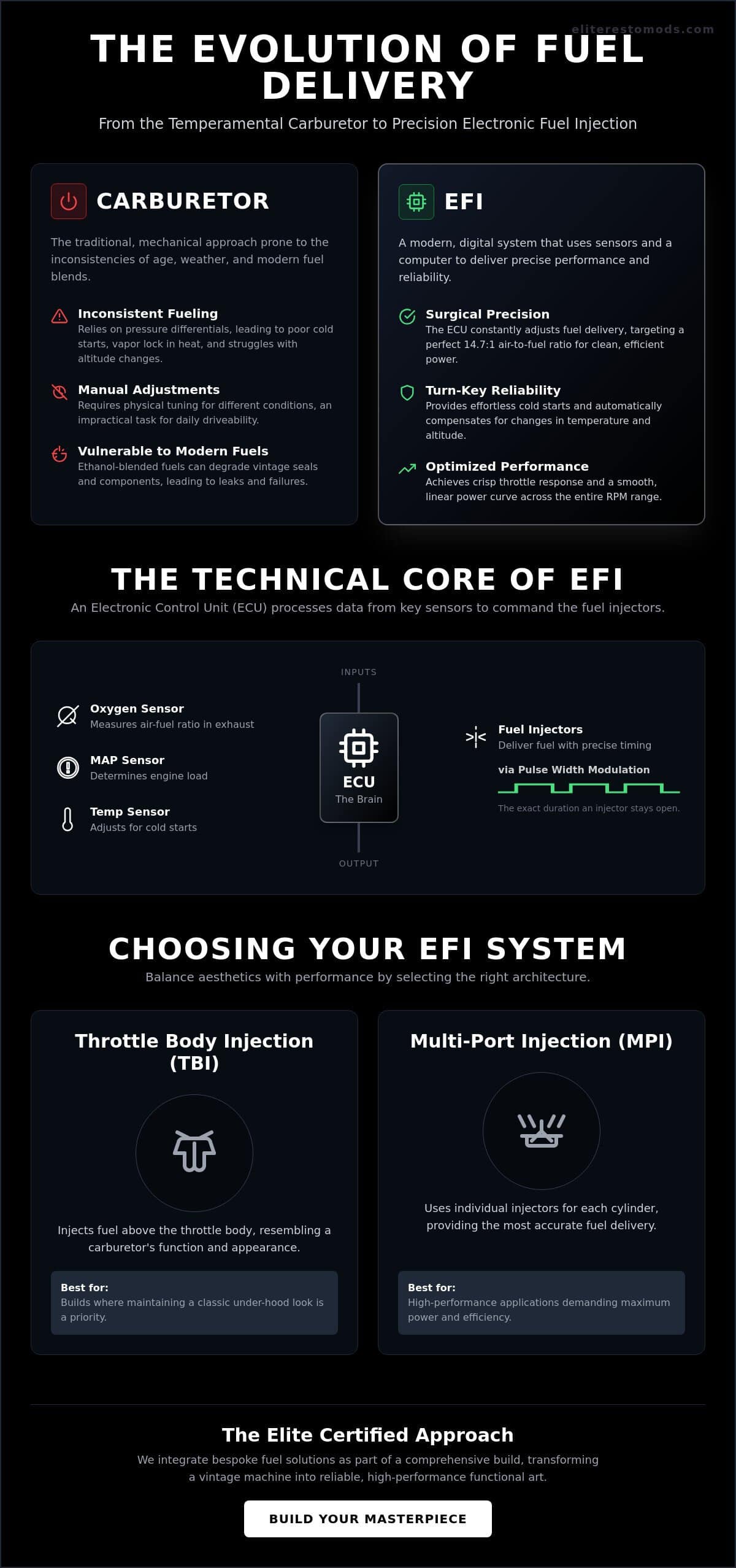
The roar of a classic V8 is a sensory masterpiece. It evokes a golden age of design and raw mechanical power. Yet, for many enthusiasts, that nostalgia is dampened by the temperamental nature of a traditional carburetor. Modern ethanol-blended fuels, which didn’t exist when these machines were originally engineered, often wreak havoc on brass floats and rubber seals. Altitudes change. Temperatures shift. The mechanical simplicity of the past becomes a liability in a world that demands turn-key reliability and consistent performance.
This is where the digital age meets classic iron. The Evolution of Fuel Injection represents a fundamental shift from approximate fueling to surgical precision. By optimizing fuel injection on a restomod, we replace mechanical guesswork with high-speed data processing. This digital calibration of air-fuel ratios ensures peak efficiency under any condition, whether you are cruising at sea level or climbing a mountain pass. Beyond the immediate performance gains, a fully sorted fuel system significantly enhances the market value and desirability of classic car restomods for sale, positioning them as investment-grade assets rather than high-maintenance hobbies.
To better understand how these modern upgrades manifest in a real-world build, watch this technical overview:
The Limitations of Vintage Fuel Delivery
Vintage fuel systems are prone to mechanical fatigue. Aged fuel pumps lose pressure. Floats stick. These failures are more than just an inconvenience; they are risks to the engine’s longevity. Heat soak is a recurring nightmare for high-performance builds. In a congested urban environment or on a scorching summer afternoon, fuel can boil within the lines. This leads to vapor lock, leaving you stranded. Inconsistent fueling also causes carbon buildup and premature cylinder wear. It’s a slow degradation of the soul of the machine, one that we meticulously address through our services to ensure every component meets modern standards of excellence.
The Promise of Electronic Fuel Injection (EFI)
EFI provides the clarity that mechanical systems lack. An Electronic Control Unit (ECU) makes real-time adjustments for temperature, engine load, and atmospheric pressure. It constantly seeks the perfect stoichiometric ratio. This 14.7:1 balance of air to fuel results in clean, efficient combustion that a carburetor simply cannot replicate. The result is visceral. Throttle response becomes crisp. Power delivery is linear. Your vintage engine finally feels as potent and refined as its design suggests.
The Technical Core: Sensors and Pulse Width Modulation
The Electronic Control Unit (ECU) acts as the master curator of your engine’s performance. It is the silent conductor of a mechanical symphony. While a carburetor relies on physics and pressure differentials, the ECU interprets a constant stream of data to make millisecond decisions. At the heart of this digital orchestration is pulse width. This term refers to the precise duration an injector remains open to deliver fuel. Optimizing fuel injection on a restomod requires a deep understanding of how these micro-adjustments influence the engine’s character. It is the difference between a machine that merely runs and one that breathes with purpose.
To achieve this level of refinement, the system relies on high-fidelity feedback loops. The wideband oxygen sensor is the most critical component in this dialogue. Unlike vintage narrowband sensors that only provide a binary signal, a wideband sensor offers a continuous, detailed report of the actual air-fuel ratio. This allows the ECU to employ adaptive learning algorithms. These systems observe real-world driving patterns and self-correct over time, ensuring your vintage icon maintains its composure despite changes in fuel quality or environmental conditions. If you are just beginning to explore these digital horizons, a Beginner’s Guide to Performance Tuning provides an excellent foundation for understanding how these components interact.
Critical Sensors in an Optimized System
Precision begins with accurate data. Most modern builds utilize either a Manifold Absolute Pressure (MAP) or Mass Air Flow (MAF) strategy to calculate engine load. MAP sensors are often favored in restomods for their aesthetic cleanliness and reliability in high-performance applications. These sensors work in tandem with coolant and intake air temperature probes to adjust for cold starts and heat soak. The Throttle Position Sensor (TPS) acts as the direct link between your right foot and the engine’s response. It dictates acceleration enrichment, providing that immediate, visceral punch when you demand power. Every sensor must be calibrated to ensure the transition from idle to wide-open throttle is seamless and predictable.
Managing the Injector Duty Cycle
Power requires fuel, but volume is not the only metric that matters. Calculating the safe limits of injector capacity is a vital step in any high-horsepower build. We generally aim for a maximum duty cycle of 80 percent. This leaves a critical safety margin for the hardware. Over-sizing injectors is a common pitfall. While large injectors support massive power, they often struggle to provide the tiny, controlled bursts needed for a smooth idle or low-speed driveability. The relationship between fuel pressure and injector flow rates must be balanced with surgical precision. This level of detail is a standard part of our meticulous build process, where we treat every mechanical choice as a contribution to a larger piece of functional art.
Choosing Your System: Throttle Body vs. Multi-Port Injection
Selecting the right architecture is a defining decision in the developmental journey of any world-class build. It is where you decide if your project will whisper its modern capabilities or proudly display them. Throttle Body Injection (TBI) serves as an elegant aesthetic bridge. These systems replace the traditional carburetor with a unit that mimics its form, allowing you to retain a factory-correct appearance while gaining the precision of digital control. It is a favorite for those who value the heritage of an original engine bay but demand the reliability of a modern daily driver.
Multi-Port Fuel Injection (MPFI) represents the pinnacle of individualized performance. By placing an injector at each intake port, the system ensures superior cylinder-to-cylinder balance. This eliminates the inherent distribution flaws of a shared plenum. When optimizing fuel injection on a restomod, the choice often comes down to timing. Batch fire systems trigger injectors in groups, which is a reliable and straightforward approach. However, sequential injection provides surgical timing, firing each injector exactly as its specific intake valve opens. This level of refinement results in a smoother idle and more efficient low-speed operation, making it the preferred choice for high-end, investment-grade builds. It’s about matching the fuel system to the specific character of your custom restomod builder project.
Aesthetic vs. Performance Priorities
Heritage doesn’t have to be sacrificed for power. Many enthusiasts choose TBI to maintain the “under-the-hood” soul of a classic muscle car. However, TBI has a performance ceiling, particularly in high-output forced induction builds where air-fuel distribution becomes critical. MPFI is the undisputed king for modern engine swaps. It provides the headroom needed for massive horsepower while maintaining the manners of a luxury grand tourer. This Electronic Fuel Injection Guide provides a deep dive into how these systems behave on high-displacement platforms, illustrating why MPFI is often the standard for those seeking the ultimate in modern operational reliability.
Fuel System Plumbing Requirements
The beauty of a modern fuel system is often hidden beneath the chassis. High-pressure fuel lines and robust return systems are non-negotiable. While external pumps were once the norm, modern builds favor in-tank solutions. These pumps run cooler and quieter, submerged in the fuel they deliver. For track-oriented pro-touring builds, we often integrate surge tanks. These secondary reservoirs prevent fuel starvation during high-G cornering, ensuring that the engine never misses a beat. Every fitting and line is a testament to our commitment to perfectionism, ensuring your functional art performs as flawlessly as it looks.
The Tuning Phase: Calibrating for Driveability and Power
Tuning is where the mechanical hardware gains its unique personality. It begins with a foundational map. This is a safe, calculated baseline that allows the engine to breathe for the first time. Optimizing fuel injection on a restomod is not a one-time event but a layered process of meticulous refinement. We pay particular attention to the art of cold-start enrichment and idle air control calibration. These settings ensure that your vintage icon fires with modern confidence; it should feel as reliable as a contemporary luxury sedan whether it is a crisp autumn morning or a humid summer afternoon. This phase is the bridge between a dream and a high-performance reality.
Many enthusiasts focus exclusively on the dyno. High horsepower numbers look impressive on paper. However, the dyno is only half the story. It measures peak power in a controlled environment. Street tuning is where the visceral experience is truly crafted. It captures real-world transitions. It addresses how the car behaves when you lift off the throttle or cruise through a quiet neighborhood. Data logging acts as our eyes, capturing the detailed story of the engine’s performance through every gear and load scenario. This ensures that the brute force of the engine is always tempered by refined control.
The Tuning Process Step-by-Step
We begin by verifying mechanical health. A tuner cannot fix a mechanical vacuum leak or a faulty ground with a digital keyboard. Steady-state tuning follows. We hold the engine at specific RPM and load points to refine the fuel map with surgical precision. Then come the wide-open throttle pulls to find the limit of safe power. The final stage is driveability refinement. We smooth out tip-in and deceleration to ensure the power delivery is as elegant as the car’s bespoke interior. Every transition must be seamless.
Common Tuning Pitfalls to Avoid
Modern systems often boast auto-tune features. They are helpful but should never replace professional oversight. A computer lacks the intuition of a world-class curator. Another common error is focusing solely on fuel. Ignition timing is equally critical for engine safety and throttle response. Don’t fall into the trap of chasing a peak number at the expense of long-term reliability. If you desire a machine that balances brute force with refined comfort, browse our Elite Certified restomods to see the results of this precision tuning in action.
The Elite Certified Approach to Precision Fuel Delivery
Every Elite Certified restomod represents a relentless pursuit of mechanical perfection. We don’t simply install aftermarket kits; we curate high-performance experiences. Optimizing fuel injection on a restomod is a sophisticated endeavor that requires more than a laptop and a wiring harness. It demands a holistic understanding of the vehicle’s unique DNA. Every build undergoes a rigorous multi-point fuel system inspection to ensure long-term stability. We verify everything from tank baffling and fuel rail pressure to the integrity of every electrical connection. This meticulousness ensures that the bespoke fuel solutions integrated into our services perform flawlessly under the most demanding conditions.
Our Meticulous Build Process
The journey begins with selection. We analyze the specific power goals and aesthetic desires of each client to determine the optimal EFI architecture. Whether it’s the period-correct look of a throttle body system or the raw efficiency of multi-port injection, the choice is always intentional. Our master technicians lead the final calibration phase. They spend countless hours on the road and the dyno refining the software to match the hardware’s potential. This is a transparent and collaborative journey. You can discover the depth of our restoration process, where every solder joint and fuel line routing is treated with the reverence of fine art. We don’t hide the mechanical complexity. We master it for your benefit.
The Result: A Masterpiece of Functional Art
The sensory payoff is undeniable. A perfectly tuned engine doesn’t just run; it sings with a crisp, authoritative note. You feel it in the immediate, linear throttle response. You hear it in the steady, confident idle that remains unshakable even after a cold start. This level of reliability allows you to drive your investment across the country with total peace of mind. It transforms a vintage asset into a usable masterpiece that commands respect on the road and the show floor. Every vehicle in our inventory is fully sorted for immediate, turn-key enjoyment. A professionally optimized fuel system is the hallmark of a premier restomod. In fact, optimizing fuel injection on a restomod is the single most important step in ensuring your vintage icon is ready for the modern world. It represents the final realization of a long-held dream.
Realizing the Modern Potential of Your Classic Icon
The journey from a temperamental vintage machine to a modern masterpiece is defined by the quality of its heartbeat. We’ve explored how transitioning from traditional carburetors to sophisticated EFI architectures provides the consistency your investment deserves. Whether you choose the heritage aesthetic of TBI or the surgical precision of multi-port injection, the goal remains the same: functional art that is meant to be driven. Optimizing fuel injection on a restomod bridges the gap between nostalgic design and 2026 performance standards, ensuring every turn of the key results in immediate, turn-key reliability.
Our master-built bespoke vehicles are the result of this meticulous attention to detail. Every project undergoes our Elite Certified quality assurance process, where nothing is left to chance. You don’t have to settle for a showpiece that stays in the garage. It’s time to experience the visceral thrill of a perfectly calibrated engine on the open road. Explore our current inventory of fully sorted, investment-grade restomods and find your next masterpiece. With national enclosed vehicle transport available, your dream car is ready for delivery to your doorstep. The road is calling; answer it with the confidence of modern engineering.
Frequently Asked Questions
Is fuel injection better than a carburetor for a classic car?
Fuel injection is superior for those prioritizing modern drivability and turn-key reliability. While carburetors possess a mechanical charm, they struggle with modern ethanol fuels and altitude changes. EFI provides precise air-fuel ratios, ensuring your vintage engine starts effortlessly and performs consistently in all climates. It transforms a temperamental machine into a dependable masterpiece of functional art.
How much does it cost to convert a restomod to fuel injection?
Hardware for an EFI conversion typically begins around $1,200 for base throttle body kits. However, a complete installation involves high-pressure plumbing and electrical integration. When optimizing fuel injection on a restomod, you should also factor in professional calibration. Industry data suggests professional tuning often ranges from $650 to $1,000 depending on the complexity of the specific engine and ECU hardware used.
Can I tune my restomod fuel injection system myself?
Many modern kits offer self-tuning capabilities that allow for basic operation. While these are convenient for initial start-ups, they often lack the ultimate refinement of a manual calibration. Achieving a truly seamless driving experience usually requires a master technician. They can smooth out transitions and cold-start behaviors that automated algorithms might overlook, ensuring the power delivery is as elegant as the car’s bespoke interior.
What is the best EFI system for a classic Chevy or Ford?
The Holley Sniper 2 and Edelbrock Pro-Flo 4 are among the most respected systems for classic American V8s. The Pro-Flo 4 is often favored for its multi-port efficiency and faster processing speeds. For those seeking a simpler throttle body setup that maintains a traditional look, the Sniper 2 provides a reliable bridge between heritage aesthetics and modern digital control.
Does fuel injection increase the value of a classic car?
Fuel injection significantly enhances the marketability and value of a restomod. Today’s collectors prioritize usable classics that can be driven regularly without the maintenance burden of vintage fuel systems. A professionally integrated EFI system signals that the vehicle has been engineered for reliability. It positions the car as an investment-grade asset ready for the modern world rather than a high-maintenance hobby.
What is the difference between self-tuning and professional tuning?
Self-tuning systems use basic feedback loops to keep the engine running within safe parameters. Professional tuning involves a systematic, logical breakdown of the fuel and ignition maps on a dyno or during real-world street driving. This bespoke approach ensures that the power delivery is linear and the idle remains unshakable. It’s the difference between a machine that merely runs and one that performs with surgical precision.
Do I need a new fuel tank for an EFI conversion?
While not strictly required, an EFI-ready fuel tank is the preferred choice for high-end builds. These tanks feature internal baffling and high-pressure pumps designed to prevent fuel starvation during spirited cornering. Integrating an in-tank pump also reduces operational noise and improves cooling. This choice reflects a commitment to perfectionism, ensuring your project is as reliable as it is visceral.
How often do fuel injectors need maintenance in a restomod?
Modern fuel injectors are remarkably durable and generally require inspection every 30,000 to 50,000 miles. Using high-quality fuel and maintaining a clean filtration system will extend their lifespan significantly. If you notice inconsistent idling or a loss of throttle response, it may be time for professional flow-testing. Optimizing fuel injection on a restomod includes ensuring every component remains at peak performance for years of enjoyment.