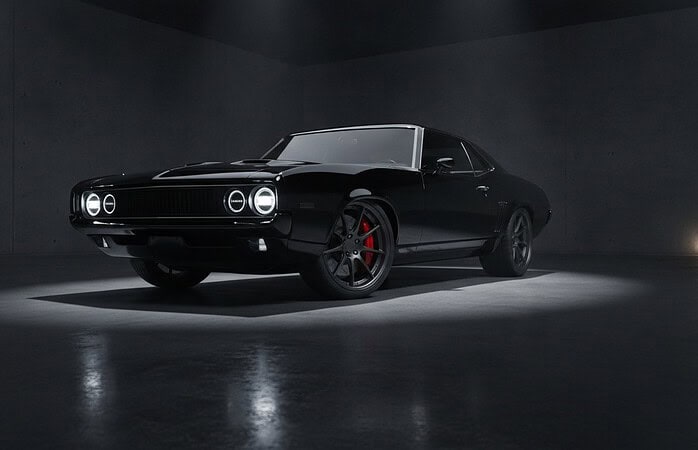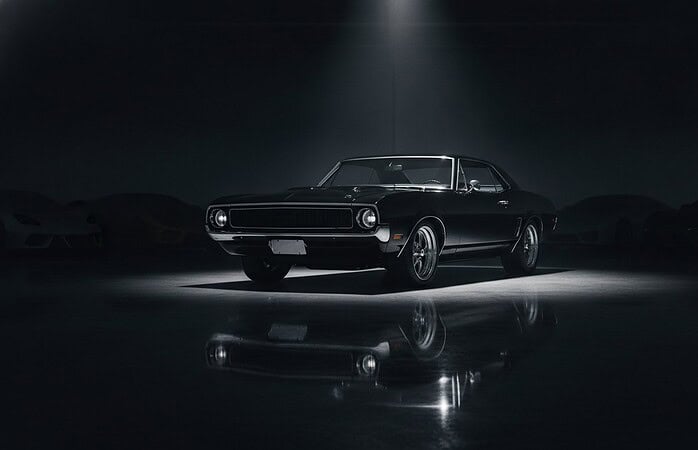

The most valuable asset in your collection is no longer defined by a museum-grade odometer; it is defined by the visceral thrill of modern performance wrapped in a heritage silhouette. In 2026, the traditional metrics of classic car value have undergone a radical transformation. You likely feel the tension between what the static price guides suggest and what the market actually pays for a meticulously engineered machine. It’s a gap that leaves many owners feeling uncertain about their investment.
We’ll bridge that divide by providing a definitive framework for assessing your vehicle’s worth. You will learn which bespoke upgrades generate the highest return on investment and how to distinguish between a “fully sorted” masterpiece and a standard restoration. From technical condition audits to selecting the most exclusive sales channels, this guide ensures you never leave money on the table. We’re moving beyond the ledger to understand the true market reality of functional automotive art. We’ll explore how to turn your passion into a documented, high-performance reality.
Key Takeaways
- Learn how the intersection of provenance, rarity, and modern reliability dictates classic car value in today’s sophisticated market.
- Discover why the “Big Three” mechanical upgrades—powertrains, suspension, and climate control—are the primary drivers of restomod appreciation.
- Master the art of analyzing real-world auction data to bridge the gap between outdated price guides and true market demand.
- Establish a comprehensive documentation strategy to transform a simple binder of receipts into a powerful value multiplier during resale.
- Understand why professional consignment provides a more secure and lucrative path than the traditional risks of private party sales.
Defining Classic Car Value: The Core Pillars of Valuation
Determining classic car value is an exercise in balancing tangible data with emotional resonance. It is a formula where rarity, condition, and provenance converge to create a definitive market position. While production numbers provide a baseline, they do not account for the soul of the machine or its historical narrative. A vehicle’s value is also tethered to market liquidity. An appraised figure is only as valid as the speed at which a qualified buyer is willing to exchange capital for the keys. You must understand that a high price on paper does not always translate to a swift transaction in the real world.
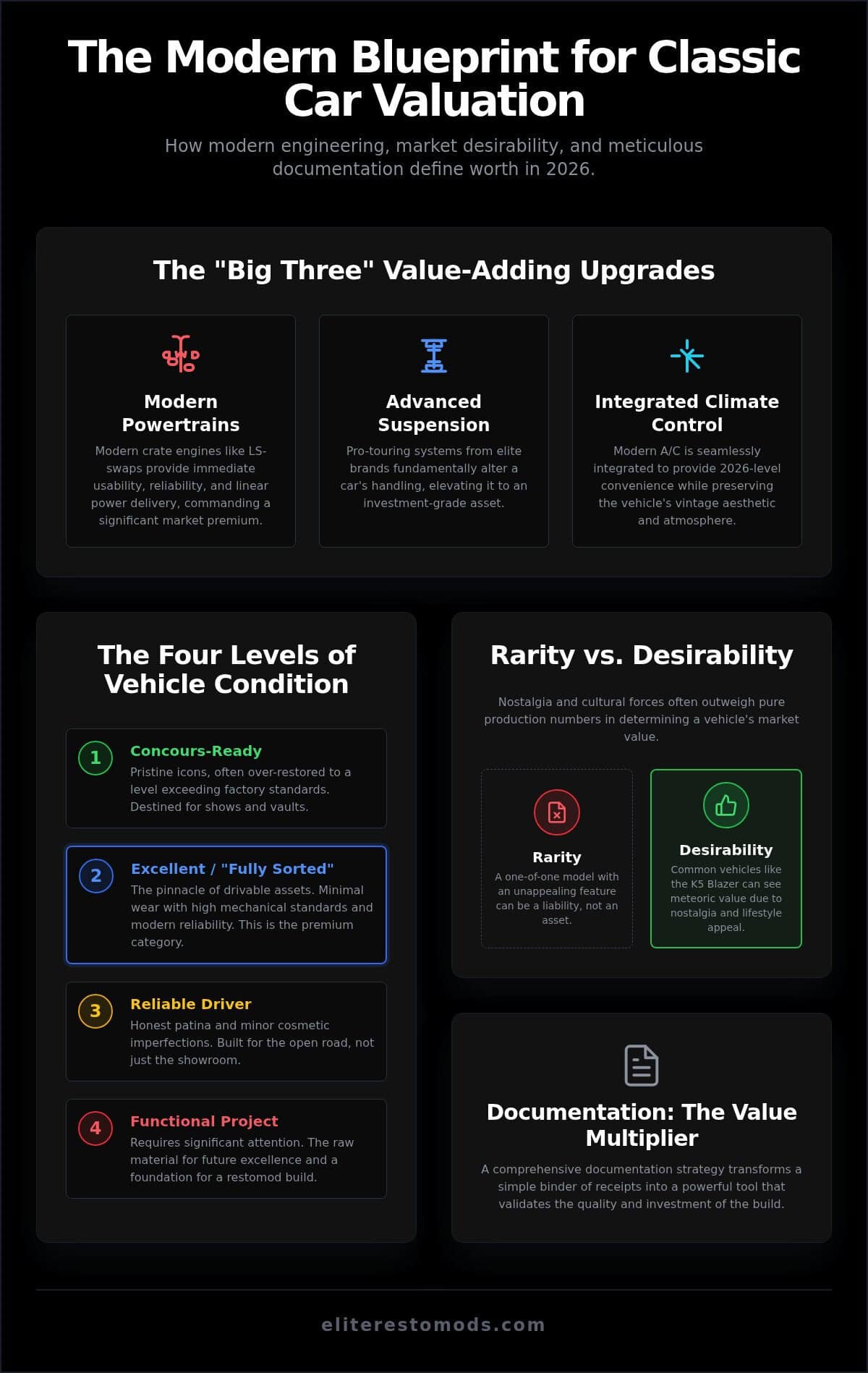
The Four Levels of Vehicle Condition
The industry relies on a tiered scale to quantify quality, though these definitions often shift when moving from preservation to performance. This scale helps standardize expectations between buyers and sellers.
- Level 1: Concours-ready specimens. These are pristine icons, often over-restored to a level of perfection that exceeds factory standards. They are destined for grass fields and climate-controlled vaults.
- Level 2: Excellent condition. These vehicles exhibit minimal wear and boast high mechanical standards. They represent the pinnacle of drivable assets.
- Level 3: Reliable drivers. These cars carry an honest patina and minor cosmetic imperfections. They are meant for the open road, not just the showroom.
- Level 4: Functional projects. These require significant attention. They are the raw materials for future excellence.
At Elite Restomods, we look beyond these standard grades. We focus on the “fully sorted” concept. This ensures that a Level 2 aesthetic is matched by modern mechanical reliability, a combination that often commands a premium over traditional categories.
Rarity vs. Desirability: Why Some Common Cars Cost More
Rarity is a mathematical fact, but desirability is a cultural force. You might own a one-of-one model with a rare paint code, but if that color is unappealing, the rarity becomes a liability rather than an asset. Conversely, vehicles like the K5 Blazer have seen a meteoric rise in classic car value despite healthy production numbers. This surge is driven by nostalgia and the visceral desire for a specific lifestyle that these rugged machines represent.
Nostalgia often outweighs scarcity. A survivor car with original paint and upholstery offers a connection to the past that a fresh restoration cannot replicate. However, a high-quality older restoration can sometimes offer better entry-level value for those who prioritize the experience of driving over the purity of preservation. True value lies in the marriage of historical significance and the functional art of the build.
The Restomod Variable: How Modern Engineering Impacts Worth
The long-standing dogma that only numbers-matching originals hold significant classic car value is a relic of the past. Today, the market is driven by a new generation of collectors who prioritize the visceral experience of driving over the static prestige of preservation. These buyers seek the silhouette of a legend paired with the reliability of a modern supercar. This shift has created a massive premium for vehicles that successfully bridge the gap between heritage and high-performance engineering. It is no longer enough for a car to look the part; it must perform with modern precision.
We identify the ‘Big Three’ value-adding upgrades as modern powertrains, advanced suspension geometry, and integrated climate control. An LS-swapped classic often commands a higher price than its stock counterpart because it offers immediate usability. It starts every time. It runs cool in traffic. It delivers power with a linear precision that vintage carburetors cannot replicate. The key to maximizing this investment is seamless integration. Modern technology must feel invisible, hidden behind artisanal finishes that respect the vehicle’s history. A digital dashboard disguised as an analog gauge or a hidden Bluetooth system maintains the nostalgic atmosphere while providing 2026-level convenience.
High-Performance Mechanical Upgrades
High-performance mechanical upgrades are the backbone of modern appreciation. Installing a modern crate engine provides more than just horsepower; it provides the confidence to utilize the asset on long-distance rallies or daily commutes. Pro-touring suspension systems from elite brands like Roadster Shop elevate a vehicle to investment-grade status by fundamentally altering its handling profile. This transformation is complemented by superior stopping power. High-end brake conversions from Wilwood or Brembo are not just safety features. They are essential markers of a professional, high-value build that can handle the brute force of a modern engine.
The Premium for Professional Craftsmanship
A clear distinction exists between a garage-built project and a professionally commissioned restomod. Elite builds undergo a meticulous quality assurance process that justifies a premium market position. Every bespoke interior and custom finish must meet a standard of perfection that ensures the vehicle is a functional piece of art. Selecting a master builder ensures that your classic car value is protected through every stage of the transformation. You can explore our custom build services to understand how professional craftsmanship translates into market-leading results. This meticulous approach ensures that every mechanical intricacy is handled with the precision required for top-tier pricing, turning a vintage dream into a tangible, high-performance reality.
Evaluating Market Data: Tools and Real-World Metrics
Market data acts as the heartbeat of the automotive investment world. It’s a complex tapestry where historical trends meet current emotional demand. To accurately determine classic car value, you must look beyond a single source. Hagerty provides excellent macro-level trends and is the gold standard for insurance metrics. NADA offers a more conservative, traditional perspective. Hemmings serves as a bridge, showing what private sellers hope to achieve in the retail space. Relying on just one of these can lead to a skewed perception of your vehicle’s actual worth.
Analyzing auction results from platforms like Bring a Trailer or Barrett-Jackson requires a discerning eye. These venues often fall victim to auction fever. This phenomenon occurs when competitive bidding drives a price far beyond logical market ceilings. While these results make for great headlines, they can provide misleading data for the average seller. You must distinguish between a genuine market shift and a one-time bidding war between two determined collectors. The gap between asking price and selling price in private marketplaces is another critical metric. Many private listings are aspirational, reflecting the owner’s emotional attachment rather than market reality. Professional data focuses on completed transactions, which often settle at a lower point than the initial public ask. Understanding this discrepancy prevents you from overestimating your asset’s immediate liquidity.
Using Valuation Tools Effectively
Different tools serve different strategic purposes. Hagerty is your primary resource for establishing agreed-value insurance coverage. Agreed Value is the specific, pre-determined dollar amount an insurance provider guarantees to pay in the event of a total loss. When preparing for a sale, Hemmings data allows you to spot regional pricing trends, such as the premium placed on rust-free chassis in the Southwest. This regional insight helps you position your car in the right market at the right time.
The ‘Fully Sorted’ Premium
A significant gap exists between a finished build and a sorted machine. A vehicle with a documented 500-mile shake-down period is inherently more valuable than a car fresh off the lift. This testing phase identifies the minor mechanical gremlins that inevitably haunt new builds. Younger, busier collectors prioritize turnkey reliability. They want to drive, not tinker. You can view examples of our meticulously vetted vehicles in our inventory. This level of preparation ensures that the classic car value remains resilient, reflecting the peace of mind that comes with a truly road-ready asset.
Strategic Preparation: Maximizing Your Vehicle’s Resale Value
The final stage of ownership is a performance in itself. You have curated the machine; now you must curate the narrative to maximize classic car value. High-end buyers aren’t just looking for a car. They are looking for the confidence that the vehicle has been maintained with clinical precision. This confidence is built through strategic presentation and an unassailable paper trail. It is the difference between a machine that sells and a machine that inspires a legacy.
The Documentation Trail
A binder of receipts is often the difference between a quick sale and a long, suspicious negotiation. You should transform your maintenance history into a comprehensive build book. This dossier should include exact component specifications, wiring diagrams for modern electronics, and chronologically organized restoration records. It serves as a technical biography of the vehicle. For those looking to keep their assets in peak condition before a sale, our blog offers deeper insights into professional maintenance standards. A well-documented history suggests an owner who treated the machine as a bespoke piece of art rather than a disposable commodity.
Professional Detailing and Staging
First impressions are visceral. A high-end buyer’s eyes will immediately gravitate toward the engine bay. If the heart of the machine is coated in road grime, the rest of the build is viewed with skepticism. Professional detailing involves more than a soap and water rinse. It requires multi-stage paint correction and ceramic coating to give the finish a deep, liquid luster that justifies a premium price point. Inside the cabin, the goal is to evoke a sense of exclusivity. You want the sensory appeal of fresh, artisanal leather and a pristine environment that mirrors the experience of a new luxury vehicle.
The psychological impact of a sorted mechanical inspection report cannot be overstated. When a third-party expert confirms the vehicle’s integrity, it removes the fear of the unknown. Pair this report with professional automotive photography. High-resolution images that capture the play of light over the fenders and the intricate details of the suspension are essential for online listings. These visuals act as a digital showroom, inviting the client into a world of luxury and performance. If you are ready to transition your asset to its next steward, consider our consignment program to ensure your vehicle is presented with the prestige it deserves. This professional approach ensures you don’t leave money on the table during a private sale.
The Elite Path to a Successful High-Value Sale
The final transition of a vintage asset is a high-stakes maneuver. You’ve invested in the mechanical integrity and the documentation; now you must choose the proper theater for the sale. Selling a high-value machine privately often invites unnecessary risk. You deal with unqualified buyers, security concerns, and the tedious friction of logistical hurdles that can stall a deal for months. A professional consignment service transforms this chaotic process into a refined, secure transaction. It ensures that the true classic car value is recognized and defended by experts who speak the language of elite collectors. This path doesn’t just sell a car; it preserves the legacy of the build.
Why Professional Consignment Wins
Consignment offers access to a global network of qualified buyers that a standard private listing simply cannot reach. These are individuals looking for curated quality and investment-grade assets, not a weekend project. A professional partner handles the entire narrative, from the initial inquiry to the final title transfer. They manage the heavy lifting of negotiations and inspections, acting as a sophisticated buffer between you and the market’s noise. For a deeper look into how this process protects your interests, you can explore our consignment services guide. This approach ensures your vehicle is positioned as a premier asset, removing the uncertainty of the open market.
The Elite Restomods Difference
Our approach is rooted in the Elite Certified standard. This status is the ultimate validation of classic car value in the modern era. Every vehicle entering our program undergoes a rigorous quality assurance process that leaves no bolt unturned. We ensure it is truly fully sorted before it ever hits the showroom floor. This transparency builds immediate buyer confidence, as the technical work is already vetted and verified. We further facilitate the deal by offering specialized classic car financing and secure, enclosed vehicle transport. These aren’t just perks. They are essential tools that remove the barriers to a high-value purchase, allowing a buyer in another state to commit with total peace of mind.
Professional marketing and climate-controlled staging provide the visual impact necessary to justify premium pricing. We treat every vehicle as a bespoke piece of functional art. When a buyer sees the Elite Certified seal, they know they are acquiring a machine that has been vetted for both brute force and refined comfort. It is a mark of reliability and perfectionism. If you are ready to realize the full potential of your investment, you can commission your build or consign your classic with Elite Restomods today. We are the bridge between your automotive dream and its final, high-performance reality.
Securing Your Automotive Legacy in 2026
The future of automotive investment belongs to those who recognize that the marriage of historical soul and modern reliability is the new gold standard. We have explored how classic car value is no longer a static number in a book; it is a dynamic reflection of a vehicle’s mechanical integrity and its readiness for the open road. By prioritizing professional documentation and high-performance engineering, you transform a vintage asset into a timeless masterpiece. The market rewards precision and punishes the unvetted.
Navigating this complex market requires a partner who understands the intricacies of the build and the expectations of the global collector. Our Elite Certified Quality Assurance process ensures your vehicle is presented with unassailable authority. Coupled with our specialized classic car financing partners and global enclosed vehicle transport capability, we remove every barrier between your machine and its next steward. It’s time to move beyond the uncertainty of private listings and embrace a more refined approach to asset management. Maximize your classic car value with our professional consignment services and ensure your legacy is preserved with the precision it deserves. Your journey toward a successful high-value sale begins with a single, expert step.
Frequently Asked Questions
How do modern engine swaps like an LS or Coyote impact classic car value?
Modern engine swaps typically elevate the market appeal for collectors who prioritize drivability and raw power. While purists may prefer original blocks, a professionally integrated LS or Coyote engine transforms a vintage silhouette into a reliable, high-performance machine. This shift often results in a higher realized classic car value because it expands the buyer pool to include those who want supercar performance without the temperamental nature of vintage carburetors.
Is a professional appraisal necessary before selling a classic car?
A professional appraisal is essential for establishing an objective baseline for any high-end automotive asset. It provides the documented validation necessary for securing agreed-value insurance and facilitating specialized financing. Without this expert assessment, you risk leaving significant capital on the table during negotiations. It’s the bridge between your emotional attachment and the cold, hard metrics of the current market reality, ensuring every detail is accounted for.
What is the difference between book value and market value for vintage vehicles?
Book value serves as a generalized statistical baseline, while market value represents the actual price a qualified buyer is willing to pay. Standard guides often fail to account for the premium associated with a fully sorted mechanical status or bespoke interior finishes. Real-world market worth is driven by current demand, recent auction volatility, and the specific quality assurance standards met by the vehicle during its meticulous restoration process.
Do matching numbers still matter in the 2026 restomod market?
Matching numbers carry significant weight in the preservation market, but they are less critical in the elite restomod space. In 2026, the value of a restomod is dictated by the quality of its modern components and the seamless nature of its engineering. Buyers in this segment prioritize high-performance reliability and artisanal craftsmanship over the historical purity of an original drivetrain, treating the car as a bespoke piece of functional art.
How much does a professional consignment service cost for a high-value car?
Professional consignment services typically operate on a commission structure that varies based on the vehicle’s final sale price and the level of marketing required. This fee covers the meticulous detailing, professional photography, and global reach necessary to attract qualified collectors. It also removes the friction of managing inspections and title transfers. You’ll need to check with individual providers to understand their specific fee schedules and the value-added services included.
Will adding modern air conditioning decrease the value of my classic car?
Integrating a modern air conditioning system almost always increases the desirability and resale worth of a vintage vehicle. Modern buyers expect refined comfort alongside brute force performance. When a system is installed with the precision of a master builder, it enhances the cabin experience without detracting from the nostalgic aesthetic. It turns a seasonal show car into a versatile machine that can be utilized and enjoyed year-round. It’s a strategic upgrade.
How do I prove the value of my custom restomod to an insurance company?
Proving the classic car value of a custom build requires a meticulous documentation trail and a comprehensive build book. You must provide your insurance carrier with detailed receipts, component specifications, and high-resolution imagery of the mechanical intricacies. This evidence supports an agreed-value policy, ensuring that your investment in professional craftsmanship and high-end hardware is fully protected in the event of a total loss. It’s about documented excellence.
What are the most desirable classic car models for investment in 2026?
Investment interest in 2026 is gravitating toward vintage SUVs like the K5 Blazer and high-performance icons from the late 1990s. These models offer a unique blend of heritage design and modern operational potential. Additionally, professionally commissioned restomods of 1960s muscle cars continue to command premium prices. Collectors are increasingly seeking vehicles that offer a transformative journey, bridging the gap between a long-held dream and a tangible, high-performance reality.